The largest open-source smart home platform, Home Assistant, has released its first version of 2026 for beta testers. Version 2026.1 reflects the platform’s increasing focus on open standards by moving them, including Matter and Thread, from the Integration list to the main settings menu. This adjustment integrates these local protocols more deeply into the user interface, treating them as a standard part of the platform.
Easier access to Matter and Thread
Home Assistant 2026.1 moves open-source protocols, including Matter and Thread, from the “Devices & Services” page to the primary level of the “Settings” menu. This means you will no longer need to scroll through long lists of integrations to find these daily network settings. This change aims to make the platform easier to navigate for users relying on these open standards, according to Home Assistant.
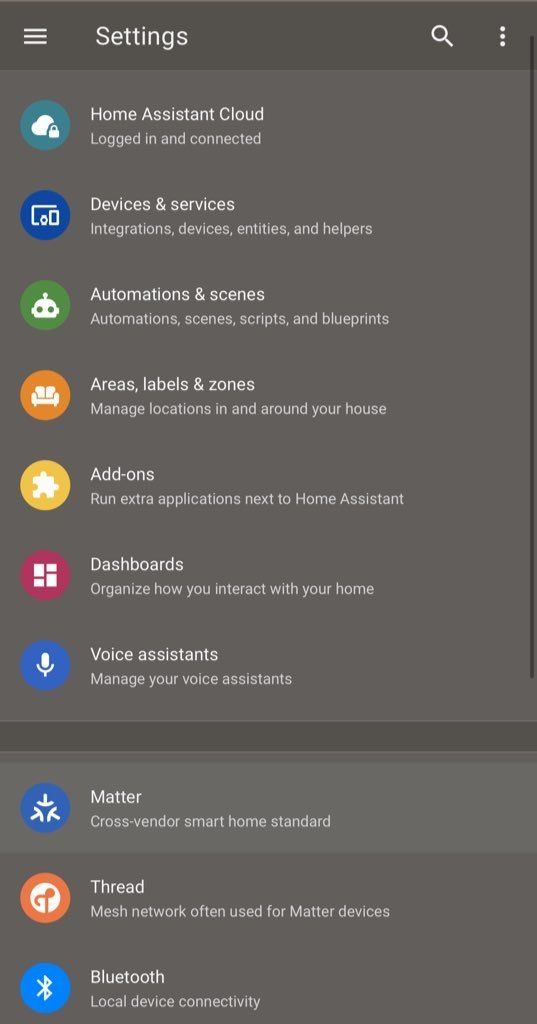
The new Thread entry redirects users to the existing Thread integration page. However, the Matter section features a new panel. This allows you to add Matter devices directly from the Home Assistant web interface or app without using a smartphone (via Google or Apple APIs). The feature is not new, as it is accessible from the Matter-Server WebUI too, but the new entry is way more accessible without technical jargons.
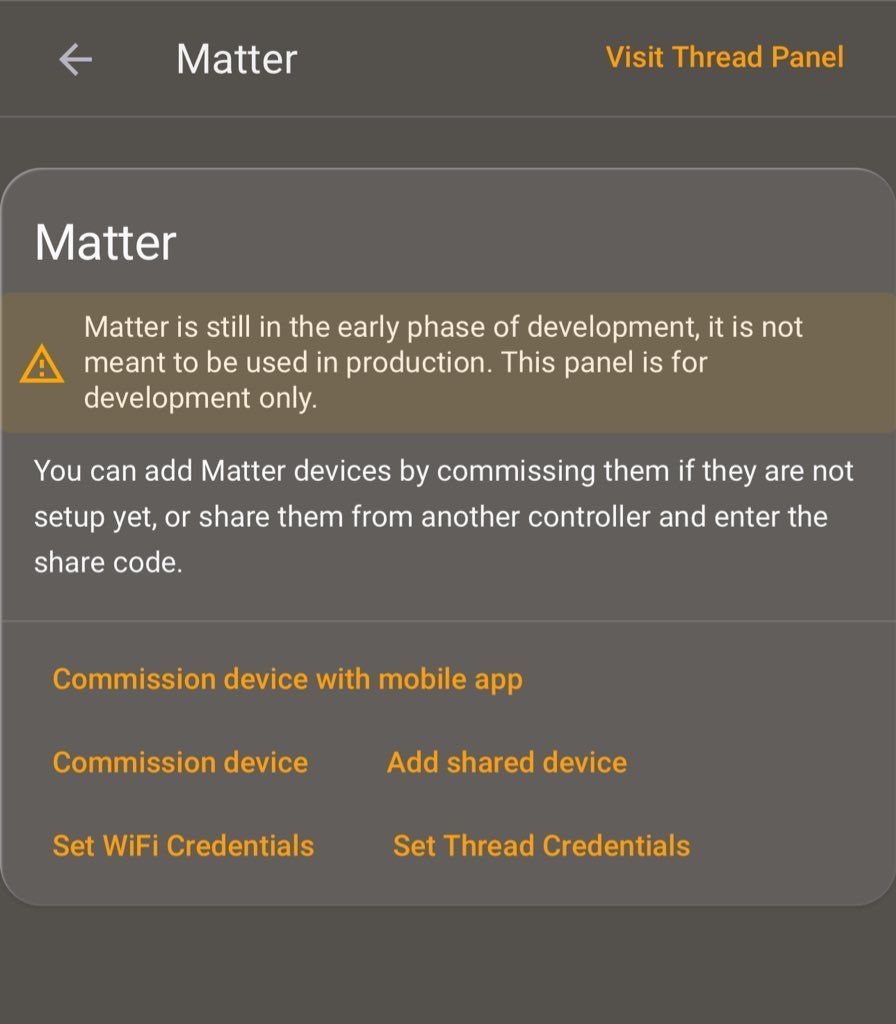
Users can set Wi-Fi and Thread credentials or handle devices shared from other ecosystems using pairing codes. Adding brand-new Matter devices directly through Home Assistant requires a Bluetooth dongle or an internal adapter on the host machine.
New controls for speakers, locks, and thermostats
This update adds specific features for various Matter devices. For smart speakers, Home Assistant now supports volume control using the “LevelControl” cluster. This exposes a number entity that works as a volume slider, allowing users to adjust the audio output of Matter speakers directly.
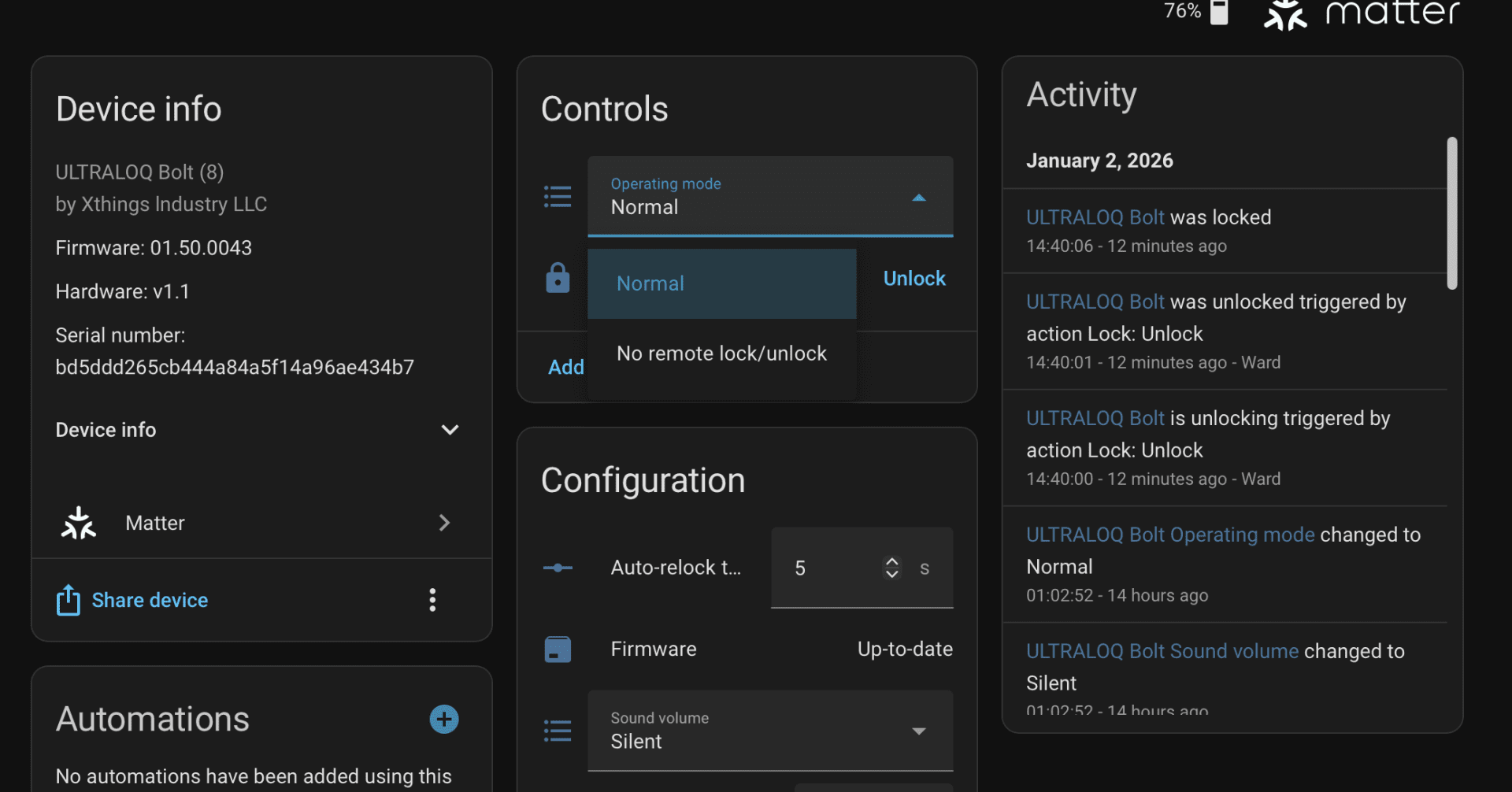
Door locks also see a change in how they are managed. The mode selection for Matter door locks, which includes states like “Privacy” or “Passage,” has been moved from the configuration menu to the main control section. This change treats the operating mode as a daily control option rather than a configuration setting. Developers have also added two new diagnostic sensors that track the total count of “Door Open” and “Door Closed” events to help users monitor usage.
Better sourcing for thermostats
Thermostat support is updated to provide deeper visibility into how devices make decisions. The platform now reads the “RemoteSensing” attribute directly from the standard Matter Thermostat cluster. By decoding the bitmap data within this attribute, Home Assistant exposes three new diagnostic binary sensors. These sensors confirm whether the local temperature, outdoor temperature, or occupancy status is coming from the thermostat’s internal hardware or an external remote node. This technical detail allows users to identify exactly which data source is controlling their climate system, removing the guesswork when troubleshooting heating or cooling cycles.
Preparation for Matter cameras
The update also includes technical changes for future video features. The core team has made WebRTC a universal integration shared by other integrations. This component is required for low-latency camera streaming and serves as preparation for full Matter Camera support in future updates.
(Source: Home Assistant, GitHub; Image Source: Home Assistant, CSA, Matter Alpha/Ward Zhou)