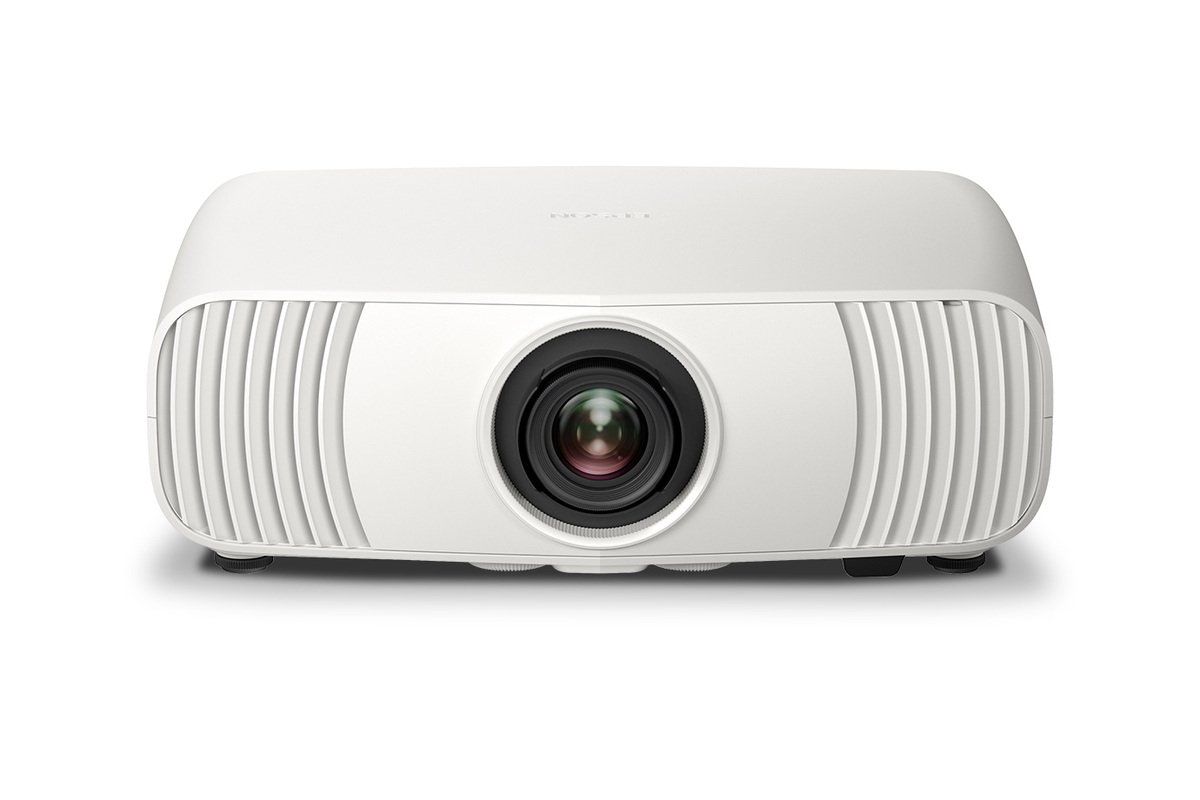
Epson has announced a series of new LS-series 4K home cinema projectors, but among the expected increased brightness and AI-enhancing picture technology is Matter compatibility. The new range consists of the EH-LS5000, EH-LS6000, EH-LS7000 and short-throw EH-LS7500. All four can be added to Matter-compatible smart home platforms, with Epson specifically naming Google Home, Samsung SmartThings and Home Assistant.
That makes these some of the more unusual Matter devices we’ve seen recently. Lights, plugs, sensors, and locks are commonplace, but native Matter support is still far less common in serious home entertainment hardware. As far as we know, these are first Matter-compatible home cinema projectors.
Device type indicates a “Basic Video Device”
There are two main types of video device when it comes to Matter: Basic Video Device, and Casting Media Player. The Epson projectors are the former. In practice, that means they offer a basic level of remote control — precisely which are supported is unknown, but the Basic Video Device specification allows for:
- Power and volume
- Playback controls
- Input selection
- Remote control menu navigation
Epson says Matter allows the projectors to integrate with other connected devices without locking users into a single smart home platform, via a simple on-screen Matter setup process. A good implementation would allow a single scene to close the blinds, dim the lights, switch on the projector, and select the appropriate input. Whether Epson’s implementation goes that far remains to be seen; Epson hasn’t yet detailed which of those capabilities its new projectors expose. Devices don’t have to support all of the specifications to be labelled as “Matter-compatible”.
A Casting Media Player, on the other hand, supports streaming from your devices directly to the display or output — an open-source alternative to AirPlay or MiraCast. The Matter Casting specification covers things like remote control, app launching, specific content launching, and app login features for sharing credentials without needing to log in again on the target device.
The Casting Media Player initiative seems to be led by Amazon, with the Echo Show and latest Fire TV sticks being the only known devices that currently support the Matter Casting protocol. Matter Casting also requires compatible software to be the source, such as Prime Video or Tubi. To be clear, the new Epson projectors don’t appear to support Matter Casting.
Interestingly, Epson also has two other Matter certification entries labelled EF-200 and EF-300. The EF series are portable projectors, although we haven’t been able to identify corresponding retail products under those exact model numbers, so these are potentially unannounced future products.
Home Assistant and Google Home
Epson projectors have been supported by Home Assistant for a while now via a limited official plugin, or more extensively with an unofficial plugin through HACS. They can either use the local network, or an RS232 serial cable, thanks to the standardised ESCVP command control scheme.
Google Home support also comes via an official integration, offering voice control for basic features.
These are both outside of the standard Matter specification support.
Hardware Specifications
Away from Matter, the four projectors share plenty of hardware features. The EH-LS5000, EH-LS6000 and EH-LS7000 are long-throw projectors, all using a 1.32–2.15:1 throw ratio. For a 100-inch 16:9 image, that means positioning the projector roughly 2.9 to 4.7 metres from the screen. All three also offer 1.62x optical zoom as well as vertical and horizontal lens shift, so there’s a fair amount of flexibility over exactly where they can be installed without losing quality to digital keystoning.
The EH-LS7500 is the odd one out, using a shorter 1.00–1.31:1 throw ratio. A 100-inch image therefore requires roughly 2.2 to 2.9 metres of throw distance, making it easier to accommodate in smaller rooms, although it still isn’t an ultra-short-throw projector (which are designed to sit immediately below the screen).
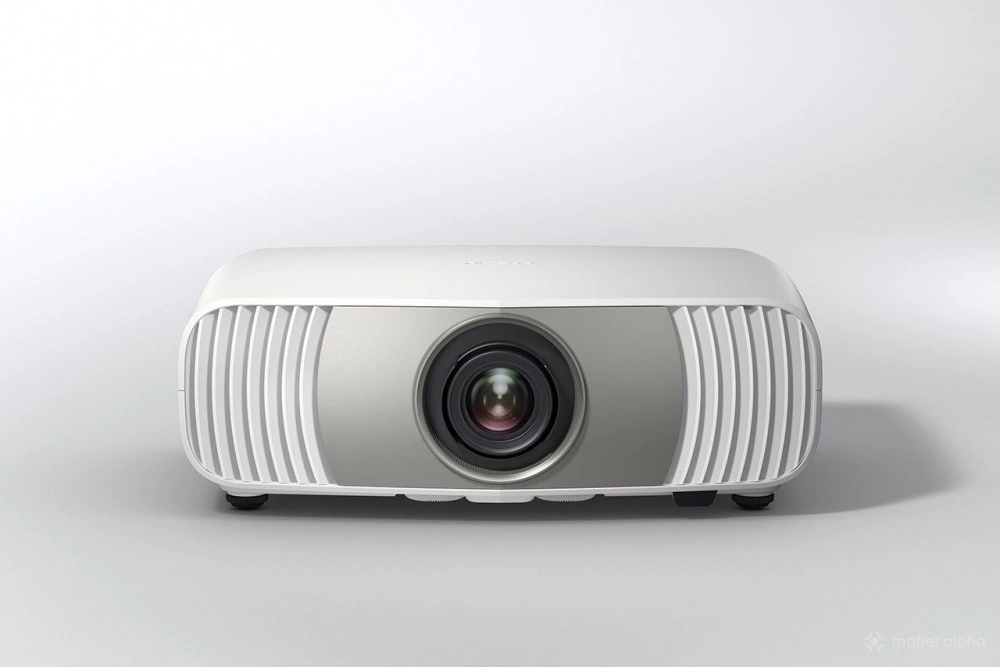
All use Epson’s 3LCD laser projection system with 4K output and a claimed 20,000-hour light source. Image processing is handled by a MediaTek MT9681 chipset, with Epson using AI processing for scene detection, upscaling, contrast, colour, and motion optimisation.
The entry-level EH-LS5000 offers 2,500 lumens and costs £1,600 in the UK or $1,999.99 in the US, while the £1,799.99 / $2,199.99 EH-LS6000 increases brightness substantially to 3,400 lumens.
The higher-end EH-LS7000 costs £2,500 and pushes brightness to 3,600 lumens, while also increasing native contrast from 600:1 on the LS5000 and LS6000 to 1,900:1. The LS7000 does not currently appear in Epson’s US launch lineup.
Finally, the short-throw EH-LS7500 costs £2,799.98 in the UK and $2,699.99 in the US. Epson is pitching it not only at home cinema users, but also at “indoor golf simulators”, which sounds oddly specific. The higher-end LS7000 and LS7500 add ISF-certified image optimisation and professional AV control integration, while the LS7000 also lists memory for up to 10 lens positions.

The entire range supports HDR10 and HLG (no mention of HDR10+ or Dolby Vision, unfortunately), as well as HDMI eARC, Ethernet, and Wi-Fi 6E for connectivity.
Epson says the new range will be available across Europe from September 2026, with the LS5000, LS6000 and LS7500 also launching in the US.
At those prices, they need more than Matter support to justify themselves against some very capable 4K UST laser projectors. They’re ideally suited to suited to existing larger installations or cinema rooms with ceiling mounts already installed. Lens shift is critical to ensure the best image quality to match your screen location without resorting to digital keystoning to distort the image. For the average family who want a big screen movie night in the living room, a budget 4K UST laser projector will always win for convenience, and many come with superb built-in sound.