Aqara has consistently pushed the boundaries of what is possible within the Matter standard by acting as a highly capable bridge and platform for its extensive catalog of devices. The company previously introduced features like signal sync and scene sync, which allow complex, multi-device Aqara setups to map seamlessly into major Matter platforms like Apple Home, Google Home, and Home Assistant.
Now, the hardware maker is introducing a new software feature called the Presence Soft (Software) Sensor. This addition serves as a powerful extension to better integrate Aqara products into broader Matter ecosystems, making complex room automations easier to manage for everyday users.
A composed virtual sensor
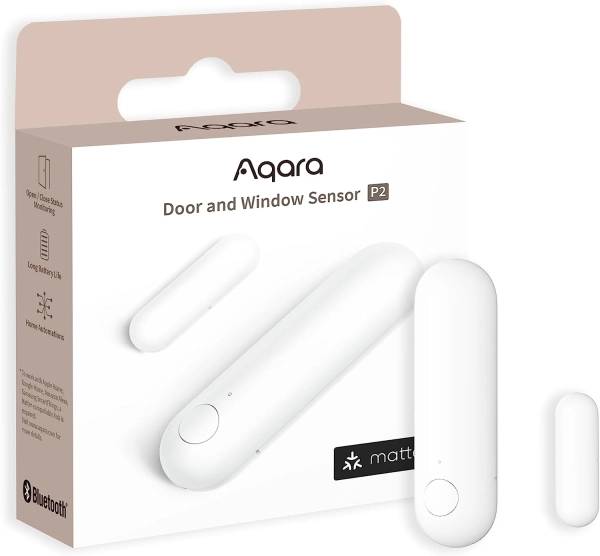
Aqara Door and Window Sensor P2
The Aqara Door and Window Sensor P2, a contact sensor, is a key component of the Aqara smart home ecosystem, offering compatibility with the Matter protocol, enabling seamless integration and control within your smart home network.
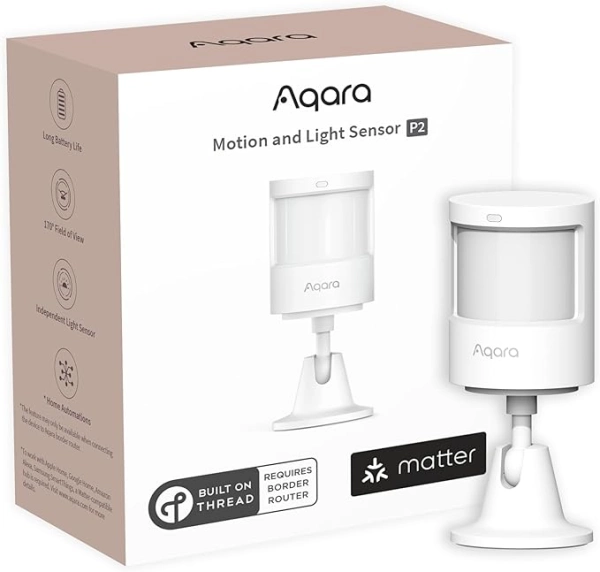
Aqara Motion and Light Sensor P2
The Aqara Motion and Light Sensor P2, part number AS057, is a unique component of the Aqara smart home ecosystem, offering compatibility with the Matter protocol, and providing seamless integration with popular virtual assistants for enhanced home automation.
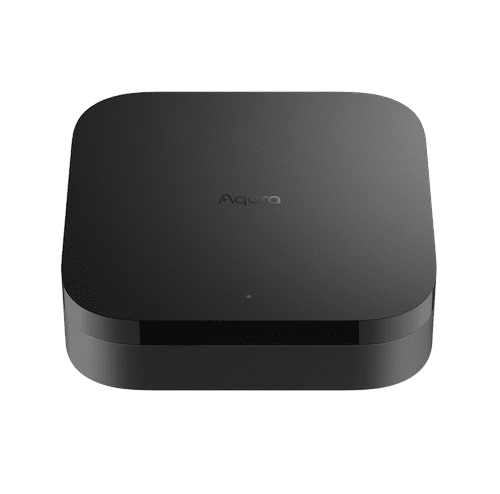
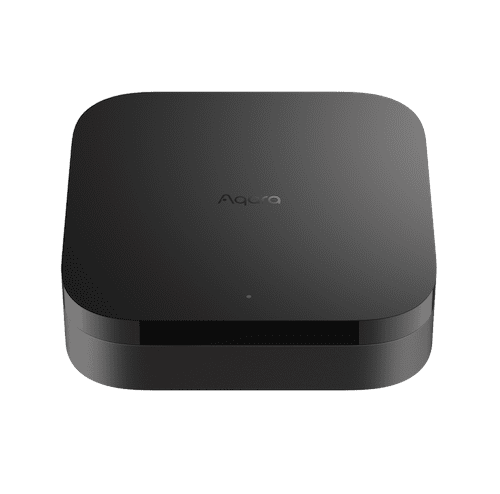
Aqara Hub M3
The Aqara Hub M3 is a Matter-compatible gateway that connects and manages up to 128 smart devices, facilitating local device automation without relying on Wi-Fi.
The Presence Soft Sensor is a free feature provided by Aqara that helps determine whether a room or a specific space is actually occupied. Occupancy detection is a base trigger for daily automation, especially for light and climate control.
However, individual hardware devices often struggle to provide a perfect picture of a room. A traditional PIR motion sensor only sees a specific cone area and fails on still objects. A door contact sensor only knows open/closed states, not if someone actually walked through the door. The Presence Soft Sensor is to link devices from all over the house together, creating a unified sense of presence to eliminate these blind spots.
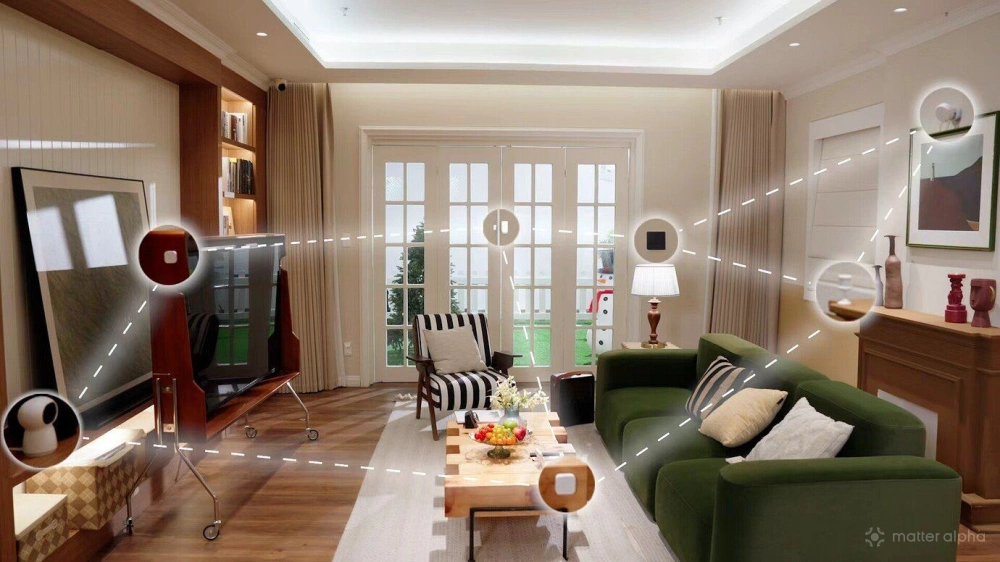
The virtual sensor can pull data from a wide range of Aqara and third party Matter products, including:
-
Security cameras
-
Smart locks
-
Millimeter-wave presence sensors
-
Smart switches
-
Contact sensors
-
Motion sensors
-
Vibration sensors
By integrating data from all these standalone endpoints, performing local preprocessing, and combining those inputs with AI-based computation, the central hub can accurately determine whether a space is genuinely occupied or entirely vacant, according to Aqara.
How to set up
Configuring the virtual sensor is straightforward within the app. Firstly, you need to have several presence-related devices and an Aqara Hub M3 paired and active in the Aqara app.
Upgrade your Aqara app (6.1.1) and Hub M3 (4.5.40 or higher) before creating a Presence Soft Sensor.
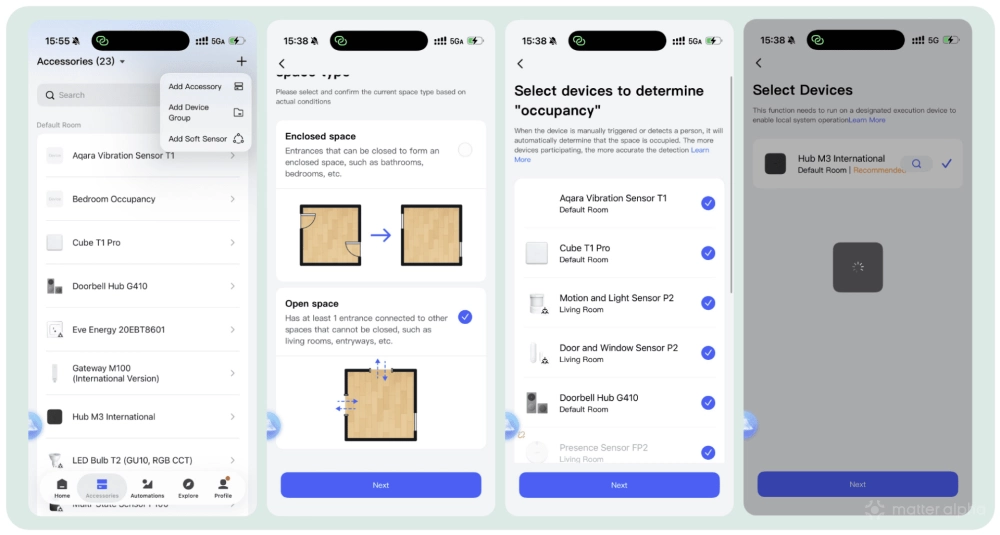
For optimized results, Aqara recommends including a smart lock or a door and window sensor in your setup group, as these perimeter devices provide definitive entry and exit data to anchor the AI calculations. Switch to the Accessory tab in your Aqara app. From the add device entry (the plus icon in the top right corner) select Add Soft Sensor.
The setup flow would ask you to select the physical space where you want to install the Presence Soft Sensor, utilizing the specific room divisions you have already created in the app. Next, choose whether the space has physical doors that close or if it features doorless, open entryways. You then manually select the specific sensing devices you want to contribute data to the virtual sensor.
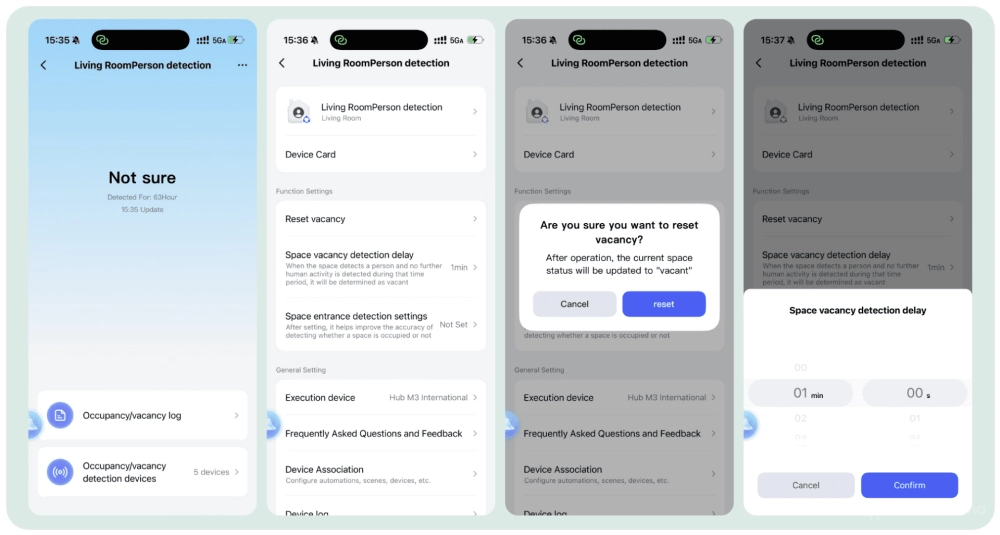
Next, assign the virtual sensor to your specific Hub M3 that runs the calculation. Once saved, the new Soft Sensor appears as a single device, allowing you to begin configuring your automations based on a highly accurate, unified room state.
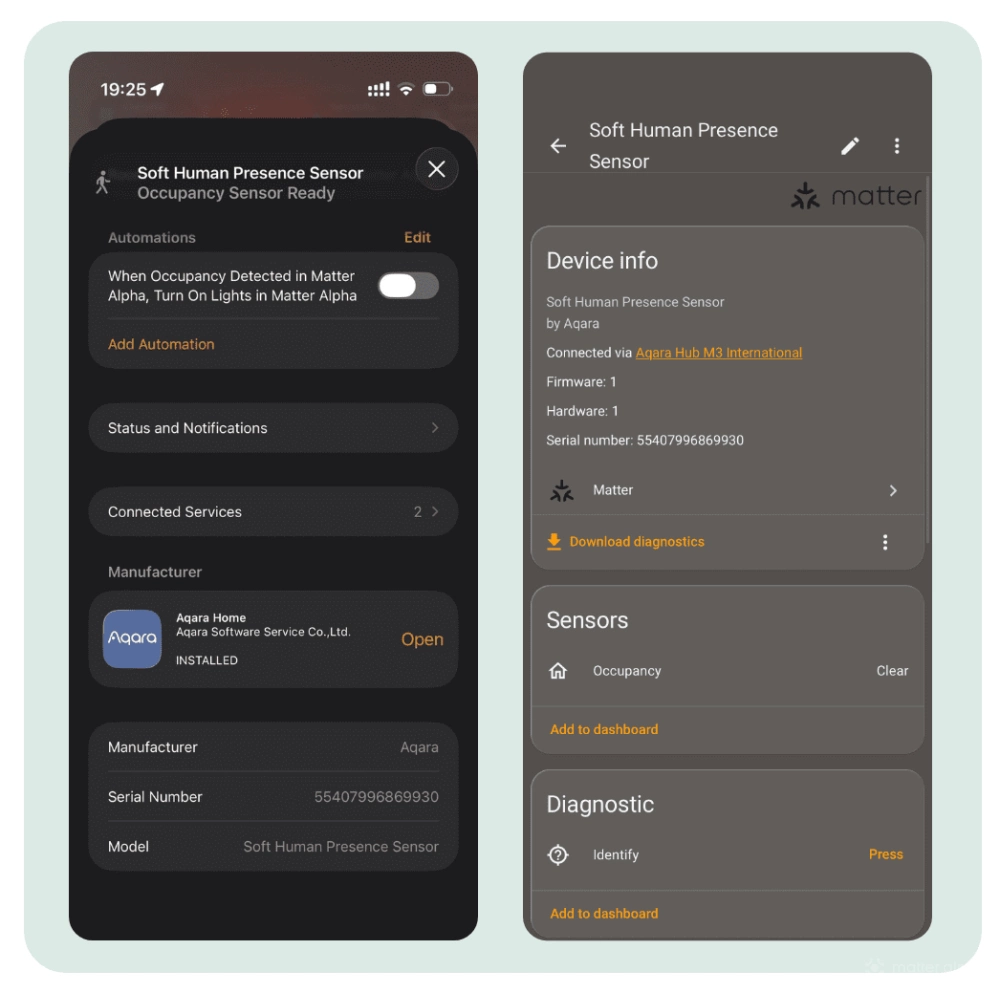
From the device card page, you can check its state, logs, and configure linked devices, or set duration for the vacancy delay. And the sensor would be exposed as an occupancy sensor to connected Matter platforms once it is created. You can create automations within the Aqara app or any other supported Matter ecosystems.
Why is it important?
As of the latest spec version, the Matter lacks a systematic and universal way to combine and group sensors natively in daily use. Achieving this kind of unified, multi-device detection usually relies on a central hub or a specific ecosystem platform to calculate various device states and report them as a single composed sensor.
Even when a platform like Home Assistant supports creating these types of template sensors or helper groups, it requires a significant amount of manual configuration, logic mapping, and testing to get right. It is a high barrier to entry that keeps average users from achieving perfectly automated rooms.
The Aqara Presence Soft Sensor simplifies this entire process. By doing the heavy lifting and logic processing locally on the Hub M3, it creates an accessible, flexible virtual device out of the box. When this unified state is passed through to a Matter ecosystem, it allows users to build highly accurate, reliable room automations without needing to write complex conditional rules for every single sensor.
(Source: Aqara; Image: Aqara, Matter Alpha/Ward Zhou)