The Matter smart home platform promises to keep smart homes simple, with one of its aims being to unify a fragmented environment.
This is a bigger challenge than you might imagine. Along with the problem of proprietary protocols and standards, there is also the challenge of plugs and power supplies. Then you have personal considerations like the favored smart home app of the householder, and whether this differs from the apps used by other members of the home.
Furthermore, worldwide differences in heating solutions exist.
While smart home tech is easy to buy in the UK, buying devices online can be a challenge, and mistakes can be made. Here’s what I’ve found since I began the process of making my modest UK home smart with Matter.
The electrical supply problem that isn’t
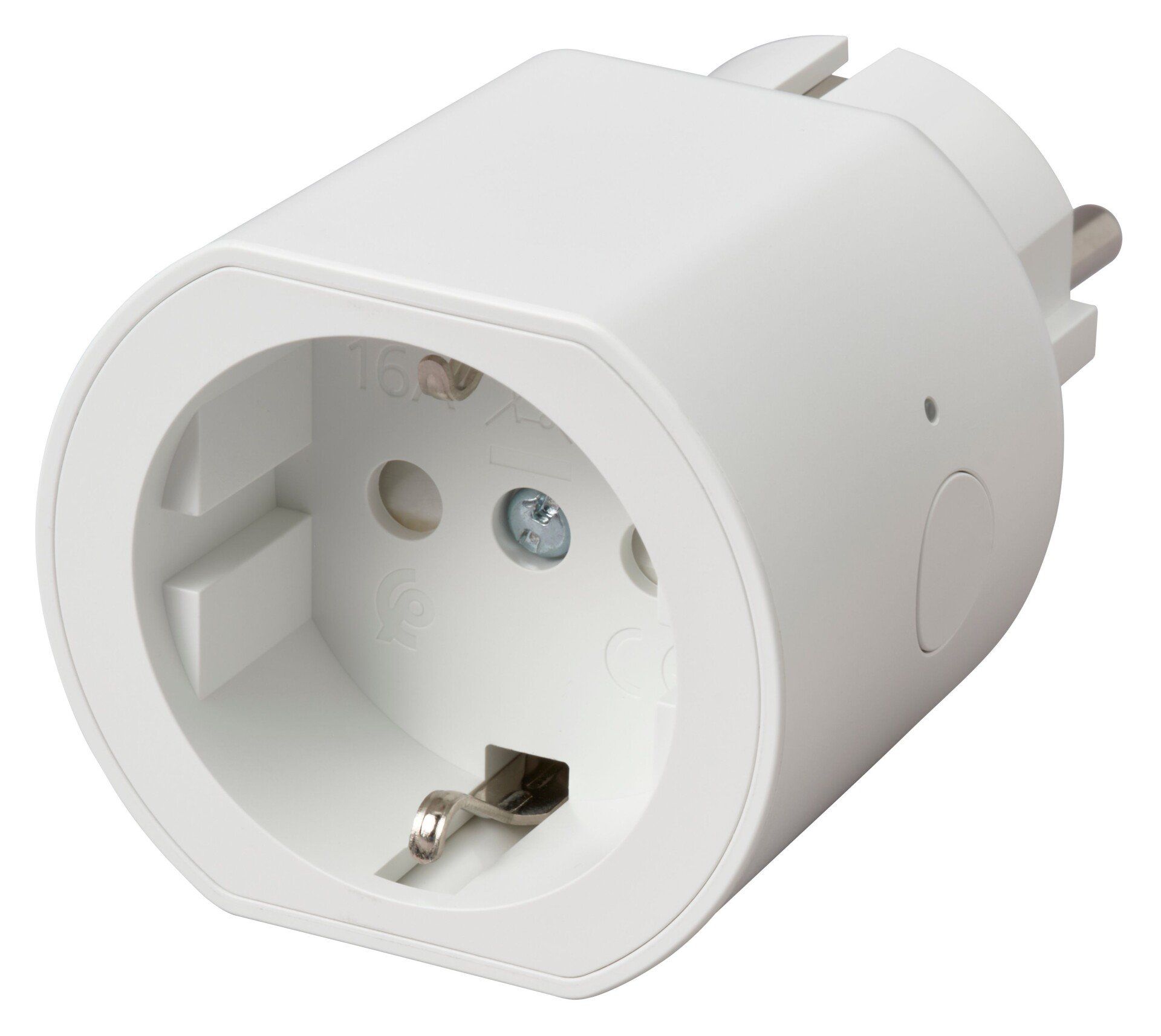
Voltage differs between the UK/EU systems and the US. But there is also the challenge of different plug types. While standard devices have been supplied with these issues overcome over the years, pass-through smart plugs offer a new challenge, as do user-installable smart switches.
So, plug types might offer a challenge, but the actual systems do not. Here's why.
In the UK and European Union, the electricity networks provide households with a 230V/50Hz supply, with protection provided by fuses mounted in the plugs in the UK. EU plugs do not have these device fuses.
Meanwhile, in the US, a 120V/60Hz is supplied, offering higher safety. US devices do not have device fuses.
This is, of course, a surface level appreciation of the situation, but the important takeaway is that almost identical appliances and gadgets and entertainment systems have worked across North America, Britain, and Europe for decades. No problem exists that cannot be solved by the manufacturer.
Hairdryers, record players, and other devices over the years have demanded slightly different configurations to run in different territories. You might notice some devices have a switch labelled 120V/230V (for example, hairdryers) which means they can be used in different “voltage location” if the switch is set appropriately. More modern devices have automatic detection, however.
Smart plugs and light switches in the UK smart home
So, if the electrical supply isn’t a challenge for building a smart home with Matter in the UK, what is?
The main challenge facing a smart home enthusiast in the UK is identifying the right hardware. Finding a device with a UK three-pin plug is the obvious challenge, although you can get around this with an adapter (my robovac has a US plug).
It starts to get a bit trickier when you start ordering goods online. Every smart home begins with a smart plug, but you need to ensure that the device you buy is designed for a UK (Type G) plug. Failing to do so will limit you to using a smart switch the next time you stay in a hotel in Paris or New York.
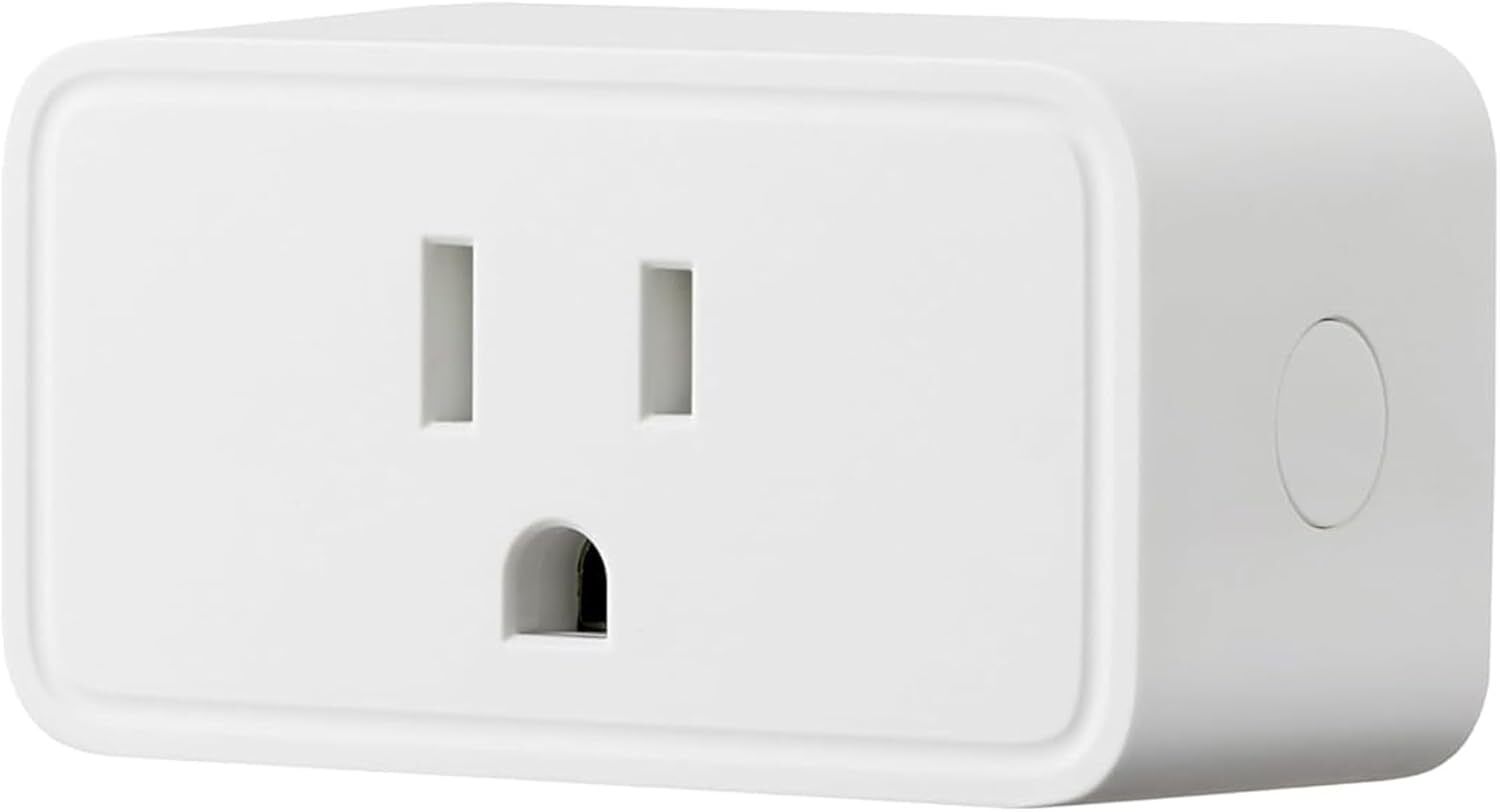
Fortunately, providers like Tapo, Govee, and Aqara all offer native UK smart plugs. You can also find Matter-compatible smart plugs in IKEA, and UK-based retailers such as Currys and Screwfix also stock Matter smart plugs and light switches.
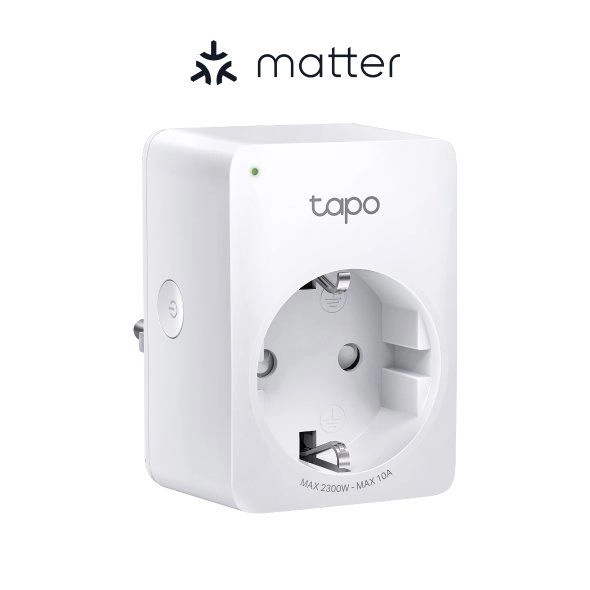
Tapo Mini Smart Wi-Fi Plug P100M
The Tapo Smart Plug P100M is a compact Wi-Fi-enabled plug that supports voice and remote control, auto-off functionality, and integrates with any Matter ecosystem for simplified device management.
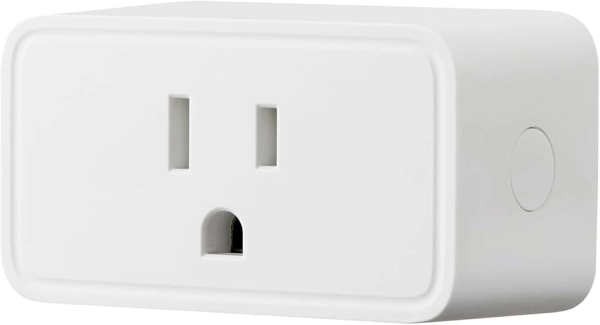
Amazon Basics Smart Indoor Plug – Single outlet
Matter-certified smart plug with 2.4GHz Wi-Fi, Alexa-friendly setup, scheduling and voice control, plus a compact one-outlet design for lamps, fans, coffee makers, and other small appliances.
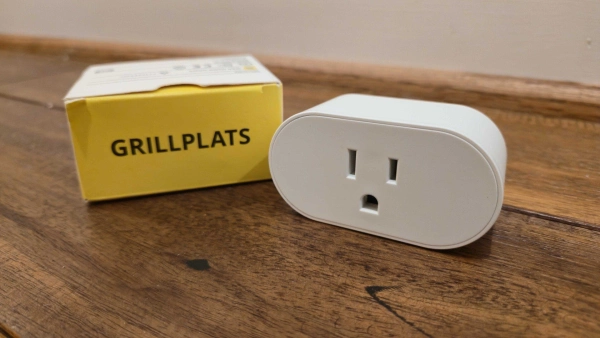
GRILLPLATS Smart Plug
A smart Matter over Thread plug with power meter support.
Smart light switches and no-neutral
In the case of light switches, you will need to ensure you buy UK-compatible smart switching devices (there is little chance of you rewiring your overseas hotel room!). The same applies wherever in the world you are, due to the variations in light switches.
Across the UK, US, and EU territories, considerable differences have developed over the decades in how light switches work. All are recessed into a wall, but aside from having a user-accessible switch on the outside, this is where the similarities end. The main challenge comes with older homes with no neutral wire in the light switching system. In this scenario, a smart switch with “no-neutral” techniques are needed.
As smart switches are mini computers, they need a neutral connection, so retain power by draining a small amount of electricity. A consequence of this is that you might notice constant power drain when using a smart meter, but it is purely to keep the smart switch active and online.
So, ensuring you buy a smart light switch (or fan controller) that is compatible with both your electricity supply and how it is distributed is extremely important. Installing a device designed for another type of power supply and circuit could lead to fire.
Can a Matter smart home reduce UK electricity bills?
In late 2025, the UK was judged to have some of the most expensive electricity in the world, equivalent to 0.4 dollars/kilowatt hour (Statista). Ireland is higher at 0.47. Neither country is currently taking advantage of natural resources, and the UK has completed no new nuclear plants since 1995 – nuclear power accounts for just 16% of the supply, while the integration of renewables relies on increased tariffs for all homes and businesses.
Consequently, householders are looking for ways to keep bills low in the UK. Can Matter help?
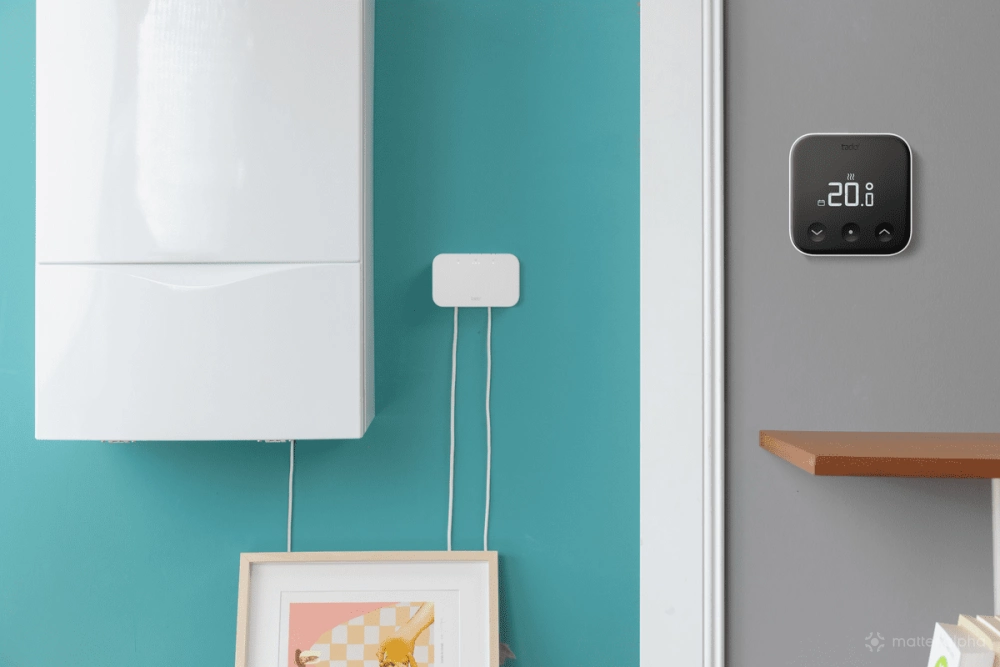
I think it can: Matter smart home gear with energy monitoring can be installed. Heating, too, can be made smart, aiding in energy efficiency. However, this is another area in which confusion can occur. In the UK and EU, a standard called OpenTherm is used by thermostats to communicate with boilers. Various Matter thermostats have interoperability with OpenTherm devices, such as the Tado X range.
So, if you’re planning to add smart heating solutions to your home, it is vital to ensure you have something compatible with your boiler. (In the US, standard Wi-Fi is used to remotely control boilers.)
Smart energy efficiency
The Matter 1.5 update introduced new energy management features, including support for smart plugs and appliances that can sync with off-peak tariffs and solar storage systems.
Meanwhile, underfloor heating can also be managed using Matter-compatible thermostats and HVAC systems, further helping to reduce energy use. Integration with presence sensors, weather monitoring, and timer programs in your preferred Matter app can add a noticeable long-term reduction in heating bills.
So, can you build a Matter smart home in the UK? Yes!

Integrating smart home technology with your home is an improvement, and as with any home improvement, it is important to spend the necessary time researching everything. Integrated Matter smart home devices like smart light switches and HVAC controllers can potentially add value to the property too – assuming buyers are looking for energy efficiency.
Cross-platform control and multi-admin make it possible to see a TP-Link Tapo smart plug in your Samsung SmartThings app at the same time as it appears in your partner’s Apple Home app. Interoperability isn’t limited to the United States – it is built into Matter, and simply works.
Matter Alpha contributor James Bruce has been integrating smart technology into his home (above) for years, much of which is supported by Matter. My own smart home solution is pretty modest, growing as and when the budget allows. But the point is, it is developing, with lamps and switches and sensors slowly unifying via Matter, accessibly through a phone (or TV, as I rely mainly on Samsung SmartThings), to create a smart home,
In short, if you have a Matter controller, and Matter smart home gear, you can build a Matter smart home anywhere you have a Wi-Fi router. Just be sure to select Matter devices compatible with your regional electrical and heating requirements.