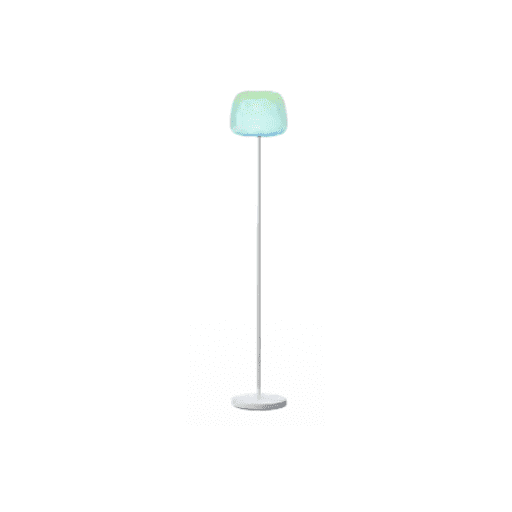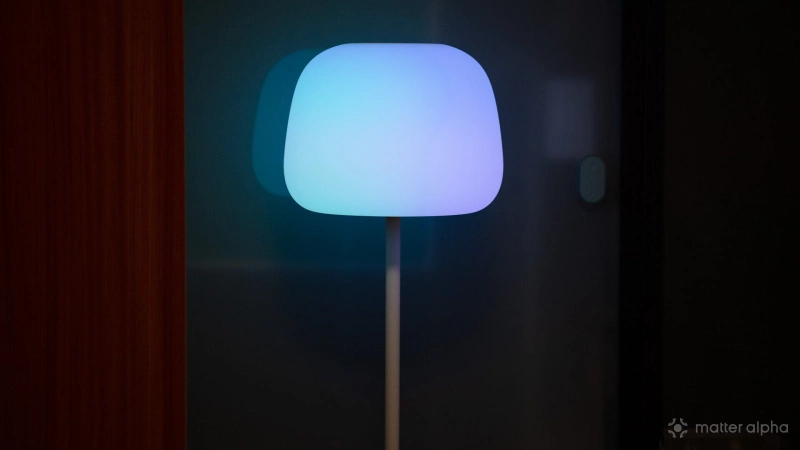
I thought I would be completely bored with regular Govee lamps by now, at least until the new Lantern Floor Lamp came out. For years, the smart lighting market has been dominated by flashy, loudly LED strips and gaming-focused panels. However, this new lamp really reminds me of the iconic design style of IKEA. It is incredibly sleek, beautifully minimal, and exceptionally warm. It is the kind of mature design that actually fits well into a modern home without screaming that it is a piece of tech.
And the lamp, to be honest, has surprised me in many ways during my testing period. From its physical construction to its deep smart home integration, it brings a lot to the table for its price point. Here is my take on this new Govee Lantern Floor Lamp.
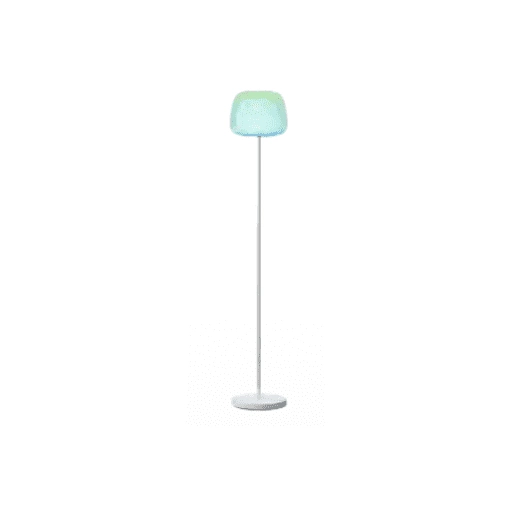
Govee Lantern Floor Lamp
TL; DR
Fors
-
Incredibly easy, tool-free assembly
-
Smooth onboarding process across multiple ecosystems
-
Stable and responsive connectivity via Matter
-
Rich feature set within the official Govee app
-
High brightness and wide color temperature range
-
Gentle, diffused color vibe through the silicone case
Againsts
-
Slow vendor app compared to native Matter connectivity
-
Dated Matter 1.3 and Wi-Fi 4 standards
-
The silicone shade may collect dust
Light up your room in minutes
Just like a regular Govee lamp, it features a highly simplified design intended to help you assemble it as quickly as possible. Absolutely no screws or tools are needed to put the structural pieces together. Basically, there are just three metal pillars and an internal power wire to connect. The threading is smooth, and the physical assembly process just took me a few minutes from opening the box to plugging it into the wall.
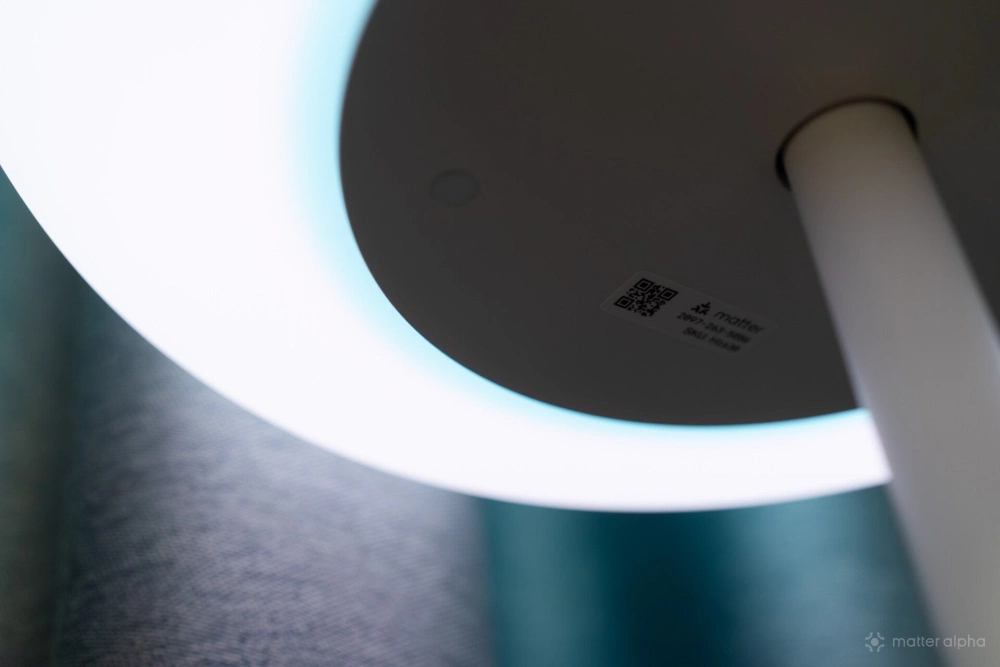
Once the hardware was standing up, I immediately tried to set it up via Apple Home and the official Govee app. All the setup avenues are just as smooth as what I expect most from a premium smart home gadget today. The Govee app discovers the device via your local network and Bluetooth incredibly fast, and it did not take any extra sweat to link the hardware with my user account.
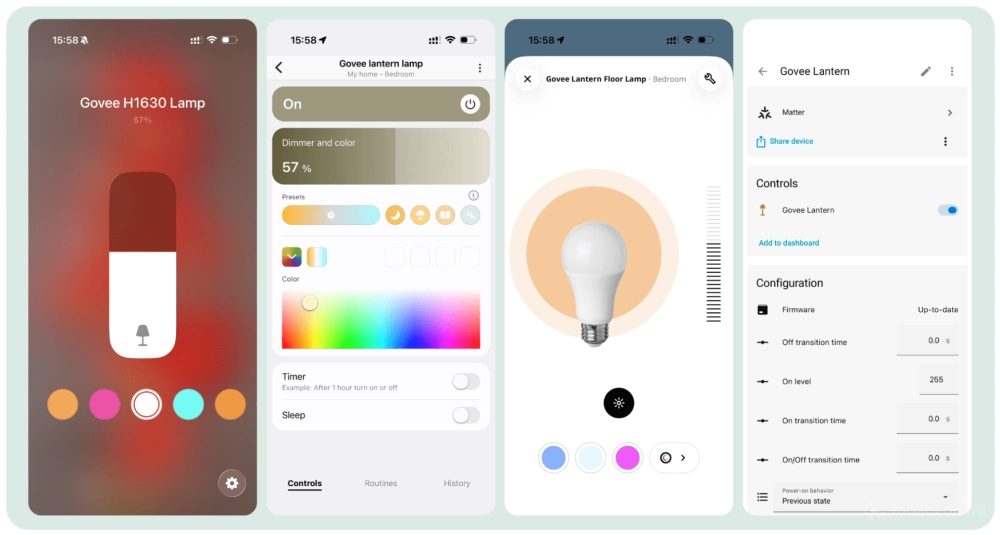
As part of my regular testing routine, I also initiated a secondary share of the device to Home Assistant, as well as to Samsung SmartThings. This multi-admin sharing process is pleasantly smooth. Most of the onboarding attempts usually succeed within the first two tries, allowing the lamp to communicate across entirely different smart home ecosystems simultaneously without dropping its connection.
A lamp that makes me feel at home
The lamp features a tall and thin stand. This slim profile makes the base structure far less visible in a regular home setting, letting the illuminated top section shine and fill a corner of your room with ambient light.
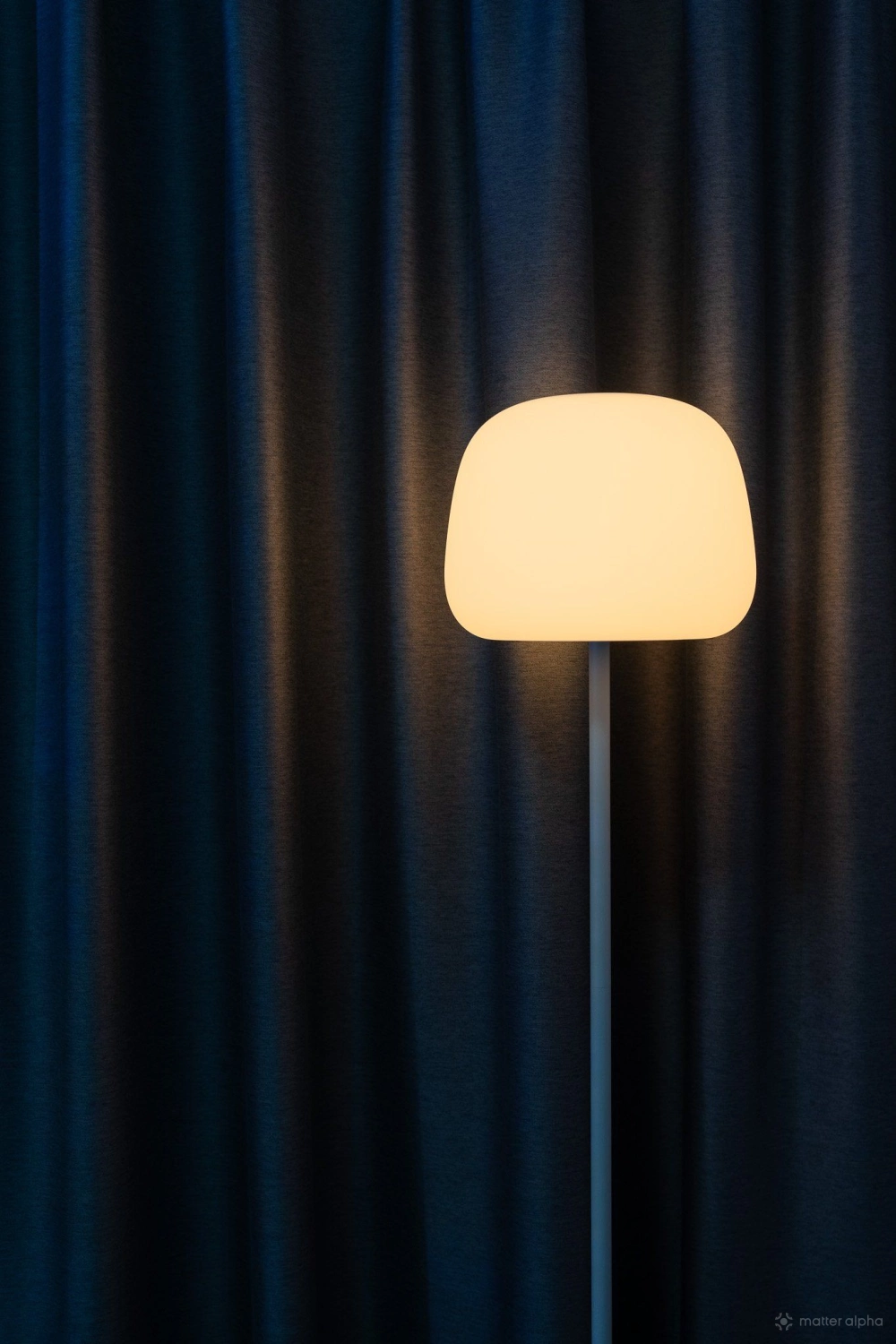
The top case is made of a soft silicone, which is a surprise out of the box because it looks pretty much like a traditional matte glass lamp from a distance. According to Govee, this specific shade material is both anti-yellowing and UV-treated. This treatment is crucial for ensuring the white silicone does not degrade or discolor over years of exposure to natural sunlight in your living room. It glows and diffuses light in a very gentle way, allowing the internal LEDs to project patterns and dynamic effects that are fully customizable via the Govee app.
While the diffusion is excellent, there is a small downside to the silicone case material. It can be a dust collector, especially when your room environment is too dry and static electricity builds up. Or you may have furry pets at home. You will likely find yourself wiping down the shade much more frequently than you would with a standard glass or fabric fixture.
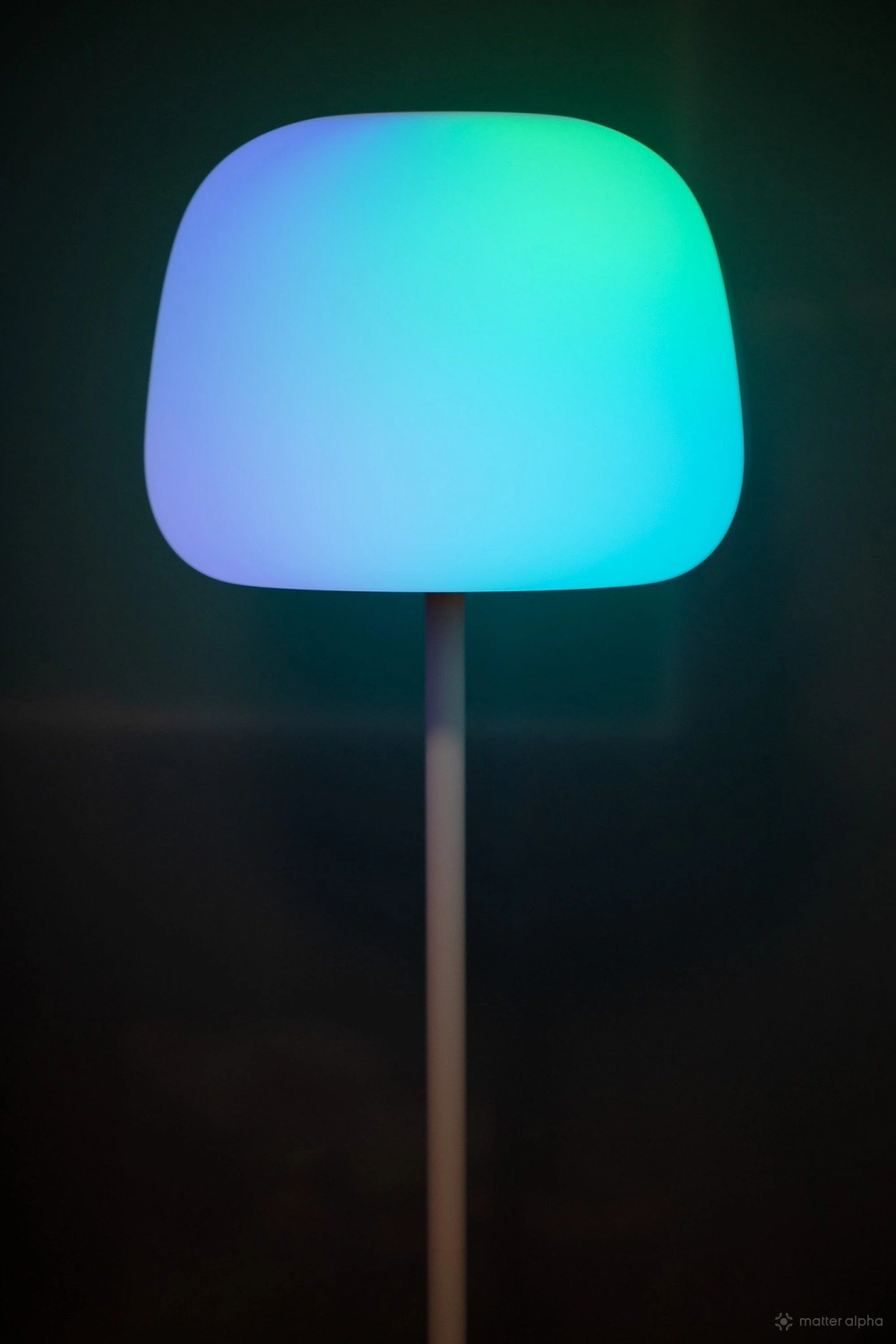
When it comes to raw illumination, the lamp pushes an impressive max brightness of 1,400 lumens at a 6,500K color temperature. It also features a massive color temperature range, sweeping from a super warm 1,000K all the way up to a crisp, daylight-mimicking 10,000K.
And the color transitions are pretty smooth. Whether you are shifting from a warm white to a deep blue, or running a complex animated scene, the lights blend perfectly without any noticeable stepping or harsh color banding.
Advanced Daylight Sync and AI features
There is an advanced daylight sync feature available with the lamp. I thought at first it was just a regular adaptive lighting setup with a fixed algorithmic curve to let the lamp appear similar to the sun, transitioning from warm to cool throughout the day. But Govee makes further tuning possible. The software allows for full customization, along with a highly flexible schedule, so you can really tune the light to fit the exact home space you need. I tried out some of the built-in presets, and it works basically as a set-and-forget option, leaving my motion sensors and smart home scenes to trigger its on and off states.
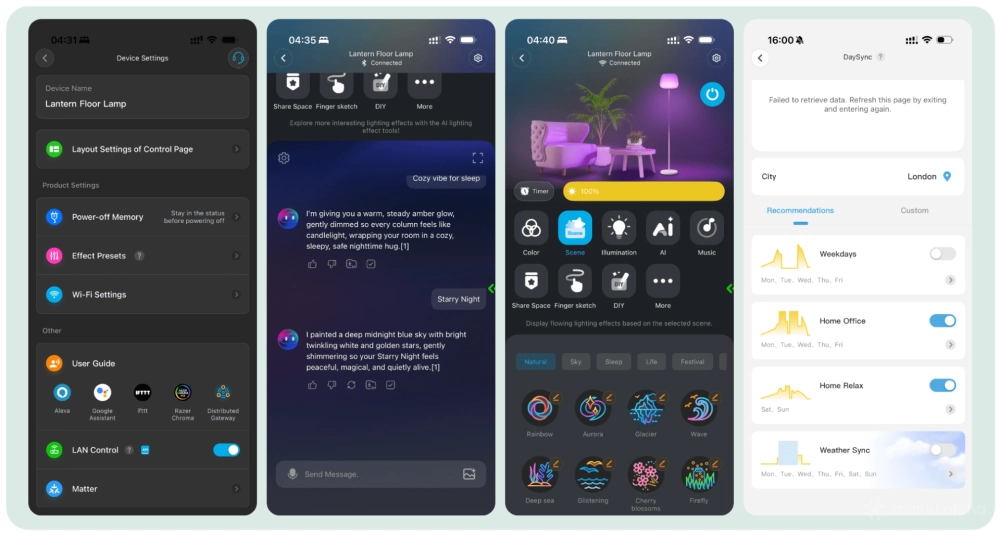
I also tried out its AI-generation tool for light effects. A quick line of text to describe the mood or scene you want is enough to create a gorgeous, multicolored glow. I usually use it when I notice I need an extra specific vibe from the lamp, as its regular day sync schedule can meet my daily needs well.
Stable performance
Besides its incredibly smooth Matter onboarding, the day-to-day performance is also very good. I barely see a connection drop or a failed control command via the Matter platforms I tested, which included Apple Home, Home Assistant, and SmartThings. And that is already saying a lot for a regular Matter piece that usually fails or struggles on a heavy local network. If you are using platforms with extensive local support like Home Assistant, you can natively configure its default power-on state. You can also carefully tune its on and off transition times for a much smoother, theatrical experience.
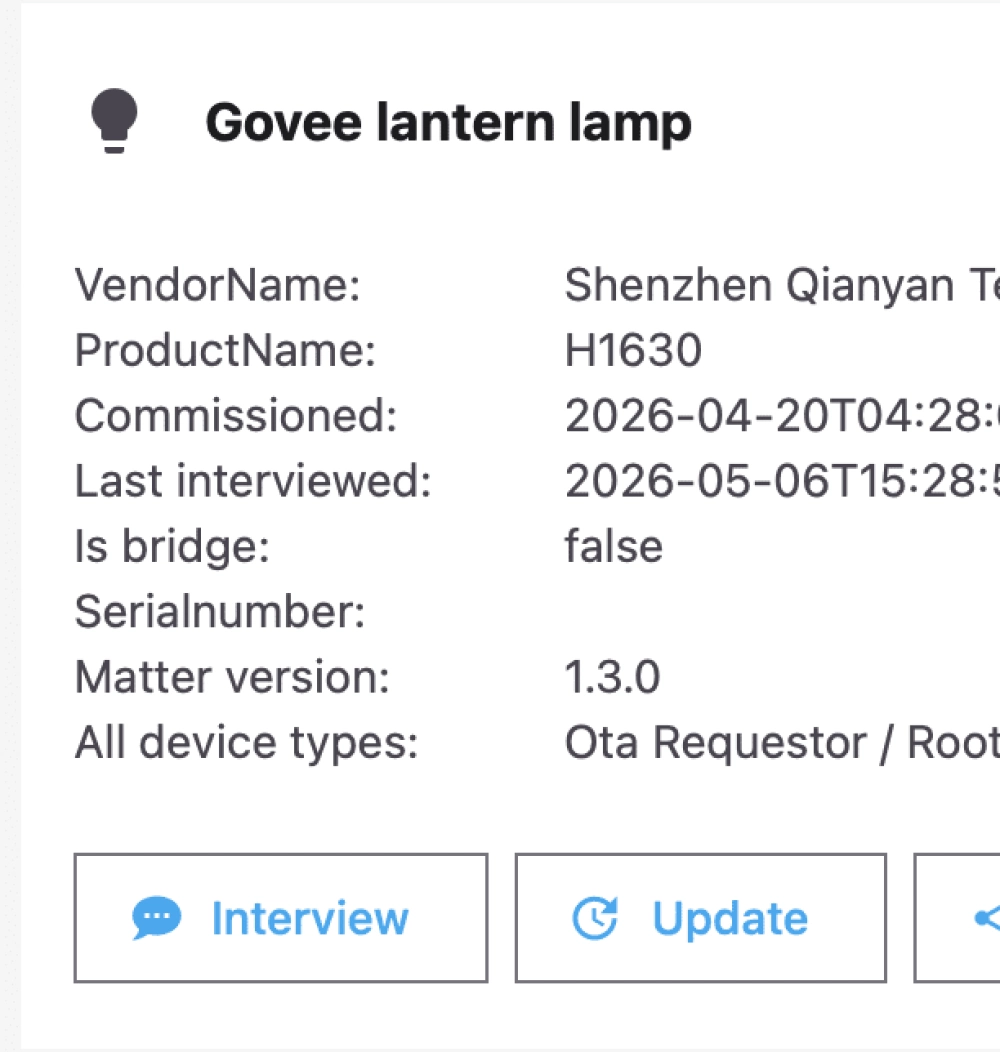
However, the reliable local control won’t cover the fact that the hardware is still using dated Wi-Fi 4 networking standard along with the older Matter 1.3 specification. This older 2.4GHz radio can be less stable in certain edge cases and heavily crowded Wi-Fi conditions. Another setback indirectly caused by this engineering choice is that the lamp does not currently support Apple’s native Adaptive Lighting feature, which requires a minimal of Matter version 1.4 to function.
In comparison to the instant local Matter commands, the official Govee app loads significantly slower. It can take up to 10 seconds to fully load the controls of the lamp. This delay is a major discouragement for me to open it up, unlike platforms that run more locally like IKEA Home smart and Homey.
Final verdict
The Govee Lantern Floor Lamp is an impressive addition to any smart home, beautifully blending a sleek, minimal aesthetic with a brilliant performance. While it relies on slightly older connectivity standards like Wi-Fi 4 and Matter 1.3, its local reliability and the incredibly rich feature set within the Govee app make it a standout choice for those looking to add a warm vibe to their living space.
On the positive side, you get an easy tool-free assembly process, responsive Matter connectivity, and exceptional brightness for the size. The main trade-offs are the dust-prone silicone shade and the lack of native Apple Adaptive Lighting support due to the Matter spec version.
Priced at $129.99, it offers fantastic value for a premium smart lamp. It will be available starting May 7, 2026, on Amazon and the official Govee website.
(Image: Matter Alpha/Ward Zhou)