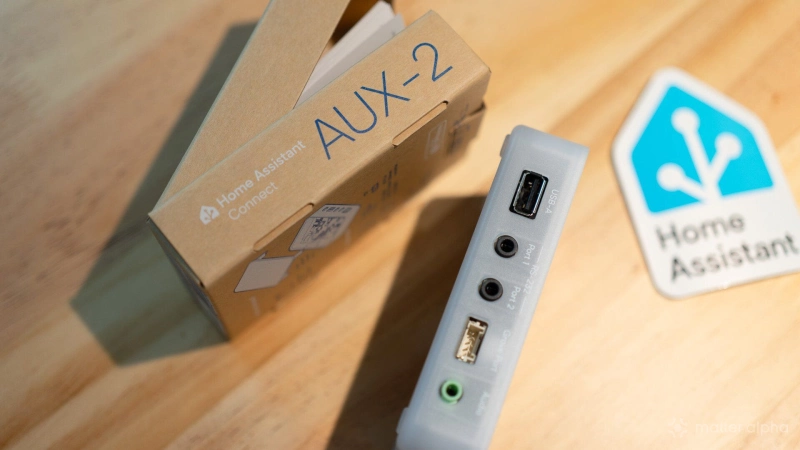
Nabu Casa just released a new Home Assistant official hardware, Home Assistant Connect AUX-2. It is an audio streamer built around Sendspin, with Power over Ethernet, flexible audio output and room for hardware expansion. It brings the open audio project closer to a conventional consumer product without closing the door on ESPHome customization.
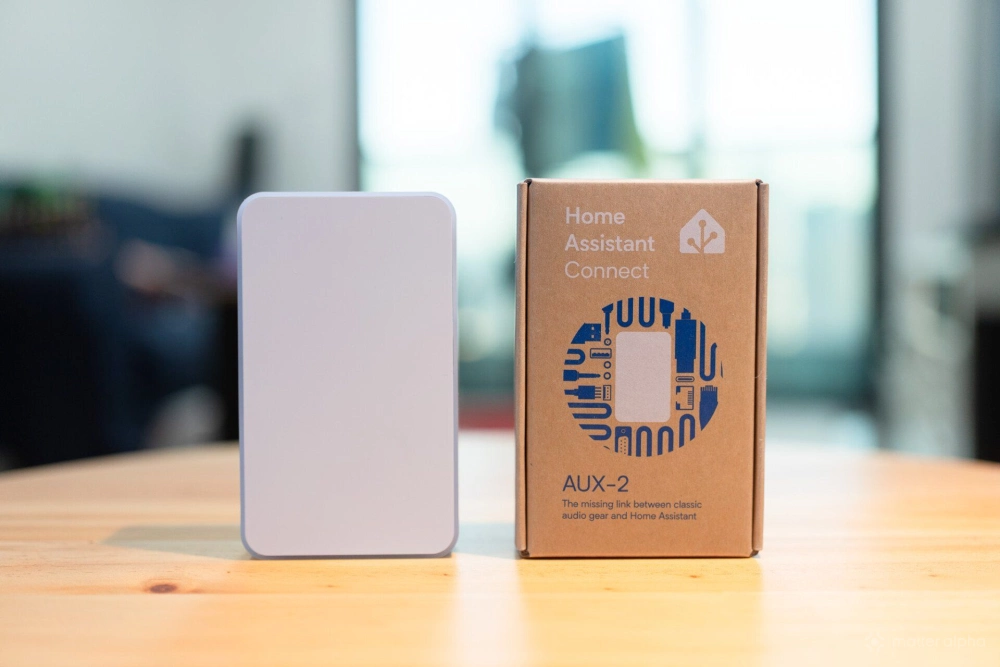
The idea is straightforward: connect an existing speaker or amplifier to Home Assistant and stream music through Music Assistant. Compared with compact community-oriented alternatives, such as Apollo Automation’s Cast-1, the AUX-2 aims to cover more setups, including digital audio systems and projects that need additional USB or Grove hardware.
With weeks of using the device, here are my takes.
Design and connectivity
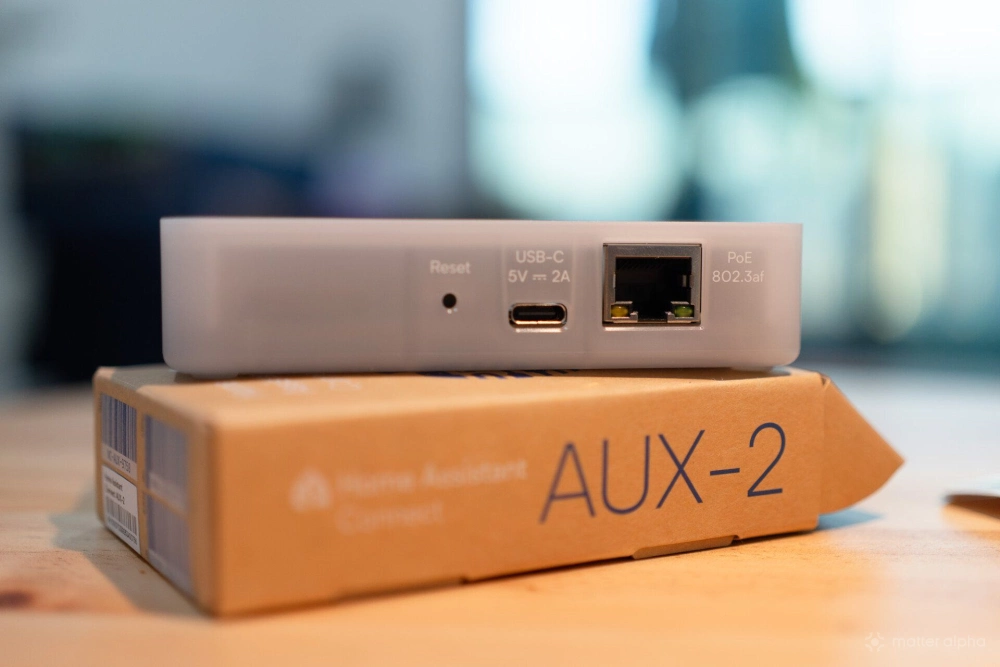
The Connect AUX-2 looks like a finished piece of consumer gadgets rather than an exposed dev board. Similar to previous products from Nabu Casa, the new AUX-2 features a sleek design, although the arrangement of connectors on both sides makes cable management difficult. Depending on where it sits, wires may need to run in opposite directions. It is a pity to see this compromise rather than pushing the concept further to make it a better decorative piece for the home like Home Assistant Green and Connect ZBT-2.
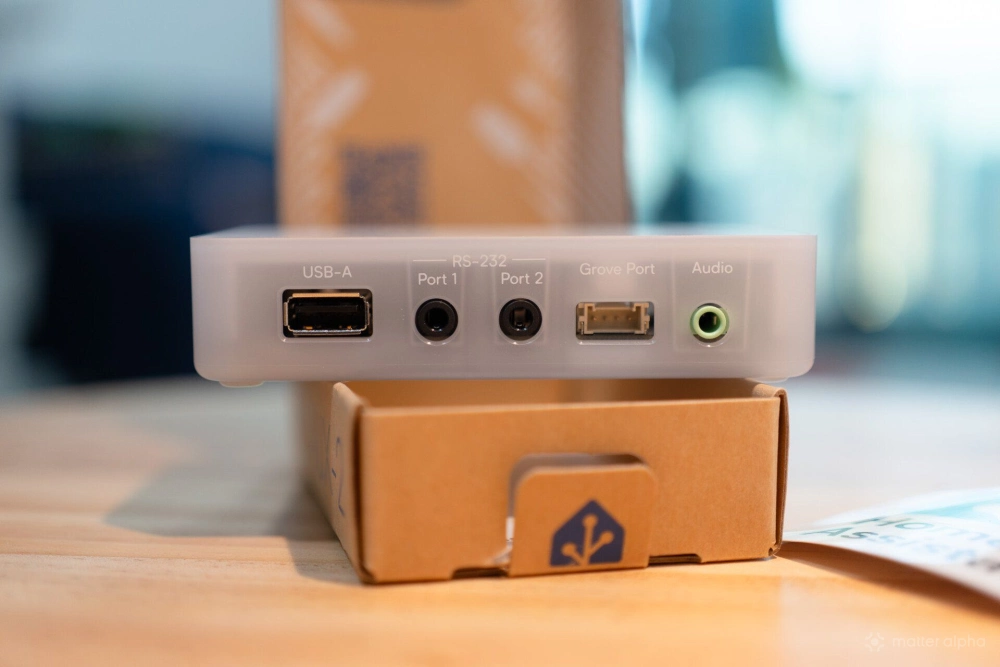
One of its most attractive features is the combined analog and digital audio output. Both connections share the same physical 3.5 mm jack, so switching formats only requires a different cable. In my test with a new IKEA SOLSKYDD speaker (45 cm), the digital connection was my preferred option. It offers better audio quality and avoids the noise caused by loose connectors or a poor ground connection.
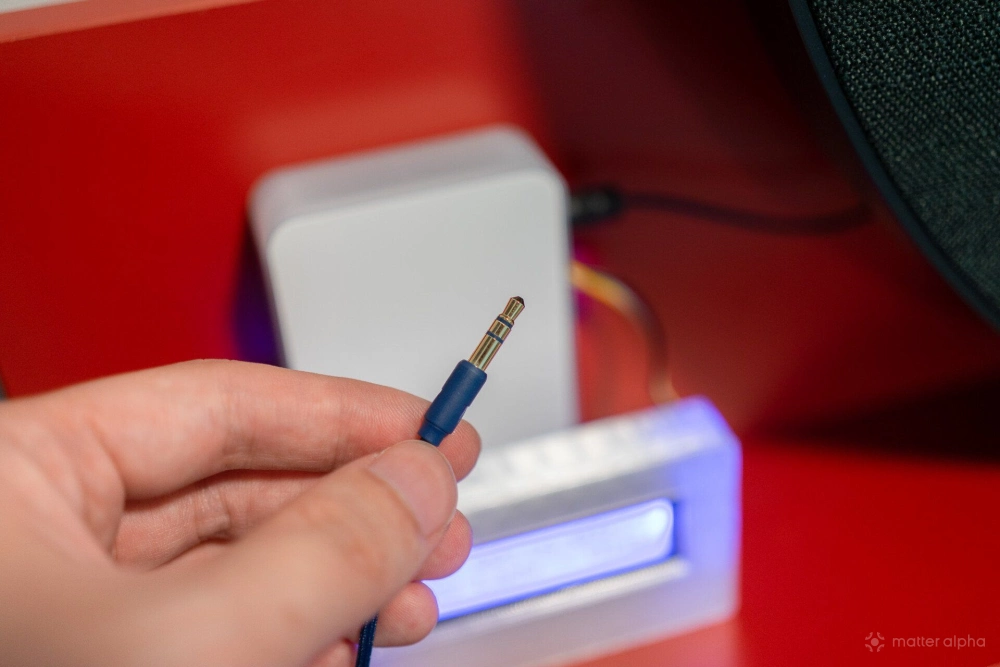
Setup was much the same either way, and the AUX-2 handled output switching automatically. More importantly, digital output makes the streamer relevant to users with dedicated amplifiers and more capable home audio systems.
Ethernet and PoE are also key additions. A single network cable simplifies installation and avoids relying on Wi-Fi for continuous audio streaming, making it much easier for advanced users to deploy the device alongside ceiling speakers or other fixtures.
There are also serial ports, USB, and Grove expansion options, which make the AUX-2 more than a single-purpose receiver.
Setup: simple first, advanced later
With a PoE connection, the AUX-2 was detected by Home Assistant almost immediately. Home Assistant prompted me to add it, and the process took around half a minute in my test to go through the configuration. Wi-Fi setup was also approachable using a smartphone and the Home Assistant companion app with extra clicks.
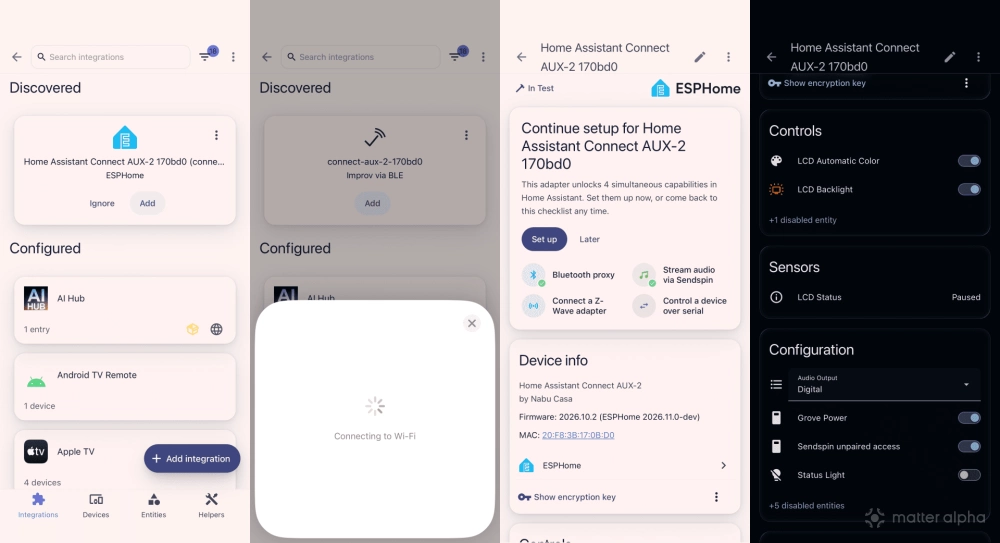
For normal use, I did not need to touch the ESPHome Builder. Home Assistant handled device management and firmware updates, much like it does for other integrated smart home products. That is a meaningful difference from projects where users must flash and maintain firmware themselves.
The second tier is for people who want to go further. Changing the audio codec, adding voice-related functions or connecting a custom display takes additional ESPHome configuration. The AUX-2 does not require that work to be useful, but it leaves the option available.
Ethernet makes a difference
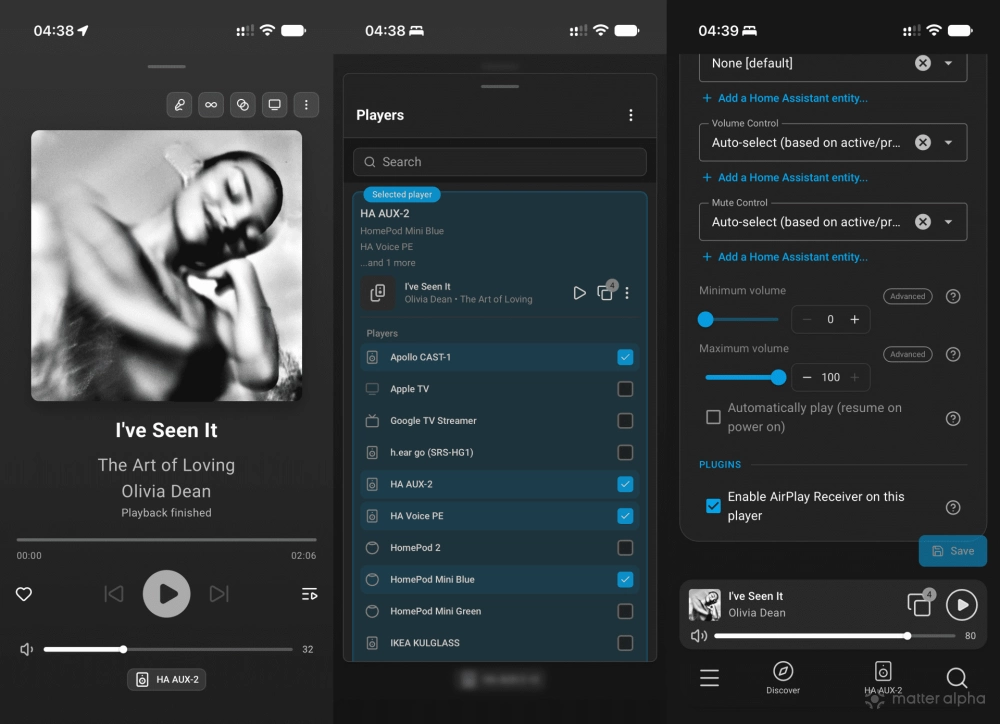
The streaming experience in Music Assistant still reflects the maturity of Sendspin and the limitations of the ESP32-S3 platform. Initial playback usually took longer than I expected. Grouping and ungrouping speakers could also feel less responsive than established systems such as AirPlay. But the audio quality is solid.
Once a group had been playing for a while, however, the experience settled down. In my setup, the Sendspin speakers maintained close synchronization across the group, and I did not notice meaningful drift during continued playback.
Ethernet was noticeably more reliable than Wi-Fi in my crowded wireless environment, particularly when streaming FLAC audio. And ESP32-S3’s dated Wi-Fi standard makes a larger gap. To be frank, it is a pity the product can not catch the batch shipment of ESP32-S31, which is more powerful and offers huge upgrade in Wi-Fi.
For Wi-Fi use, switching to the more bandwidth-efficient Opus codec through ESPHome configuration made a great improvement. It does not eliminate every possible wireless issue, but it is a worthwhile adjustment when a wired connection is unavailable. You can add this code to your ESPHome Builder configuration to enable the patented codec for personal use only.
media_source:
- id: !remove sendspin_source
- platform: sendspin
id: sendspin_source
task_stack_in_psram: true
static_delay_adjustable: true
codecs: [OPUS, FLAC, PCM]
Room for useful expansion
The extra connectors are not all equally important to everyone. For daily listening, the audio output options matter most. But things are different for tinkers.
The USB connection has a practical smart home role: it could let users place a compatible Zigbee and Z-Wave coordinator closer to their devices instead of leaving it beside a Home Assistant server in a basement or equipment rack. The ZHA experience is still experimental, and I am waiting for the possibility of OTBR along with the ZBT series.
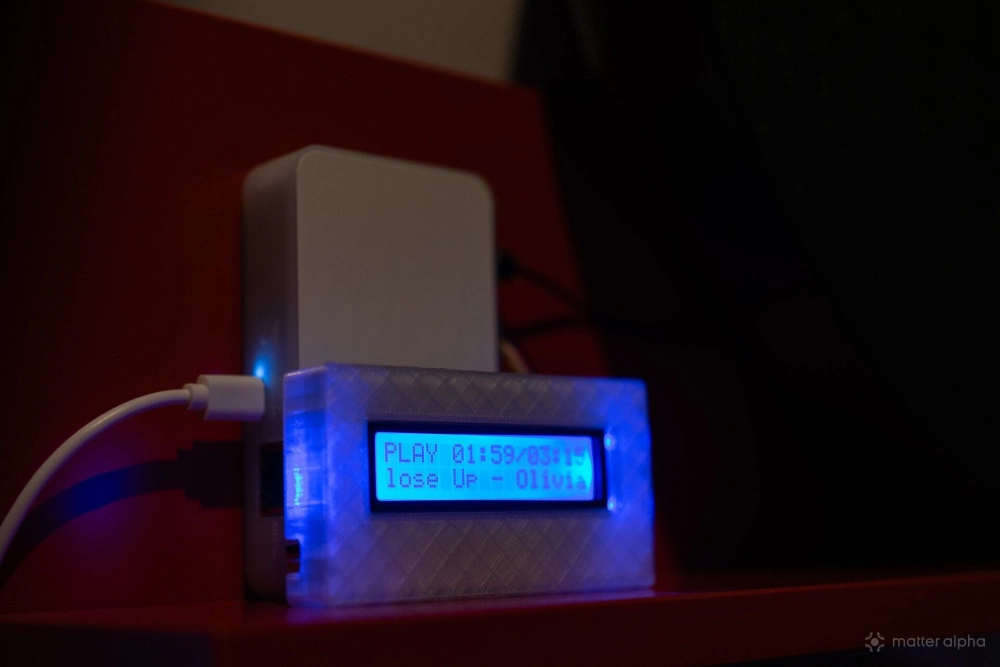
The device also includes a Grove port for connecting hundreds of Seeed Studio accessories, such as sensors and displays. Using a custom ESPHome configuration, I connected a Grove RGB LCD display to show the current song title, album, and playback progress. While not essential, it demonstrates how easily the hardware can fit into a personalized music setup with extra work.
You can find the ESPHome codes and printed case on GitHub and MakerWorld. Cases printed with Bambu PETG Translucent and PC filaments both match the display and AUX-2 design. And use beta channel for firmware builds which offers better experience at the moment for Sendspin.
Serial control is also available through the tiny box. There are some integrations to control devices like LG and Samsung TVs. But sadly I don’t have any of the listed products while I tested the device.
Pricing and alternatives
Priced at $69 (59 euros), the AUX-2 sits in a range where you will want to weigh which features they actually need. If Sendspin inputs for a CD player or turntable matter more than PoE, the Apollo Automation CAST-1 Pro could be a better option at the same price.
For a basic Sendspin player setup with voice control, the Home Assistant Voice Preview Edition is slightly cheaper at $59. If you only need basic audio streaming, you can look at the base Apollo Automation CAST-1 at $35, while the Seeed Studio reSpeaker Lite offers another budget choice at $30 with an ESP32-S3 included.
The AUX-2 is probably the most ambitious piece from Nabu Casa. The appeal of the AUX-2 goes beyond a simple price-to-parts comparison, though. It combines straightforward onboarding, Home Assistant-managed updates, PoE, digital audio output and expansion connectors in one device. And the team makes its core features easy to use for average users.
Home Assistant Connect AUX-2 is now available worldwide. As a final note, buying an official product also helps support the broader open-source ecosystem around Home Assistant, ESPHome, Music Assistant, and Sendspin, as part of the profits goes to the Open Home Foundation.
(Image: Matter Alpha/Ward Zhou)