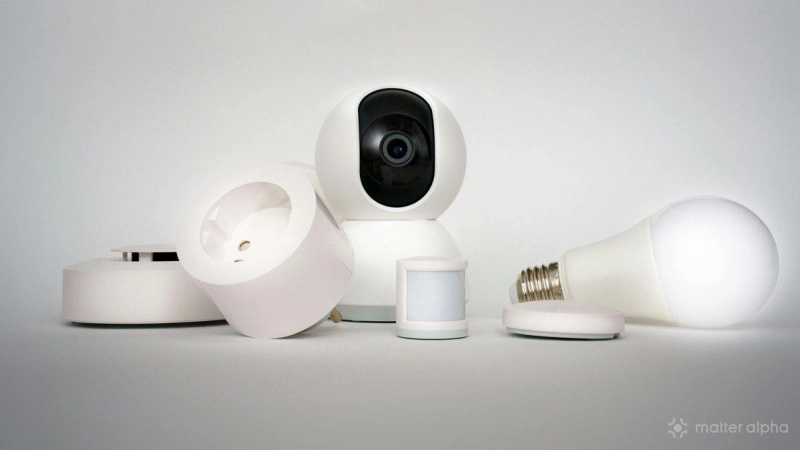
When Matter was first announced as a new smart home standard, it was largely ignored, and filed in the “not another one” section.
But things have changed.
While the platform for a fully interconnected smart home still has some way to go before we can enjoy full integrations and scenes, it is now at a point where we can see the direction of travel, and add devices that were barely considered when Matter was launched in 2022.
Each Matter specification so far
Launched by the Connectivity Standards Alliance (CSA), Matter 1.0 was billed as the "unification" of the smart home.
Backed by over 280 companies (including Apple, Google, Amazon, and Samsung) it was designed to run over Ethernet, Wi-Fi, and Thread, using Bluetooth LE for the initial setup (commissioning).
Following its first release in October 2022, a revision was scheduled for May the following year, which established the usual Spring/Fall update cycle (with the exceptoin of August 2025). Matter 1.1 focused on making it easier for developers to get their products certified and ensuring that devices—especially those that go into "sleep mode"—stayed connected.
Here’s the full release schedule as of May 2026:
-
Matter 1.0, October 4, 2022
-
Matter 1.1, May 2023
-
Matter 1.2, October 2023
-
Matter 1.3, May 2024
-
Matter 1.4, November 2024
-
Matter 1.4.1, May 2025
-
Matter 1.4.2, August 2025
-
Matter 1.5, November 2025
-
Matter 1.5.1, March 2025
It wasn’t until the roll-out of Matter 1.3 (May 2024 onward) that the platform began to build momentum as a legitimate smart home solution.
Keep reading to learn more about what device categories are supported with each iteration of Matter.
Matter 1.0
Matter launched with support for these device categories:
-
Lighting and electrical: Bulbs, switches, and smart plugs.
-
HVAC controls: Thermostats and heating/cooling controllers.
-
Closures: Window coverings and shades.
-
Safety and security: Basic sensors (motion, contact, door/window) and smart door locks.
-
Media devices: Televisions and streaming video players.
-
Bridges: Hardware that allows older smart home kit using Zigbee and Z-Wave protocols to "talk" to Matter.
Other devices categories would be added to the specification with subsequent releases.
Matter 1.1
This was a minor revision in terms of device support, which aimed to improve the experience for both manufacturers and users.
-
Intermittently Connected Devices (ICDs): Improvement to how smaller battery-powered devices like sensors communicate with the smart home network.
-
Developer-friendly testing: The CSA improved its processes for testing and certification.
-
Protocol cleanup: This aimed to ensure that different brands (such as a Nest hub and an Eve sensor) played more nicely together.
Matter 1.2
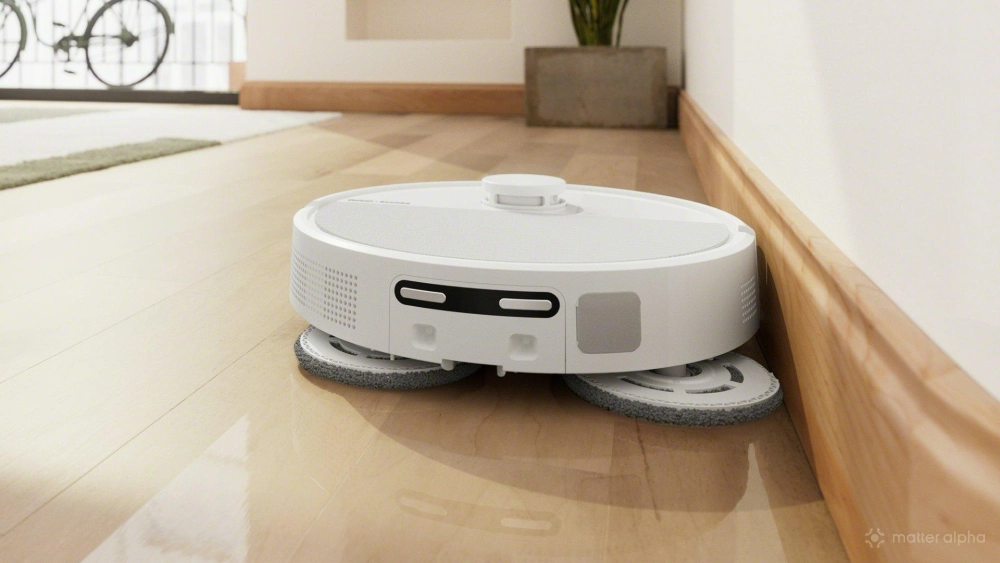
A year after its release, Matter received its second revision, expanding support to a collection of large household appliances.
-
New device categories: Matter 1.2 added support for refrigerators (including deep freezers and wine fridges), room air conditioners, dishwashers, laundry washers, and robotic vacuum cleaners control.
-
Safety and air quality: Smoke and carbon monoxide alarms (with battery and end-of-life notifications), air quality sensors (PM2.5, CO2, VOC, etc.), and air purifiers were added to the specification.
-
Fans: Added as a new standalone certifiable device type, with support for oscillation and airflow direction.
Matter 1.3
Dropping in May 2024, Matter 1.3 revised the specification to pivot toward energy management and deeper kitchen integration.
-
Kitchen expansion: Added support for microwave ovens, standard ovens (with mode and temperature management), and cooktops (also known as “hobs” and in this case focusing on induction-based).
-
Energy and water management: Matter 1.3 added Electric Vehicle Supply Equipment (EVSE) support for optimized charging, and support for water management devices, including leak detectors and rain sensors.
-
Laundry completion: Added laundry dryers to complement the washers introduced in 1.2.
-
Operational improvements: Introduced Scene support, allowing triggers to be stored on the devices themselves, and Command Batching to reduce the out-of-sync "popcorn effect" when controlling multiple lights at once.
Matter 1.4
Released in November 2024, Matter 1.4 was a major update that focused on network infrastructure and support for sophisticated energy ecosystems.
-
Network infrastructure (HRAP): Home Routers and Access Points (HRAP) support allowed routers to act as unified Wi-Fi access points as well as Thread Border Routers.
-
Enhanced Multi-Admin: This aims to improve the "Multi-Admin" feature to streamline how devices are shared across different ecosystems (enabling one device to be accessed on an Apple iPhone, a Google Android table, an Amazon Alexa device, etc.).
-
Advanced energy management: Added support for solar power (inverters and panels), battery energy storage systems (BESS), and heat pumps.
-
Thermostats and sensors: Scheduling and preset modes for thermostats were added, along with advanced sensing (radar, vision, and ambient sensing).
Matter 1.4.1 & 1.4.2
Some minor revisions added in Spring and Summer 2025 aimed to refine the setup experience and network stability.
-
Setup enhancements: Matter 1.4.1 introduced the Enhanced Setup Flow (ESF) for localizing terms and conditions, Multi-device setup QR codes for bulk onboarding, and official NFC setup support.
-
Connectivity: Matter 1.4.2 specifically focused on improving the setup experience for Wi-Fi-only devices and enhancing the base protocol performance.
Matter 1.5
The fall 2025 edition added long-awaited security hardware and camera support to Matter.
-
Camera support: Matter finally gained security cameras, floodlight cameras, video doorbells, and intercoms using WebRTC for two-way audio and video.
-
Smart garden: Soil sensors and irrigation systems were added, allowing for automated watering based on soil moisture and temperature.
-
Closures: Matter reworked how doors, windows, and gates are handled. A "Closure" can now have multiple "panels," accommodating complex movements like swinging skylights.
-
TCP support: Under the hood, full Transmission Control Protocol (TCP) support was added to handle high-bandwidth data such as video streams (as well as firmware updates).
Matter 1.5.1
The most recent minor revision refined the newly added camera features.
-
Multi-stream support: Enhanced camera capabilities include multi-stream support and allow different resolutions or streams to be sent to multiple devices simultaneously.
-
Performance tweaks: These add stability improvements for camera AV settings and streaming management clusters.
What is next for Matter?
Matter 1.6 is scheduled for release at some point in Spring 2026. This is expected to add wider support for video streaming, bringing smart security cameras into the Matter platform. It may also include support for better Wi-Fi connectivity.
This platform continues to grow, and with an increasing number of smart home devices being released with Matter support, it can only continue. While better control of devices certainly needs to be implemented (for example, specific zones or rooms for robot cleaners), the development of Matter is clearly charted above. We can see where it started, where it is, and where it is going – hopefully into your smart home, whether via entertainment systems, lighting, large appliances, or all of the above.
(Photo by Jakub Zerdzicki from Pexels)