Matter’s growth as a smart home protocol has been slow. Since its initial release in late 2022, it has gone through bi-annual iterations, each adding new features.
At this stage, it seems as though Matter is going to live up to its aims of unifying smart home software through a platform-agnostic controller app and smart hub… but it is probably going to take longer than everyone hoped.
But what then? Once we have control of every device from any smart home app via Matter, what can we expect to happen next? What part will Matter play in the smart home of the future, and when can we expect that to start happening?
The short-term: What’s likely next for Matter?
As Matter-compatible hardware is available from more and more retailers, and becomes more significant as a smart home technology, so the need for integrations will increase.
Over the short-term, we can expect more small, iterative steps, as the technology expands to adopt more and more devices, and increases support for the whole gamut of functions. We've already seen adoption of Thread, and the support for Zigbee ensures long-range device support (for example, in gardens). With mmWave sensor support, along with the expected Wi-Fi, many different wireless networking methods and protocols are being unified in purpose under Matter.
But there is a stumbling block: functionality. We're at the stage where real progress means replication of functionality. When a Matter controller app can replace the functionality of the individual apps that ship with devices, from a consumer point of view it will be ready for the next stage.
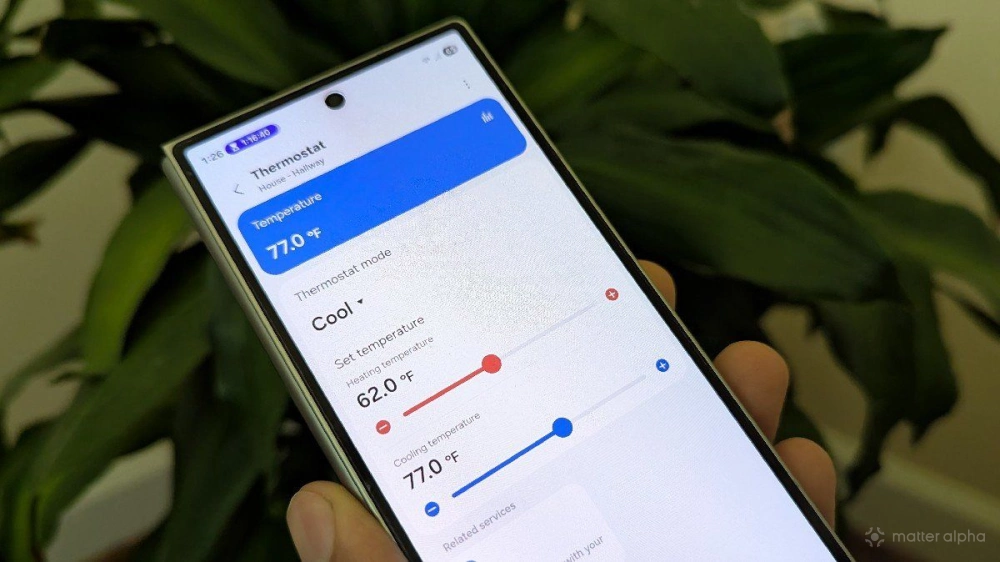
For example, say you use the Samsung SmartThings app on your phone, with the hub built into your TV or standalone, and you use it to control your curtains or blinds. The Matter functionality at the moment is limited compared to what is available in the app that shipped with the motorized system that opens and closes your blinds. You'll probably find that various automations and incremental settings are present in the manufacturer's app that you cannot access via Matter. For the smart home technology to progress, these functions need to be the same in the manufacturer's app and your preferred smart home app.
Think of it as using your smart home app (whether SmartThings, or Google Home, or Apple Home, whatever) as a universal remote. That is replication of functionality -- but at the current rate of development, and without the full commitment of manufacturers, it could be a few years into the future before this is available.
The next 5–10 years: Matter in the mid-future
Already we can create “scenes” that enable thermostats to switch on radiators based on the responses from presence sensors. This is really just a starting point, however, and a good primer for what might come in the future.
What has been described as “hyper-personalized” automation has been mooted for the future of Matter. This is a scenario, enhanced by artificial intelligence, where your smart home setup learns your daily routines, and offers suggestions (or even makes decisions for you) such as adjusting your thermostat ahead of your arrival at home. Or preheating your oven so you can expect it ready to cook your meal as you walk through the door.
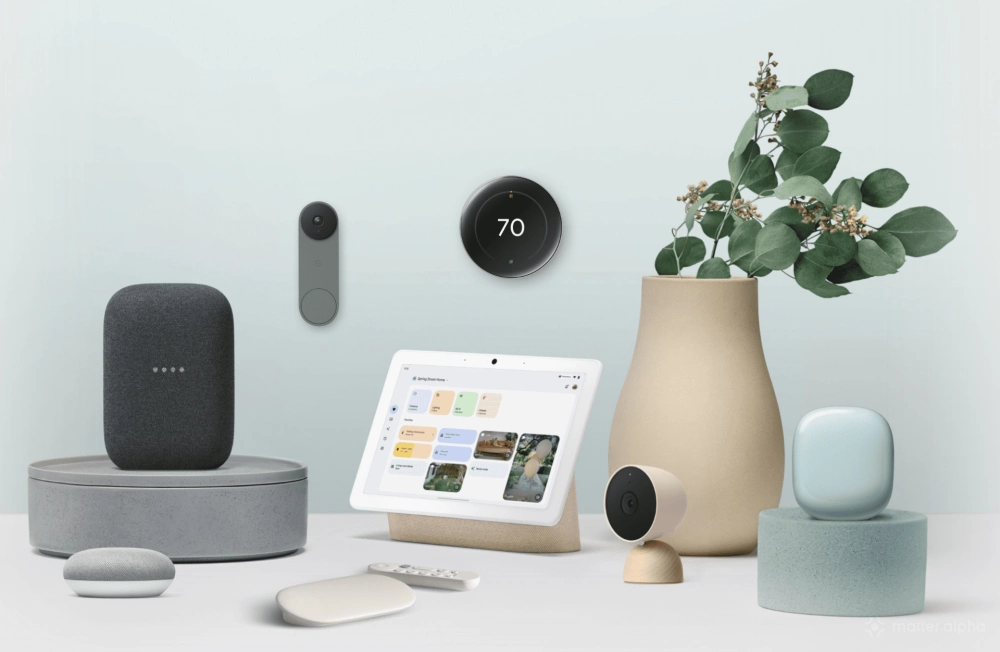
In tandem with these energy-intensive tasks is adaptive energy management. The Matter-based smart home should be equipped to communicate with smart thermostats in every room and optimize consumption based on room occupancy, usage, and of course weather conditions.
The future of the Matter smart home could also offer predictive maintenance suggestions, not just for devices but for your home’s exterior and infrastructure.
Longterm: An Internet of Everything
Support for an increasing number of devices being online and able to communicate effectively, is likely to offer a future that is usually seen in sci-fi novels and movies.
So, we could be moving into an era where smart homes are populated not just by robot and smart “white” goods, but also more niche devices that fulfill specific needs. One of the first DIY smart home projects I ever worked on was a smart pet feeder, and this is a key example of a specialist piece of technology that can be enhanced with Matter. Adjusting portion sizes based on the pet’s activity level (perhaps relying a heart monitor on the animal) makes sense, as does further adjustment based on the time passed since its last meal.
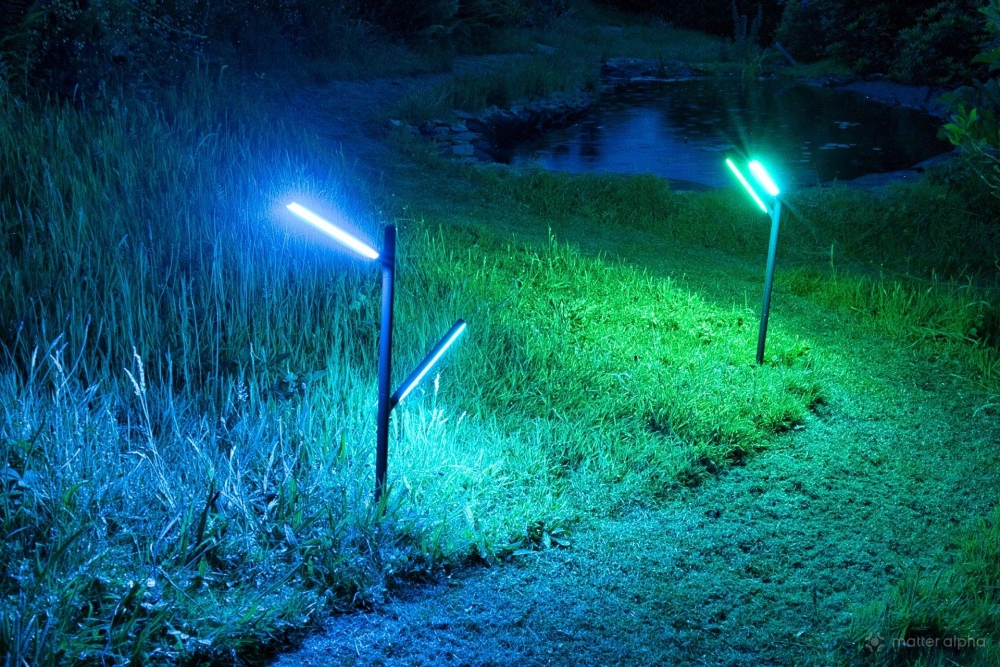
Similarly, you could be looking at smart garden systems, which are able to optimize growth based on AI insights about current and future weather conditions. So, your automated irrigation system is able to efficiently water plants, while motorized air inlets or window controllers manage greenhouse humidity. Meanwhile, your robot lawnmower is cutting grass, and depositing the waste into a composter.
One of the most attractive features of Matter is its aim to minimize landfill by helping to keep smart home tech functional and relevant for as long as possible. We already see retrofitting as an element of Matter tech, and one day this might be extended into our current tech. So, in the next 5–10 years, your smart TV might be blessed with voice control via a Matter-enabled smart speaker.
These unforeseen synergies seem likely to be at the forefront of the smart home revolution as Matter finds its place.
Reality check: Development cycles vs. security
This all sounds pretty good so far, but it is important to remain grounded. While these are fine aims and aspirations, a lot of work has to be done to ensure all these dreams of integrations and automations, assisted by a helpful home-focused AI, can succeed.
But the importance of IoT – particularly in the workplace and industry – means that while smart, connected devices can work together in new and interesting ways, there has to be greater focus on security. Each potential benefit brings with it new complications, and new challenges to overcome.
Ahead of that, there is still considerable ground to cover. Matter still has to be able to provide each smart home platform app with the tools they need to replicate the proprietary apps that ship with smart home devices. Until that happens, Matter’s long-term future most wait.
One way or another, piece by piece, the smart home of our dreams is becoming a reality.