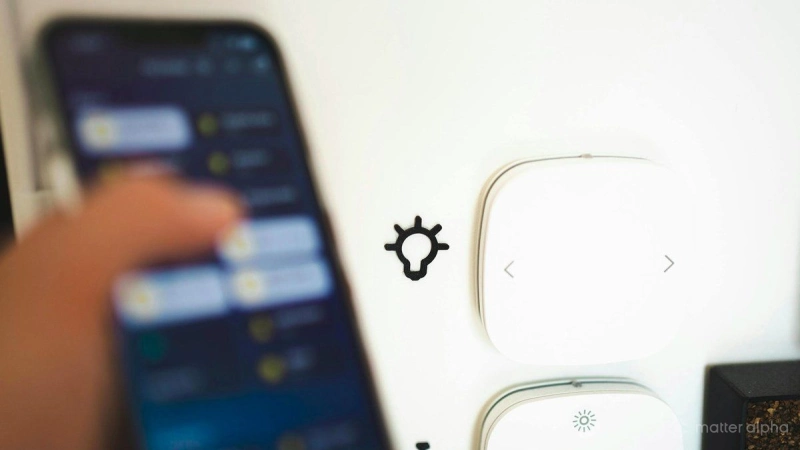
Robot vacuum cleaners with Matter support are notorious for having varying levels of control and operability. They handle some basic automations, but nothing complicated. This shouldn’t be a huge surprise… we can accept a level of disparity across manufacturers as the relatively nascent smart home platform gathers momentum and features.
But what if Matter features are already present on a device that supports Matter, but doesn’t share those features?
That’s a recipe for disappointment, disillusionment, and potentially a disaster for the public perception of the smart home.
The EIGHTTREE Matter Smart Plug with Energy Monitoring
I’ve learned over the past few weeks that this is an area of growing concern among smart home enthusiasts. In a world where I can tell a light to switch off when I leave the house, or control the temperature based on my presence, apparently I cannot see energy monitoring details from a plug with energy monitoring.
Smart plugs are one of the easy pathways into Matter. They’re affordable smart home devices with a simple purpose that everyone can appreciate. Like smart bulbs, they’re affordable, and can help you to make dumb devices seem smart.
A few months ago bought the EIGHTTREE Matter Smart Plug with Energy Monitoring from Amazon. It’s listed as supporting Matter, and I can control it from both IKEA Home and Samsung SmartThings. Adding it was easy, too. In fact, everything was grand until I decided to use it to monitor the energy use of my air fryer.
(I should add that using a smart plug for an air fryer isn't necessarily a clever thing to do, but I had no intention of leaving it connected; besides, the air fryer cannot be set to start when it powers on.)
Get the naming right
The name of the device gives away the fact that it monitors energy. In fact, “Matter Smart Plug with Energy Monitoring” led me to believe that the energy monitoring was Matter-compatible. After all, this is a specification that has been accessible for some time with Matter smart plugs.
But closer inspection (after trying and failing to find any energy monitoring information in my preferred Matter app) revealed this bullet point in the Amazon listing:
“Track your real-time and historical energy usage only accessible through the Smart Life app. Optimize usage to save on energy bills and support sustainability.”
(Emphasis mine.)
So, a “Matter Smart Plug with Energy Monitoring” doesn’t do energy monitoring on Matter. The proximity of “Matter” and “Energy Monitoring” and the use of “with” clearly misled me. As, I suspect, it has misled many others. I have, in effect, been miss-sold a piece of electronics hardware.
The question is, how many other people have been similarly attracted by a specific feature only to find it isn’t there – and what might the impact be on the public perception of Matter smart home hardware? That's potentially a big deal, one that I think needs to be dealt with at the Matter testing and certification stage.
The limits of Matter in 2026
What we want from Matter is interoperability. Three years after the standard was launched, Matter is… still “getting there.” Even though a detailed specification exists for manufacturers to build towards, devices often fall short. New Matter devices should be easy to set up, smart home gear should communicate, and the software – firmware on smart home devices, apps on mobile – should simply work.
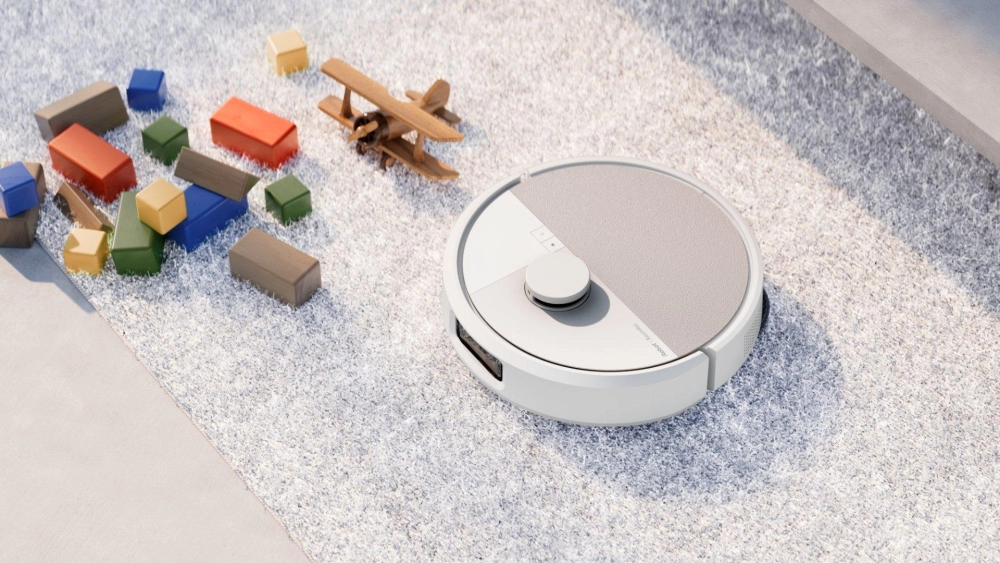
But despite promising moves over the past 18 months, we’re still hitting walls with devices like Matter robovacs and energy monitoring. With Matter, you can tell a robovac to clean up your home when you leave… but you can’t ask it to clean the dining room when you’re heading to bed. There is a difference in that level of granularity. For that apparently simple task, you need to use the manufacturer’s app.
Matter is supposed to remove the need for many apps. This aim, in particular, feels particularly distant. What we’re getting from Matter is, therefore, not quite the interoperability that has been promised, and while setup is simple, unfortunately so are its controls.
Can Matter actually stand on its own?
If a smart home is to succeed, its hardware needs to work as desired by the homeowner. Failure to meet this aim will result in tech being abandoned, leading to digital waste – one of the very things Matter was conceived to avoid.
While Matter continues to unify Wi-Fi, Thread, and Zigbee smart home systems into a single interface, and operate Aliro-secured smart locks, it is lagging in many areas. Meanwhile, the open source Home Assistant automation software is currently using older protocols and Matter together, resulting in the type of integrations we’ve been dreaming about since Matter’s launch. The only difference is that Home Assistant is not suitable for someone who wants a simple smart home with off-the-shelf components -- it's an enthusiast's platform.
But this does lead to a worrying concern: could Matter really end up being limited to just being yet another thing compatible with Home Assistant?
At this stage, with so much industry backing, the answer is probably no. With specific device labeling and the impending support for security cameras, Matter should be on the cusp of going mainstream. With the arrival of Matter 1.5, it feels as though we're almost at the point -- perhaps Matter 1.6 will push it over the line?
In the meantime, I'm about to swap out all of my smart plugs for ones with Matter-compatible energy monitoring functionality...
(Featured image: Jakub Zerdzick/Pexels)