The Connectivity Standards Alliance (CSA), the organization widely known for backing the unified smart home standard Matter and Zigbee, recently announced the highly anticipated first official release of the Aliro spec. Aliro introduces a brand-new communication protocol alongside a digital credential standard that is specifically designed to completely transform the access control ecosystem.
Since its initial public reveal, the standard has gained a massive amount of attention in a manner very similar to Matter, primarily due to its promise of unifying smart lock access across different mobile ecosystems. While the standard can easily be applied to achieve a much broader impact, aiming to streamline digital access across corporate offices, university campuses, hospitality venues and standard residential homes, its core mission remains clear.
Much like Matter, Aliro is directly solving the deep hardware and software fragmentation that has historically held back the widespread adoption of digital keys, effectively replacing messy proprietary systems with a single, unified interoperability standard.
Here are things we learnt from the initial release of Aliro.
Digital wallet integration
First and foremost, it is important to clarify that Aliro and Matter operate as two entirely parallel projects within the alliance. As a result, you will likely see door locks carrying both badges on the market. In other words, a door lock does not have to be a Matter device to support Aliro, and the reverse is also completely true.
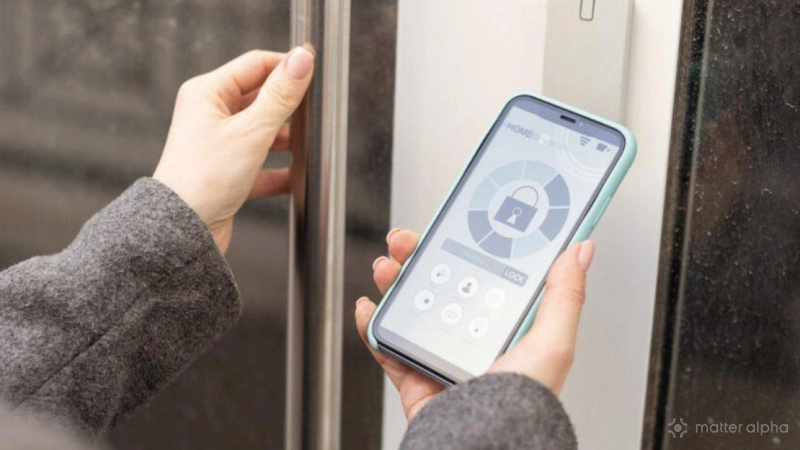
A key differentiator for Aliro is the confirmed commitment from the world leading mobile wallet ecosystems. By aligning directly with Apple, Google and Samsung, Aliro offers a highly standardized digital credential experience utilizing the smartphones and wearable devices that people already use every single day to unlock your home and office entries.
In practical terms, this means family members who use completely different phone brands now do not have to struggle to pick a smart lock that works perfectly for everyone in the household. And it helps users move easily between their homes, their workplaces and public spaces without all kinds of apps and physical key cards.
By connecting the access control industry directly to these leading mobile wallet ecosystems, it delivers a secure, frictionless experience that goes well beyond the front door.
Under the hood with NFC, BLE and UWB
The Aliro 1.0 spec establishes a robust and secure framework utilizing “asymmetric cryptography.” This design ensures secured and trusted interactions between user devices and access readers, all while strictly respecting user privacy at every step, according to CSA.
To meet diverse installation requirements, the spec fully supports a variety of transport tech stacks that are mature in modern access control systems.
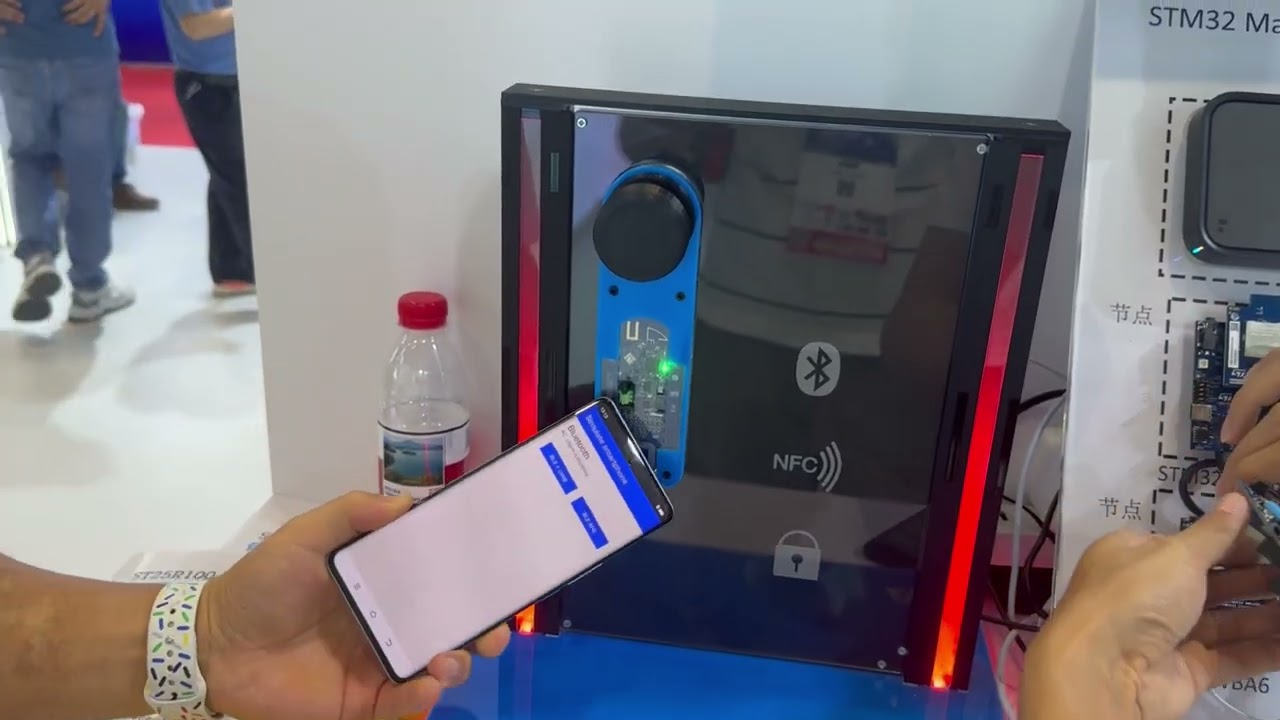
This includes Near Field Communication (NFC) for simple tap-to-access scenarios, Bluetooth Low Energy (BLE) for user initiated long range communication, and a combination of BLE and Ultra Wideband (UWB) for a seamless, secured and hands-free authentication method. This standardized protocol is also designed to provide a reliable experience even in areas entirely without network coverage, such as underground parking garages and elevators.
Balancing speed and control with time-based access
To make digital keys as fast as physical cards without sacrificing security, Aliro defines a “Two-Phase Access Protocol”. Every interaction starts with the “Expedited Phase” – a lightning-fast digital handshake. If the lock already recognizes your device, the door unlocks instantly. However, if the lock is offline or hasn’t seen your specific device before, it requests the optional Step-up Phase. In this step, your mobile wallet transmits a detailed, digitally signed “Access Document” from a trusted authority, giving the offline lock the exact proof it needs to grant entry.
The Access Document mentioned above also brings highly granular access directly into native mobile wallets. Instead of relying on third-party apps to manage guests, Aliro builds complex schedules into the digital credential itself. For instance, you can issue a key to a dog walker that only works on specific weekdays during certain hours, seamlessly handling time zones without needing an internet connection. Furthermore, credentials can restrict specific physical actions, like allowing temporary unlocks (“Momentary Unsecure”) while denying the ability to permanently toggle a lock’s security state.
A shift in the smart access industry
The strategic changes brought by Aliro can be magnified when considering that the smart home industry supply chain is highly cost-sensitive.
Aliro provides tangible benefits across the entire industry value chain by lowering implementation barriers and reducing overall hardware and software complexity. For manufacturers, the standard acts as a universal option for interoperability certification, significantly reducing research and development costs while simplifying the integration process with new industry partners.
Just like Matter, for vendors, Aliro serves as a clear alternative to Apple HomeKey and rival proprietary standards. The financial cost, as well as the overall communication, development and certification processes, will be greatly simplified.
Device makers would benefit from this streamlined approach through easier setup routines and much more efficient troubleshooting processes across devices sourced from multiple different hardware providers.
Ultimately, Aliro provides system owners with simplified maintenance protocols and the flexibility to mix and match vendor independent hardware and software across a wide variety of user devices. Lower integration complexity directly translates to faster industry adoption and a much shorter time to market for new products.
Adoption challenges
Recent discussions regarding the slow rollout of Matter and Thread really make the industry rethink everything about standardization, and the very truth is that immense complexity hides behind a simplified marketing concept. A universal standard requires close correlation among all participating companies, creating a fragile chain that could break if any single part becomes vulnerable.
The first major challenge is the required cooperation between end device makers and the digital access ecosystems. Unlike regular smart home devices, Aliro is a standard in addition to Matter. Specifically for door locks, Matter integration is handled by the smart home department while Aliro could be developed and managed by the payment and wallet department of these tech ecosystems. There could be communication gaps and extra administrative costs associated with this separation.
We have seen a similar situation with Samsung SmartThings, as some hubs get faster updates while others managed by Samsung home appliance and smartphone team are months slower without any specific commitment or timeline provided.
Furthermore, unlike Matter, Aliro itself is not open sourced as of now. Community momentum could be noticeably weaker as a result. We currently see open source projects like “Matter.js” thrive immensely to bring up the whole open home community for Matter adoption.
Previously for closed standards like HomeKit and HomeKey, there were unofficial “hacks” to bridge uncertified devices to such platforms with limited features and support. For the current state of Aliro, gaining similar grassroots community adoption could be really tricky.
Which devices will have Aliro certification?
Aliro can unify a global collective of over 220 CSA member companies, ranging from traditional lockmakers to radio chip vendors and mobile platforms as the alliance claimed in the press release.
Several firms are expected to receive official Aliro certification first, possibly due to them being active participants of the spec internal tests and feature contribution. For the ecosystems, the big three providers, Apple, Google and Samsung, will firstly support the feature within their respective phone wallets. So most consumer mobile devices on the market should be Aliro-ready soon.
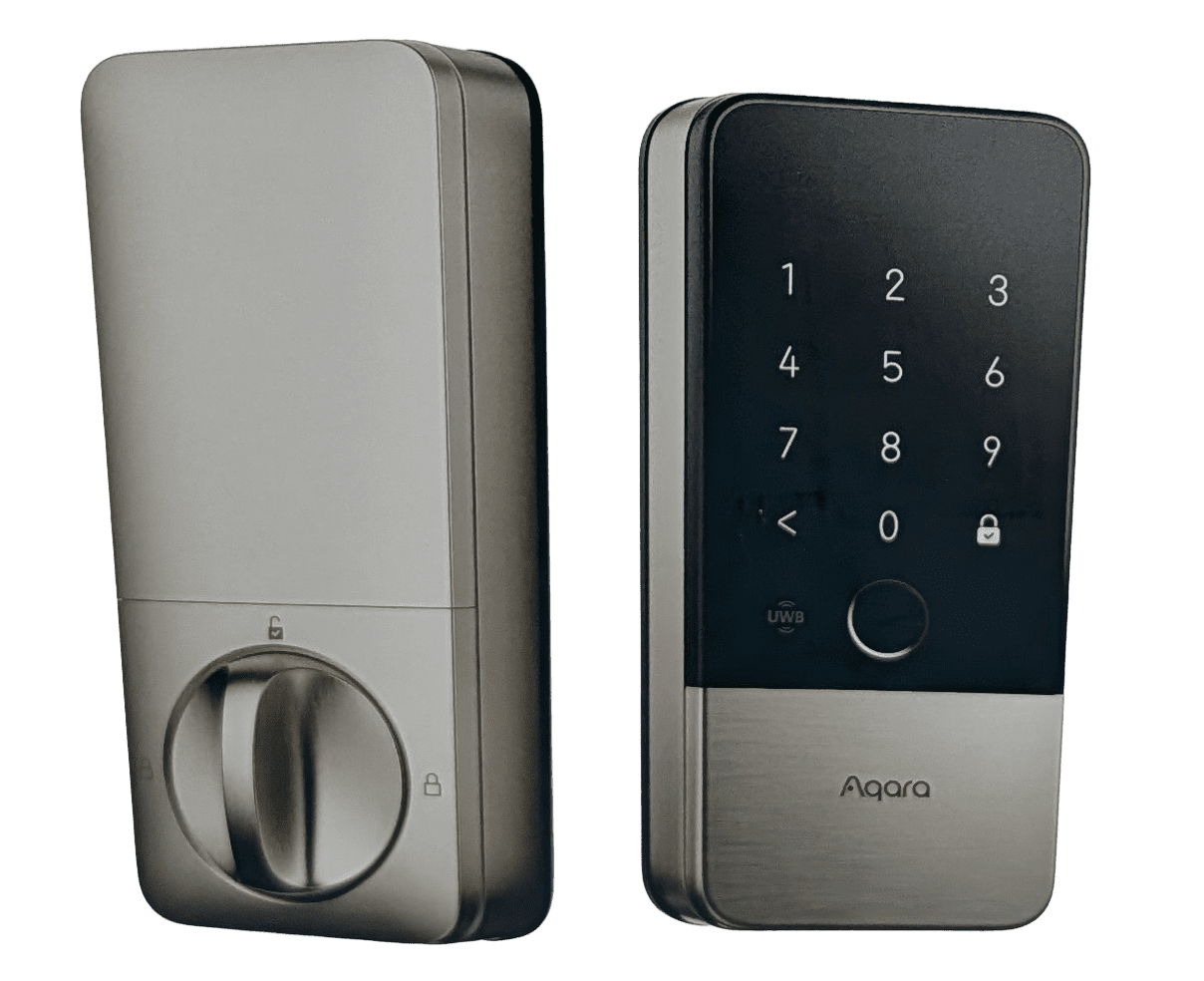
Vendor and solution providers including Allegion, Aqara, HID Global, Kastle, Kwikset, Last Lock, and Nuki will be among the first to obtain official Aliro certification. According to previous announcements, the Aqara U400 smart lock would get the support, but the firm has yet to make further comments on the Aliro 1.0 release timeline.
Here are devices that could get Aliro:
- ULTRALOQ Latch 7 Pro (Planned)
- ULTRALOQ Latch 7 (Planned)
- Aqara U400 (Planned)
- Nuki Keypad 2.0 (Demostrated at IFA 2025)
- Durin MagicKey (Q1 2026)
For chipset providers, Nordic, NXP, Qorvo and STMicroelectronics are part of the first launch batch. It means device makers can get per-certified and validated hardware along with development kits to start product development quickly.
And just like Matter, Aliro is shipped with a certification program managed through test labs officially authorized by the CSA. In theory Aliro devices for consumers should be more reliable due to a simpler testing combination, as there are only three major platforms unlike the grown Matter.
Aliro 1.0 lays a strong foundation for cross-platform digital keys, backed by early alignment from major phone ecosystems. The alliance says Aliro will continue to evolve rather than remain a one-time effort, while keeping backward compatibility as the smart access industry changes. If momentum holds, Aliro could make interoperable digital access far easier to deploy at scale.
The new spec is now available via CSA website.
(Source: CSA, Nuki, Xthings, Aqara, Durin; Image: Matter Alpha/Ward Zhou)