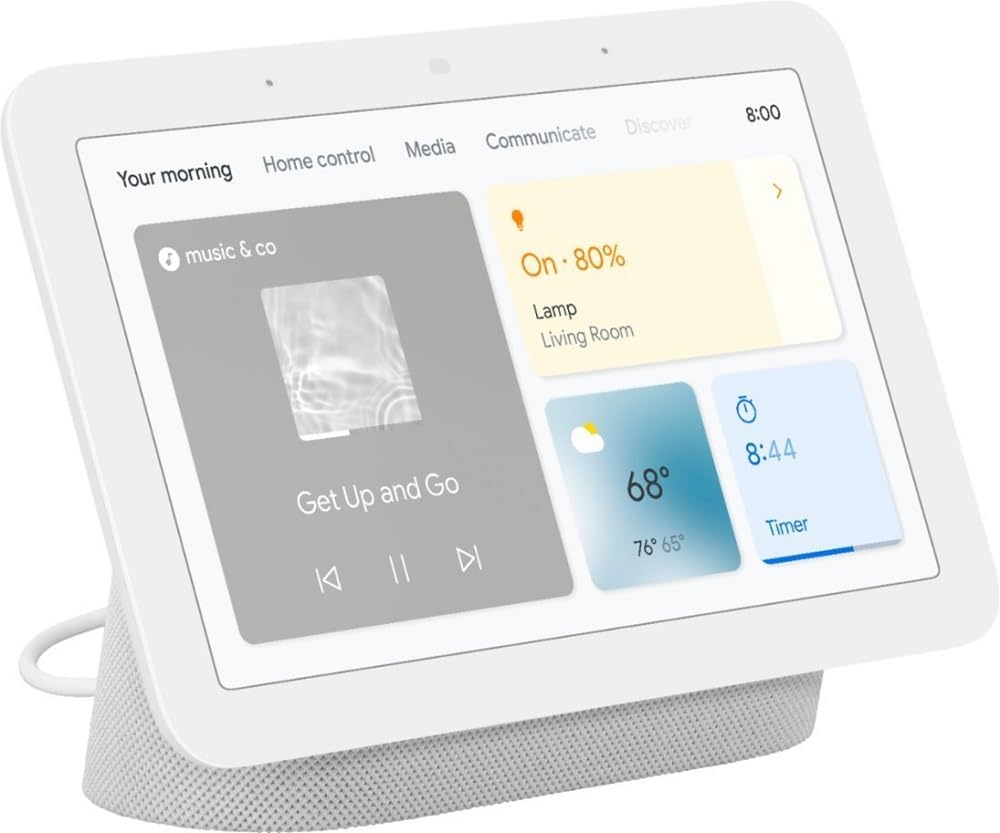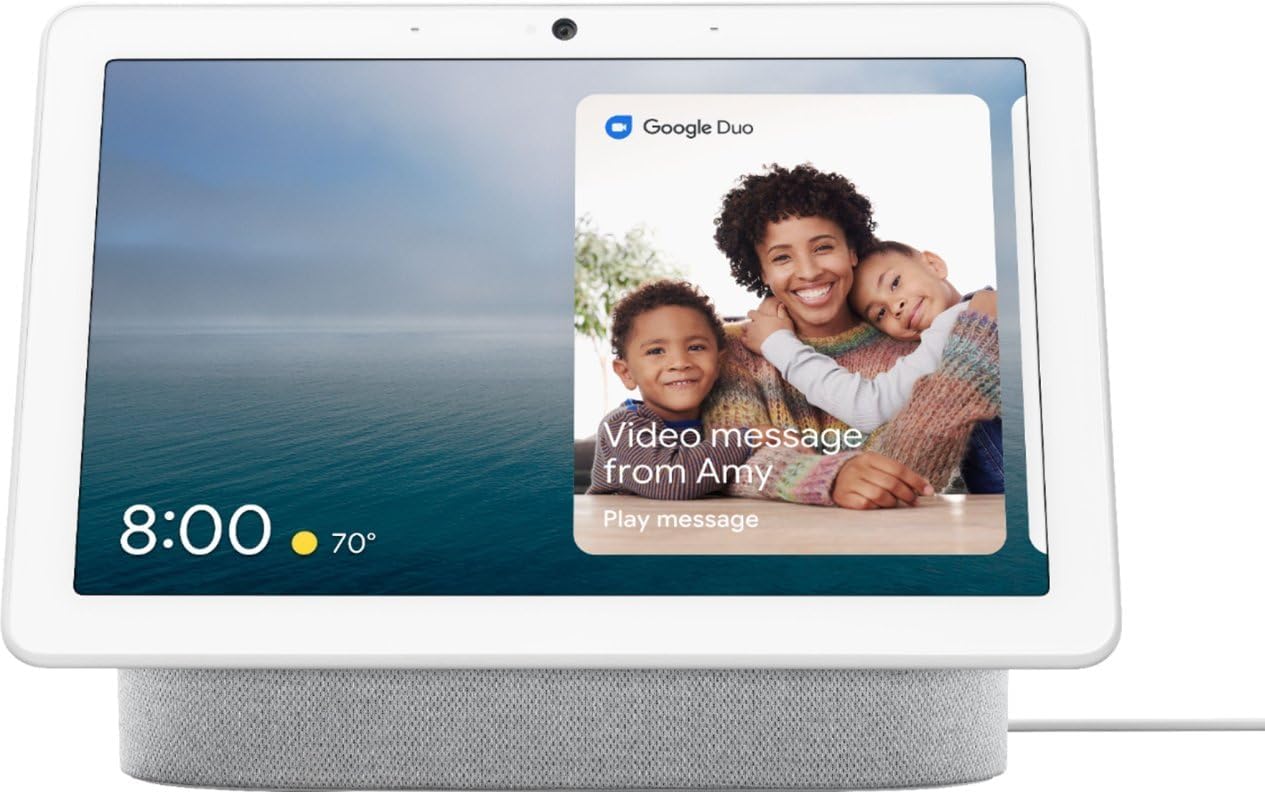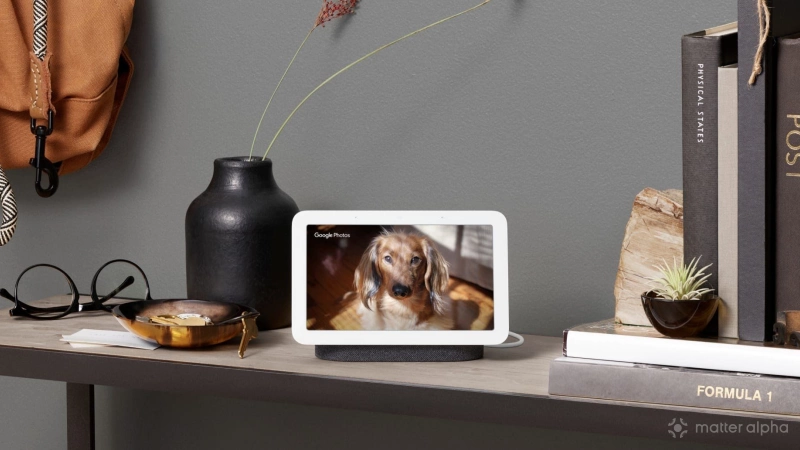
Google has started testing Thread 1.4 firmware on the Nest Hub (2nd gen) and Nest Hub Max recently, extending the newer Thread stack beyond its networking products, spotted by Reddit users.
The move brings more of Google’s Thread infrastructure onto the same generation already adopted by Apple, Home Assistant, SmartThings, IKEA, and Amazon’s Eero lineup. Thread 1.4 adds important improvements around network reliability, diagnostics, scalability, and credential sharing between ecosystems.
For Google, the update matters because Thread is spread across much of its smart home hardware, from Nest Wifi Pro to Nest displays and Google TV Streamer. But one of Thread 1.4’s most useful features is still missing from most of the Google Home lineup.
Stabilizing Thread
Thread 1.4 is not only a feature update. The specification includes broader work on network robustness, scalability, troubleshooting, and connectivity, alongside the better-known credential-sharing features. So your Nest devices are now less likely to be the weak points in the Thread mesh.
Google moved Nest Wifi Pro to Thread 1.4 first last year, followed by the Google TV Streamer 4K. The Nest Hub (2nd gen) and Nest Hub Max are now joining them through preview firmware.
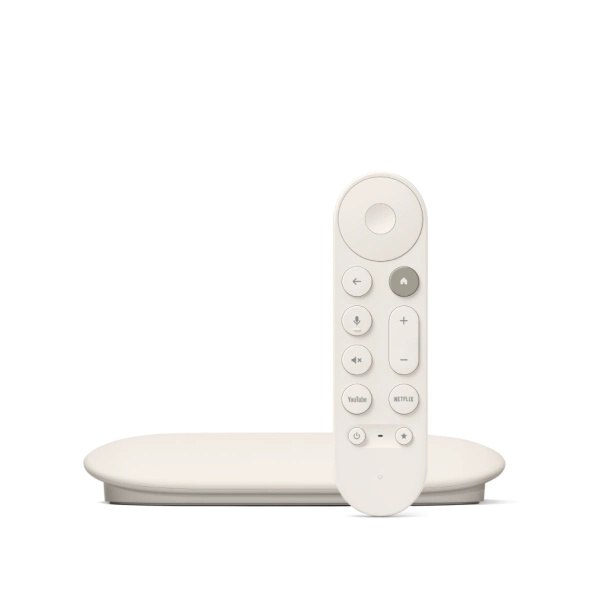
Google TV Streamer (4K)
That brings Google closer to the wider ecosystem, where major Thread border router makers have gradually moved to Thread 1.4. The change should give Google a more consistent foundation across its own Thread devices instead of leaving different hubs on older versions.
The preview build is currently identified as firmware 31.20260429.103.9800. Google’s public stable firmware page still lists the Nest Hub and Nest Hub Max on the 30.x branch, showing that the newer build has not yet reached general release. Our reader also finds Google working to bring the latest OpenThread reference 2026.8 to Nest devices as well.
The key feature is still missing
The most important user-facing addition in Thread 1.4 is Thread Credentials Sharing. It provides a standard way for a new border router to receive credentials for an existing Thread network instead of creating another separate mesh.
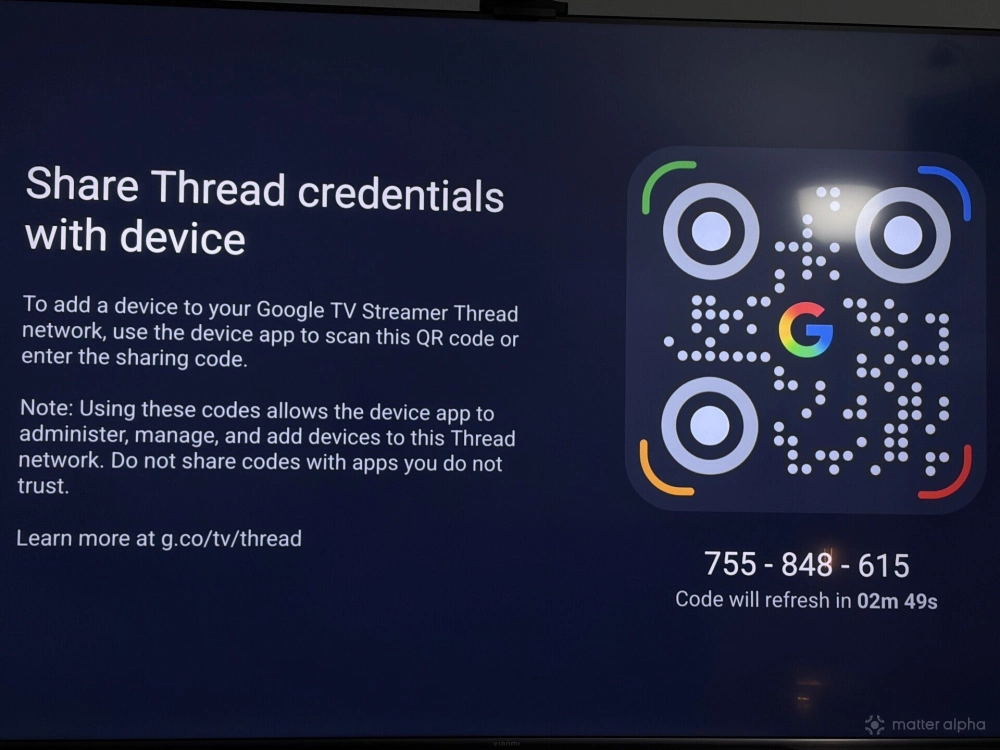
Google already partly supports a version of this experience through Google TV Streamer and some partnered Android TV devices, but it remains absent from the regular Google Home experience on Nest displays.
Google Home currently provides no obvious place to enter a one-time Thread code generated by another ecosystem or generate one for a Google-created Thread network. Even the Nest displays themselves, despite having touchscreens, do not expose those options.
That leaves much of Thread 1.4’s network-unification benefit hidden from users. The underlying stack may be newer, but Google still needs the software layer that lets people actually merge or share Thread networks across ecosystems in a standardized way.
Thread 1.4 firmware availability
The Thread 1.4 firmware is currently available through Google’s Preview Program for supported Nest displays.
To check for it, open the Google Home app, select your Nest device, go to its settings page, and enroll in the Preview Program. Devices in the program should receive the 31.20260429.103.9800 build as Google expands testing.
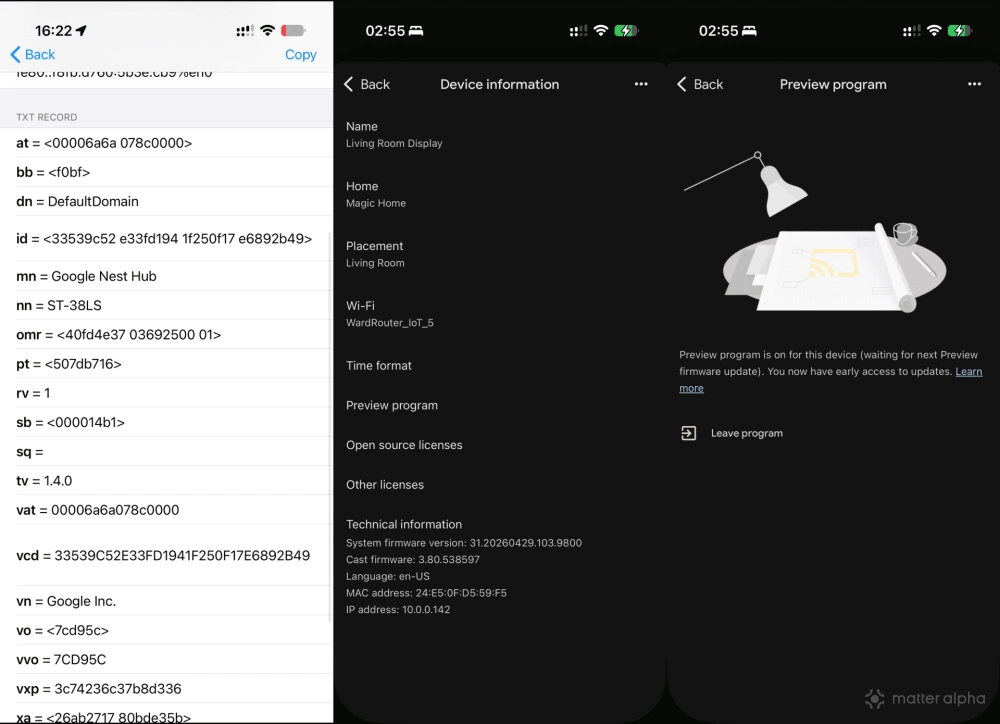
A public release could follow within weeks if testing goes smoothly, although Google has not announced a date. Its current public release page still lists the stable Nest display firmware on version 30.20260121.103.1604600.
(Source: Google, Thread Group; Image: Matter Alpha/Ward Zhou, Google)