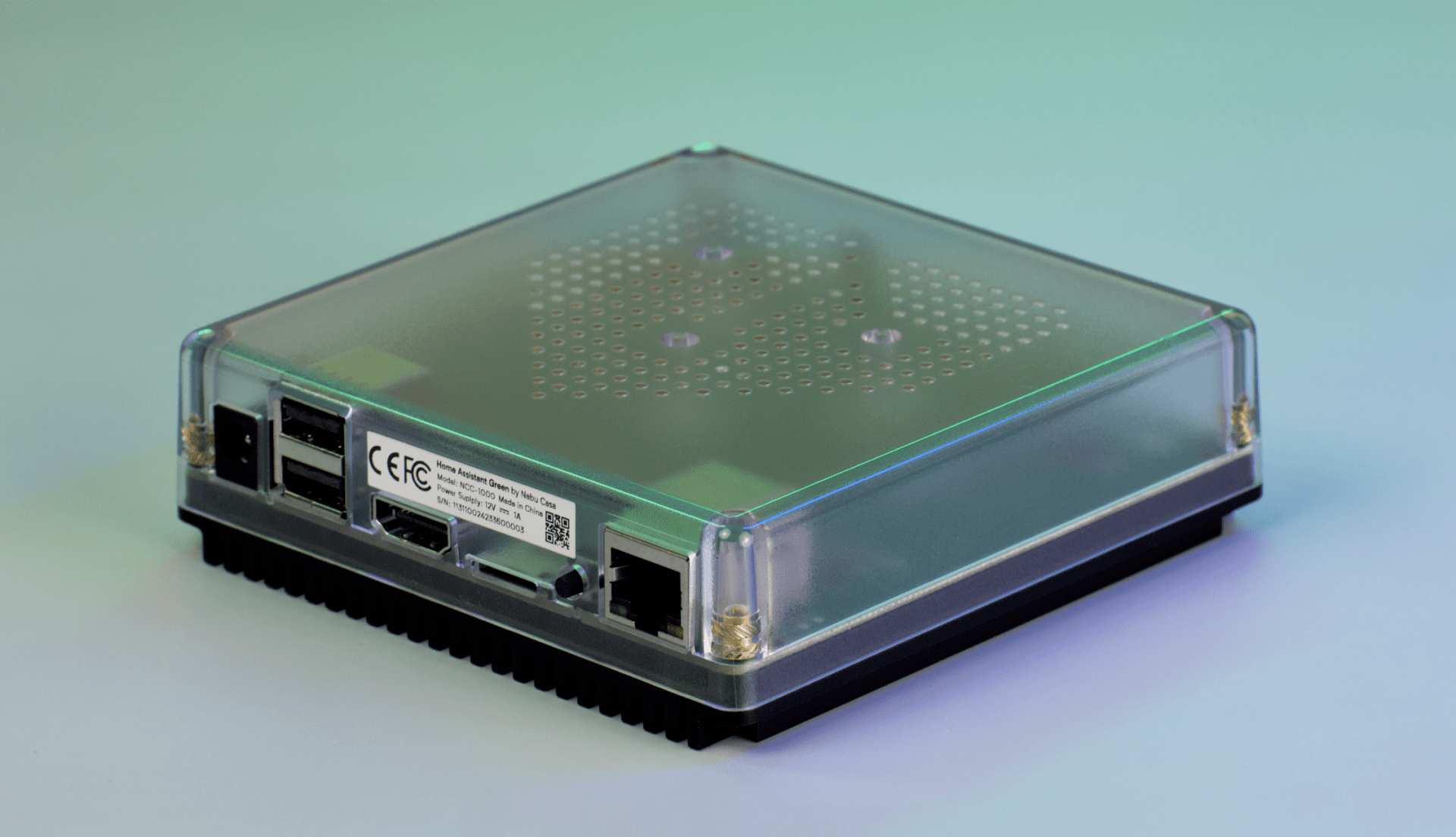
The Open Home Foundation is preparing a major update for the Matter.JS Server used in Home Assistant, the underlying controller that powers Matter in the smart home platform. According to the latest version 1.5.0 changelog, the server is upgrading to the Matter.JS 0.18.0 engine to introduce official support for Matter 1.6.1 alongside a dedicated WebRTC camera API, custom vendor clusters for upcoming Aqara and IKEA hardware, and faster offline device detection.
Laying the foundation for Matter 1.6.1 and Groupcast
When the Connectivity Standards Alliance (CSA) released Matter 1.6.1 in September, it promoted Groupcast out of provisional status and added independent volume and mute controls for doorbell chimes.
Until now, Home Assistant has handled Matter device groups by sending sequential unicast commands to each device one by one. If you turn off a room full of smart bulbs, this creates a noticeable “popcorn effect” where lights react with a staggered delay. With Matter 1.6.1, the new Matter Server establishes the protocol-level foundation required for native IPv6 multicast group messaging over Thread, Wi-Fi, and Ethernet.
Dedicated camera API and two-way audio
Following the introduction of camera support previously, the 1.5.0 server update introduces WebSocket Schema version 14 with a dedicated camera API. Instead of relying solely on raw Matter cluster commands, the server now manages WebRTC sessions and stream negotiation directly for connected clients like Home Assistant.
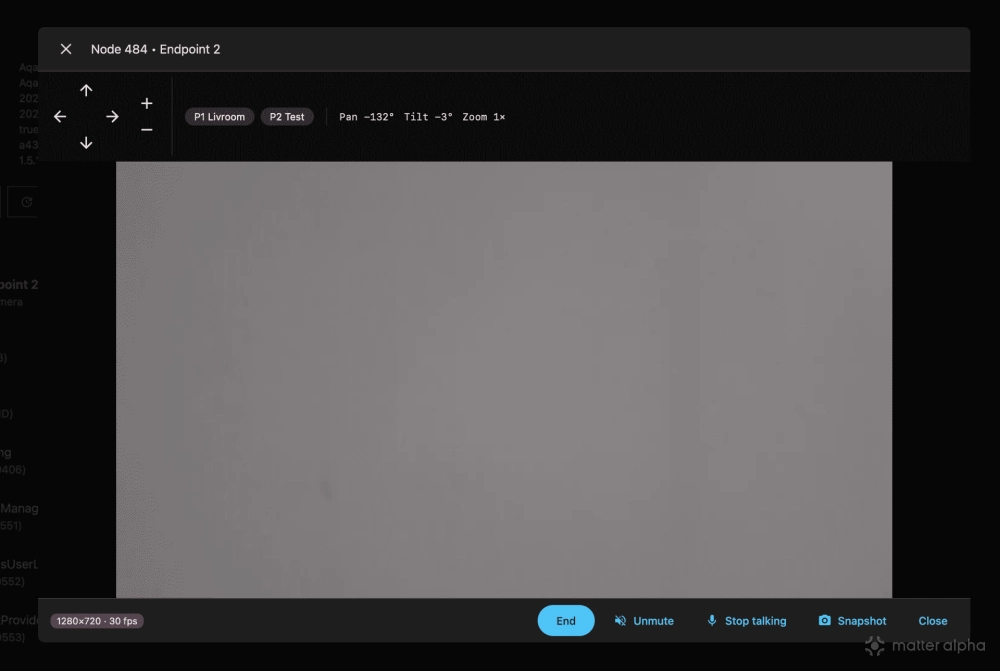
The standout addition is two-way audio support. Using the new talkback: true parameter when starting a stream, users can speak directly through compatible Matter cameras and video doorbells – such as the Aqara Camera Hub G350 – directly from the built-in web dashboard or integrated client apps. The update also resolves several WebRTC session drop issues and introduces specific error codes to make troubleshooting camera streams much clearer.
Custom clusters for Aqara FP400 and IKEA thermostats
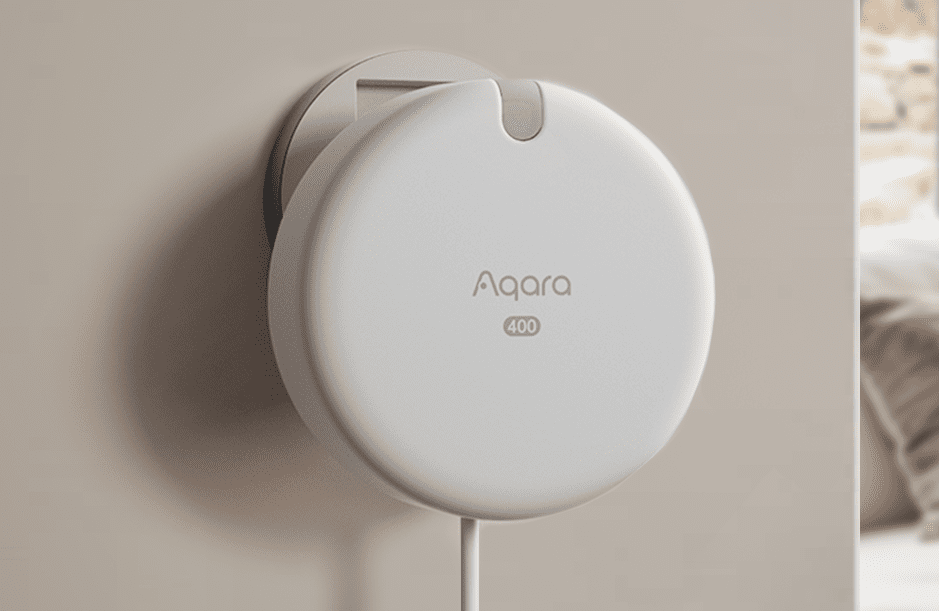
While Matter covers standard device functions, manufacturers often use custom vendor clusters for advanced hardware features. Version 1.5.0 adds built-in definitions and Python client support for several notable devices, starting with the Aqara Spatial Multi-Sensor FP400. The server now natively recognizes three custom Aqara clusters covering ambient sensing configuration, radar sensing union, and occupant location. Crucially, this unlocks support for detection zones and real-time target positioning events over Matter, accompanied by a fix that ensures zone configuration byte lists are properly transmitted to the sensor.
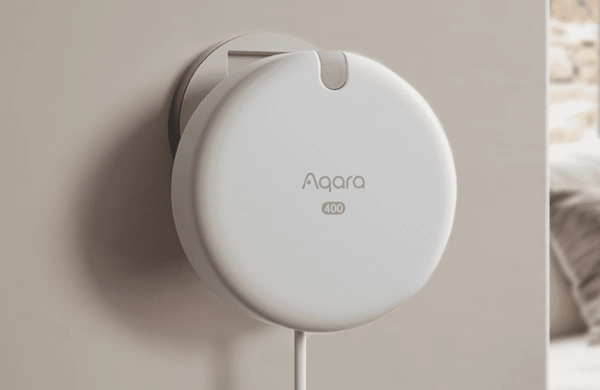
Aqara Multi-Sensor FP400
Matter-enabled mmWave sensor with Thread and Zigbee that tracks up to ten people’s position and posture, supports fine-grained zones, fall detection with exclusion areas, and includes a built-in light sensor.
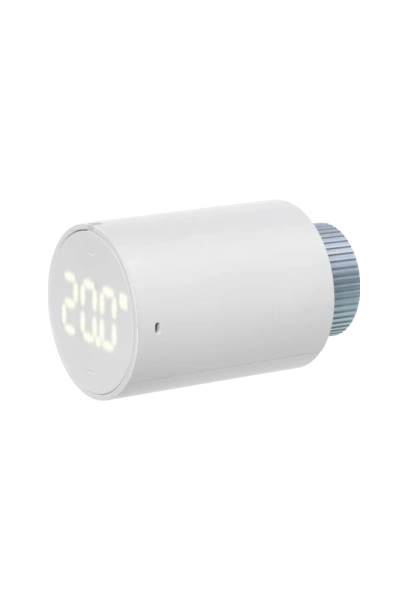
LILJEBAGGE radiator thermostat
The IKEA LILJEBAGGE Thermostat is a smart radiator thermostat for European radiator valves, designed to bring room-by-room heating control into IKEA’s smart home ecosystem.
Beyond Aqara, the update adds IKEA’s custom ValveCalibration cluster along with a dedicated control panel in the server dashboard, allowing users to calibrate compatible IKEA radiator valves without an IKEA hub. Meanwhile, owners of older Eve Energy smart plugs get a new CLI flag (--custom-cluster-poll-interval) that allows customizing the polling interval for custom attributes on legacy hardware that does not support state subscriptions.
Other key improvements in management
Beyond protocol and camera upgrades, Matter Server 1.5.0 refines daily smart home management and diagnostics. Previously, the server held a fixed three-minute grace period after losing connection to a device before marking it offline. That artificial timer has now been removed, meaning nodes report as unavailable as soon as Matter.JS determines they cannot be reached.
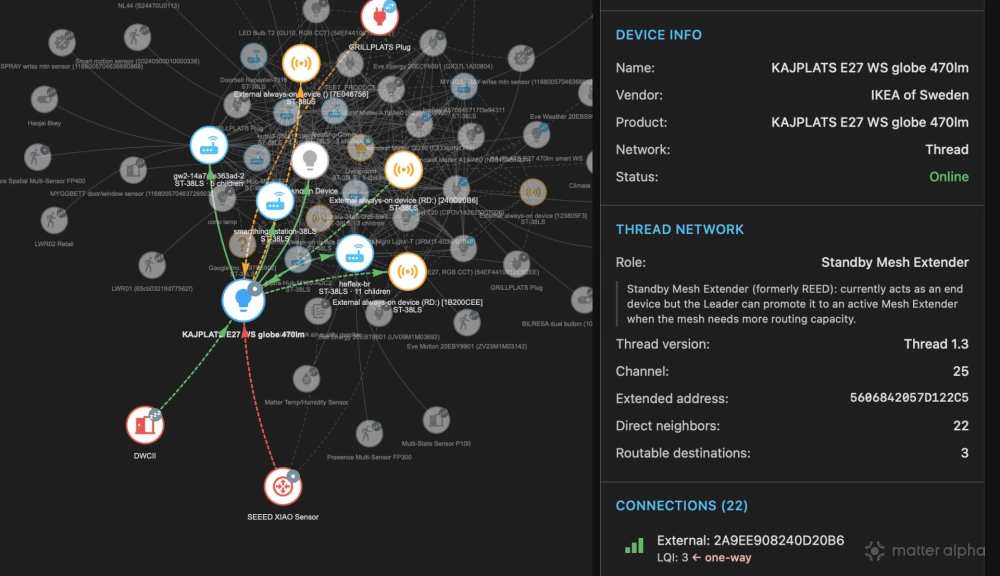
Network diagnostics are also easier to read, as the built-in network graph now adopts the clearer role names introduced in Thread 1.4. Thread Routers are labeled as Mesh Extenders, router-eligible end devices (REEDs) appear as Standby Mesh Extenders, and external non-fabric devices are clearly marked as Always-on devices.
For home security and ecosystem sharing, the dashboard’s Door Lock panel now supports creating temporary guest PIN codes (ExpiringUser) and setting custom expiration timeouts. When opening a commissioning window to share a device with another platform like Apple Home or Google Home, the server also directly outputs the discriminator, vendor ID, product ID, and timeout duration, allowing client apps to pass pairing details along without decoding a QR code.
Power users managing devices through the server’s built-in web interface will also find new interactive command panels for robot vacuums, ovens, water heaters, EV chargers, media players, window coverings, and home energy management forecasts.
Availability
Version 1.5.0 of is currently in beta, and is expected to roll out to the stable Matter Server add-on for Home Assistant soon. You can toggle on the beta option in the Matter Server settings to enroll testing. Most of the new features still require works in Home Assistant Core to be more accessible.
(Source: GitHub; Image: Home Assistant)