Home Assistant has released the first beta of version 2026.3, continuing its steady expansion of Matter support. This release introduces initial support for the Matter robot vacuum cleaner (RVC) service area feature, a key missing piece that allows vacuums to clean defined areas instead of running full cleaning cycles. Alongside this foundational change, the beta also adds several Matter feature extensions and fixes that improve Matter experience in Home Assistant.
Initial support for Matter RVC service areas
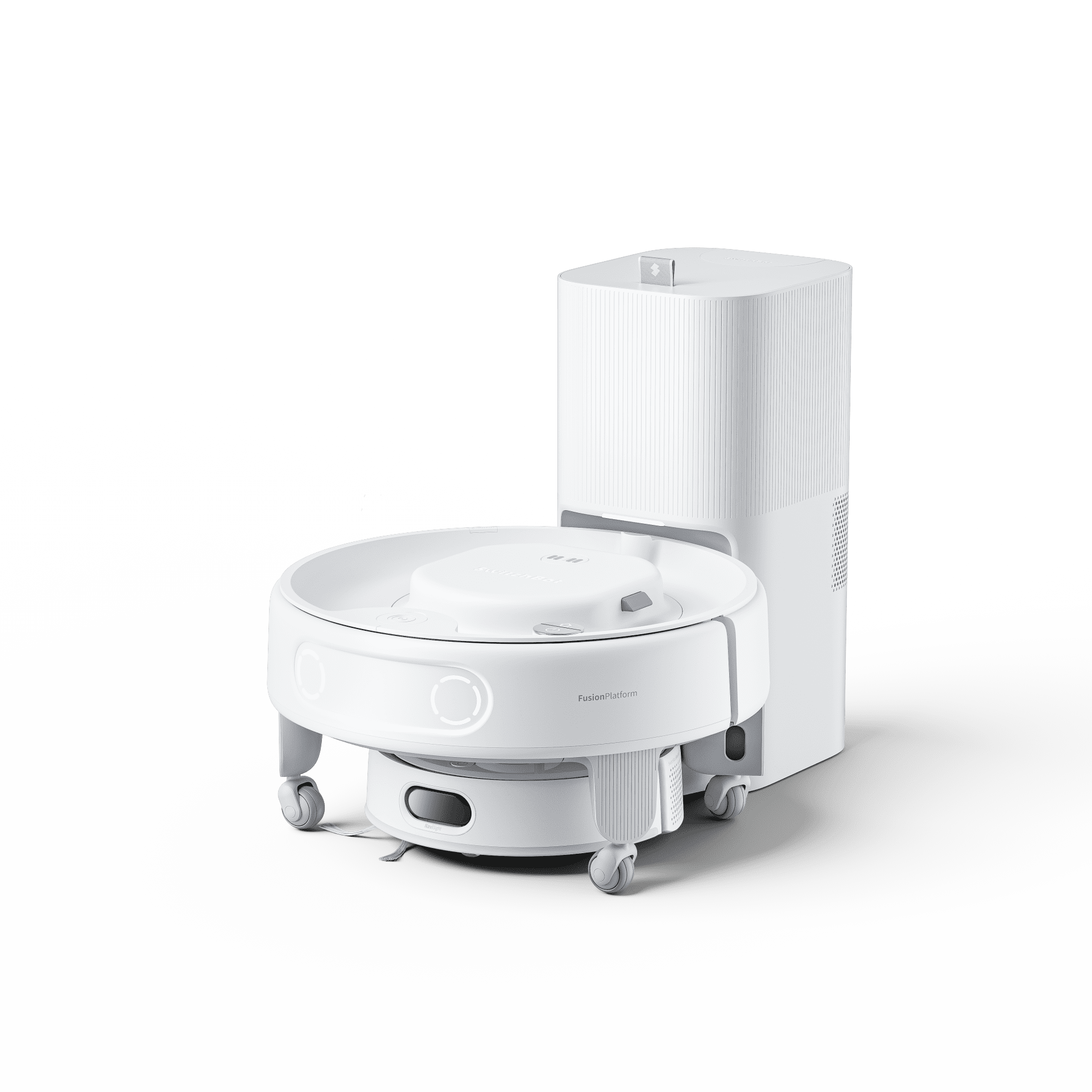
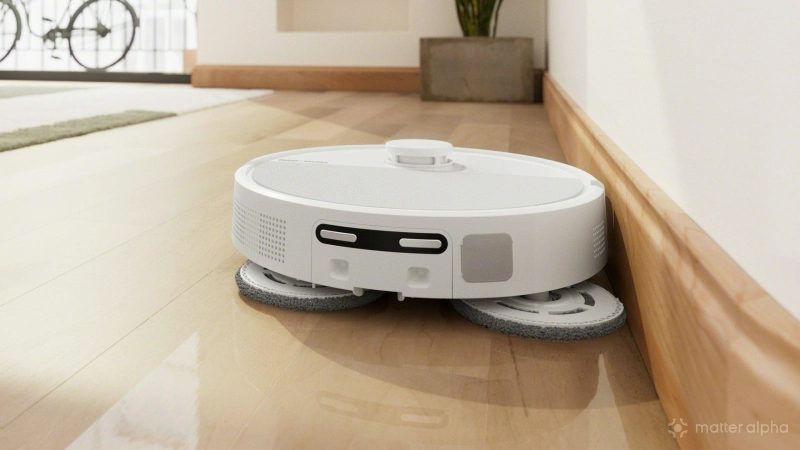
The main change in Home Assistant 2026.3 beta is the introduction of initial support for Matter RVC’s service area feature. This work builds on existing Matter RVC support by adding the ability to target specific cleaning areas, as defined by the Matter spec.
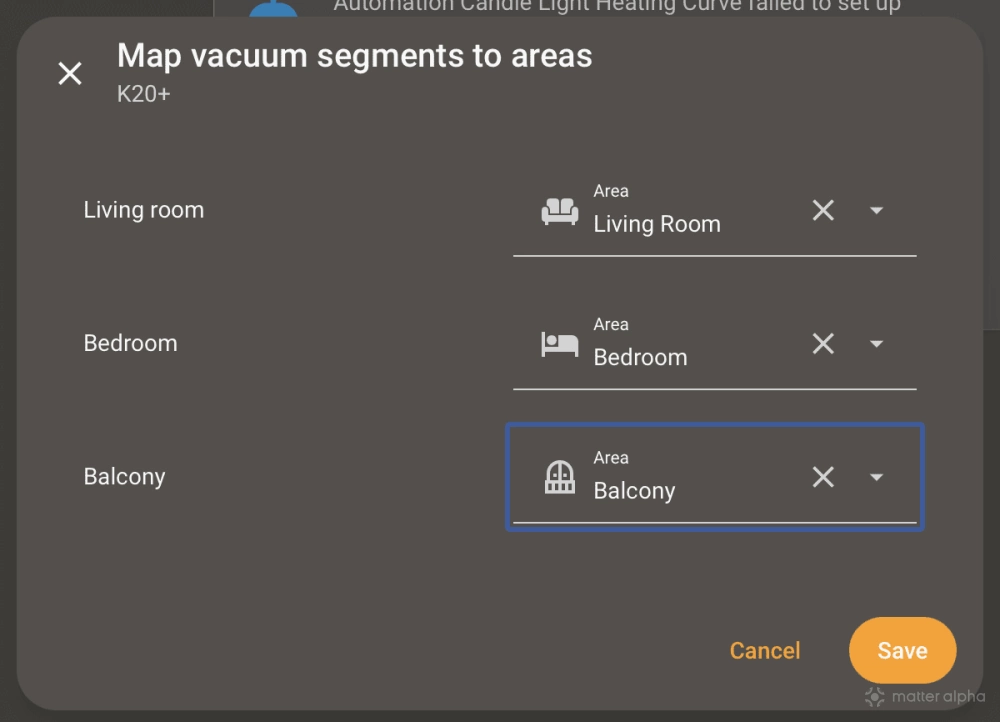
With this support in place, Home Assistant can now issue area-based cleaning commands to Matter-compatible robot vacuums. These commands work at the service and automation level, enabling use through voice assistants, scripts, and scheduled automations.
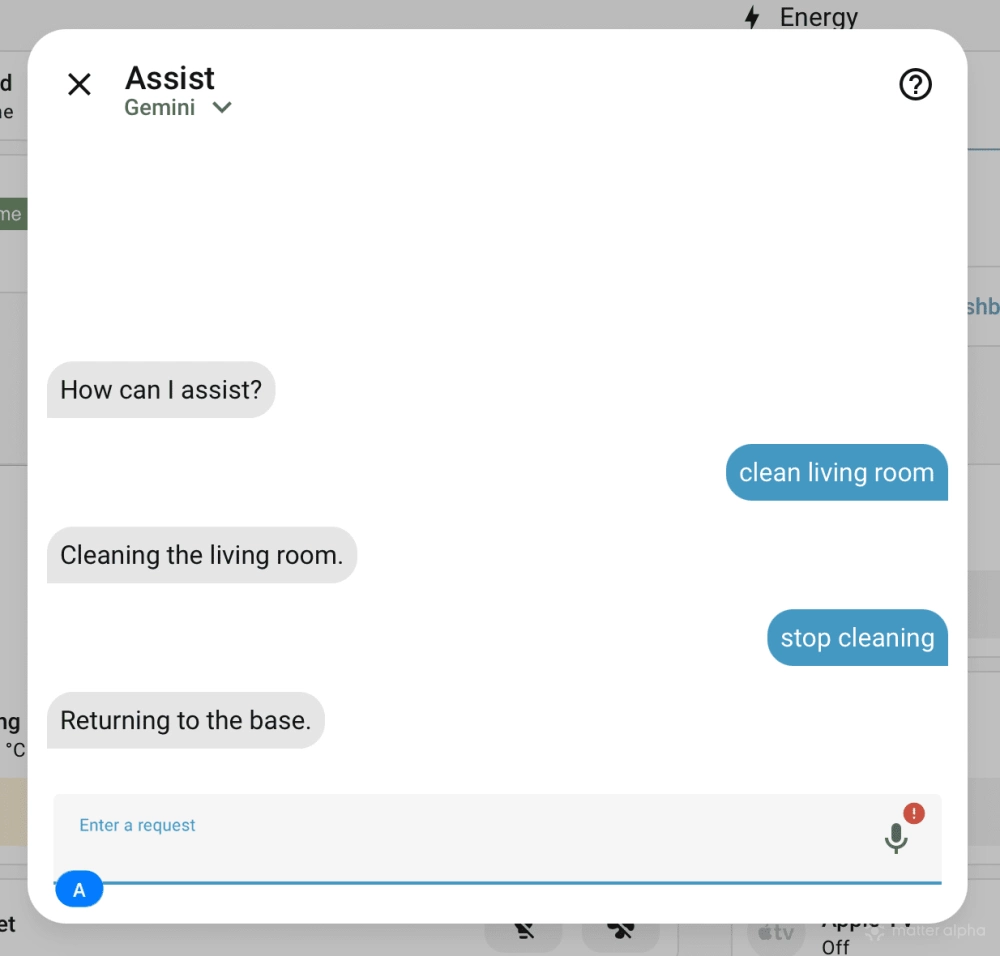
Direct area selection in the frontend is still incomplete, and further UI work will be needed before users can trigger area cleaning entirely through device cards.
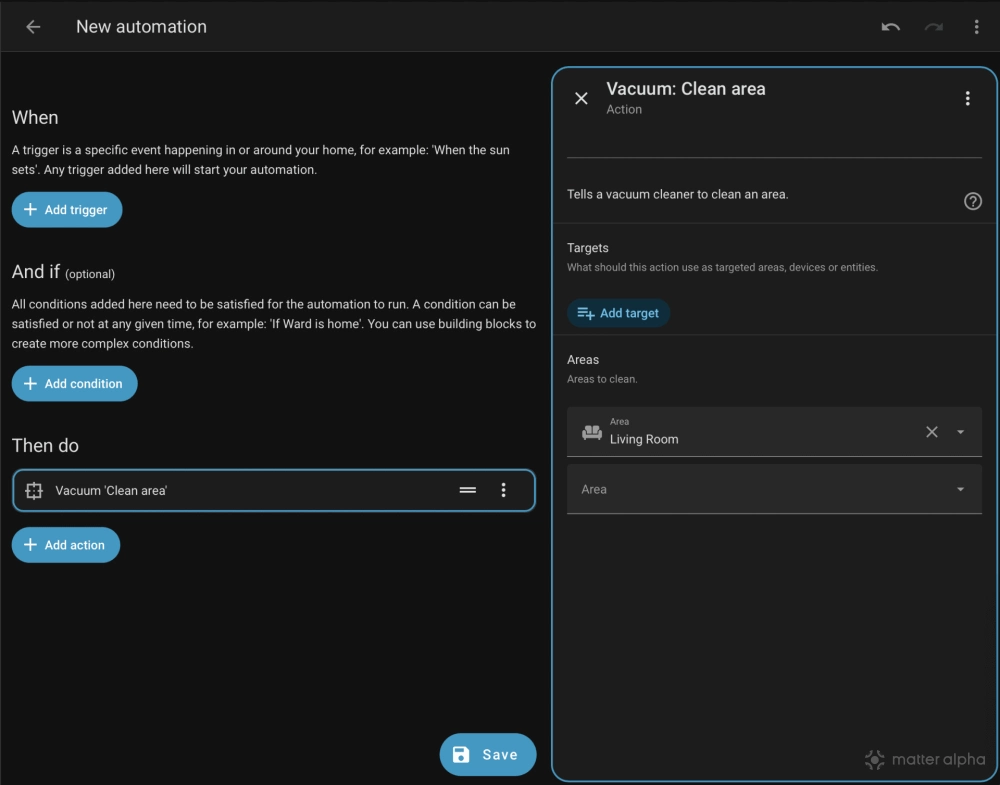
Service areas reported by Matter vacuums are mapped to Home Assistant’s existing area model. This avoids introducing a separate room system for vacuums and keeps spatial concepts consistent across the platform. Once areas are mapped, the same names used for lighting or climate automations can also be used for vacuum cleaning, reducing duplication and configuration overhead.
Matter thermostat temperature calibration
The version adds support for local temperature calibration across all Matter thermostats with “LocalTemperatureCalibration” attribute. This exposes the thermostat’s built-in calibration offset, allowing temperature readings to be adjusted directly on the device.
Until now, users often compensated for inaccurate readings by applying offsets in automations or helpers. Exposing the native calibration setting allows thermostats to report corrected values at the source, resulting in simpler configurations and more predictable climate behavior. This change brings Home Assistant closer to how Matter thermostats are intended to be configured and used.
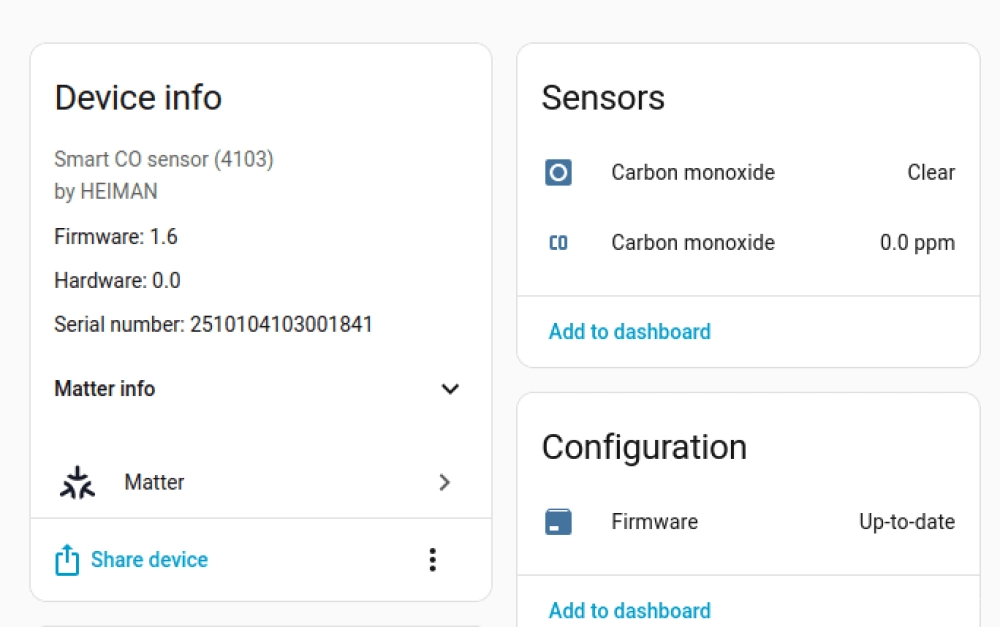
Matter safety support improves in this release with the addition of a dedicated carbon monoxide alarm state entity. This makes CO events easier to surface in dashboards and safer to use as triggers for notifications or automated responses.

Air quality reporting also expands with support for Total Volatile Organic Compounds (TVOC) level. Compatible Matter sensors can now expose TVOC levels directly, providing pre-defined levels for indoor air quality.
Bug fixes and data handling improvements
Several fixes in this beta address data correctness and edge cases:
- Matter light color mode reporting has been corrected so the displayed state matches actual device behavior.
- Matter nitrogen dioxide sensors have been fixed to ensure proper class with parts per million (PPM) units.
- Issues with Matter speaker mute toggles have been resolved, restoring consistent mute and unmute behavior.
- Matter energy sensors that report null values still show up, and wait for the device or Matter bridge to update the readings.
Additional visibility for Matter door locks
Finally, Matter door locks now provide improved state visibility through exposure of the actuator enabled attribute. This attribute indicates whether the lock mechanism is currently able (enabled) or unable (disabled) to process remote commands such as lock, unlock, or unlock with timeout.
Although a subtle addition, this status enhances diagnostics and allows automations to make more informed decisions, for example, distinguishing between a lock that is online but temporarily unable to actuate versus one that is fully operational.
(Source: Home Assistant, GitHub; Image: GitHub, Matter Alpha)