Home Assistant is bringing HACS, the Home Assistant Community Store, into Core as a built-in component called Marketplace, giving community integrations, dashboard cards, themes, and templates a place in Settings.
This could be one of Home Assistant’s biggest accessibility improvements this year. The included integrations cover a broad range of devices, but they cannot cover everything. Community integrations help fill those gaps, and making them easier to find and install could help users whose hardware is the reason they are trying the regularly updated Home Assistant in the first place.
What is HACS?
HACS is a store for community-created additions to Home Assistant. It helps users find, download, and update custom integrations, dashboard cards, themes, and reusable templates. Currently, users need to install and configure HACS separately alongside Home Assistant installation before accessing its listings.
Custom integrations can connect devices and services that Home Assistant does not support out of the box. Dashboard cards provide additional ways to display information and control devices, while themes and templates offer further customization.
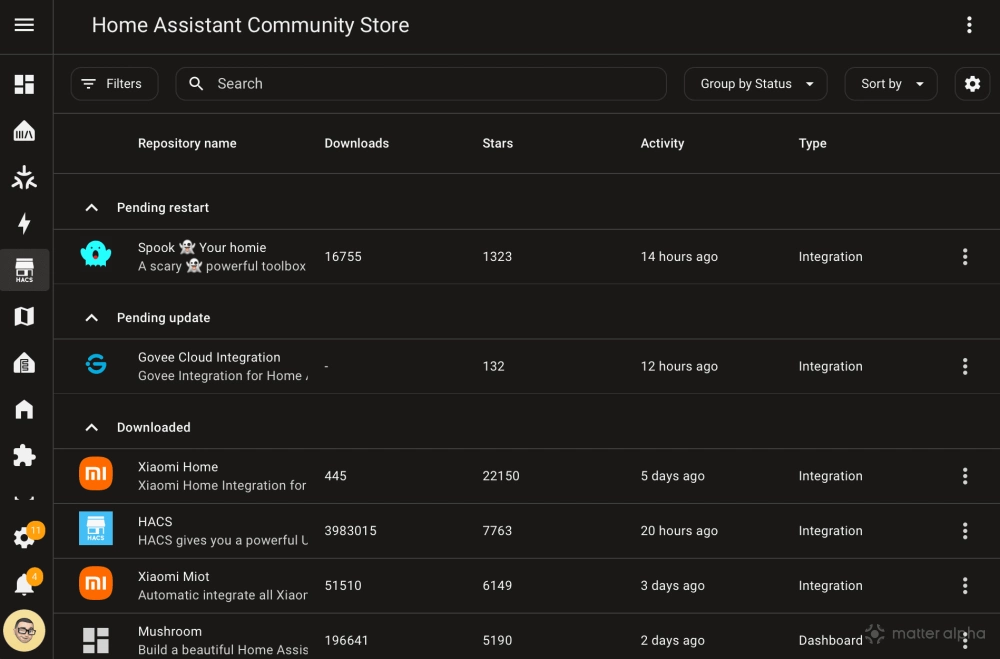
My own first attempt at using Home Assistant about five years ago started with a community Xiaomi integration. I wanted to bring my Xiaomi devices into Apple Home through Home Assistant, and that community project gave me a reason to try the platform.
Back then, I was running Home Assistant in Docker. Installing HACS was an extra complication before I could even get to the integration I wanted. The process has become easier since then, but a built-in Marketplace would remove that separate installation step altogether.
Why bringing HACS into Core matters
Home Assistant’s built-in integrations are a strength of the platform, but a community integration can be just as important to someone’s setup.
Not every contributor feels comfortable or confident taking a custom integration through the process of getting it merged into Core. That can be true even for a widely downloaded project. Popularity does not automatically mean its developer is ready to pursue inclusion.
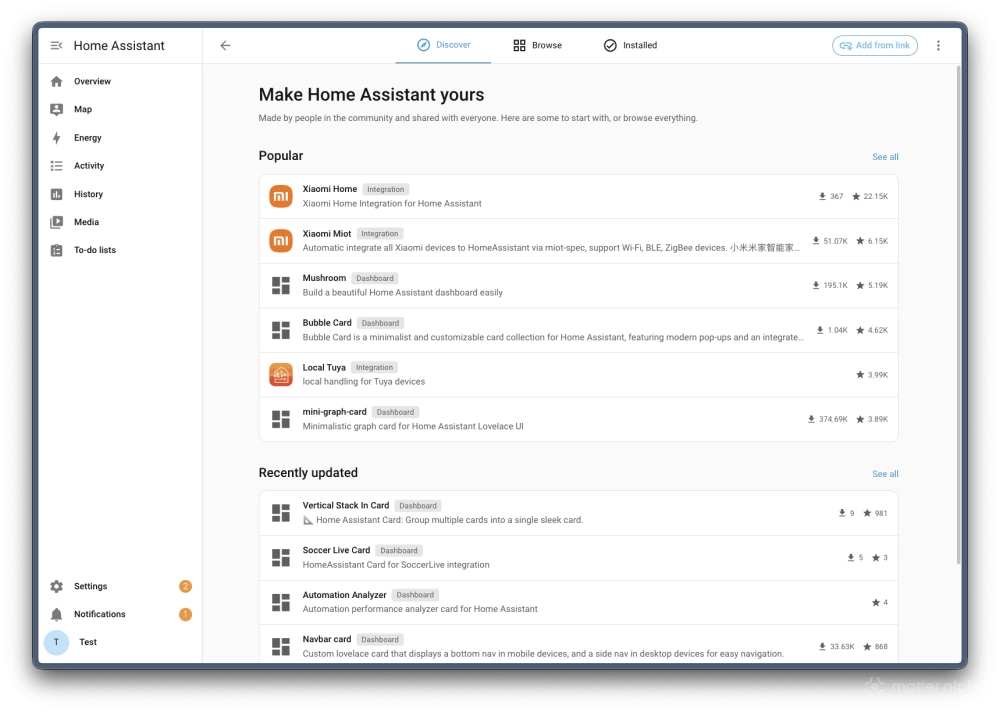
A built-in Marketplace could make those projects easier to reach while allowing their developers to keep distributing them independently. Users would have a more direct route to community support for their devices, without each integration first having to become part of Core.
The initial change focuses on bringing HACS into Home Assistant largely as it exists today, with more enhancement coming later.
A store inside Settings
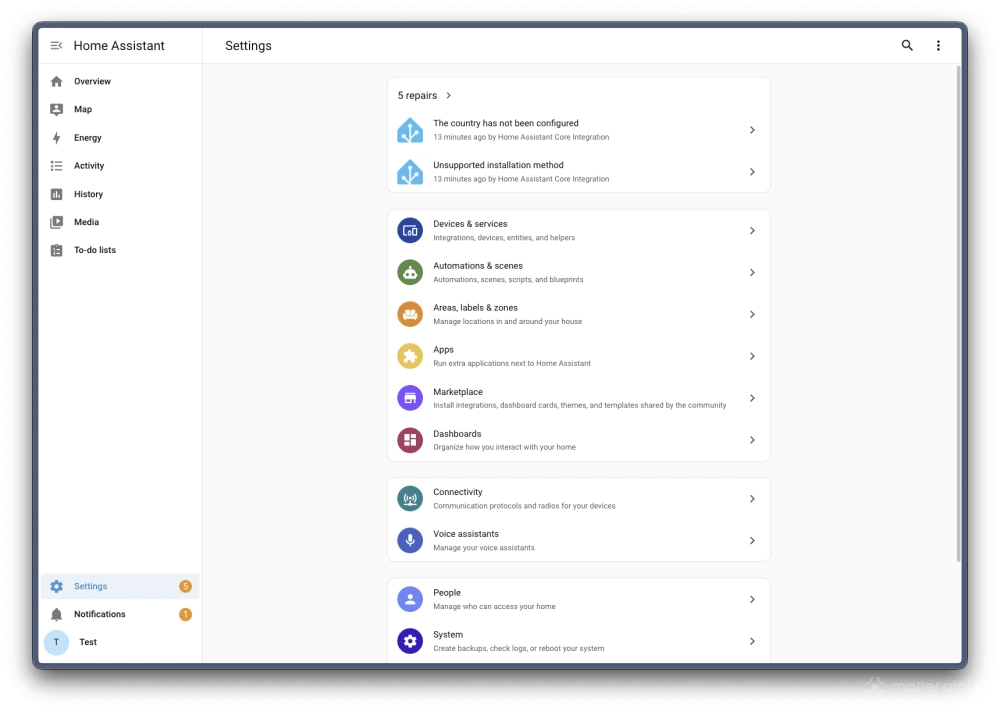
The Marketplace will be accessible to administrators through Settings. You can search and filter the catalog, view project details, install content, choose versions and remove installations. Existing HACS links to individual projects will open the corresponding Marketplace pages.
Browsing, installing and updating catalog content will work without a GitHub account. Custom repositories will still need to connect to GitHub, keeping a route available for projects outside the main catalog.
Updates for installed projects will appear alongside Home Assistant’s other updates. Bringing installation and maintenance into the main interface should reduce the number of separate places users need to check.
And hopefully, you may no longer need to reboot Home Assistant on updates installed from HACS.
Built into Home Assistant, maintained by the community
Making Marketplace a Core component does not turn everything in it into an officially supported Home Assistant integration.
The projects remain community-created, and Home Assistant does not test, audit or support the content distributed through Marketplace. Users must accept a warning before installing or updating community content, and replacing a built-in integration requires an additional confirmation.
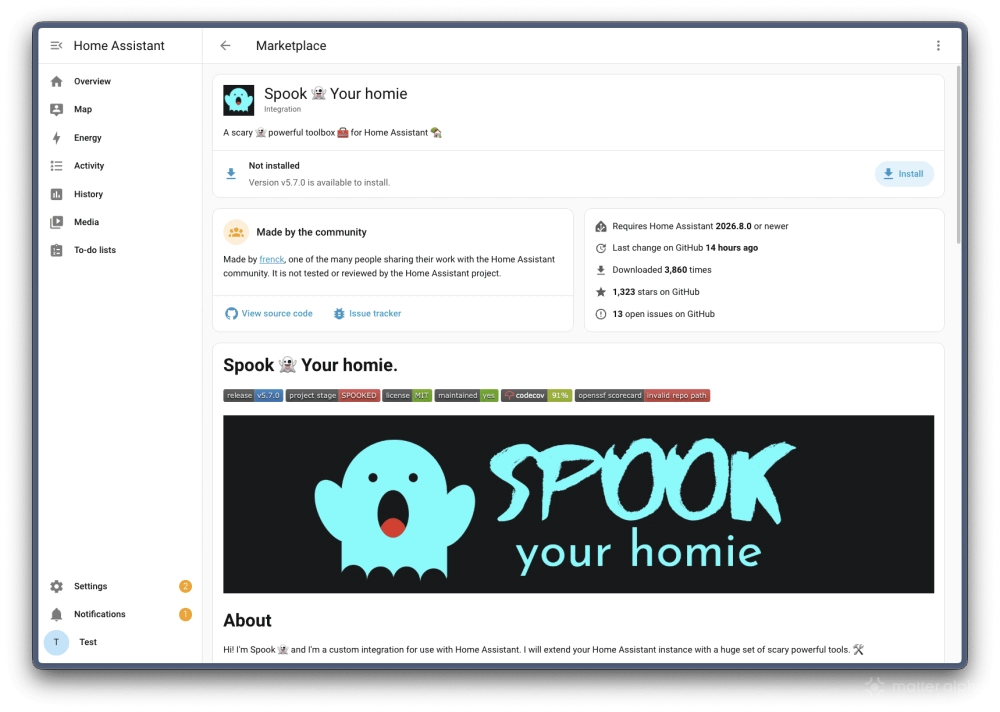
That distinction matters because easier installation does not change who maintains an integration or resolves problems with it. Marketplace brings the store into Home Assistant while leaving responsibility for individual projects with their maintainers.
For device makers, this won’t change the requirements for Work With Home Assistant certification. You still need a Core integration if you are not into open standards like Matter, Zigbee, or Z-Wave.
Availability and migration
Existing HACS installations will migrate automatically when Home Assistant first starts after the update. Custom repositories, update entities and dashboard resources will carry over, while the old HACS integration and its files will be removed. Existing HACS addresses and project links will continue working.
However, some capabilities may change. For more details, check the migration documentation when the update is released.
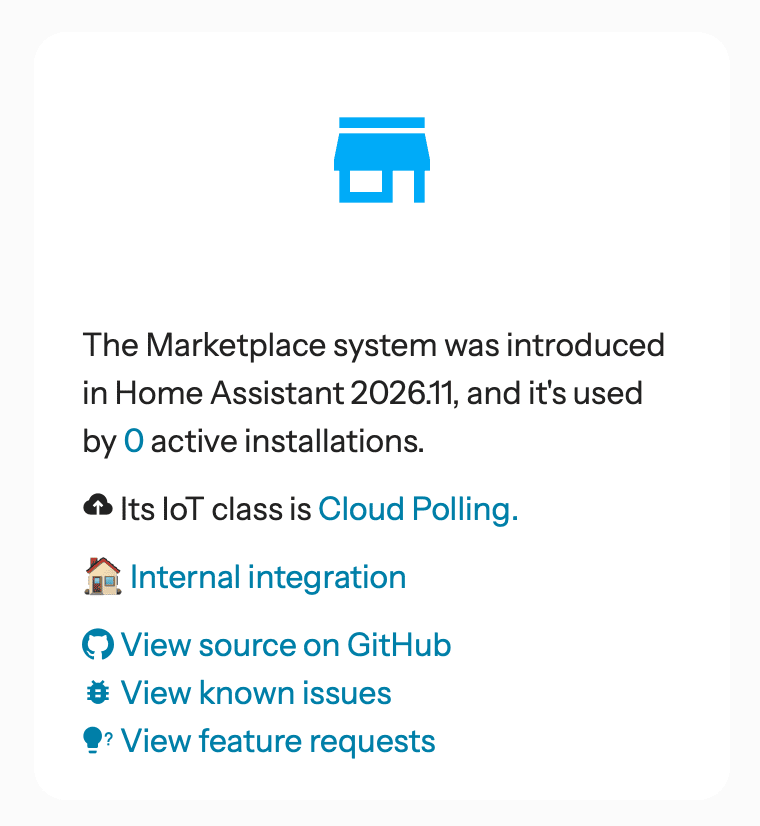
The Marketplace integration and interface were merged into Home Assistant’s dev branches this week. Its documentation suggests Home Assistant Core 2026.11 as the intended release.
(Source: GitHub, Open Home Foundation; Image: Open Home Foundation/Frenck, Matter Alpha/Ward Zhou).