SwitchBot, renowned for its retrofittable smart home gadgets, made a notable strategic shift at CES 2026, following its successful listing on the Hong Kong Stock Exchange. Moving beyond simple actuators, the company revealed a broader focus on embodied robotics and environmental sensing under its “Smart Home 2.0” initiative.
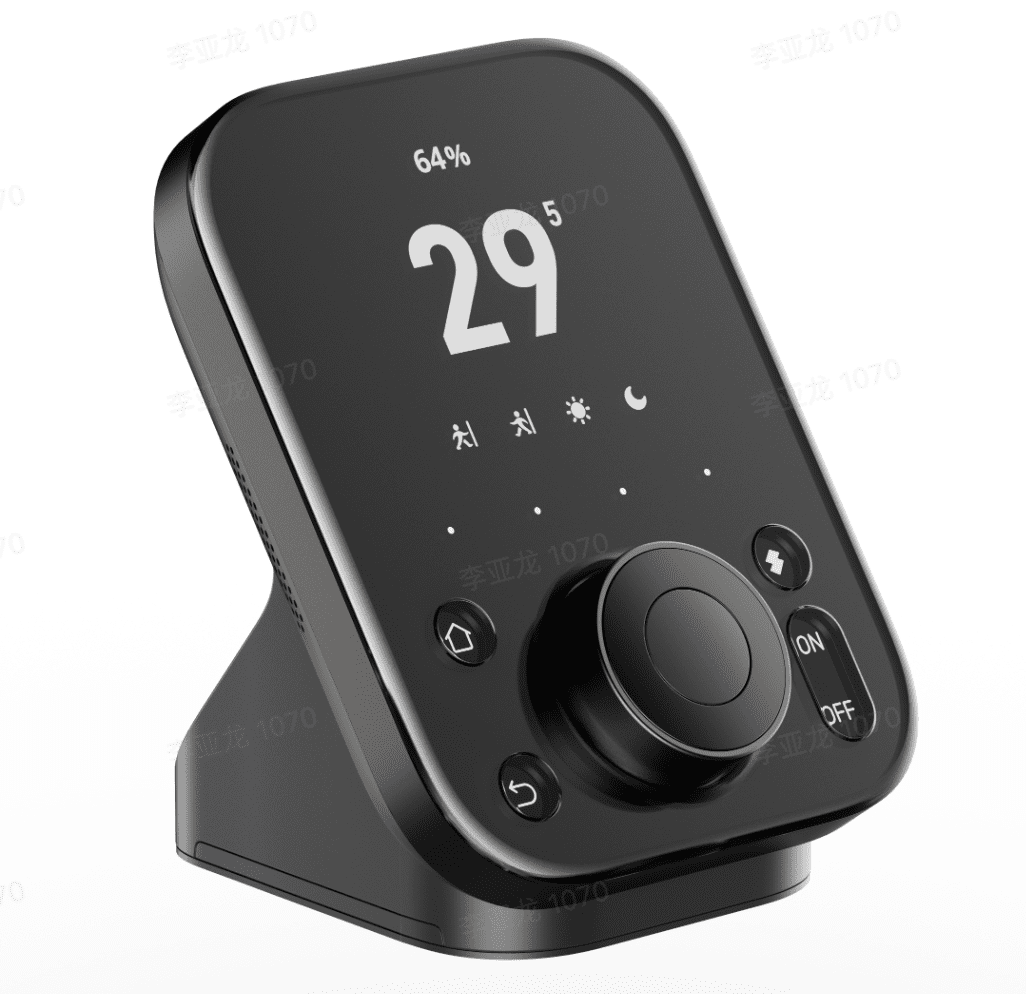
Highlighting this transition were the “Onero H1,” marketed as an accessible AI household robot, and a new SwitchBot Weather Station designed to provide granular environmental data for home automation. However, for Matter smart home users the most immediate addition to the smart home ecosystem is the new Lock Vision Series, which brings advanced biometrics and native Matter support without requiring a separate hub.
Direct Matter connectivity
This latest generation of SwitchBot locks move away from proprietary bridges, gradually phasing away its bridged solution for Matter implementation. Previous SwitchBot products often required a Matter Hub like SwitchBot Hub 3 to bridge Bluetooth devices to Matter. The new Lock Vision Series supports Matter-over-Wi-Fi directly. This allows for immediate, hub-free integration with major platforms such as Apple Home, Google Home, and Home Assistant. Users can monitor lock status and control the deadbolt remotely or via voice commands through their preferred ecosystem as soon as the device is installed.
Lock Vision Series
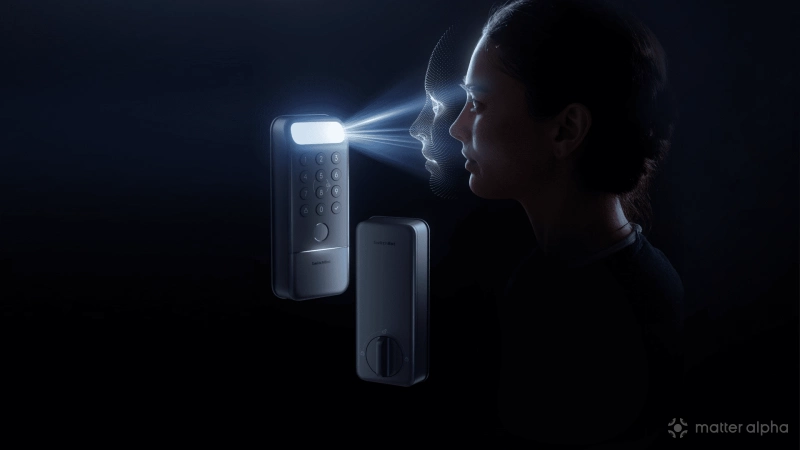
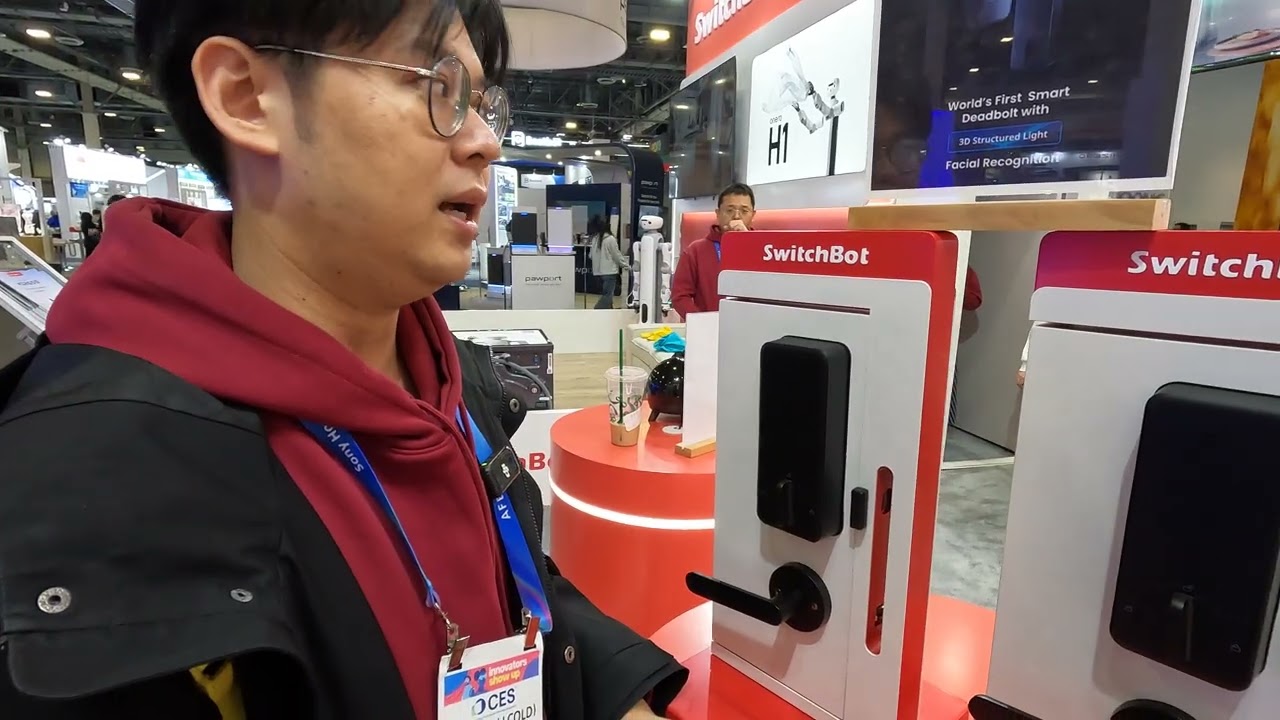
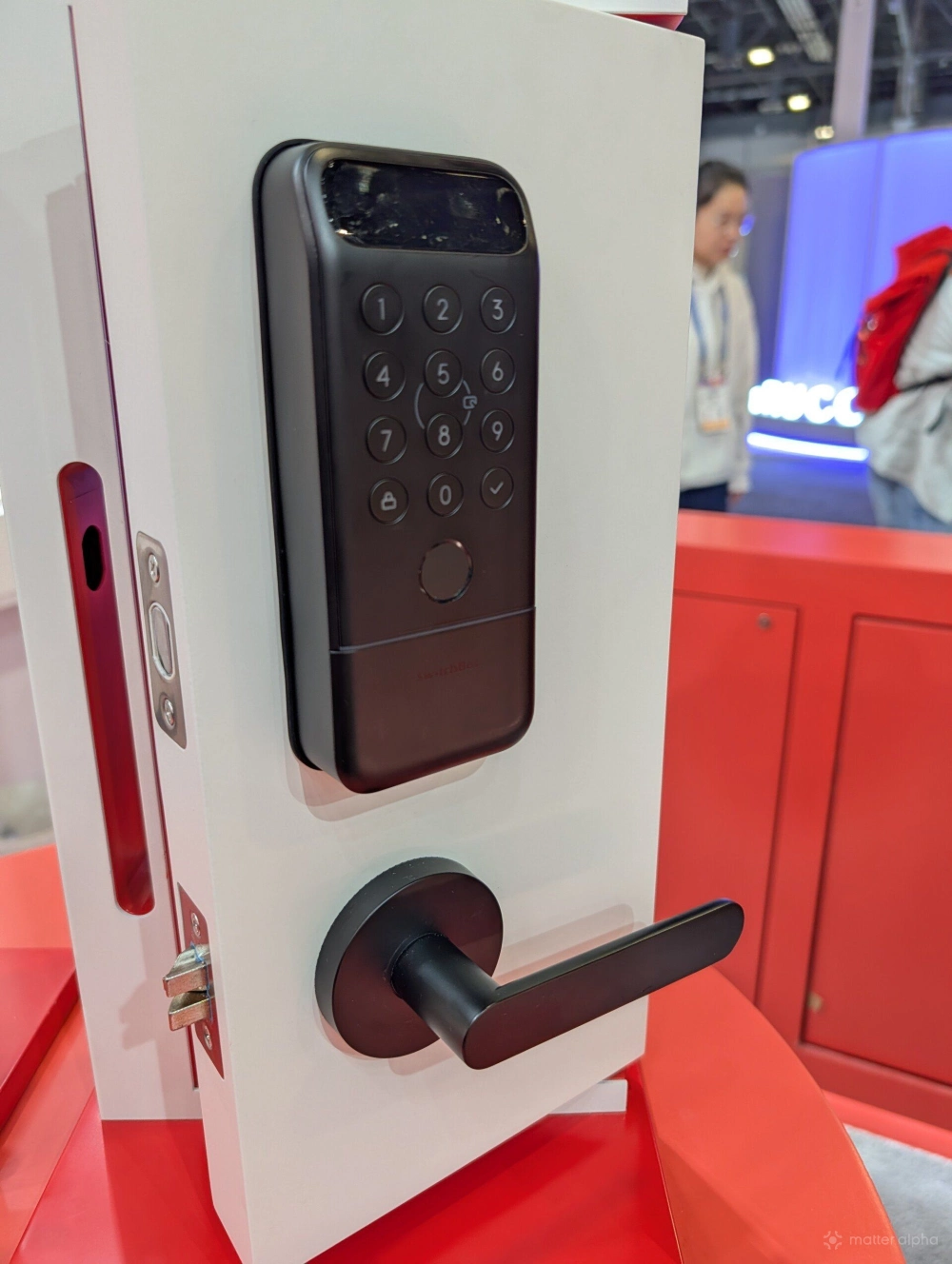
SwitchBot Lock Vision Series is the new flagship entry from SwitchBot, two smart deadbolts designed to replace existing lock hardware rather than retrofit over it. The standard Lock Vision model features 3D structured-light facial recognition.
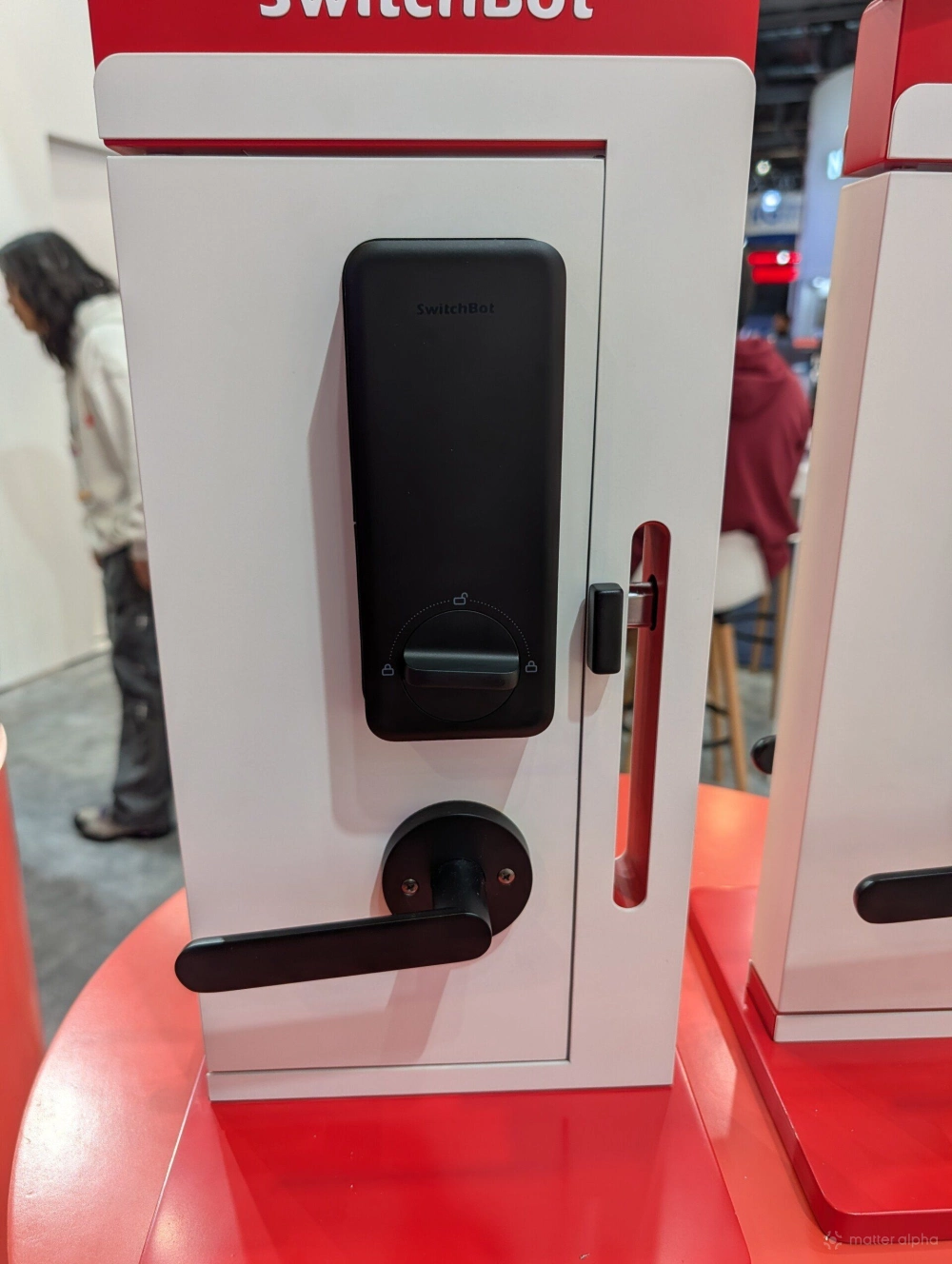
The system projects thousands of infrared dots to create a precise depth map of the user’s face. This depth data allows the lock to distinguish between a real face and a photo or video, preventing spoofing attempts. The technology is designed to work in various lighting conditions and can recognize users wearing glasses, hats, or makeup. All biometric data is stored locally on the device to ensure privacy.
Biometrics and Palm Vein recognition
For users seeking additional unlocking methods, SwitchBot introduced the Lock Vision Pro. This advanced model includes all the features of the standard version but adds contactless palm-vein recognition. Using near-infrared sensors, the lock scans the unique vascular patterns inside a user’s hand.
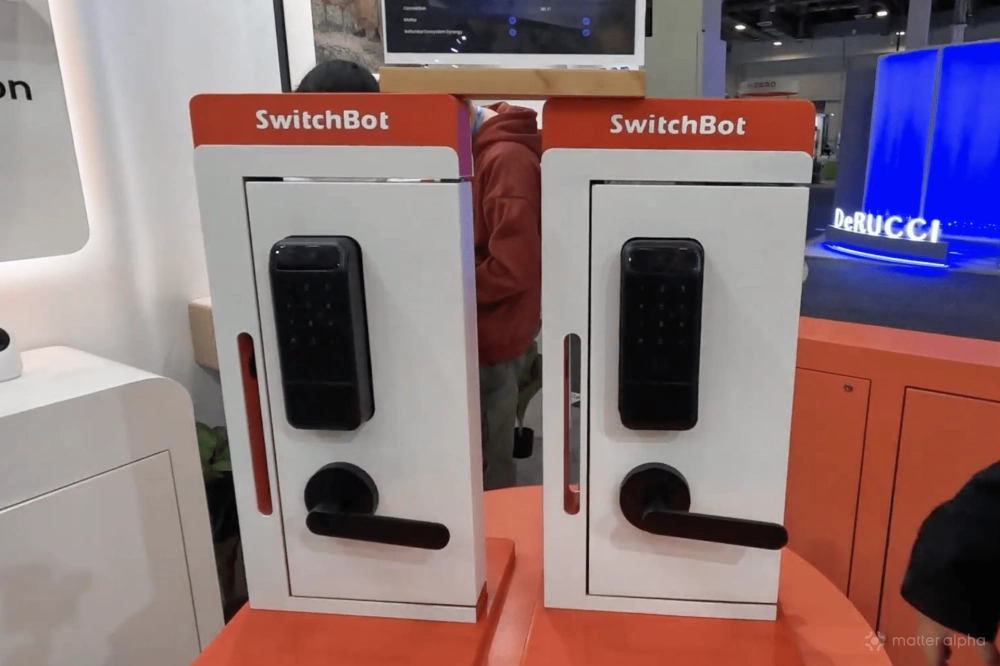
This method is particularly useful in scenarios where fingerprints might fail, such as when hands are wet, dirty, or worn. While the standard Lock Vision relies on facial recognition, passcodes, and NFC, the Pro model offers palm recognition as a robust alternative for seamless entry.
Dual-power system and installation
Reliability remains a primary concern for smart locks, especially those utilizing high-power features like radar and facial scanning. To solve this, SwitchBot implemented a “DualPower” and “DualBackup” system. The lock is powered by a primary 10,000mAh rechargeable battery estimated to last up to six months. It is backed up by a secondary CR123A battery that can provide up to five years of standby time or 500 emergency unlocks if the main battery is depleted.
The device also utilizes millimeter-wave radar to manage power consumption efficiently. The system remains in a low-power state until the radar detects a person approaching the door, at which point it wakes the biometric sensors for rapid unlocking. The lock fits standard door preparations with cross-bore holes of 38 millimeters or 54 millimeters and supports standard backsets. It includes a USB-C port on the exterior keypad for emergency power access.
*Affiliation Note: SwitchBot is a CES sponsor of Matter Alpha.
(Source: SwitchBot)