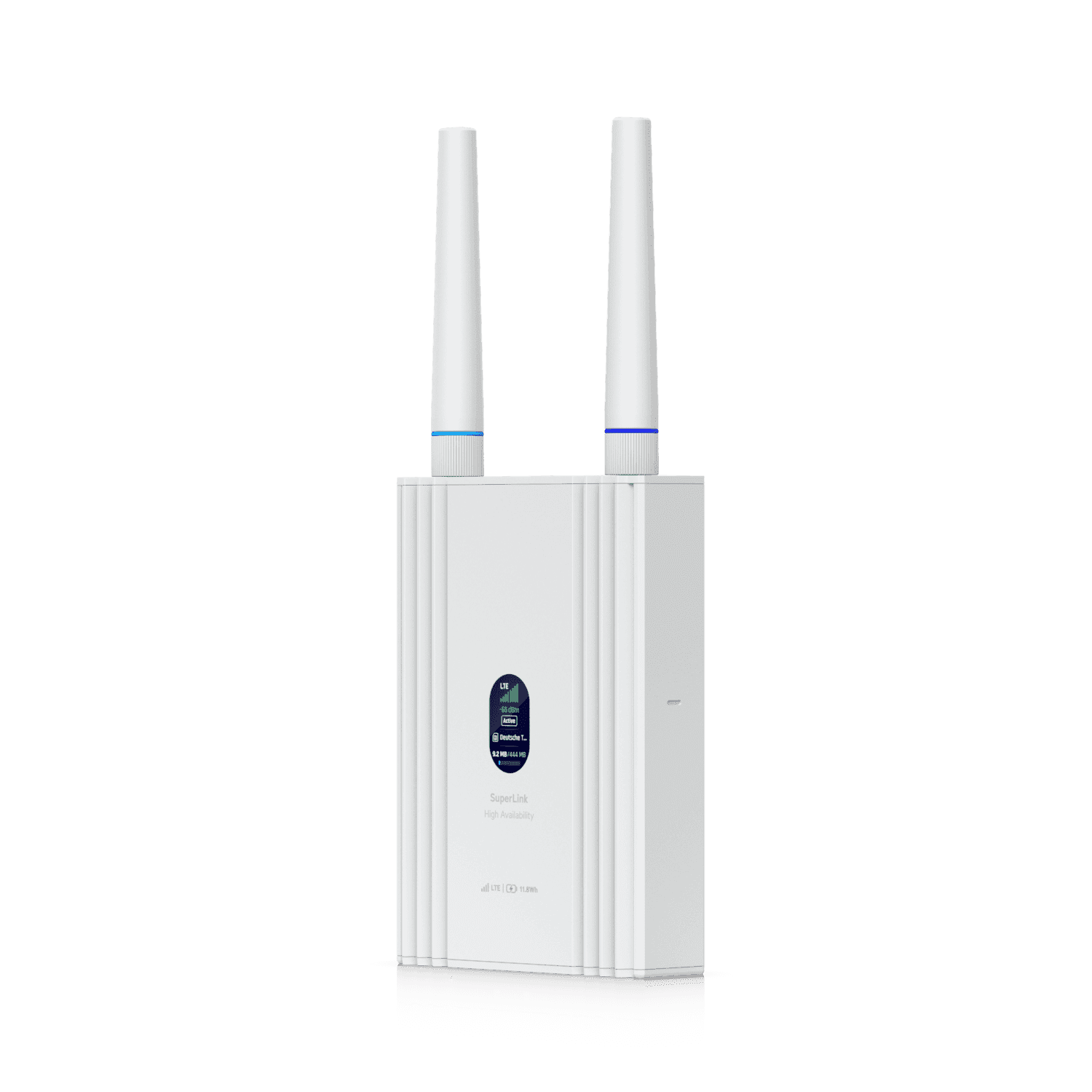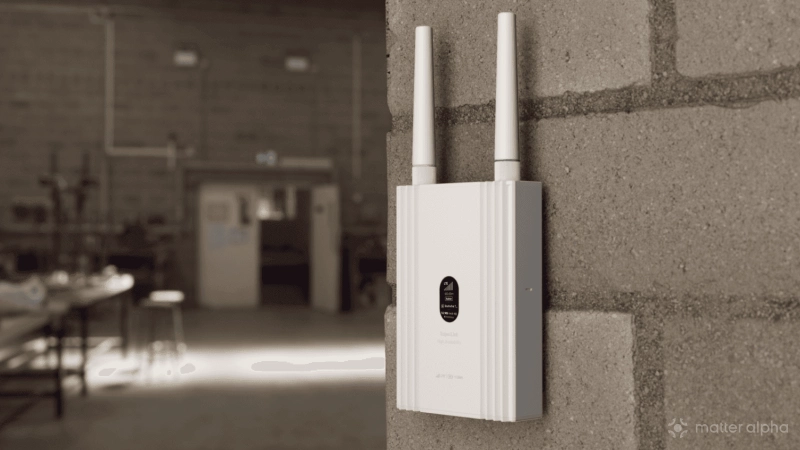
A Google Thread engineer recently highlighted Ubiquiti’s upcoming SuperLink Gateway HA on Linkedin, which adds Thread connectivity to the company’s professional IoT gateway.
The move comes only months after Ubiquiti joined the Thread Group at the end of last year. At the time, the obvious expectation was a professionally managed Thread border router. The finished hardware raises a larger question.
Ubiquiti has paired a regular 2.4 GHz Thread radio with the sub-GHz hardware already used by SuperLink, just as long-range connectivity is rumored for Thread 2.x. It is too early to call the gateway ready for the next Thread generation, but its hardware may give Ubiquiti a useful starting point.
From proprietary SuperLink to open Thread
Ubiquiti developed SuperLink as a proprietary sub-GHz protocol for its own security sensors. It offers long range and tight integration with UniFi Protect, but keeps devices within Ubiquiti’s system.
The SuperLink Gateway HA suggests the company is now exploring an open alternative alongside that proprietary network. The gateway retains SuperLink while adding a Thread border router for third-party Thread devices.
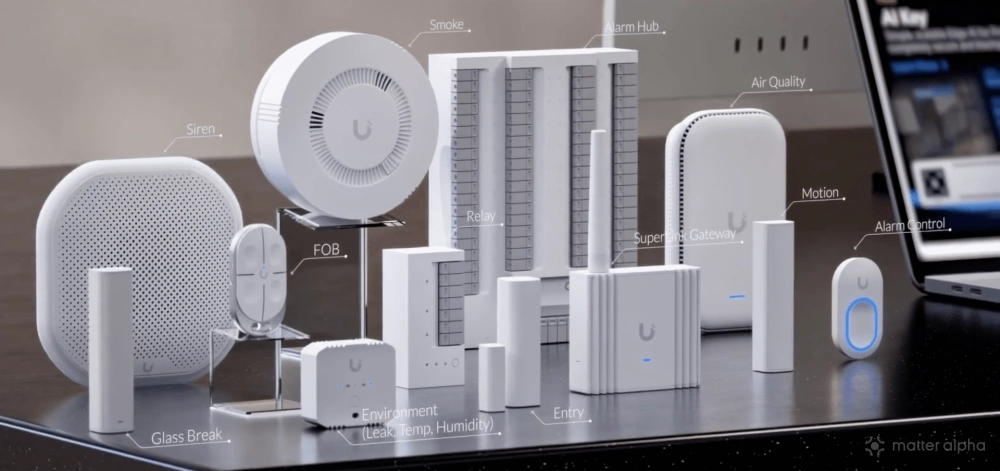
For now, the two connectivity options sit side by side. SuperLink continues serving Ubiquiti’s sensor portfolio, while Thread gives the company a route into a wider device market built around an open standard.
Ubiquiti has not announced a Matter Controller, Matter bridge, or direct Matter device management through UniFi Protect. A Thread border router only provides network access, but it gives the company the infrastructure needed to explore those functions later.
Matter Alpha has yet to get Ubiquiti contact on this product.
Dual-radio hardware for a possible Thread 2.x future
The gateway’s radio design is the most relevant part of the Thread 2.x discussion.
Its Thread radio operates in the standard 2.4 GHz band, supports up to 128 clients, and has a claimed range of up to 100 meters. The separate SuperLink radio uses regional sub-GHz frequencies, supports up to 96 clients, and has a claimed range of up to 2 kilometers. Ubiquiti also includes dedicated external antenna connectors.
Thread 2.x is rumored to introduce sub-GHz connectivity for longer-range networks. Lower frequencies could help Thread reach outdoor sensors, detached buildings, and other areas where 2.4 GHz coverage becomes difficult.
The SuperLink Gateway HA therefore has some of the hardware that a future long-range Thread implementation could require: separate 2.4 GHz and sub-GHz radios, regional frequency support, and an external antenna.
That does not mean its SuperLink radio can automatically become a Thread radio through firmware. The potential depends on the exact chipsets Ubiquiti selected, the final Thread specification, regional certification, and whether chip vendors expose the required functions through their SDKs. And Silicon Labs could be important here because it has a dominating position in both Thread and sub-GHz solutions.
A professional Thread border router
The gateway has a more immediate opportunity even without sub-GHz Thread: professional network management.
Most Thread border routers are hidden inside consumer speakers, displays, and smart home hubs. They provide connectivity but expose little information about channels, routing, topology, signal quality, or competing Thread networks.
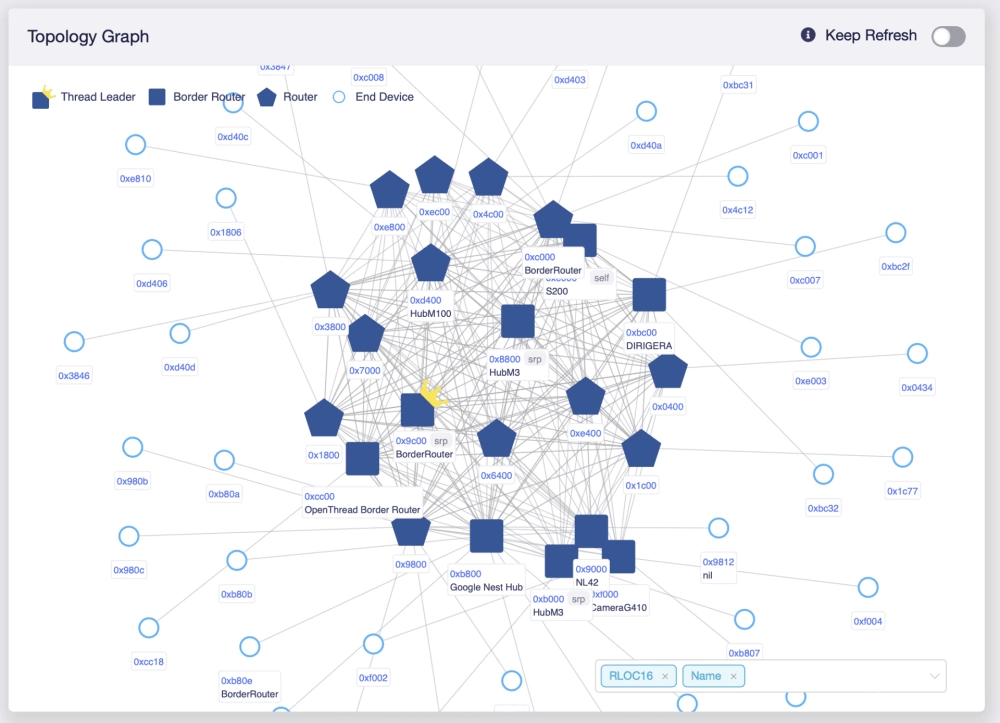
Dedicated products remain limited. GL.iNet offered more advanced OpenThread border routers through the S20 and S200, but those products have received little recent maintenance. This leaves few polished options for installers who need to deploy and troubleshoot Thread as network infrastructure.
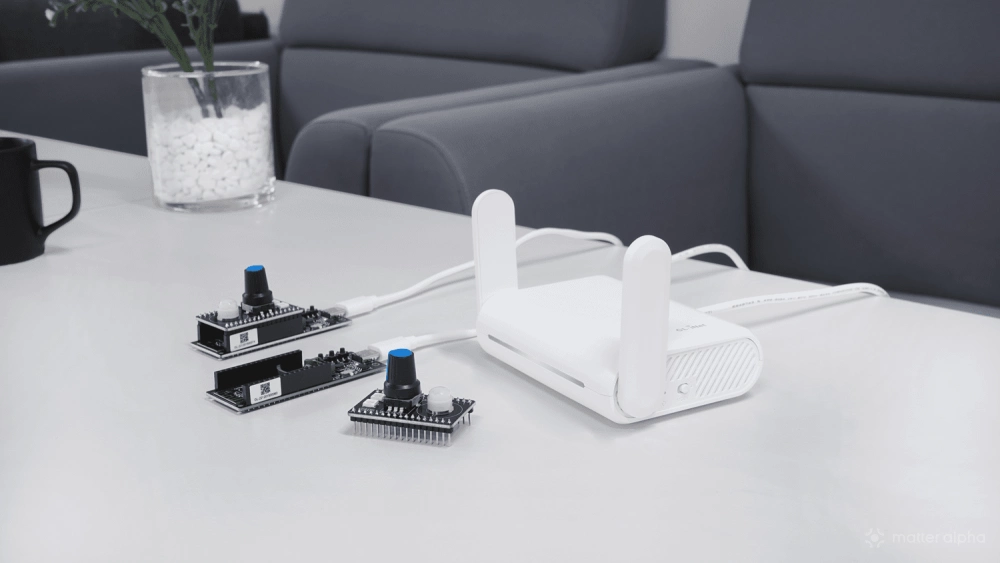
Ubiquiti is known for making complex networking controls easier to access through UniFi. Applying that model to Thread could make the SuperLink Gateway HA valuable for larger homes, offices, hospitality projects, and other professional deployments.
But this remains an opportunity rather than a confirmed feature. Ubiquiti has not shown Thread topology views, channel controls, credential management, network merging, or detailed diagnostics. Simply placing Thread devices inside UniFi Protect would not be enough. The gateway becomes more interesting if Ubiquiti gives installers the same visibility and control they already expect from its Wi-Fi and wired networking products.
A clearer route into the US market
Ubiquiti may also benefit from its position as a US networking company.
Under the new FCC policy, new consumer router models produced outside the US face a direct barrier to receiving equipment authorization. That could make US access difficult for overseas brands developing new routers and Thread gateways.
The SuperLink Gateway HA already lists FCC certification, giving Ubiquiti a clearer route into the market while some competing products may struggle to receive approval. That regulatory advantage could matter as Thread border routers move from hidden smart home components toward professionally installed network infrastructure.
Ubiquiti is not yet ahead on Thread software, and future sub-GHz support remains dependent on the standard, chipset capabilities, and SDK decisions. But the SuperLink Gateway HA puts open Thread connectivity, professional hardware, and a long-range radio into the same product earlier than most competitors.
The gateway is scheduled for release in the third quarter of 2026, priced at $199.
(Source: Ubiquiti; Image: Ubiquiti, GL-iNET, Matter Alpha/Ward Zhou)