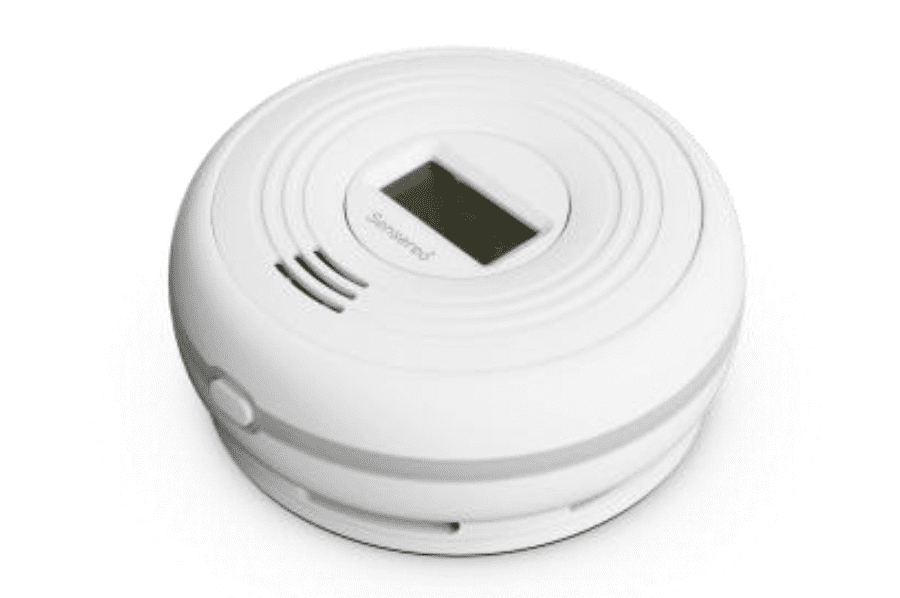
Despite the critical role of safety sensors, native Matter smoke and CO detectors are scarce, unlike other smart home devices since the initial release in 2022. Sensereo continues to address this gap with its new MSC-1 smoke and carbon dioxide alarm, utilizing “Matter over Thread.” The high regulatory bar, including strict international safety certifications, combined with complex development, explains why few companies, like the previously leading Heiman (which pivoted to industrial projects), are in this essential category.
So it is always a pleasure to see new entrants to the market, even though there are more regulatory requirements to consider alongside the software development, creating a high bar to ensure these critical safety devices work reliably when lives may depend on them.
Sensereo sent us an early production unit for comprehensive testing. After spending several weeks testing it at home across five notable Matter platforms, here are my detailed thoughts on how it performs in real-world conditions.
TL;DR:
Pros:
-
Solid build and clean design
-
Stable Thread connectivity
-
Fast recovery after power/Thread outage
-
Rich options in Home Assistant
-
Responsive sensening with adjustable sensitivity
-
Clear digital display showing CO levels and battery status
-
Loud, distinctive alarm patterns
Cons:
-
Battery life drops noticeably in heavy multi-admin
-
Features limited in certain platforms
-
High sensitivity may cause false alarms
Sensereo Smoke and Carbon Monoxide Alarm
Design and build quality
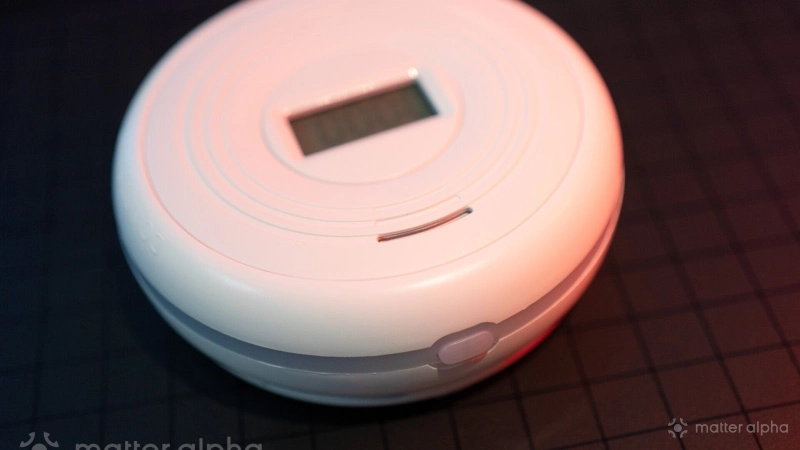
The first thing I notice about the Sensereo MSC-1 alarm is its solid build quality and attention to detail. It features a clean, round design that feels substantial and looks modern when mounted on a ceiling. The device measures approximately 11 cm in diameter and has a low-profile design that won’t look out of place in contemporary homes.
There is a built-in LED ring around the perimeter that serves as a highly visible status indicator, cycling through different colors and patterns to communicate various states. A small but clear digital display prominently shows both the current battery level and real-time CO concentration readings in parts per million (ppm). This is a significant improvement over traditional alarms that rely solely on confusing patterns of blinking lights to communicate status, often leaving homeowners guessing about what different blink sequences mean.
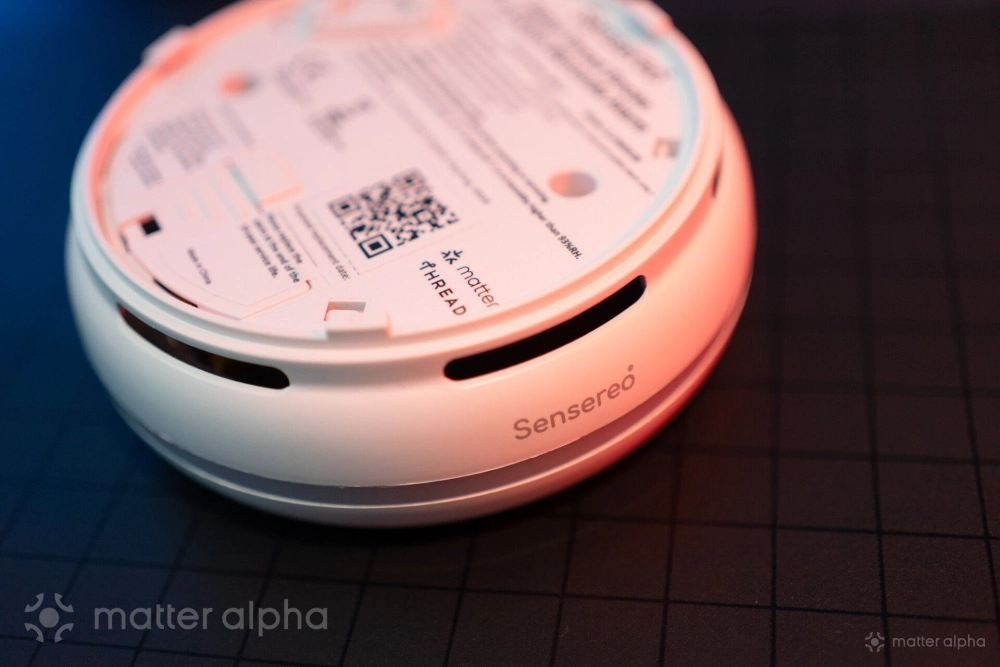
The front face features a strategically placed siren grille with elongated slots that allow the 85dB alarm to project clearly throughout the room. The acoustic design appears well-thought-out, with the sound being both loud enough to wake you from sleeping.
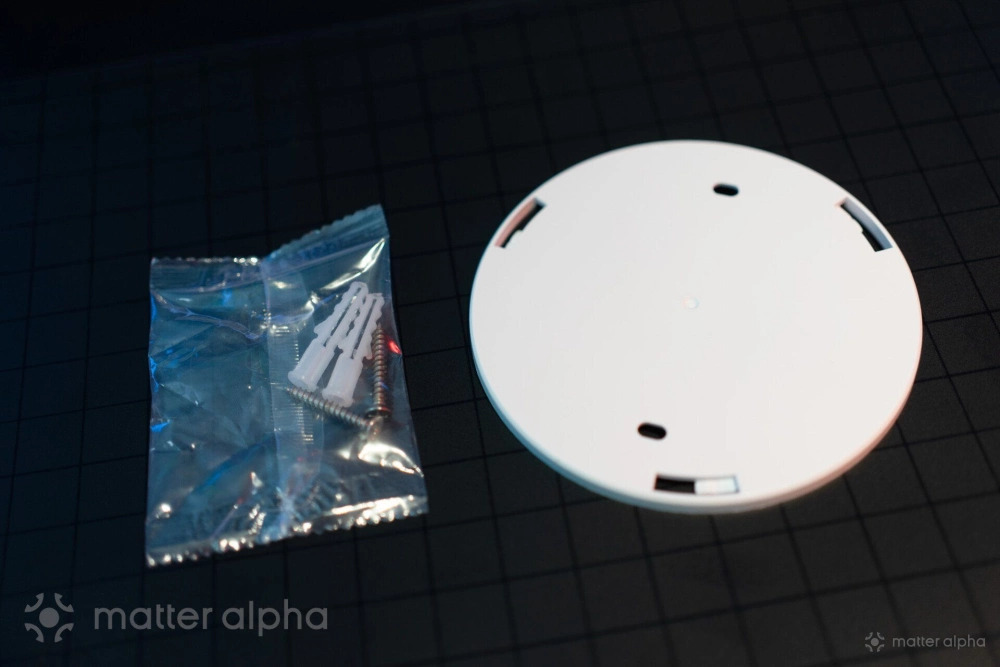
The mounting system has a user-friendly design. The mounting panel installs easily with standard screws. More importantly, the detector unit can be quickly twisted off for maintenance without requiring tools - a crucial feature when you need to replace batteries or perform routine testing. The mount also includes a side-accessible test button that’s easy to reach even when the unit is installed on high ceilings, plus a small physical toggle switch that temporarily disables the sensors when you’re doing activities that might trigger false alarms, such as cooking or using cleaning products.
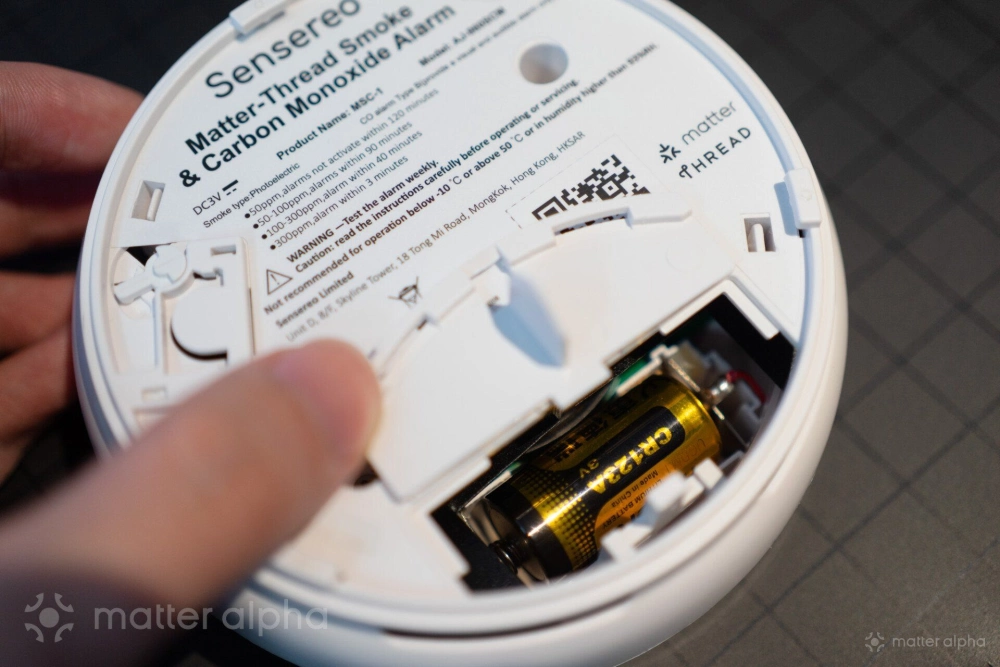
Unlike some cheaper alternatives that feel flimsy or use thin plastics, both the mounting hardware and the main unit feel substantial and built to last. The materials can bear high temperatures so it should survive sudden accidents and alarm still.
Setup and Matter features
The initial pairing process proved refreshingly smooth across all six platforms I tested: Home Assistant, Apple HomeKit, Google Home, Samsung SmartThings, Amazon Alexa, and Homey. Because the device uses Thread for connectivity, it does require a compatible Thread border router in your network - this could be an Apple TV 4K, HomePod mini, Google Nest Hub (2nd gen), Amazon Echo (4th gen), or a dedicated Thread router. However, once this requirement is met, the actual pairing process is straightforward using standard Matter QR codes.
The Thread connectivity itself proved to be exceptionally stable throughout my testing period. Unlike Wi-Fi devices that sometimes struggle with intermittent connection issues, the MSC-1 maintains consistent communication with all connected platforms simultaneously. When I deliberately power-cycled the MSC-1 to test recovery behavior, the detector reliably reconnected within 1 minute.
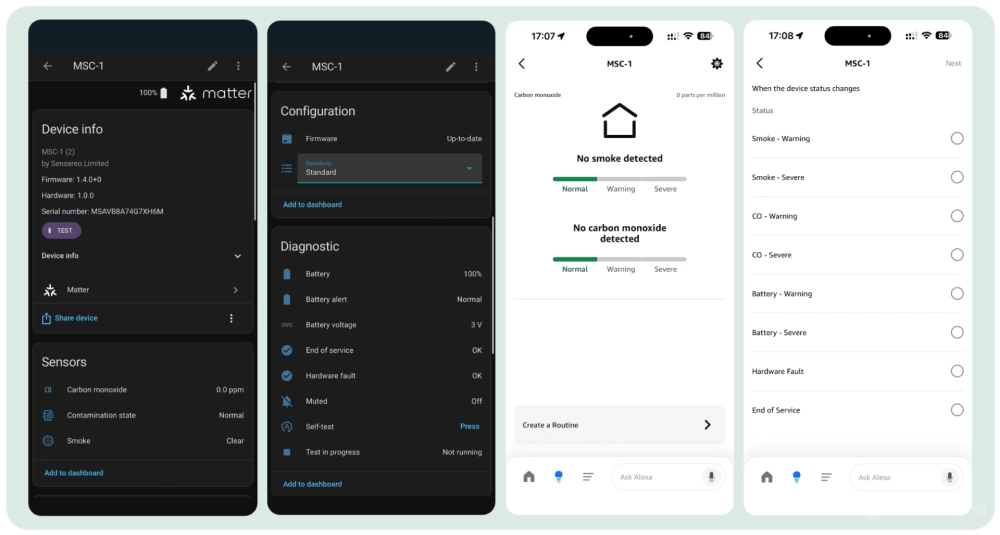
However, the feature set and user experience varies significantly depending on which platform you choose as your primary controller. Home Assistant clearly offers the most comprehensive integration, providing access to advanced settings including sensitivity levels that can be adjusted between “low,” “standard,” and “high” modes. The Home Assistant integration also exposes a wealth of diagnostic data including detailed hardware fault reporting, precise battery voltage readings, self-test status, and even indicates when the device is currently in muted mode. This level of detail is invaluable for monitoring the health of such a critical safety device.
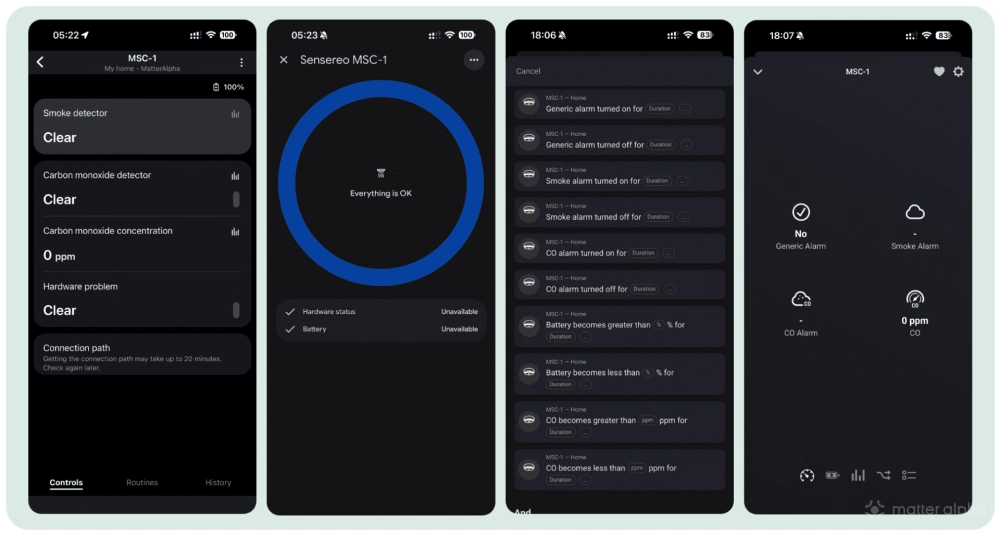
SmartThings and Homey also provide good integration, showing hardware status information alongside the basic smoke and CO detection states. Both platforms properly display battery levels and can trigger automations based on alarm conditions.
Alexa has a well-designed interface in app, with full automation triggers support from the sensor, including smoke level, CO level, and hardware fault.
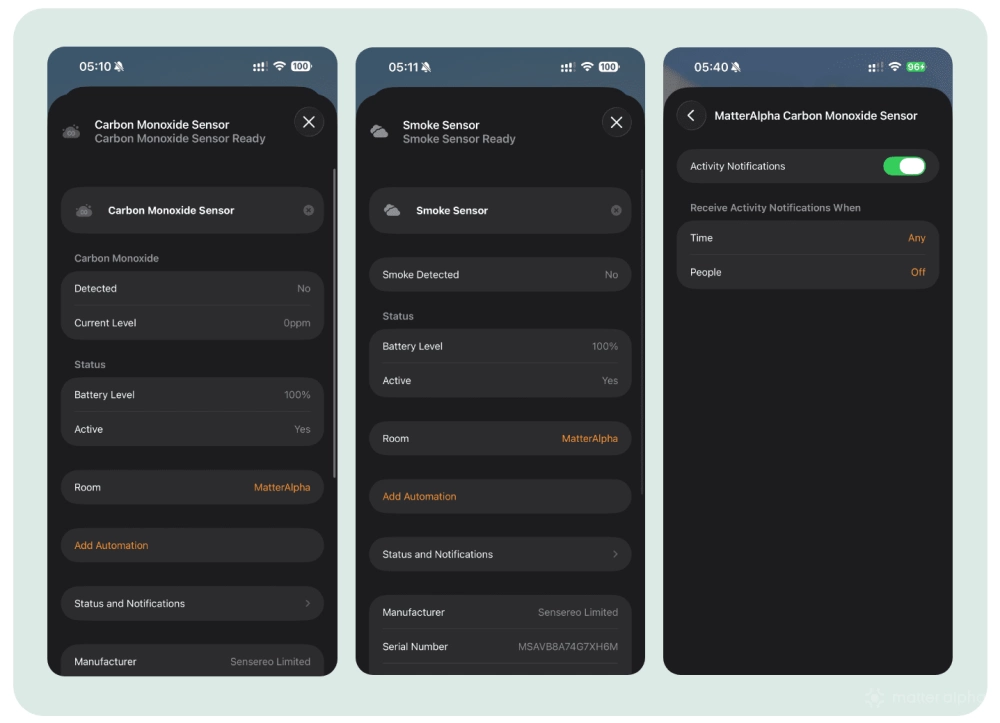
Apple Home takes a more streamlined approach, focusing primarily on status reporting and push notifications when alarms are triggered. While it doesn’t offer the granular controls available in Home Assistant, the integration feels polished and reliable for basic monitoring and alerts.
Unfortunately, Google Home currently provides the weakest experience. The device appears as a combined sensor card, but battery status and hardware diagnostics frequently show as “unavailable” in the Google Home app. This appears to be a broader compatibility issue affecting various Matter smoke detectors in Google’s ecosystem, rather than a problem specific to the Sensereo device.
Day-to-day performance
The Thread connectivity stands out as one of the device’s strongest features in daily use. Throughout several weeks of testing, the MSC-1 never went offline unexpectedly, and it consistently recovered quickly after planned network maintenance or power outages. The mesh networking capabilities of Thread also mean that the device can mesh with other Thread devices in your home, creating redundant communication paths that improve overall reliability.
For smoke detection testing, I used controlled smoke sources including incense sticks. The photoelectric sensor proved appropriately sensitive, detecting even relatively low concentrations of smoke particles within 15-30 seconds while avoiding the hair-trigger sensitivity that leads to frequent false alarms.
For kitchen installations, you may want to consider adjusting the sensitivity to “low” mode through Home Assistant to prevent false alarms from normal cooking activities.
The electrochemical CO sensor also performed well in testing, with the digital display showing real-time concentration changes fast when exposed to CO sources. The readings update quickly, so you can act or let it trigger automation to cut off pipelines or appliances.
Battery life monitoring showed the CR123A cell dropping from 100% to approximately 78% during my intensive multi-platform testing period within a month. Under normal single-platform usage, I would expect 12 months of battery life, which is typical for a Thread device. You can set automations to remind you to replace it.
Sensereo Smoke and Carbon Monoxide Alarm
Final thoughts
Sensereo has delivered an impressive entry into the niche Matter market. The combination of solid build quality, reliable Thread connectivity, and extended Matter feature makes it stand out among bridged rivals.
While battery life during heavy multi-platform usage and limited integration in certain platforms present minor concerns, the overall package represents a significant step forward for Matter-native safety devices.
The visual CO display and sensitivity controls available through Home Assistant set this device apart from simpler alternatives, making it an excellent choice for users who want both safety and flexible smart home integration without compromise.
Sensereo MSC-1 is now available for pre-order, with an early-bird price of $69.99.
Editor's Note: This article was sponsored by Sensereo.