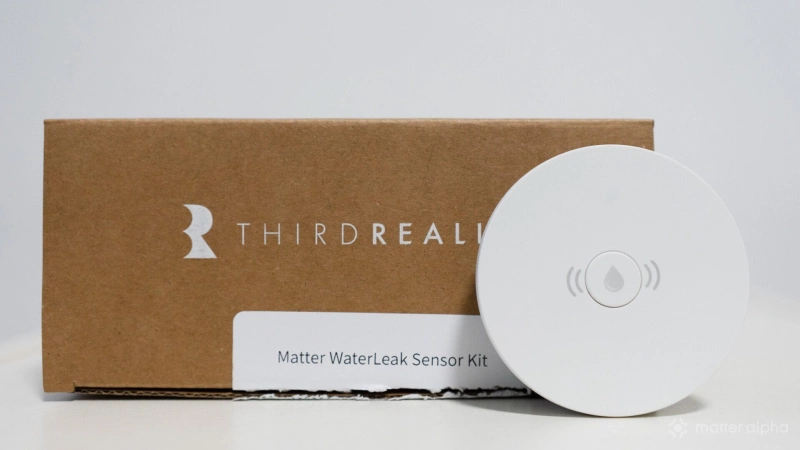
ThirdReality is a notable device maker in the smart home space for its iconic design and embrace to open standards. Its latest release, the Matter Water Leak Sensor Kit KM1, fills a significant gap in the ecosystem. While native Matter water sensors have been slow to reach the market due to power and range constraints, this new kit offers a smart workaround. It utilizes a central Matter enabled siren, paired with three satellite sensors connected via a 433MHz radio frequency for superior long-range communication.
By offloading the sensor communication to a low-frequency radio band, the kit brings reliable leak detection to the very edge of a home, including basements, garages, and distant laundry rooms. After a month of testing, here is a detailed look at how this kit performs.
Smart WaterLeak KM1
TL;DR
Fors
-
Innovative long-range solution
-
Sensitive and fast leak detection
-
Stable connectivity
-
Scalable kit (up to 10)
-
Budget-friendly price
Againsts
-
Incompatible with SmartThings (a fix is coming)
-
Battery reporting issue
-
Lags and crashes on heavy multi-admin (4+)
An integrated and scalable kit
ThirdReality opted for a hybrid communication strategy to tackle the dual challenges of low power consumption and wireless range. Standard Wi-Fi or Thread sensors often struggle with battery life or signal penetration through thick walls and floors, which is why native Matter leak sensors remain a rarity.
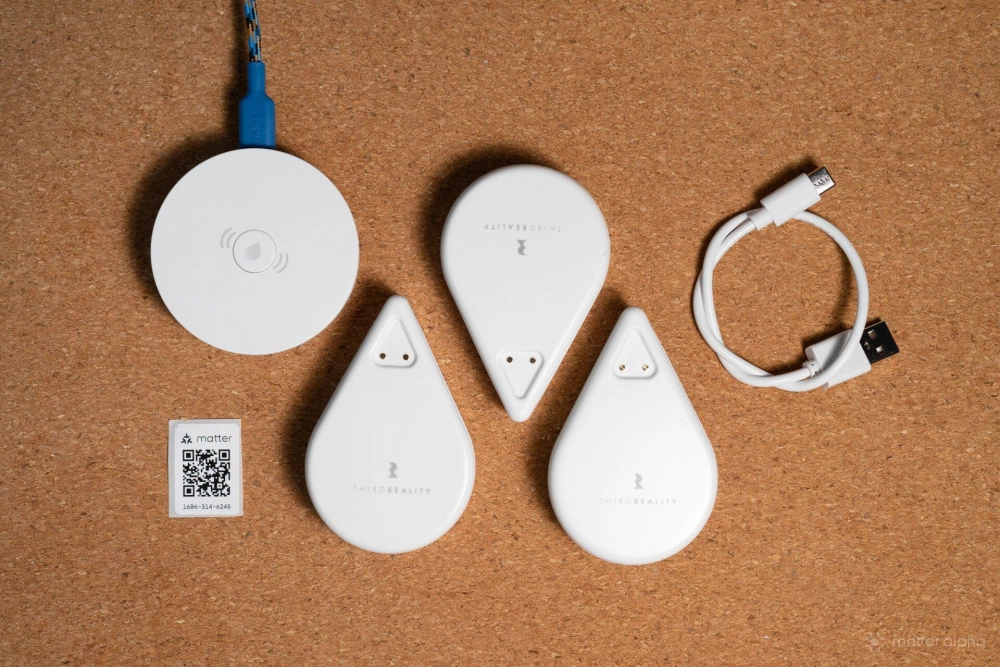
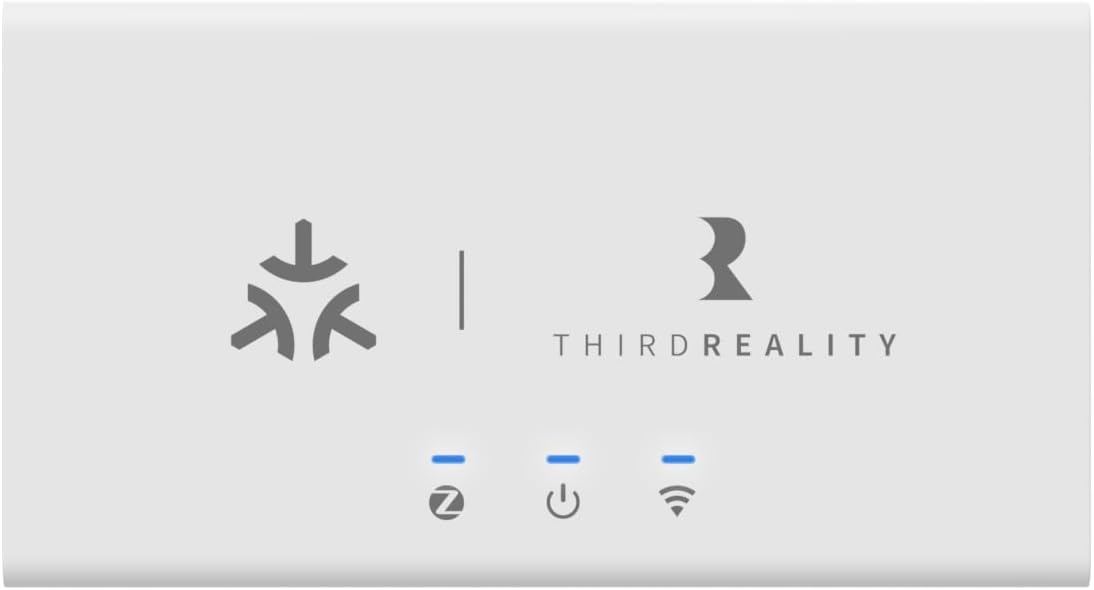
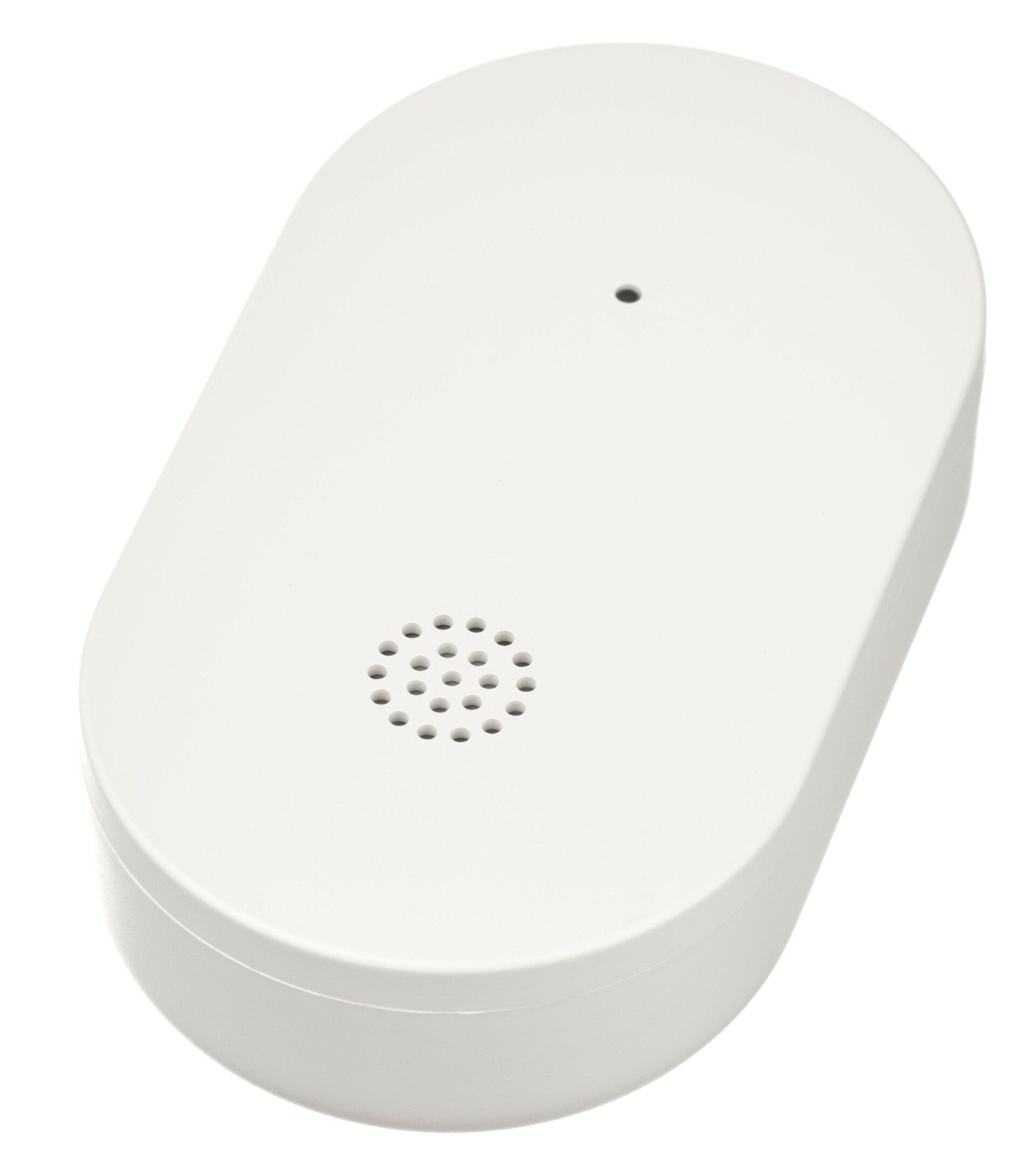
The new kit utilizes a siren (they call it a controller) that serves as a central “hub” or “bridge”. This siren communicates with a smart home network via Wi-Fi and talks to the satellite sensors using a low-power radio frequency. This intuitive design allows the siren to be placed in a central location, such as a living room or hallway, where the alarm can be heard clearly.
Meanwhile, the sensors can be tucked away in high-risk areas like under sinks or behind washing machines.
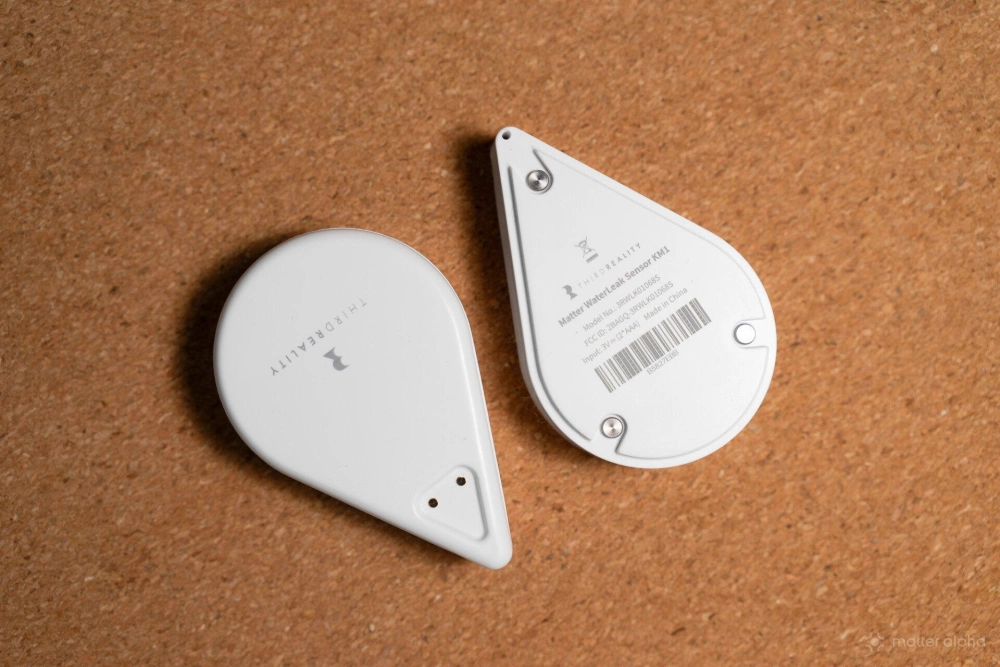
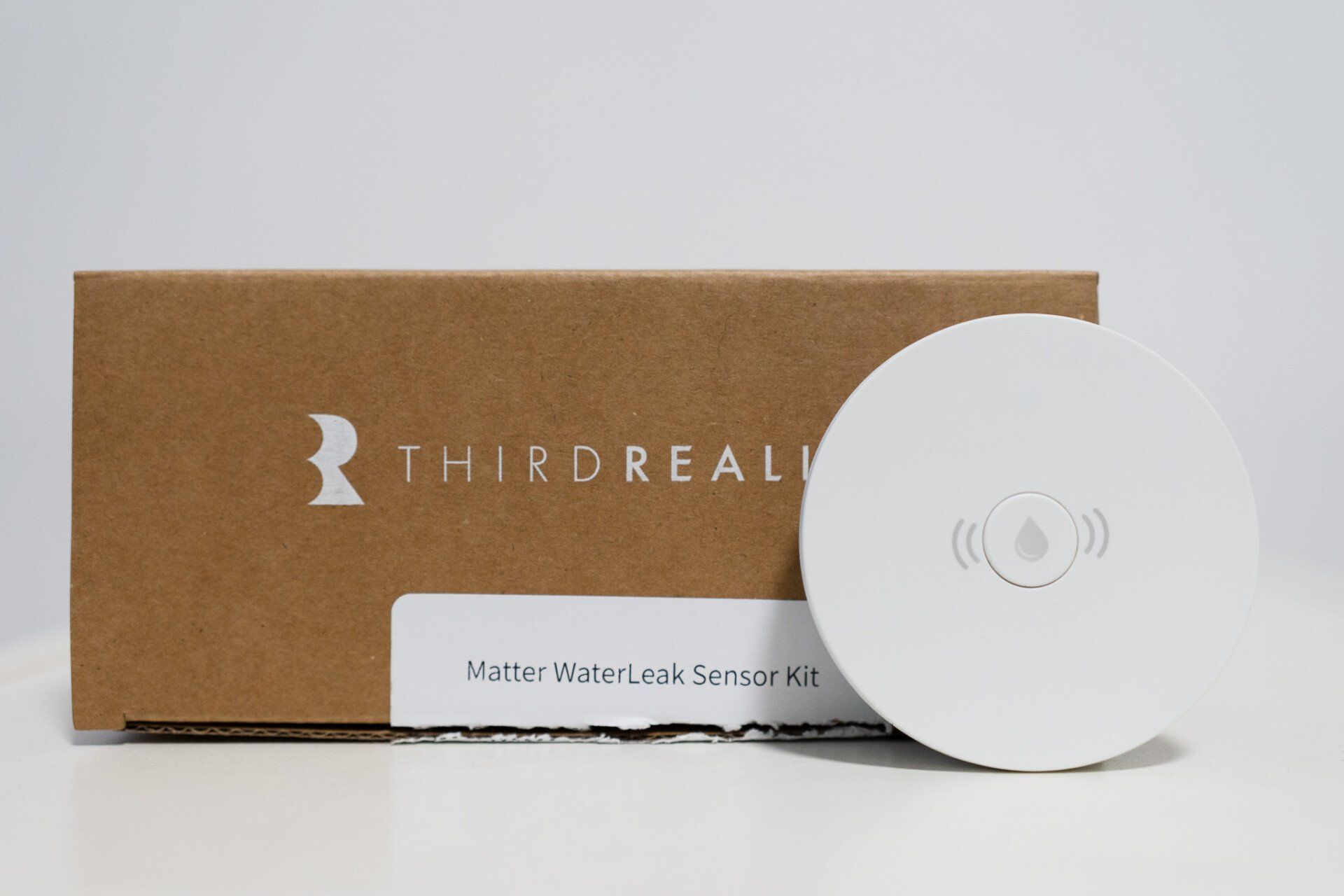
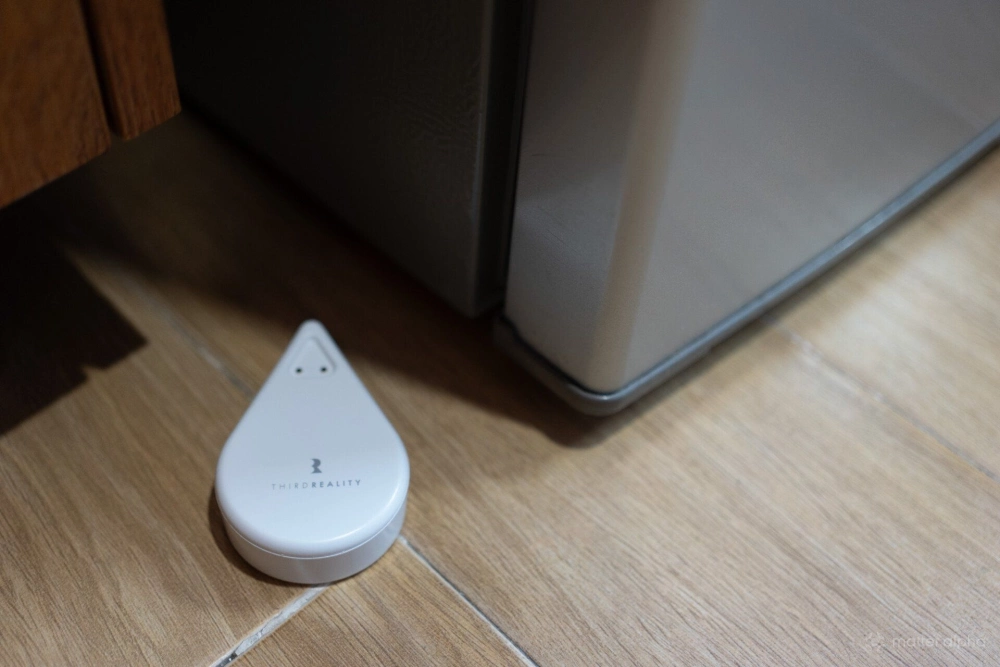
The sensors feature a refreshing design update compared to previous models from the company. While they maintain a signature water-drop shape, the new version adds contact points on the top of the housing. This clever addition ensures that water dripping from pipes above can be detected immediately, potentially catching a leak before it even pools on the floor.
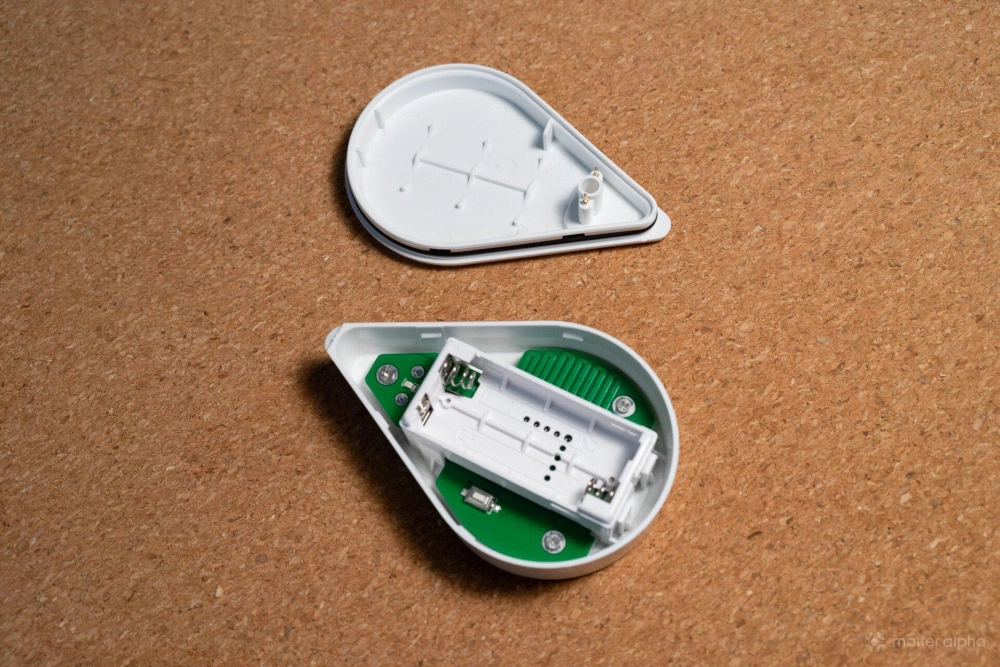
Each sensor is powered by two triple-A batteries. The battery compartment lid is screw-free, making it easier to open than earlier iterations, and it includes solid rubber seals to protect the internal electronics from water.
The siren is powered via a standard USB-C connection. While the kit includes a cable, it is notably short at roughly 25 cm, which may limit placement options without an extension. However, it proved compatible with standard third-party power cables.
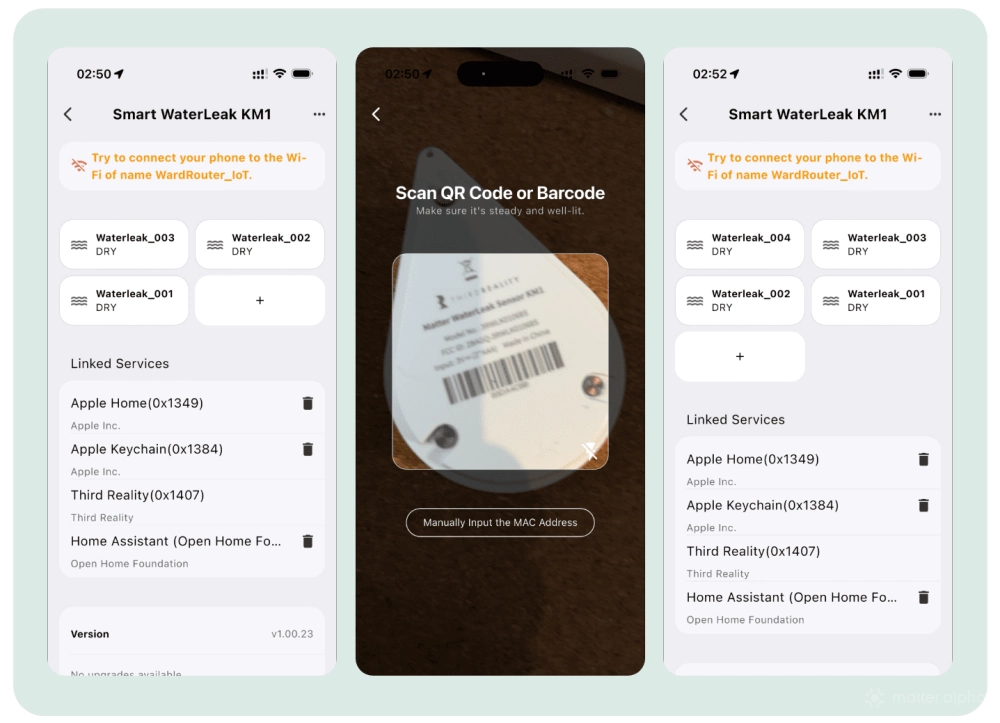
The base kit includes three sensors but is highly scalable. Users can add additional sensors by scanning barcodes within the manufacturer application. Once paired locally, these new entries propagate to connected Matter platforms automatically. The manual notes you can add up to 10 sensors to the kit.
Onboarding and multi-platform experience
Thanks to the updated Matter 1.4.1 specification and the Wi-Fi 6 standard, the experience is overall solid. The setup and device sharing processes are smooth, and connectivity issues are rare when using the sensor kit with just two platforms. It is a great advancement that ThirdReality now utilizes Wi-Fi 6, a critical standard that saves internet-of-things devices from heavy Matter traffic, unlike the dated Wi-Fi 4 standard that is still popular on the market.
During testing, the device was added to Apple Home, Home Assistant, Google Home, and Samsung SmartThings. The sensor works well on Apple and Home Assistant, with all sensor information exposed natively as water leak detectors. Apple also triggers a critical notification when a leak is detected.
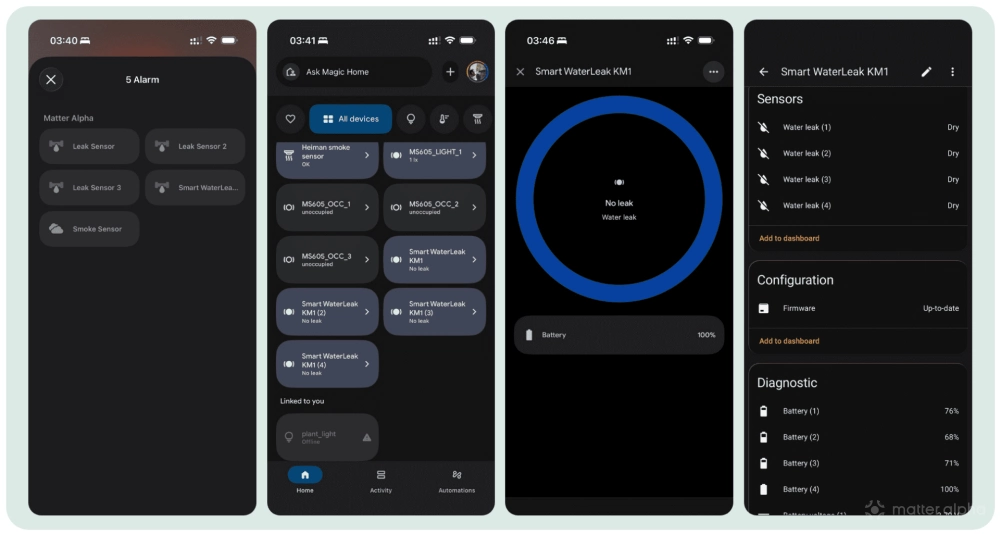
The sensor kit appears to have a fabric limit of five. Its vendor application operates as a local Matter control, which also takes one of those slots. Because of this, users may only be able to add the kit to two or three third-party platforms, which is generally enough for the average home.
A severe issue spotted during testing was that Samsung SmartThings cannot correctly add the sensor kit, returning a registration failure error even though its fabric already showed up. With more attempts, the sensor was successfully added to the SmartThings app, but only one sensor showed up, and the details page was stuck at “the device hasn’t updated all of its status information.” ThirdReality said SmartThings is working on a “driver” to get it working as soon as later this month (March 2026).

The sensor battery levels can be viewed on Apple, Google, and Home Assistant. However, on Apple Home, the battery level for each sensor displays incorrectly, showing an identical reading across all units, which is a known issue of Apple.
The battery tracking seems to be calibrated using standard 1.5V dry batteries. If you prefer to use rechargeable 1.2V batteries, the system will usually show a 70 percent level even at full capacity.
Daily experience
The sensor is very sensitive and fast in standard conditions. A simple finger contact is conductive enough to trigger the siren. During testing, the sensor was successfully triggered two rooms away from the siren, and the communication still worked flawlessly. While the max distance between sensors and the siren controller is 100 meters on paper.
However, when stressing the system by adding it to five different Matter platforms at once, noticeable lag appeared. Sometimes the state changes would get stuck until the controller initiated a re-interview. Because the siren itself shows immediate visual and sound alarms, it is safe to assume the Wi-Fi or Matter processing slowed down the remote notifications.
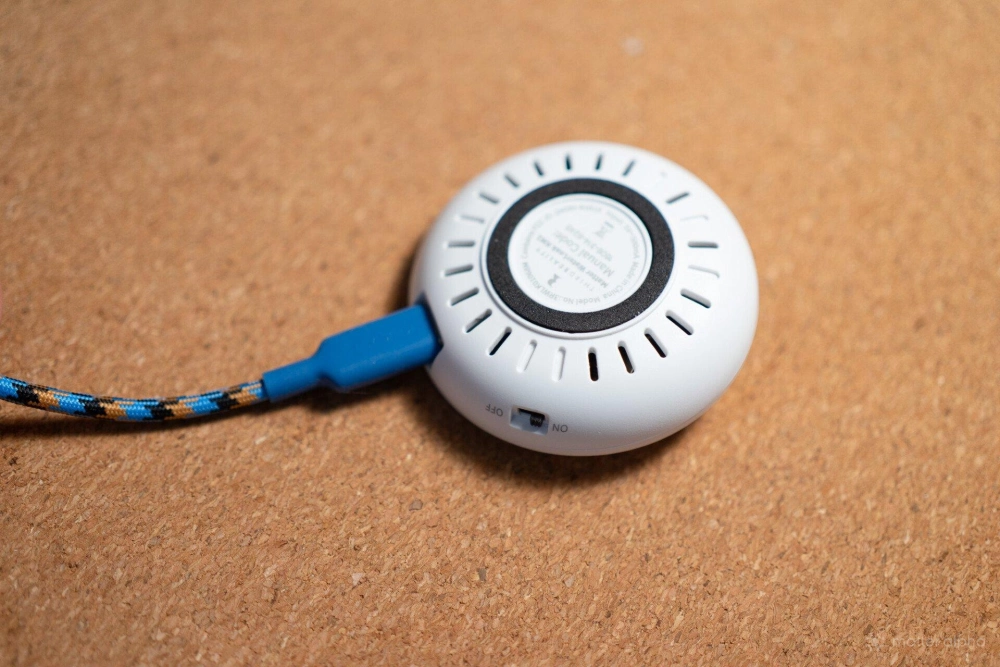
The siren is loud enough to be heard when you are in the next room, but its overall volume is slightly lower than a regular smoke alarm. There is a small physical toggle on the siren, so users can easily mute the audible alarm and rely strictly on smart home platforms for digital notifications and automations.
Final thoughts
The ThirdReality KM1 is a good option for most users. The long-range communication and native Matter support make it a unique offering. If you do not want to invest in a Thread network yet and prefer a safe and reliable option, this kit is the way to go.
There are minor issues, like inaccurate battery reporting and slow response under heavy multi-admin conditions, but they will not be a big deal for the average user. And it has a really competitive price tag of roughly $40 for a complete kit.
However, if you already have a stable Thread mesh network, or if you prefer standalone units rather than a centralized option, there are also strong alternatives available from brands like Heiman, Shelly, and IKEA.
(Image: Matter Alpha/Ward Zhou)