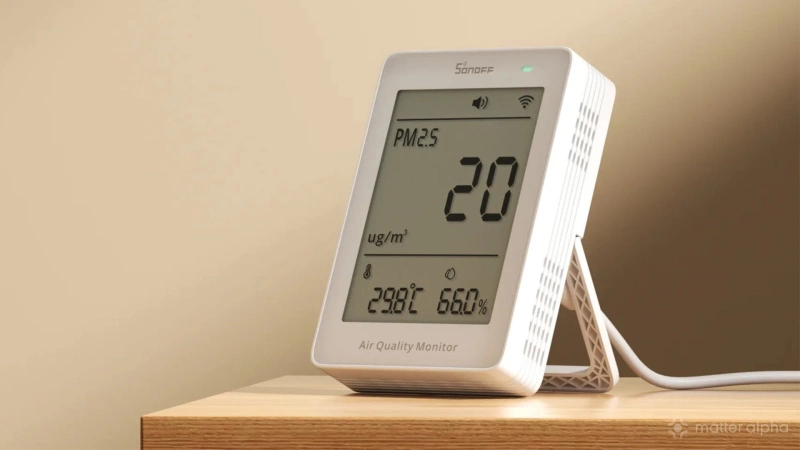
Although most smart home devices focus on actions and automations that provide the "wow factor," such as turning a Matter light bulb to a cool shade of blue, passive sensors can make a much bigger impact on our daily lives by providing valuable insight into the things that we cannot see. This includes Matter-compatible air quality sensors, which give you instant access to the CO2 levels or the number of pollutants floating around in your home (or your lungs), so you can take immediate action before it starts to impact the health of you or your loved ones.
Ready to add air quality monitoring to your smart home's repertoire, but don't know where to start? This guide will point you in the right direction with air quality sensor recommendations and things to keep in mind when shopping around.
The best Matter-compatible air quality sensors: what to look for
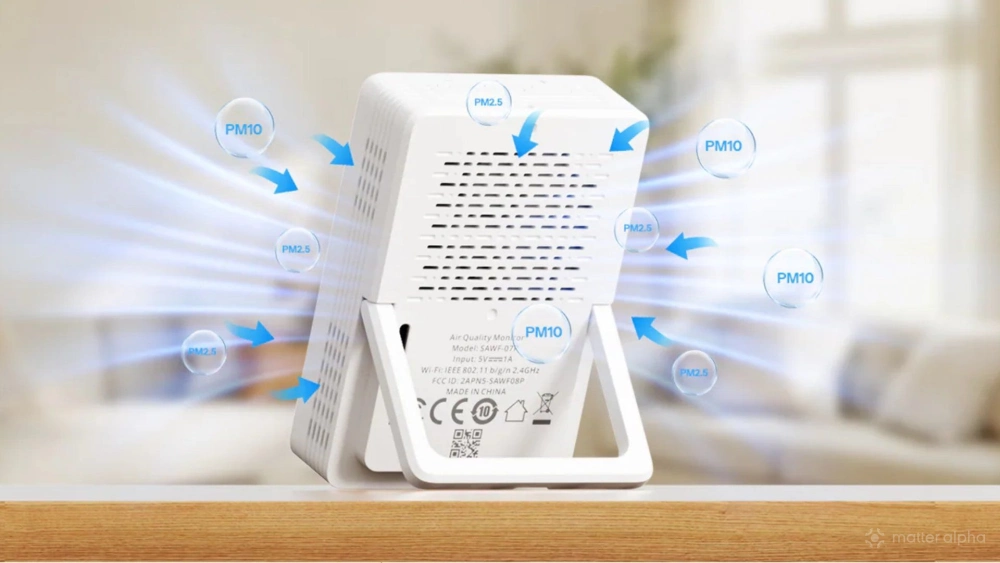
When it comes to shopping for a Matter-compatible air quality sensor, there's good and bad news. Starting with the bad, our Matter product database lists just 13 available air quality sensors, with some being only available in certain locations, so needless to say, options are limited.
Now for the good. Sensors that require a vendor's hub—while not ideal—are not included in our counts, so the number is technically a little higher. Another plus is that Matter takes all the guesswork out of smart home ecosystem compatibility, so you won't need to worry about looking for "Works with" Alexa, Apple Home, SmartThings, or Google Home logos.
Moving on to considerations, you can make significant headway into your search by focusing on five key areas: design, power, features, connectivity, and price. We've broken them out below:
- Design - A sensor's design is more important than you think. Sensors with on-device displays make measurements and real-time information glanceable, but they can clash with home decor and attract unwanted attention.
- Power - Battery-powered sensors have flexible placement and mounting options, but may require frequent replacement and have slower polling rates. Plug-in units are best for continuous monitoring; however, outlet location may prevent optimal placement.
- Features - Most sensors feature PM2.5 (or larger) particulate monitoring, which should be good enough for most homes. If finer dust is a concern, look for a sensor with PM1.0 capabilities. For common indoor pollutants, look for VOC monitoring.
- Connectivity - ZigBee-based sensors require a vendor-specific hub and app for smart home functionality, and while Thread devices connect directly to Matter without an app, they still require a Border Router.
- Price - Air quality sensors typically range between $25-$50. However, you'll need to factor in battery replacements and potential hub requirements if you have a set budget.
After carefully considering the above, you should now be ready to explore Matter-compatible options. Despite a limited number of devices on the market, choosing a sensor can still be an arduous task, so be sure to read on for our top recommendations.
The best Matter-compatible air quality sensors
IKEA ALPSTUGA

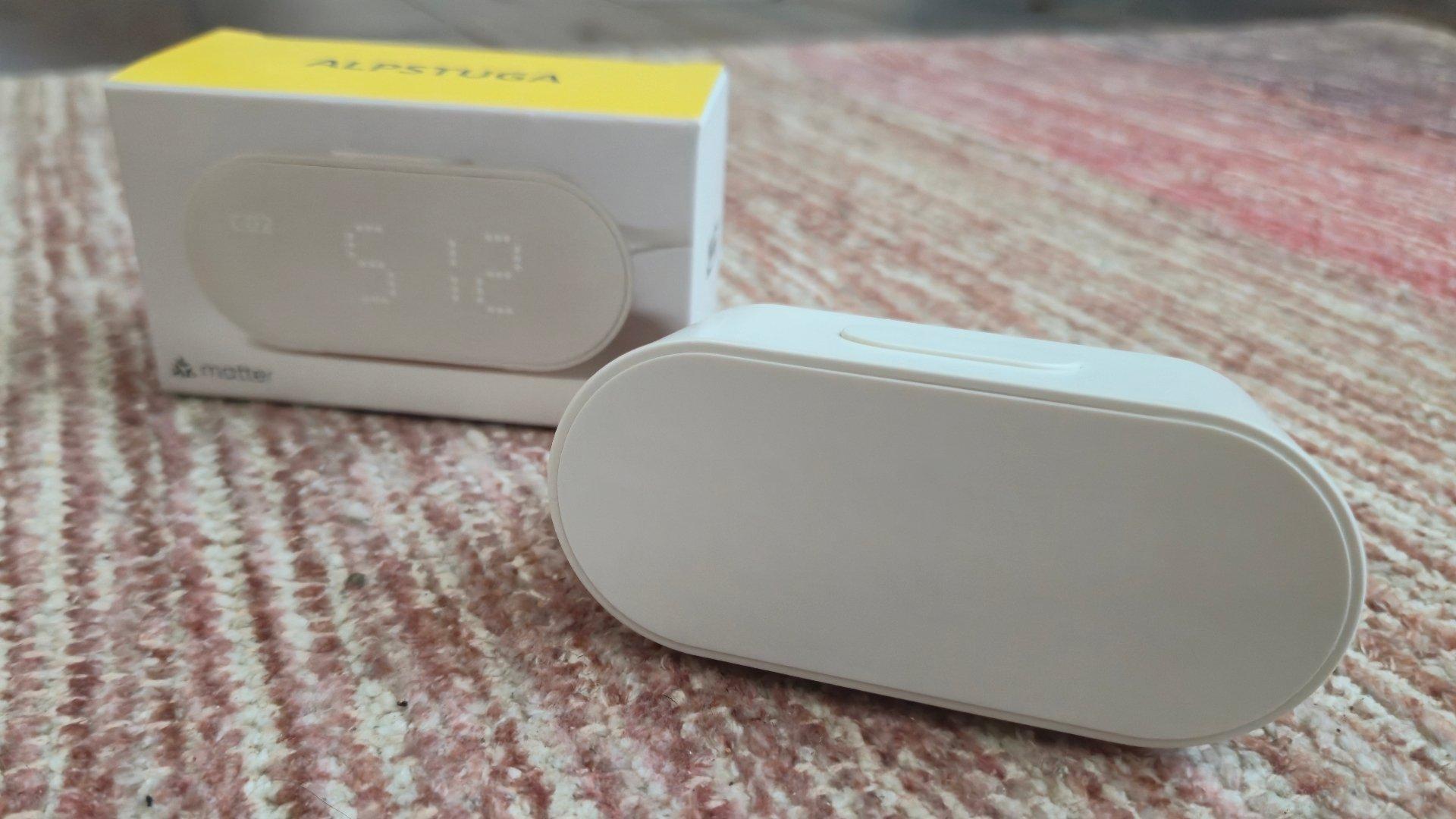
IKEA's ALPSTUGA is a multi-functional air quality sensor that offers PM2.5 particulate measurements, temperature and humidity tracking, and CO2 monitoring, all in one incredibly affordable package for just under $30. Even with its low price point, the ALPSTUGA features an on-device display that puts current conditions and measurements front and center, and it can also function as a handy clock while still relaying data quietly in the background.
IKEA's sensor supports Matter-over-Thread connectivity, so it works without the need for an additional hub—as long as you have a Border Router already set up in your home. The ALPSTUGA doesn't require managing batteries, either, as the ALPSTUGA sports a USB-C port on the back, and since it is always powered, it functions as a relay or repeater for other Thread devices, strengthening your home network and its overall range.
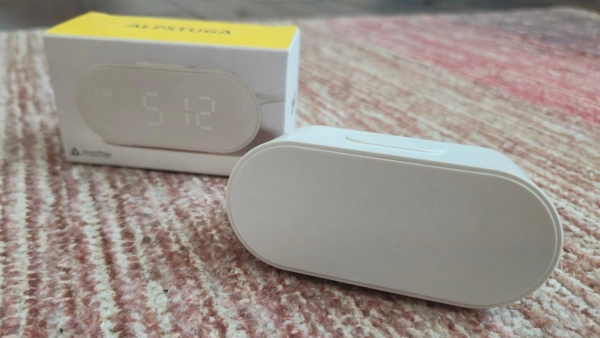
ALPSTUGA Air Quality Sensor
Sonoff AirGuard 07P
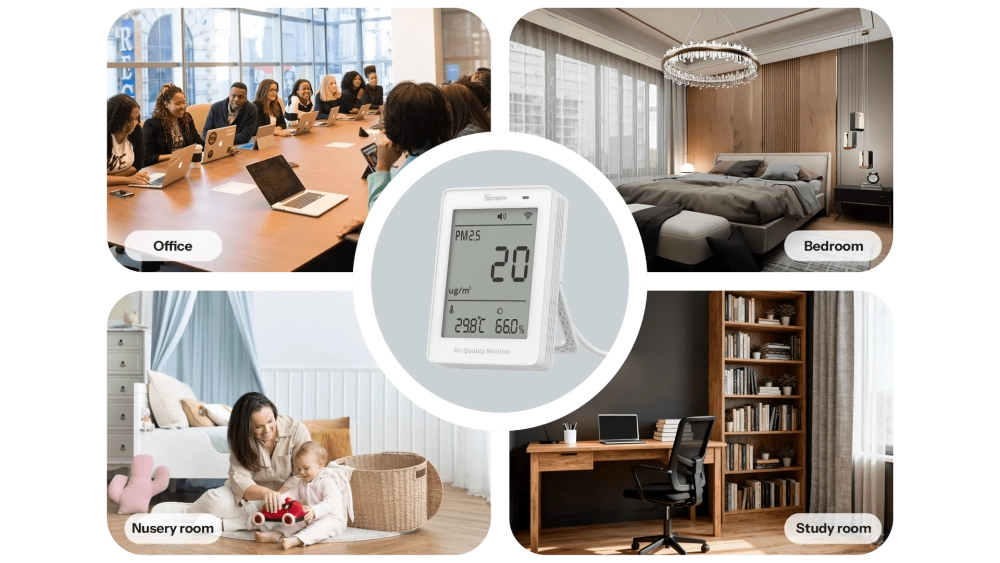
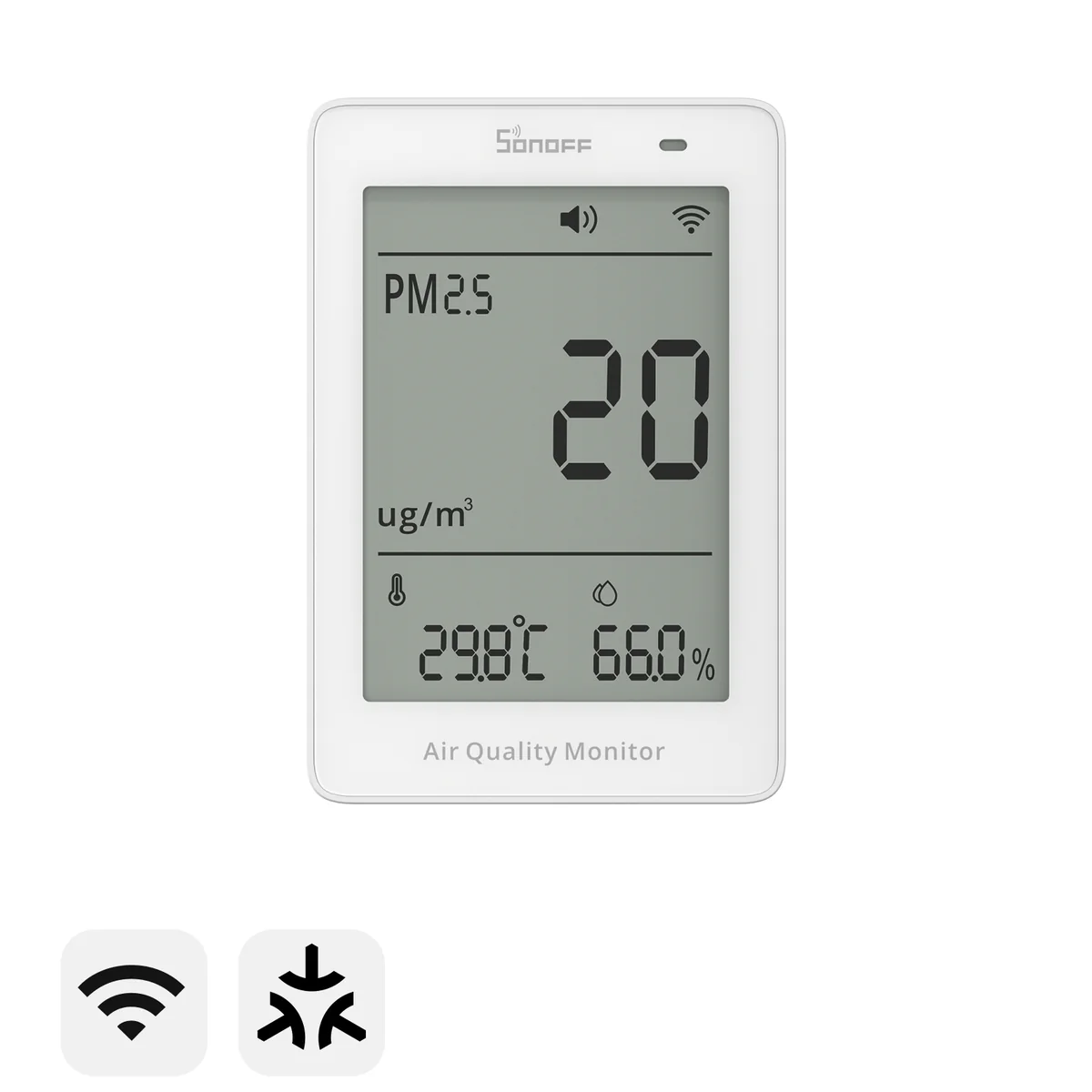
In our hands-on review of the Sonoff AirGuard 07P, we experienced smooth, hassle-free pairing and surprisingly solid reliability over 2.4GHz Wi-Fi despite testing in a highly congested home with tons of sources of potential interference. Sonoff touts the AirGuard line as featuring high-precision sensors and two-second polling rates for PM2.5, PM10, temperature, and humidity, and while we can't say for certain just how accurate it truly is, it did live up to its billing for speed as it picked up changes in our environment almost instantly.
As with IKEA's ALPSTUGA, the AirGuard 07P has a small onboard LCD on its front; however, Sonoff's sensor goes one step further by putting all of its measurements on one screen without needing to press a button to cycle through metrics. And if on-device and Matter-based app monitoring weren't enough, the AirGuard also includes a built-in siren and light system that provides extra peace of mind by letting everyone in your home know if a threshold is exceeded.
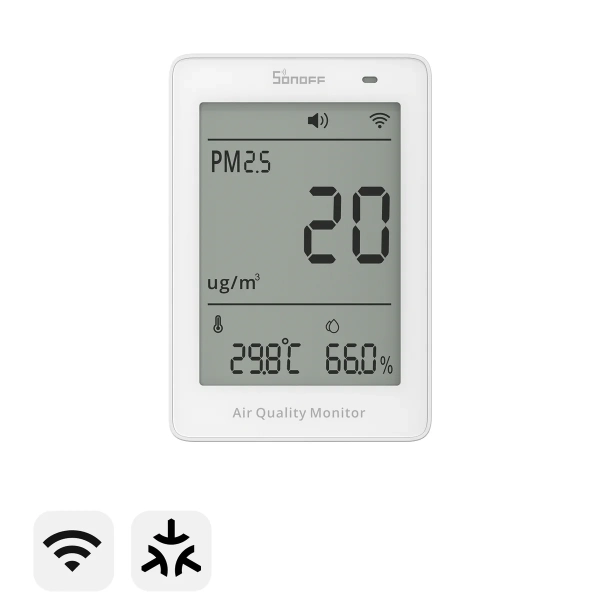
SONOFF SAWF-07P AirGuard 07P
Also available at
LG Air Quality Sensor
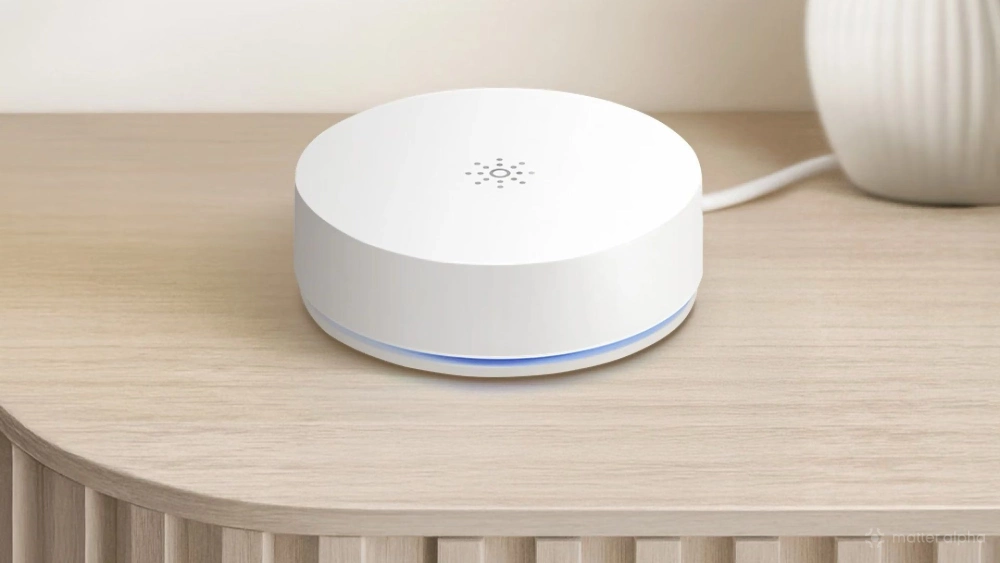
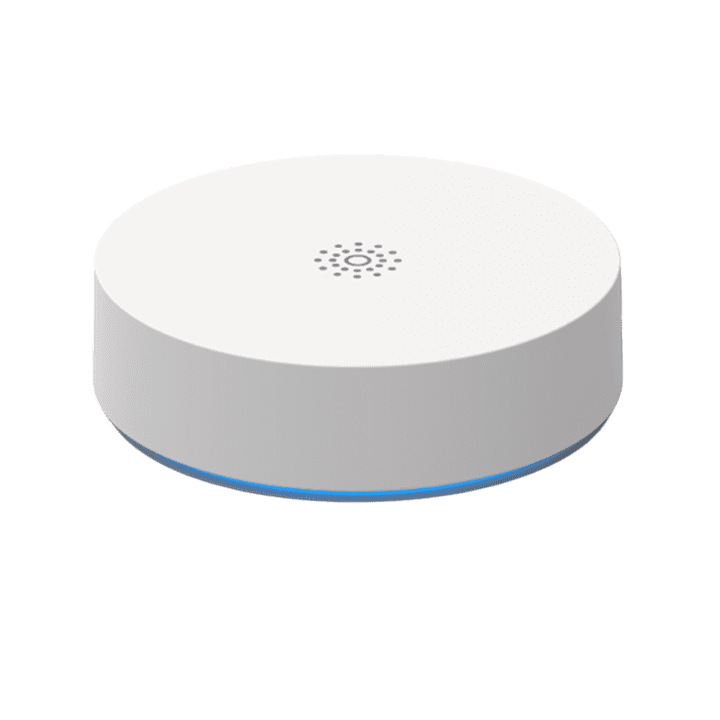
While LG's tiny sensor looks rather basic and unassuming with the lack of a display, it actually is one of the most capable Matter-compatible air quality devices on the market. That's because, in addition to PM2.5 and PM10 monitoring that you get with other devices, LG's sensor provides a clearer snapshot of your home's environment by including ultra-fine PM1.0 measurements, and it throws in other nice-to-haves such as CO2, temperature, and humidity.
Even with the lack of display, current conditions can still be monitored without a phone through the LG Air Quality Sensor's LED status ring that shines one of four colors based on its measurements: blue, green, orange, and red. And when on the phone, LG also made set up painless, too, by utilizing Thread for its direct Matter smart home connection that only needs a scan of its QR pairing code to get started.
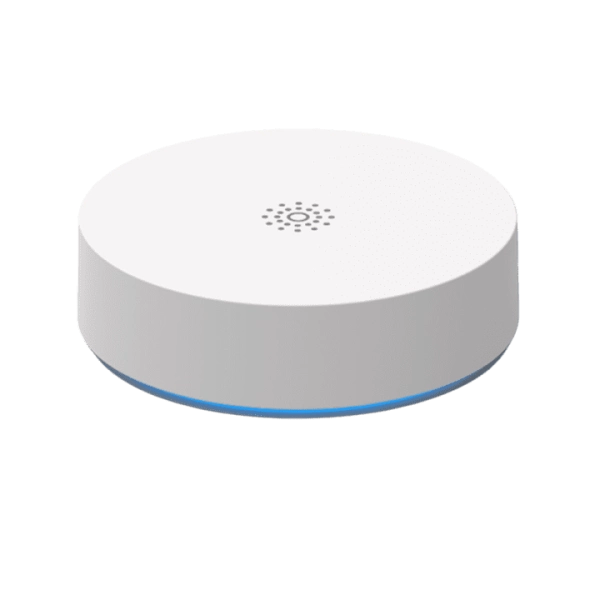
LG Air Quality Sensor
Aqara TVOC Air Quality Sensor - requires Aqara hub
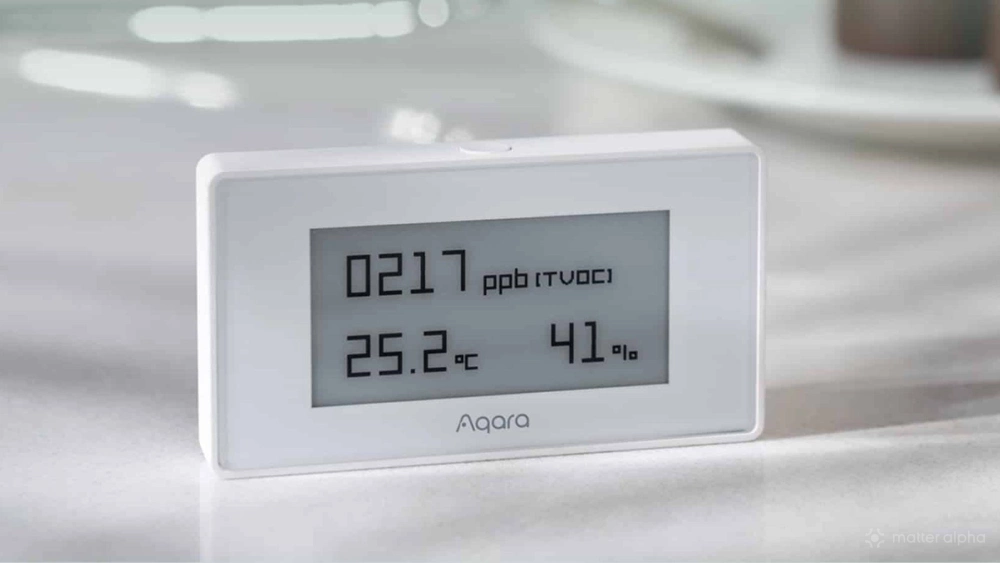
Aqara's TVOC sensor makes tracking Volatile Organic Compounds—along with temperature and humidity—a breeze with its unique five-level leaf scoring system instead of the usual numbers. Also unique is the sensor's dot-matrix e-ink display, which allows it to run completely wire-free for up to one year, and its magnetic chassis that provides flexibile mounting.
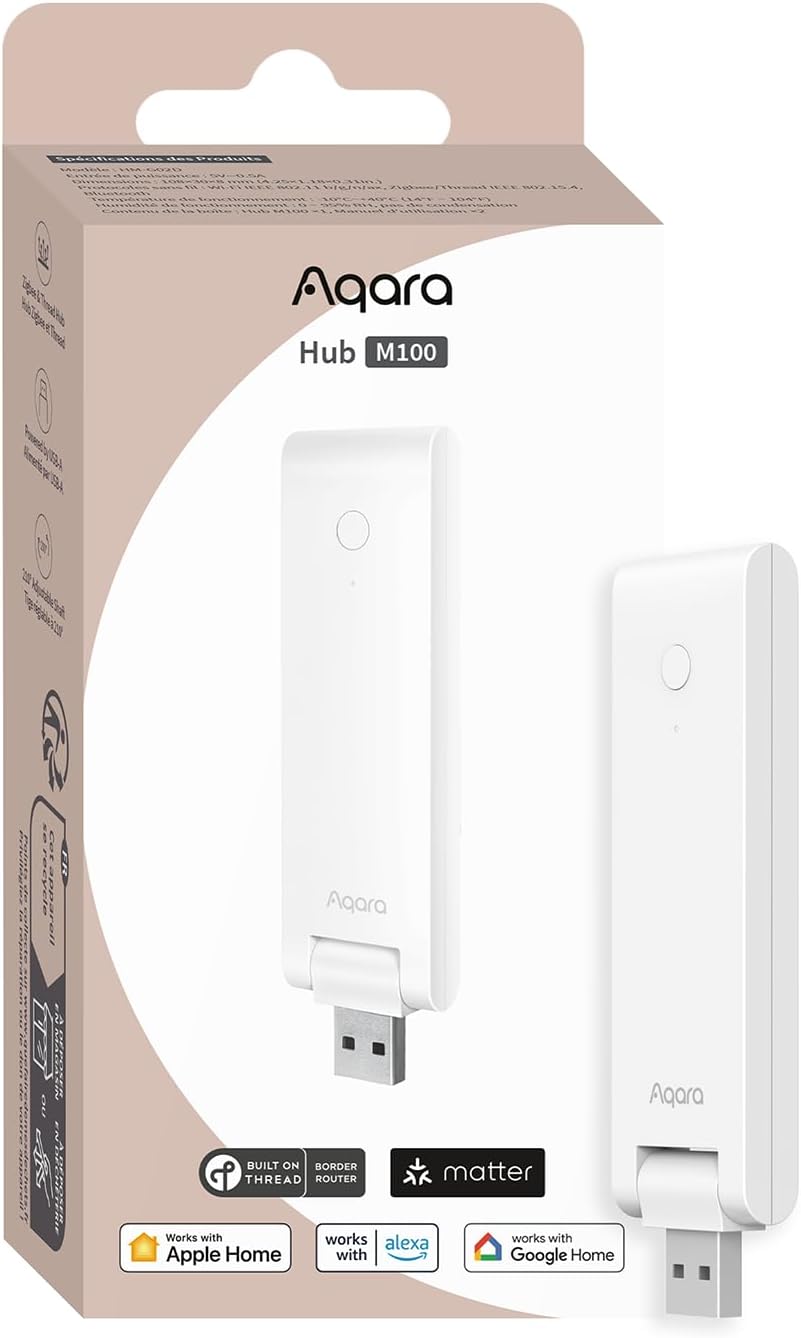
There are some major downsides to Aqara's TVOC air quality sensor to be aware of, though. One of which is that it requires an Aqara ZigBee hub like the M100 for smart home functionality/Matter integration. Another is that it is powered by not one, but two, CR2450 batteries that aren't quite as common as other coin cell sizes.
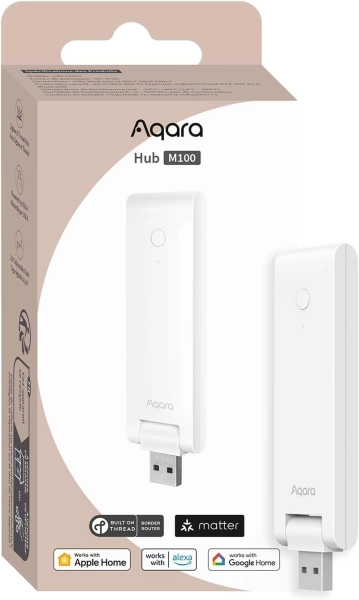
Aqara Hub M100
Also available at
The best Matter-compatible air quality sensors provide valuable insights into your home's environment
Matter air quality sensors can provide truly valuable insight into your home's environment with 24/7 monitoring of particulates, temperature, humidity, and CO2 levels. The data gathered by these sensors can then be used to determine the best course of action for your home if pollutants are detected, such as firing up a Matter-compatible air purifier through automation.
For most homes, we recommend IKEA's ALPSTUGA air quality sensor as it strikes the right balance of features, affordability, and versatility. IKEA's sensor is wallet-friendly at $30, offers direct Matter-over-Thread pairing, provides essentials like PM2.5 monitoring, and even serves as a traditional digital clock without needing batteries.
If CO2 is a main concern for your household, then Sonoff's AirGuard 07P or LG's Air Quality Sensor might be your best bets. Both of these sensors give you real-time monitoring through a display or color indicator ring, so you'll know exactly when to open the windows to clear the air in your home.