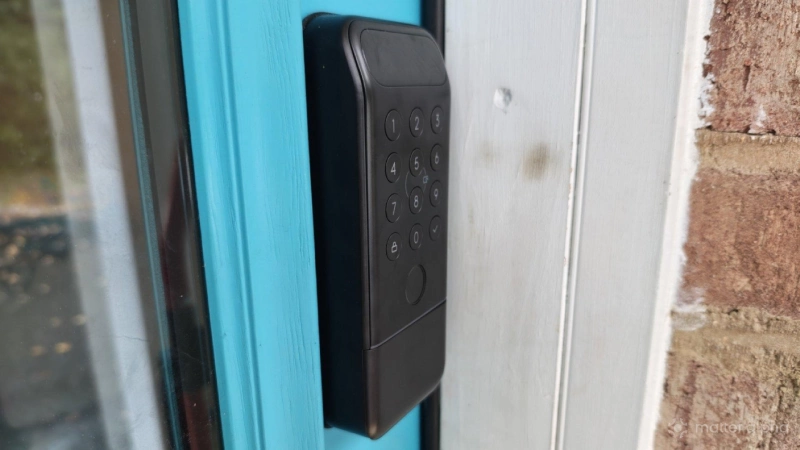
New smart home locks offer an ever growing number of ways to enter your home, but at the end of the day, a door lock has one fundamental purpose—to keep intruders out. When you opt to secure your door with a Matter-compatible lock, is your home suddenly less safe?
All smart locks increase your lock's attack surface
A traditional door lock that is secured exclusively with a physical key only has one method of entry. To break in, you must either pick or physically destroy the lock. An intruder attempting to bypass a smart lock retains these two options, since many keypad locks still have a physical keyhole that can be picked. Some locks can also be bypassed by knowing precisely where to aim a power drill.
Yet a smart lock has other vulnerabilities. The existence of buttons on a keypad lock means that it's possible for an intruder to guess your entry code. More realistically, they may obtain it via observation or by retrieving it from someone else who knows your passcode. Cracking a keycode may be easier for an intruder who is targeting you specifically, but it's more difficult for one who is attempting to target a house at random.
Biometric forms of security such as fingerprints and facial recognition can theoretically be spoofed, but modern lock designers know this. If their marketing is to be trusted, they should not be fooled by a picture of a face or replica of your finger. True or not, such lengths are even less likely for a casual burglar to undertake.
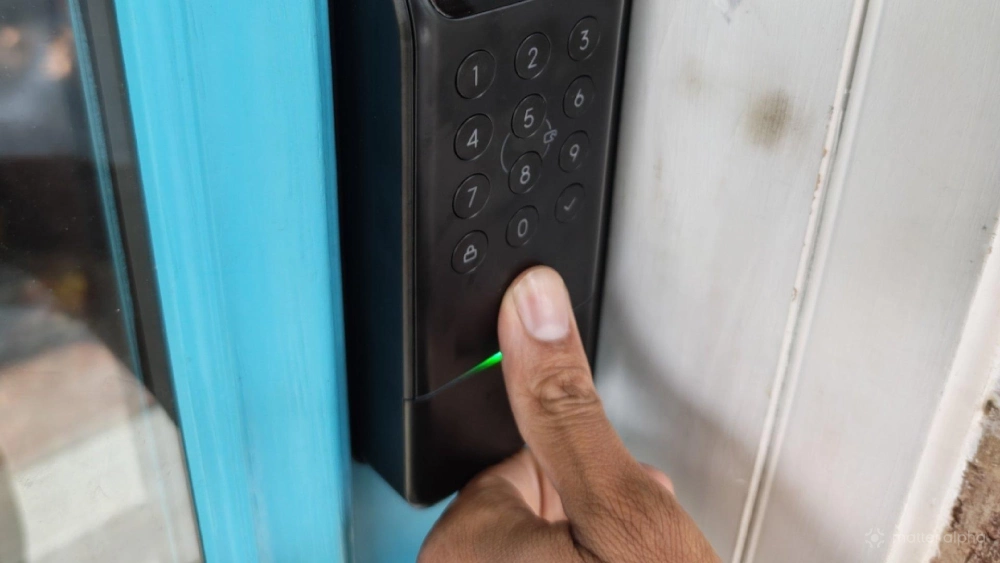
Network-connected locks introduce yet another potential vulnerability, and it's here where it's time to talk about Matter .
Matter is designed with security in mind
The Matter standard is meant to be private and secure. There's a lot of information that can be gained from monitoring our smart home usage, and many of us aren't eager to fill our homes with smart lights and sensors that anyone connected to our Wi-Fi network can snoop on. This is why Matter communications are encrypted, with devices needing to have the correct electronic signatures in order to talk to one another.
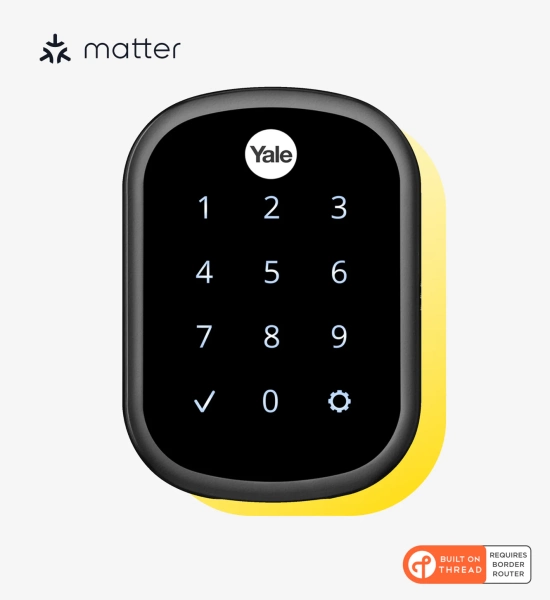
Yale Assure Lock SL with Matter
The Yale Assure Lock SL with Matter is a key-free smart lock upgrade designed to work with the Matter smart home connectivity standard, ensuring compatibility with a range of smart home systems.
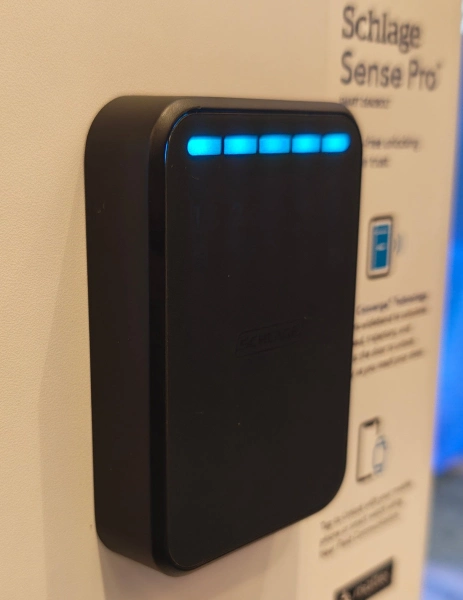
Schlage Sense Pro Smart Deadbolt
The Schlage Sense Pro Smart Deadbolt uses Matter-over-Thread and Ultra Wideband technology for hands-free unlocking, tap-to-unlock with NFC, keypad entry, and advanced smart home integration.
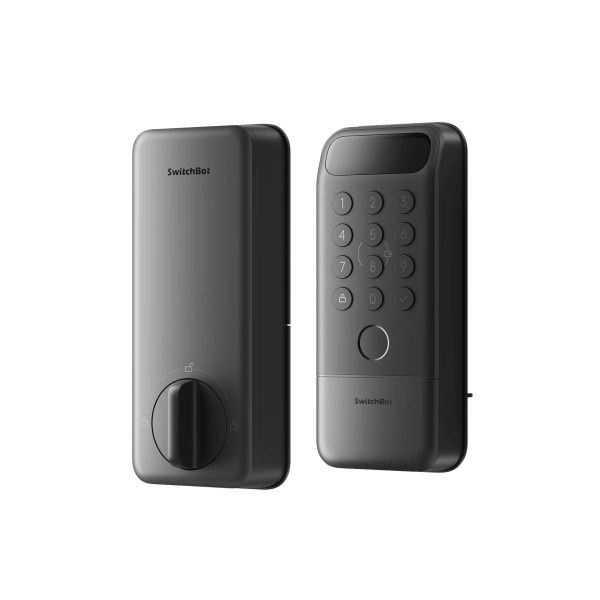
This brand helps to support our site to remain ad-free.
Read more about our ethics policySwitchBot Lock Vision Pro
An advanced smart deadbolt that combines facial recognition with contactless palm-vein scanning for flexible, hands-free entry.
This means that even if a remote intruder were to gain access to your home Wi-Fi network, there is security in place to prevent them from simply being able to take over your lock. Doing so remotely is unlikely anyway unless there’s a device exposing your local Wi-Fi network to the web, such as a self-hosted server with insufficient security. For most of us, an intruder would actually need to be close enough to our home to pick up our Wi-Fi signal. In such a circumstance, they may have better luck attempting to break in the old-fashioned way instead.
Yet just because Matter has strong security on your Wi-Fi network, that doesn't mean your devices are fully isolated from the web.
Does your smart home live in the cloud?
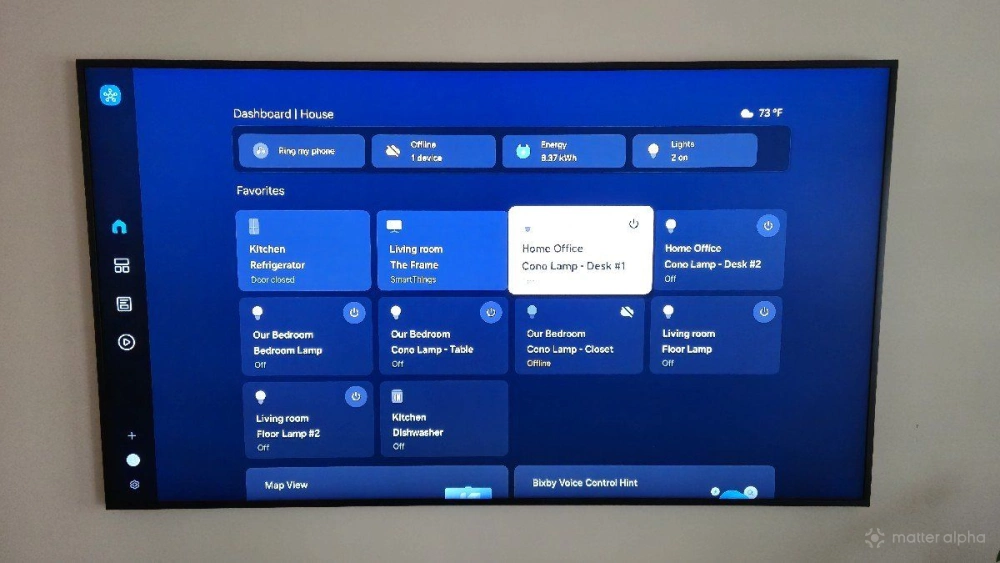
Since Matter does not require the use of any remote servers or external internet connections, it offers the promise of a smart home that is entirely controlled and operated locally. The truth is more complicated. The most popular smart home platforms operate in the cloud or are connected to an online account.
When an Android phone prompts you to connect your smart locks to Google Home or to set up your locks for use with Amazon Alexa, you make your home security dependent on the security of your Google or Amazon accounts. Smart home hubs that operate locally, like Apple Home or Homey, are also vulnerable if access to your online account falls into the wrong hands. Even Home Assistant can be set up for remote access.
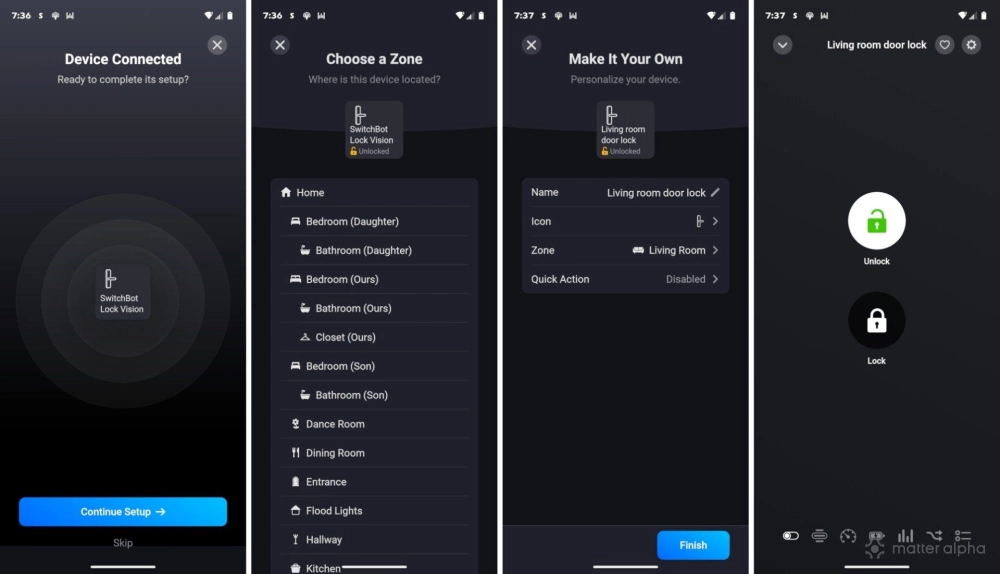
Your smart home platform isn't the only online account that matters. I recently reviewed the SwitchBot Lock Vision Pro, a smart lock that requires a SwitchBot account for getting set up and managing settings. If SwitchBot credentials were to leak in a data breach, this would put access to SwitchBot specific devices at risk. The same is true of other smart home brands, such as Aqara or TP-Link Tapo. It's these potentially lesser used smart home apps, which you may have only downloaded to initially set up a device, that could prove to be your biggest vulnerability.
How likely this scenario is depends on how closely you safeguard your credentials. An account secured with a Yubikey is much less likely to fall victim than one using a password shared across several dozen websites. Even still, the likelihood that someone with access to this leaked data also happens to know where you live and desire to break into your home is exceedingly low. That takes a degree of targeting that most of us don't have to worry about.
Even still, if your smart home hub is set to only operate locally and you cannot access it from outside of the home, then that's one less thing you have to worry about.
A Matter-connected lock may actually increase your security
Many of us purchase smart locks because their benefits outweigh the risks, but whether this is true depends on your own personal habits. Are you someone who regularly forgets their key? Being able to use a keypad or open a door using your phone eliminates that issue. Do you often forget to lock the door? Many smart locks can be set to automatically lock after a short amount of time. You can also simply lock the door remotely when you remember.
Do you have a home that many people pass through? The ability to create temporary passcodes removes the need to print additional physical keys. If you have kids who know how to use a keypad, your door can now automatically lock while they're playing outside without hindering their ability to quickly get back inside the house.
Yes, smart locks may have additional vulnerabilities, but let's not lose sight of what makes them appealing. Burglars looking for an easy mark are typically not going to go through the effort of trying to bypass a fancy lock. They're more likely to take advantage of an open window or a door left unlocked instead.
Matter is not your smart lock's weakest link
At the end of the day, if someone bypasses your smart lock, it's extremely unlikely to be a result of Matter compatibility. And if someone does physically break into your home, it likely won't be by taking advantage of the internet connection either. In other words, worry less about Matter and more about whether you remembered to lock the door and windows.
If anything, you might eventually benefit from securing your home with even more Matter devices -- particularly as hardware begins bridging local smart home automation with cross-ecosystem digital key standards like Aliro.