A Matter feature can make it into the specification, pass testing and reach a shipping device while still being unavailable in the app someone uses to control it. For manufacturers, that complicates product planning. For customers, certification alone may not answer whether a particular feature will work in their home.
In an interview with Matter Alpha, Rob Alexander, Principal Product Manager for Matter at Silicon Labs and Vice Chair of the Connectivity Standards Alliance’s board of directors, explained what gets features through development and how the alliance approaches gaps in ecosystem support. His takes highlight two challenges: validating a feature across manufacturers and encouraging ecosystems to make it available to users.
The rule of three
A proposed Matter feature begins with a New Feature Request, or NFR, documenting its use cases and intended outcome. The alliance’s marketing group reviews the product requirements before technical groups address implementation, backward compatibility and interactions with other device types.
Testing develops alongside that work. Alexander described updates to the test harness, new test scripts and in-person events where companies bring implementations to test together.
“We look for three device vendors to certify that feature with an actual implementation, not just a paper standard,” he said.
This “rule of three” helps establish that a feature works beyond a single vendor’s design. It also means progress depends on enough manufacturers completing their implementations, alongside agreement on the spec.
Asked about provisional ambient sensing support, a feature still in the waiting room as of Matter 1.6, Alexander explained that companies involved early in development do not always finish.
“We often have a number of companies, let’s say five, come up with ideas and work through the process, but sometimes they drop out or lack the resources to see it all the way to the end,” he said.
“That’s where it gets marked as provisional.”
A nearly finished spec can still be waiting on manufacturers to finish the work. For companies planning around a provisional feature, progress depends partly on other participants having the resources to follow through.
Other implementations and test readiness also matter to the schedule. Completing its own development may not be enough for a manufacturer if the feature still needs other participants to finish validation.
That dependency could delay a product launch or a promised firmware update. Someone choosing a device for an upcoming feature may end up waiting on work beyond that device maker’s control. A feature appearing in the spec offers no firm timetable for when it will work at home.

Take ambient sensing as an example. The Aqara FP400 Pro could be a candidate for recertification with the feature, but that remains a possibility, not a confirmed upgrade. If ambient sensing over Matter is the reason you want one, wait until that support is available.
A newer certification baseline
Once a feature becomes certifiable, another question remains: how much functionality will a product deliver?
We asked whether a higher certification tier, such as “Matter Plus,” could encourage manufacturers to implement more of Matter’s capabilities by requiring a richer minimum feature set. A power-monitoring smart plug, for example, would need to expose its measurements through Matter to qualify, rather than offering only on/off control.
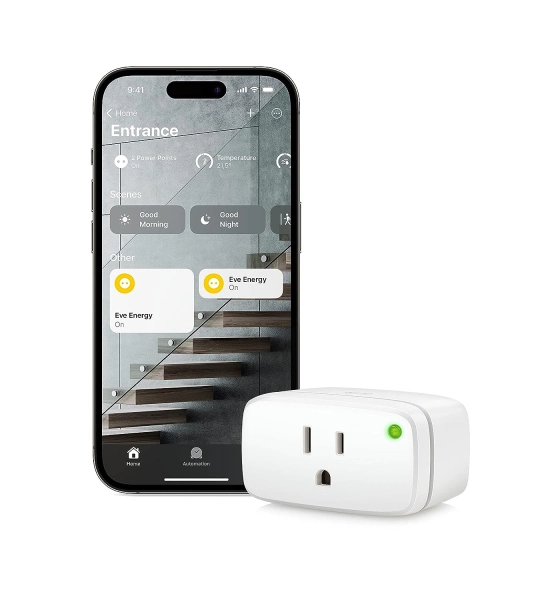
Eve Energy
Eve Energy is a smart plug that allows you to control your home appliances with your voice or an app, supports Matter for cross-platform control, ensures privacy with local connectivity, and enhances your smart home network's stability and reach with cutting-edge Thread technology.
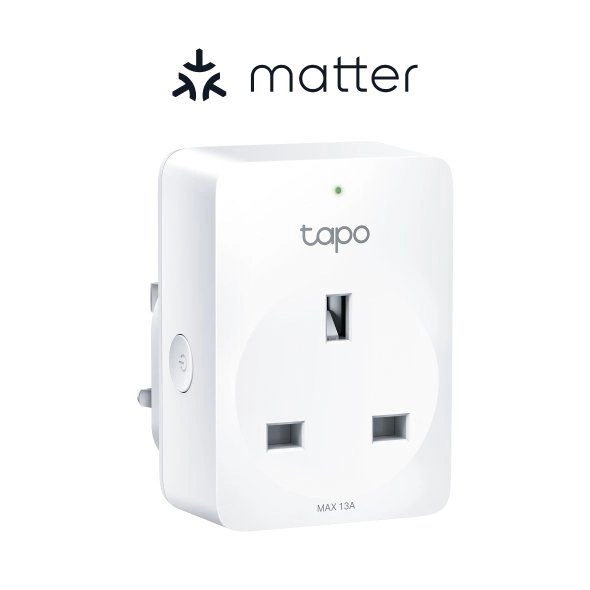
Tapo Smart Plug, Energy Monitoring P110M
The Tapo Smart Plug P110M is a Matter-compatible on/off plug-in unit that offers precise energy consumption tracking to 0.001 kWh, with an updated energy monitoring dashboard and customizable power protection settings.
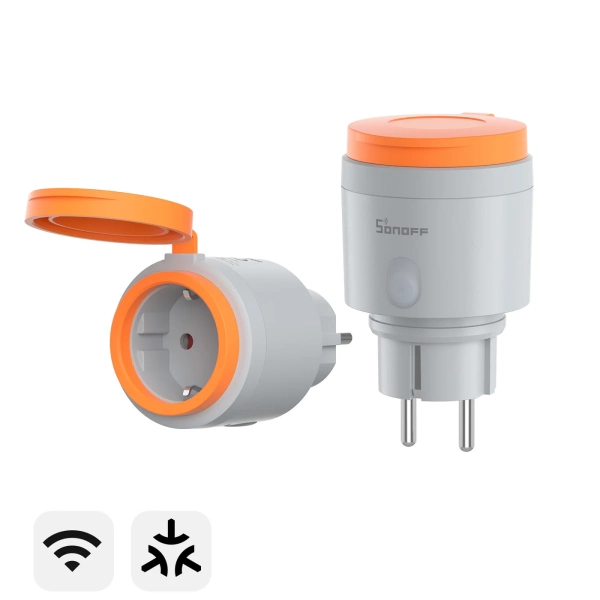
SONOFF S61s Plug
A Matter-over-Wi-Fi smart plug range from SONOFF, available in indoor and outdoor versions, with energy monitoring, 16A load support, and overload protection.
Alexander did not directly comment on the question while highlighting alternative efforts to retire older spec versions, much of that work related to bugs and testing.
At the time of the interview, he identified Matter 1.3 as the minimum version. Moving that baseline forward also has to accommodate products designed well before they reach the market.
“Manufacturers can have up to an 18-month to 2-year design cycle,” he said.
The alliance is also exploring ways for developers to certify products against older versions and upgrade them in the field later, according to Alexander.
Those changes could help manufacturers keep products current across long development cycles. They do not, by themselves, resolve whether a particular capability is implemented or available through a controller.
For the power-monitoring plug mentioned above, exposing measurements through Matter would address the device’s side of the problem. Making those readings available in an app or automation is the next step.
Who makes ecosystem support visible?
Finding reliable compatibility information remains a challenge for manufacturers planning a launch and anyone checking whether a new device will work with their existing setup. Manufacturers need to know which ecosystems can present their products’ capabilities, while buyers need to establish what works with the controllers already in their homes.
There is actually an internal spreadsheet called Compatibility Matrix, which contains all the Matter features supported by major ecosystems like Apple and Google.
Alexander said the alliance’s Compatibility Matrix was originally intended for internal use. He described the difficulty of publishing comparisons when ecosystem updates can change their findings.
“We investigate how to present compatibility without shaming the companies, because a feature not supported today could be supported tomorrow depending on ecosystem updates,” he said.
That concern makes dates and software versions important parts of compatibility reporting. It also leaves a practical tension: buyers must make decisions based on current support, even when a missing capability could arrive later.
Asked about making ecosystem compatibility more transparent, Alexander pointed to market pressure.
“At the end of the day, we count on publications and Reddit threads to help educate the market and indirectly put pressure on them,” he said.
The familiar problem is uneven feature support. His answer explains part of the alliance’s approach to addressing it: make the market aware of the gaps and let demand help encourage implementation.
That gives independent reporting a role in adoption as well as product selection. Identifying which capabilities are unavailable gives users and manufacturers a concrete basis for requesting support. It also requires more precise reporting than whether a platform “supports Matter.”
Measuring what users can actually do
For a power-monitoring plug, useful compatibility reporting would distinguish between the device exposing measurements, the controller reading them and the app presenting them. Support for using those readings in automations is another question. Confirming that the plug switches on and off establishes only part of its functionality.
Alexander pointed toward this practical use of capabilities as a test for ecosystems.
“I think the real interesting test going forward is how ecosystems present this capability to users,” he said.
He suggested voice assistants and common automation recipes as possible ways to make features accessible without requiring users to hunt through settings.
The alliance draws requirements for getting a feature through development: multiple manufacturers must prove it works. Getting that capability into everyday use also depends on ecosystem providers, with the alliance looking partly to publications and users to keep gaps visible.
For consumers, the finish line is the moment a feature works in their chosen app or automation. Until compatibility information makes that clear before purchase, they are left to discover how far a certified product has actually come.
(Source: Matter Alpha; Image: Matter Alpha/Ward Zhou, Aqara)