The Matter standard is the driving force behind modern smart home hardware, and you’ve probably already become aware of it, either seeing the badge on packaging or picked up a device from IKEA. It relies on existing technologies like Wi-Fi and Zigbee for communication, can use Bluetooth to enroll devices via your favorite smart assistant app, and is designed to ensure smart home hardware from disparate manufacturers can communicate.
As a result, you can enjoy better smart home control and integrations.
You’ve also probably already noticed the existence of something called Thread. This is a mesh networking protocol, designed for reliable communication and power efficiency. We can use it with Matter, in a dynamic referred to as “Matter over Thread.”
But how do Matter and Thread fit together, and what is the difference?
What you need to know about Matter
First released in 2022, the Matter standard is a specification developed by a consortium of over 700 companies. This includes big names like Amazon, Apple, Google, Phillips, Samsung, and even IKEA., and the companies involved are part of an organization called the Connectivity Standards Alliance.
The companies and personnel behind Matter have collaborated to make it easier for consumers to connect and control smart home devices from different brands. No smart home brand produces every type of smart home device – for example, IKEA makes sensors, lamps, and smart plugs, whereas Roborock produces robot cleaners. So, it is important for the development of the smart home market that consumers can enjoy interoperability. This means sensors from IKEA might trigger the robot cleaner from Roborock, for example, and all of this can be setup and managed from a single app – perhaps Google Home, or Amazon Alexa.

Roborock Saros Z70 Robot Vacuum
The Roborock Saros Z70 is a high-end robot vacuum featuring a five-axis mechanical arm, powerful suction, AI-powered navigation, and smart home integration for a truly autonomous cleaning experience.
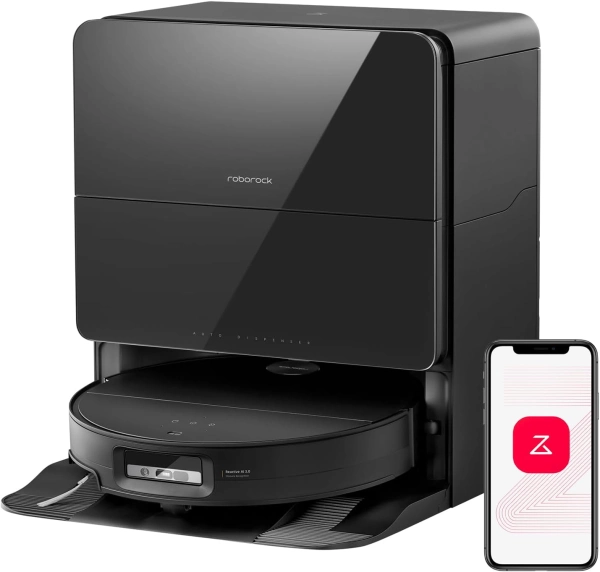
Roborock Saros 10
A high-powered, AI-enhanced robot vacuum and mop with ultra-strong suction, intelligent navigation, and advanced self-cleaning features for effortless home maintenance.
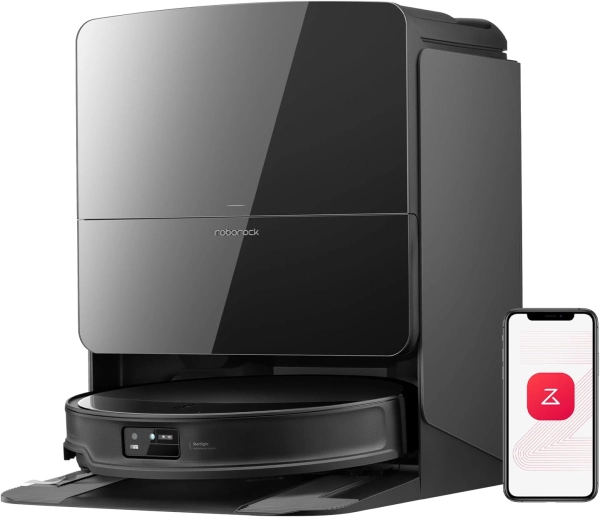
Roborock Saros 10R
A powerful, ultra-slim robot vacuum with smart mapping, zero-tangle technology, and advanced self-cleaning features for a completely automated home cleaning experience.
Unravelling the matter of Thread
While it has come to wider prominence with the development of the Matter smart home, Thread is a little different. Like Zigbee and Wi-Fi, it is a wireless networking protocol… then things get a little different.
Although Thread is based on Zigbee, it is a mesh network protocol. This means that any device with Thread can act as a router and a repeater, which ensurtes that a Thread network is resilient to failure; if a device goes down, the other devices communicate “around” it. In addition, the nature of a mesh network means Thread devices can communicate over a long distance, despite being low-powered.
Thread networks are designed to be secure, relying on encryption, authentication, and authorization protocols. As they use their own network, Thread devices don’t rely on your Wi-Fi network or the credentials you use to access it, ensuring that network is also kept secure.

However, there is an important consideration for using Matter over Thread: you need a Thread Border Router. This is typically built into your Matter controller, so you usually won’t require additional hardware.
The benefits of using Matter and Thread together
There are a number of benefits to using Matter and Thread together:
-
Security & privacy: both Matter and Thread are secure standards, utilizing encryption and other security features to prevent unauthorized access. Meanwhile, Matter lets you choose which devices and services can access your data.
-
Reliability: these standards are reliable, with Thread networks resilient to failures and Matter devices able to communicate without external internet or cloud access.
-
Interoperability: Matter and Thread devices from different brands can work together seamlessly. Smart home compatibility issues between different brands are becoming a thing of the past.
-
Ease of use: onboarding is designed to be simple, with device discovery and configuration largely automatic. Thread networks self-heal if a device fails.
-
Future-proofing: Matter will remain compatible with feature smart home devices.
-
Power-efficient smart home: Thread devices typically run on batteries, and Matter hardware can be optimized for better power efficiency.
-
Less e-waste: Ensuring a standard that encompasses as many devices and device-types as possible can contribute to reduced e-waste heading into landfill. Unless a smart home fails completely, it can potentially still play a part in the Matter-based smart home environment.
By using Matter and Thread, you’re part of the smart home revolution, something that first began in the early 20th century. Since the 1990s, the notion of a smart home has gathered pace, but thanks to current Wi-Fi standards, protocols like Zigbee and Thread, and the Matter standard, we seem to be on the cusp of the smart home as predicted decades ago.
The difference between Matter Thread
So, Thread is a networking protocol, while Matter is a communication standard. Matter devices can use Thread, but they can also use Wi-Fi and sometimes Zigbee.
Matter and Thread work well together, but you can have one without the other -- you don’t need Thread to use Matter! The Matter smart home standard can run purely on Wi-Fi, without any Thread involvement at all. Similarly, you can use Thread devices without having a Matter controller -- as long as you have a Thread Border Router. This technology is being included in all manner of devices, from computers and TVs to actual routers, so it is likely that if you don't have a TBR today, you will soon.
But when the time comes to use a device or devices with Thread, as long as you have a modern hub or controller with Thread Border Router support, it should be simple to take advantage of those low-power, reliable, and secure Thread devices.