Espressif has spent the Matter era expanding its chip and software support across Wi-Fi, Thread, and other open standards. Its latest step moves beyond controlling a smart lock to changing how users unlock it.
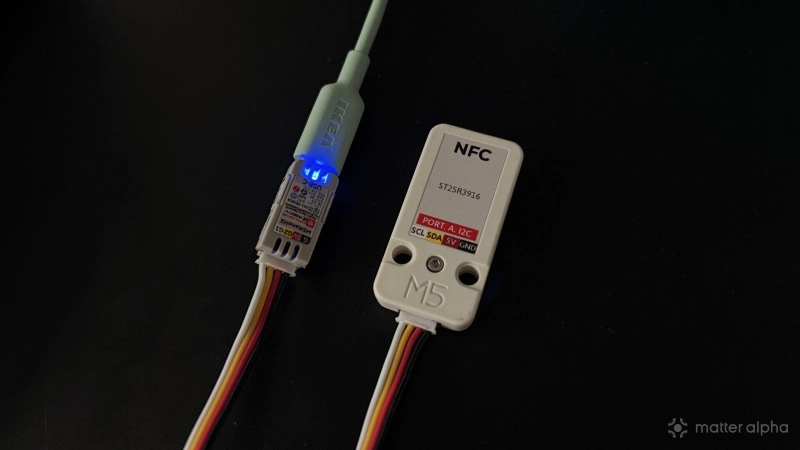
The company sent me an Aliro demo kit after its official announcement. Built by M5Stack, the reference design combines an ESP32-H2 with an STMicroelectronics NFC module, offering an early look at how Espressif plans to bring digital keys to Matter locks. And here are my thoughts on this demo kit.
Stronger connectivity continues
Espressif-powered Matter products did not have the best start in my home. During the early Matter 1.x period, several troublesome WiZ and Sonoff devices I tested used Espressif solutions, adding to a poor reputation around their reliability.
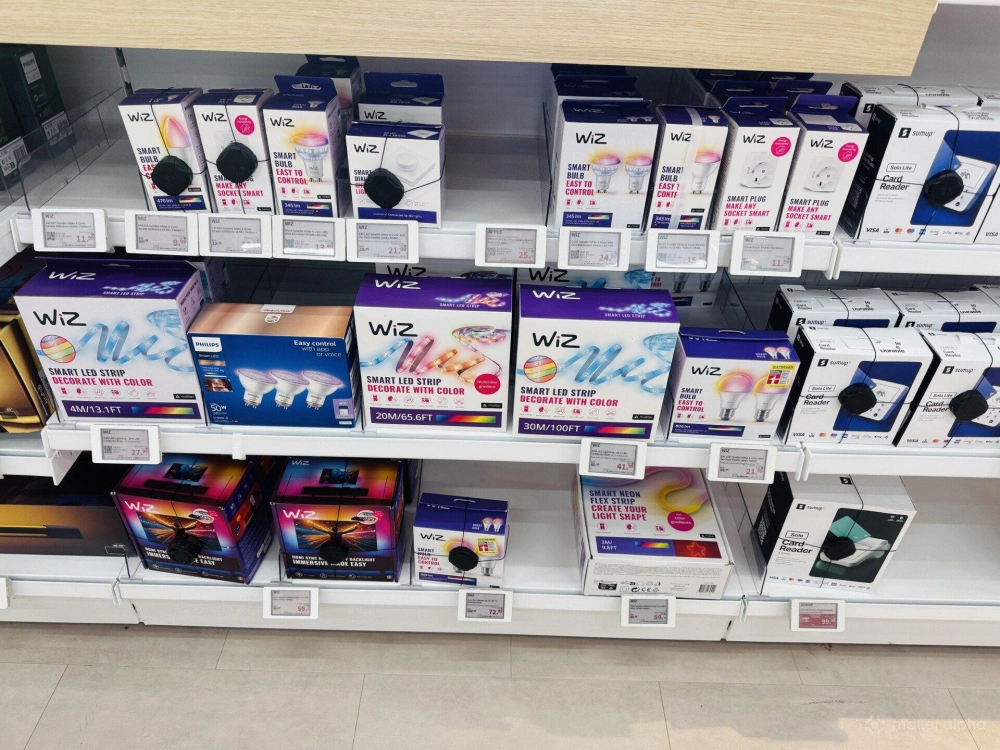
Things have improved since then, including on Thread. I have recently used devices powered by the ESP32-C6, C5, and H2 across both Wi-Fi and Thread setups, and they have become some of the products most likely to remain connected in my messy home network.
The Aliro demo kit continued that progress. It commissioned smoothly through Matter over Thread and remained responsive throughout my testing. Lock and unlock commands were fast, and the connection stayed solid without requiring resets or repeated setup.
Apple Home automatically added both Home Key and PIN code access during setup. Because this is a development kit rather than an Apple-approved commercial lock, Express Mode did not work in my test. I had to unlock the iPhone and select the key in Wallet before tapping the NFC reader.
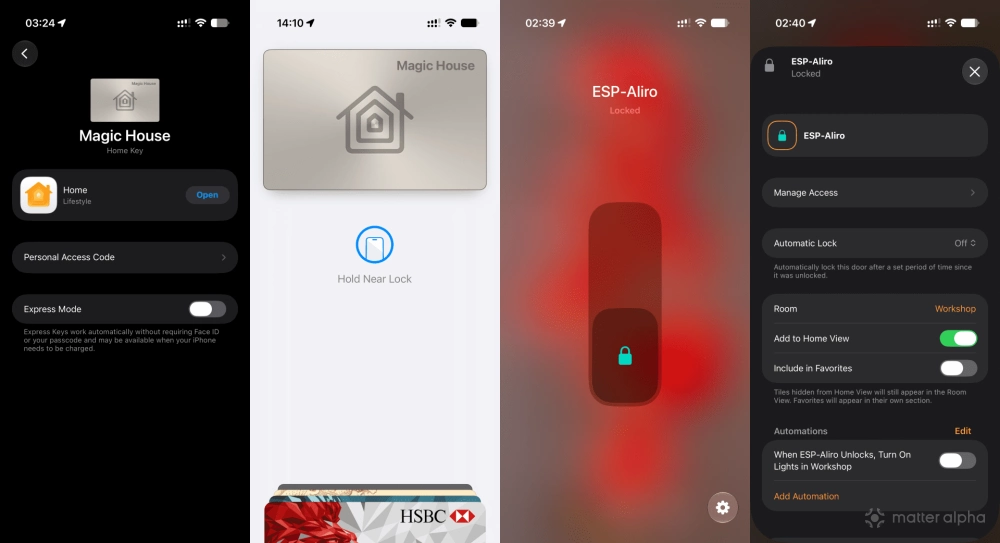
That limitation belongs to the approval stage rather than the basic Aliro transaction. A finished lockmaker would still need to complete Apple’s requirements before offering the full tap-and-go Home Key experience.
The demo uses Matter over Thread and the ESP32-H2, which lacks Wi-Fi but includes Bluetooth LE and an IEEE 802.15.4 radio for Thread. That combination is particularly relevant to battery-powered locks, where constant Wi-Fi connectivity can place a heavier demand on power.
One thing I noticed is that the chip runs efficiently. I could barely feel any heat from the chipset, unlike some Wi-Fi options. This usually makes it better suited to battery-powered devices and reduces the thermal design work needed in the final product.
A half-open gate
Espressif is known for an open development ecosystem that has supported community projects such as ESPHome and Tasmota. Its Matter investment also spreads downstream because products and community projects can build on ESP-IDF and Espressif’s open Matter tools.
The Aliro release is less open.
Espressif has published the esp-aliro repository, integration code, and reader examples under an Apache 2.0 license. However, the core Aliro implementation is distributed as a compiled library under a custom license rather than as fully available source code.
Developers can still build devices around it, inspect the examples, and connect the library to their own hardware. But they cannot review or contribute directly to the core implementation in the same way they can with many other Espressif software components.
However, the limitation is not entirely under Espressif’s control. The company’s own documentation notes that the CSA’s Aliro actuator reference remained under private access as of May 29, requiring developers to be a member to request access from CSA.
Still, the result is a less accessible path for community development. Depending on their open-source licenses, projects such as ESPHome may face barriers that prevent them from adopting Aliro at all, since the closed core may not fit how these projects distribute and contribute.
That is a missed opportunity because Espressif’s reach goes beyond commercial manufacturers. Its affordable hardware and familiar tools often allow new standards to reach hobbyists and open-source projects faster than traditional lock platforms.
A practical starting point for lock makers
Espressif’s initial esp-aliro release focuses on NFC tap-to-unlock. Bluetooth LE for user-initiated access and Bluetooth LE with UWB for hands-free unlocking are planned for later releases, according to the company.
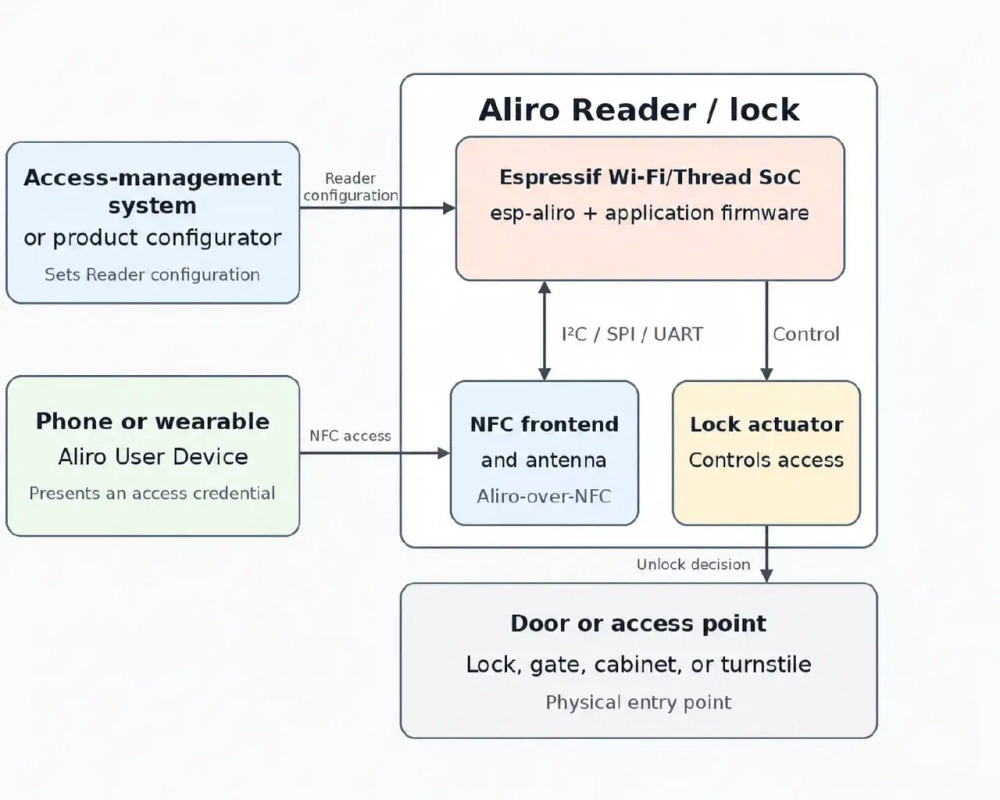
The SDK works across Matter-enabled ESP32, ESP32-C, ESP32-S, and ESP32-H chips. Manufacturers can choose Wi-Fi or Thread for Matter connectivity, then add an NFC frontend and lock actuator for Aliro access. You can use the same M5Stack NanoH2 and NFC module to run the example for early validation.
And as far as we know, commercial Aliro locks using Espressif chipsets are already on the way.
(Source: Espressif, CSA; Image: Matter Alpha/Ward Zhou, Espressif)