
An early Matter 1.7 draft this week reveals new capabilities for proximity ranging, predictive occupancy, electrical infrastructure and cameras, while starting work on post-quantum device attestation.
The changes appeared in Matter’s open-source repository as part of the 0.9 ballot data model. The pull request remains a draft, and many of the newly added capabilities are marked provisional, meaning they could still change, be delayed or be removed before the final specification.
Smarter presence sensing
Matter 1.7 could give smart home platforms more information about where people and devices are, rather than relying primarily on whether a sensor currently reports occupancy.
A new Proximity Ranging cluster and Proximity Ranger device type introduce a standard model for measuring proximity between Matter devices. Both are provisional in the current draft.
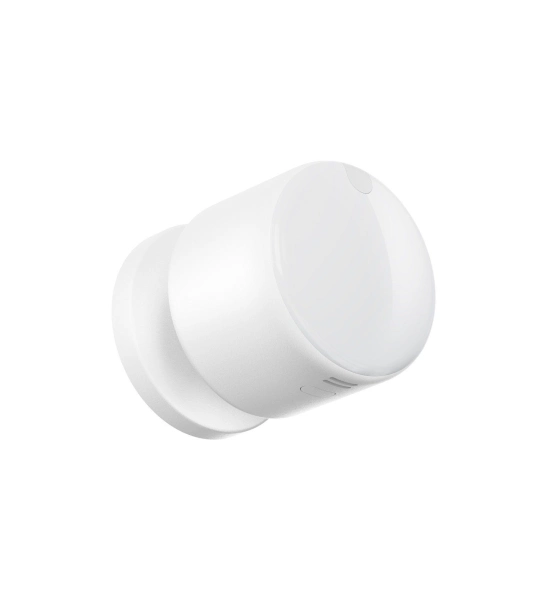
Aqara Presence Multi-Sensor FP300
A multi-functional presence sensor with PIR and mmWave detection, designed for seamless smart home integration with Thread and Zigbee support.
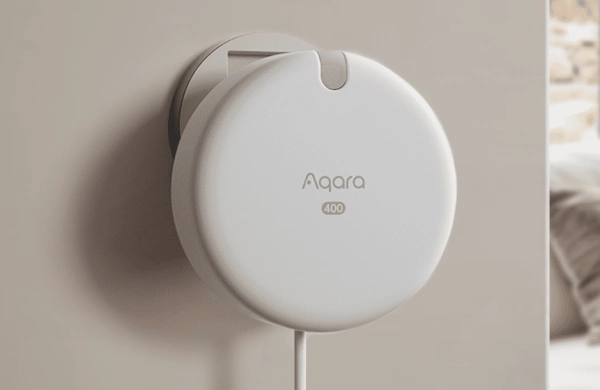
Aqara Multi-Sensor FP400
Matter-enabled mmWave sensor with Thread and Zigbee that tracks up to ten people’s position and posture, supports fine-grained zones, fall detection with exclusion areas, and includes a built-in light sensor.
The data model does not tie the capability specifically to UWB. However, this does make Aliro locks more configurable with Matter. Device makers like Signify could also benefit from this addition as their new bulbs come with space sensing capabilities.
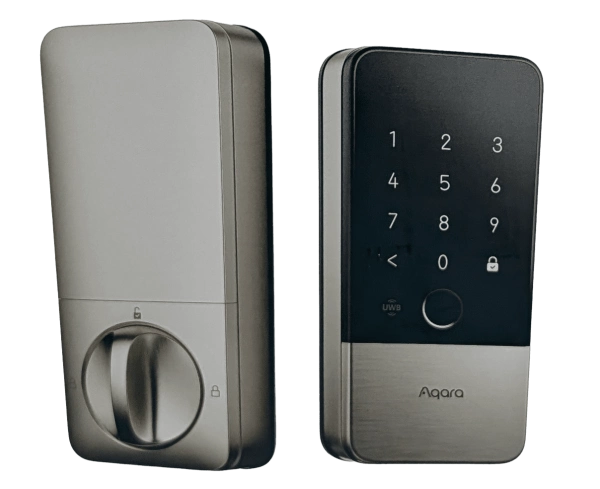
Aqara Smart Lock U400
Matter’s existing Occupancy Sensing cluster also gains a provisional Prediction feature and PredictedOccupancy attribute. Ambient Context Sensing adds Sensor Fusion, providing another building block for devices that combine information from multiple sensing sources.
Together, these additions could let platforms make smarter triggers about presence, moving beyond a simple occupied or unoccupied state and allowing devices to provide additional context for automations.
Matter moves into electrical infrastructure
Matter 1.7 also expands beyond individual appliances into residential electrical infrastructure.
The draft adds device types for circuit breakers, arc-fault and residual-current protection devices, and surge protectors. It also adds an Electrical Distribution Enclosure, which can represent equipment such as a home electrical panel, along with an Auxiliary Load Switch for additional load control. The related electrical protection features remain provisional in the current draft.
Earlier Matter releases have already added support for solar power systems, batteries, heat pumps and EV chargers. These additions bring Matter’s growing energy-management capabilities closer to the electrical infrastructure connecting those devices together.
Matter 1.7 also builds on that work with Power Range Adjustment. Instead of asking a device to use one specific amount of power, an energy-management system can give it an acceptable range to operate within. This gives equipment more flexibility to adjust its consumption based on available energy, demand or other conditions.
Cameras and media gain new capabilities
Matter cameras are set for another expansion after their introduction in Matter 1.5.
The Camera device type moves to revision 2 and adds AV Analysis alongside Ambient Context Sensing. Matter 1.7 introduces separate AV Analysis Node and Ambient Context Sensor device types. Detection of ambient contexts can be used to trigger Matter’s Push AV Stream Transport.
These additions remain provisional, but could provide a standardized foundation for more advanced camera analysis without requiring every detection feature to be handled through proprietary integrations.
The draft also expands Matter’s media capabilities. New Streaming Audio Player and Casting Audio Player device types join an Audio Control cluster that can also be implemented by speakers.
Other additions include richer playback information, content queues and presets, media file management and OAuth 2.0 Device Authorization Grant support for account login, which streamline the Matter Casting experience.
Preparing for post-quantum security
One of the more forward-looking additions is Matter’s first step toward post-quantum cryptography in device attestation.
The Operational Credentials cluster moves to revision 3 with support for PQC Device Attestation, alongside a PQC Device Attestation Profile attribute. Both are provisional in the current Matter 1.7 draft.
Device attestation is part of Matter’s setup process and allows a commissioner to verify a device’s identity and certification status before admitting it to a Matter fabric.
The change does not make Matter communications generally post-quantum secure. The draft specifically introduces PQC support for device attestation, rather than replacing the cryptography used throughout Matter’s operational communications.
Still, its appearance in the 1.7 data model shows that post-quantum security is starting to enter Matter’s architecture rather than remaining a longer-term discussion.
Other features
Matter 1.7 includes several other notable additions. Thermostats gain support for multiple sensors and sensor scheduling, smoke and CO alarms add smoke concentration measurement, and window coverings gain absolute position controls. The draft also introduces a Humidity Conditioner device type and Humidistat cluster.
The changes are part of the Matter 1.7 0.9 ballot and are not final. The repository explicitly marks many of these additions as provisional, so some could change substantially, move to a later Matter revision or disappear before Matter 1.7 is released.
(Source: GitHub; Image: Matter Alpha/Ward Zhou)