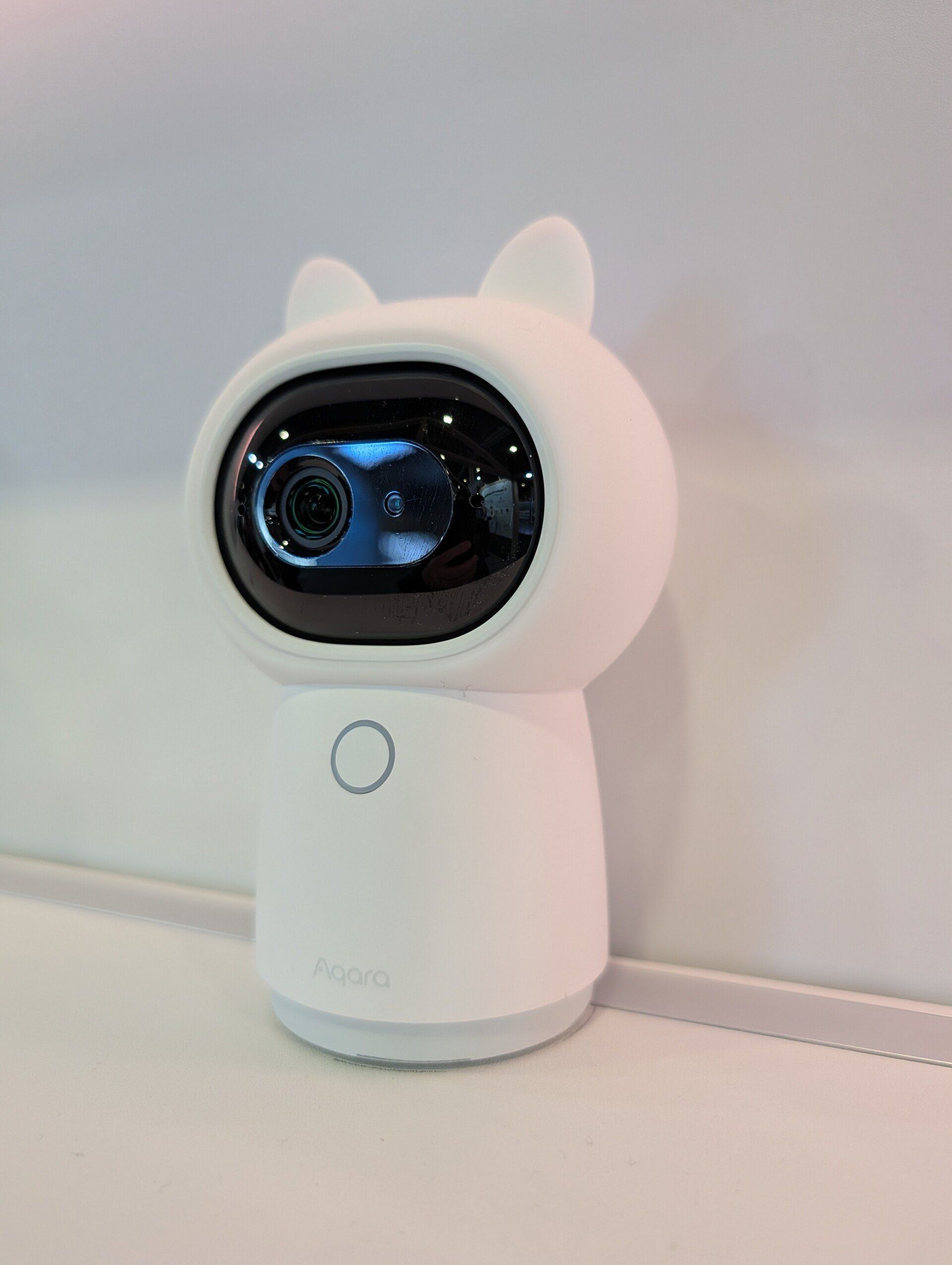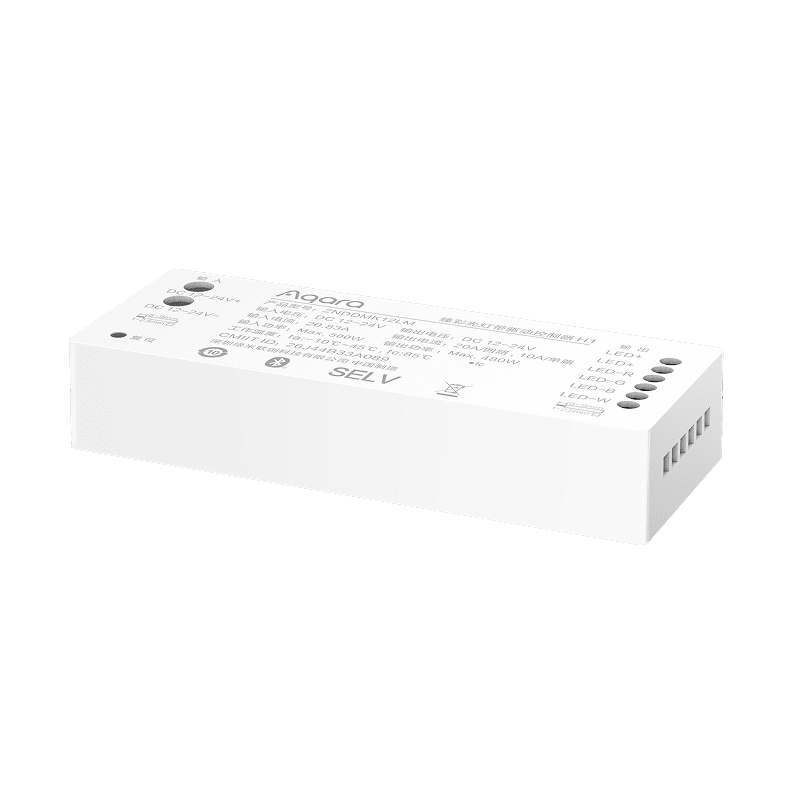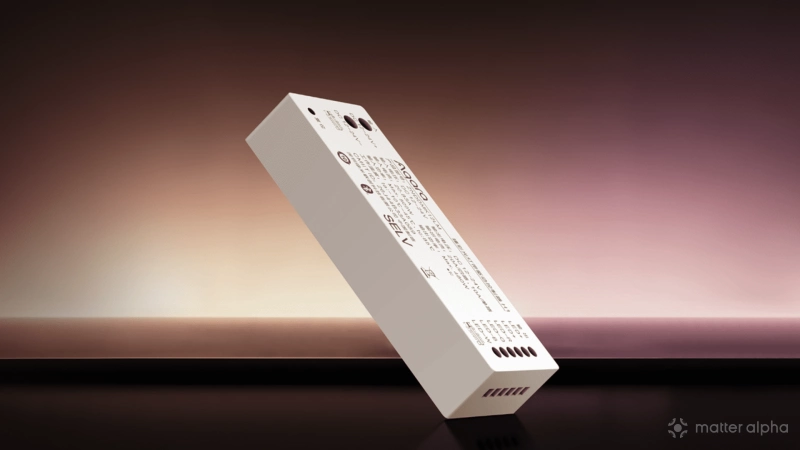
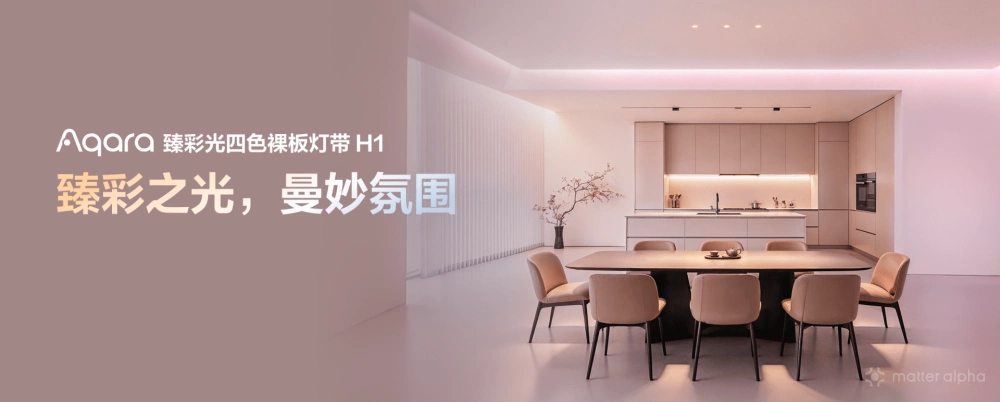
Aqara just released a new light strip controller, the H1, in China. This is another move demonstrating how Aqara diversifies its release strategy to make more hardware options available first in its home market before expanding globally like the Camera Hub G350.
High capacity power delivery
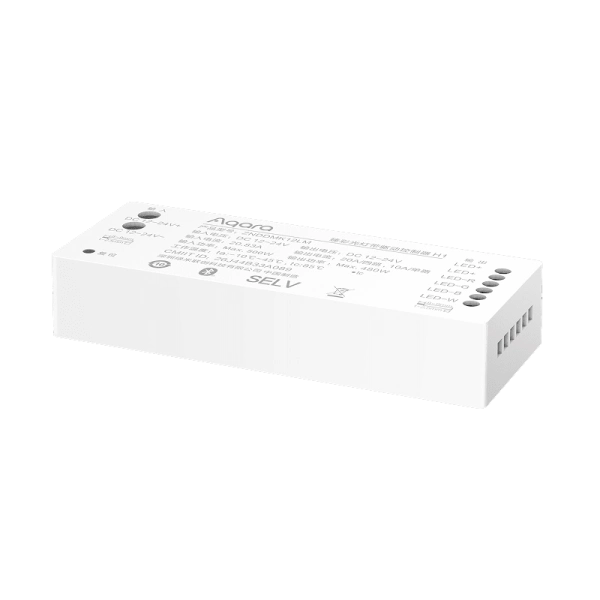
Aqara Light Strip Controller H1 (ZNDDMK12LM)
The new Controller H1 (ZNDDMK12LM) is a highly capable driver designed for extensive custom lighting installations. According to the hardware spec sheet, it is capable of driving a maximum output of 480W. It accepts a DC 12V to 24V input and provides up to 20A across four channels, or 10A on a single channel. That power delivery is enough to handle the ambient lighting strips for an entire large room, or a small apartment, minimizing the need to wire multiple synchronized controllers for extended ceiling cove or cabinet lighting projects. However, the controller remains relatively compact, measuring 125.5/48.5/23.5 mm.
Switchable wireless protocols
A core feature of the H1 is its dual-protocol wireless design, utilizing Zigbee, Thread, and Bluetooth Low Energy (BLE). The device operates on the Zigbee protocol by default in China, which is intended for pairing directly with an Aqara hub to access the full suite of features within the Aqara Home app. However, users can flexibly switch the controller to operate via the Thread protocol.
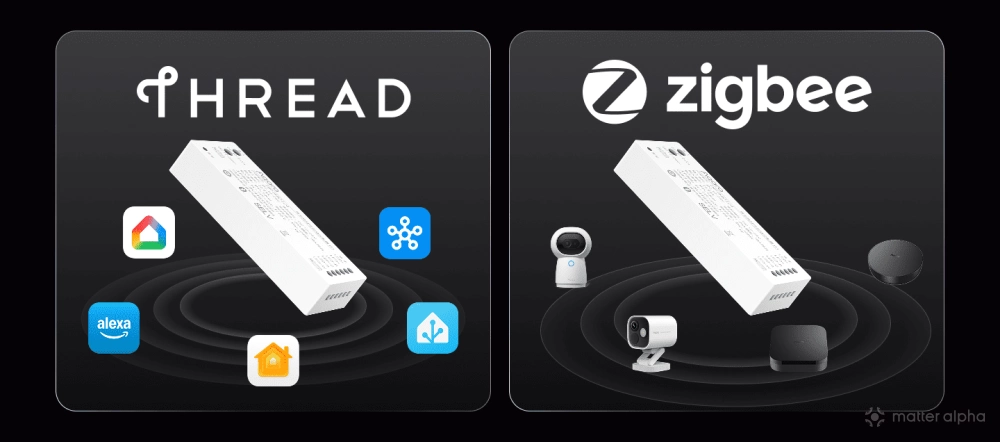
This transitions the hardware into a native Matter over Thread device, allowing it to join an existing Thread mesh network and integrate directly with platforms like Apple Home or Amazon Alexa without requiring an Aqara hub or gateway.
Advanced color mixing and Adaptive Lighting
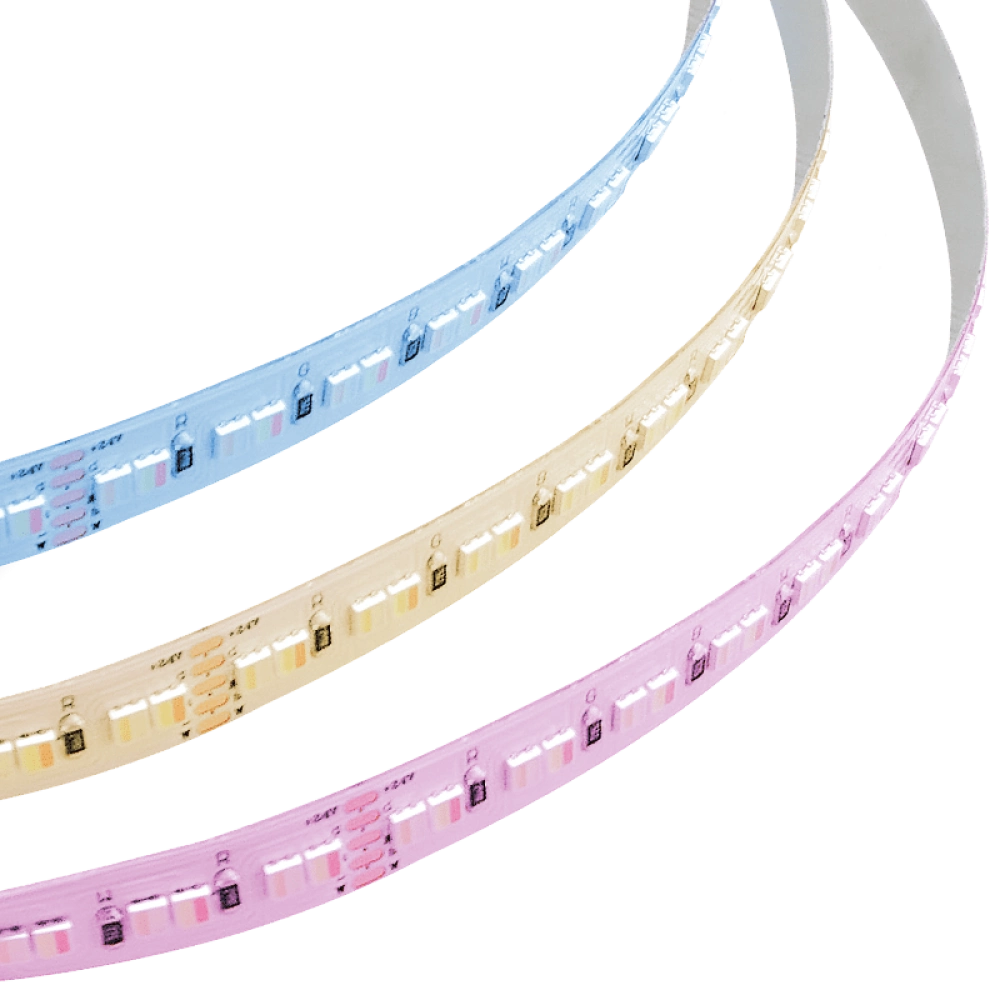
Beyond power delivery, the controller focuses on accurate color reproduction. It utilizes a four-color mixing technology and a custom algorithm to provide an ultra-wide color temperature range, stretching from an incredibly warm 1,800K to a stark 12,000K (Aqara Light Strip H1 is required). This hardware design aims to solve the color shifting and poor rendering often found in traditional dual-color or standard RGB controllers, resulting in more natural colors and better skin tone rendering.
When connected to Apple Home, the controller natively supports the Apple Adaptive Lighting feature, allowing the custom light strips to automatically adjust their color temperature throughout the day.
Ecosystem controls
Aqara has heavily integrated the H1 into both its own and Apple’s control ecosystems. The software supports custom dimming curves and dynamic lighting sequences. It can be triggered by advanced Apple hardware features, such as mapping a specific lighting scene to the iPhone Action Button or using Apple Watch hand gestures to adjust the room’s atmosphere. Locally, it can link with over 340 existing Aqara smart devices and responds to physical inputs like the Magic Cube controller or standard Siri voice commands.
Pricing and availability
The Aqara Light Strip Controller H1 is now available across local commercial platforms and through partnered professional installers. The standalone controller is priced at 439 yuan ($64.97). For users looking for a complete out-of-the-box solution, a bundled package that includes the controller along with a 10M light strip is available for 869 yuan. Aqara has yet to disclose details on global availability.
(Source: Aqara CN; Image: Aqara CN)