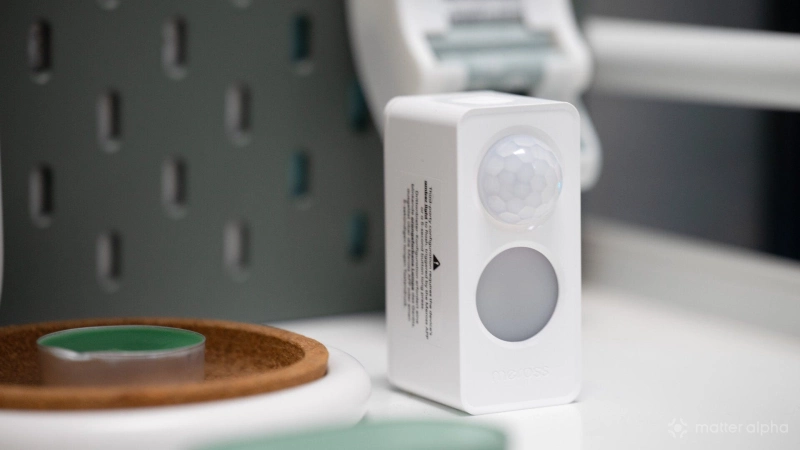
It’s a booming time for mmWave presence radar sensors with Matter and Thread support. And they start to differentiate in features and design. With more options available, it is a good chance to upgrade from motion sensors to radar along with Matter.
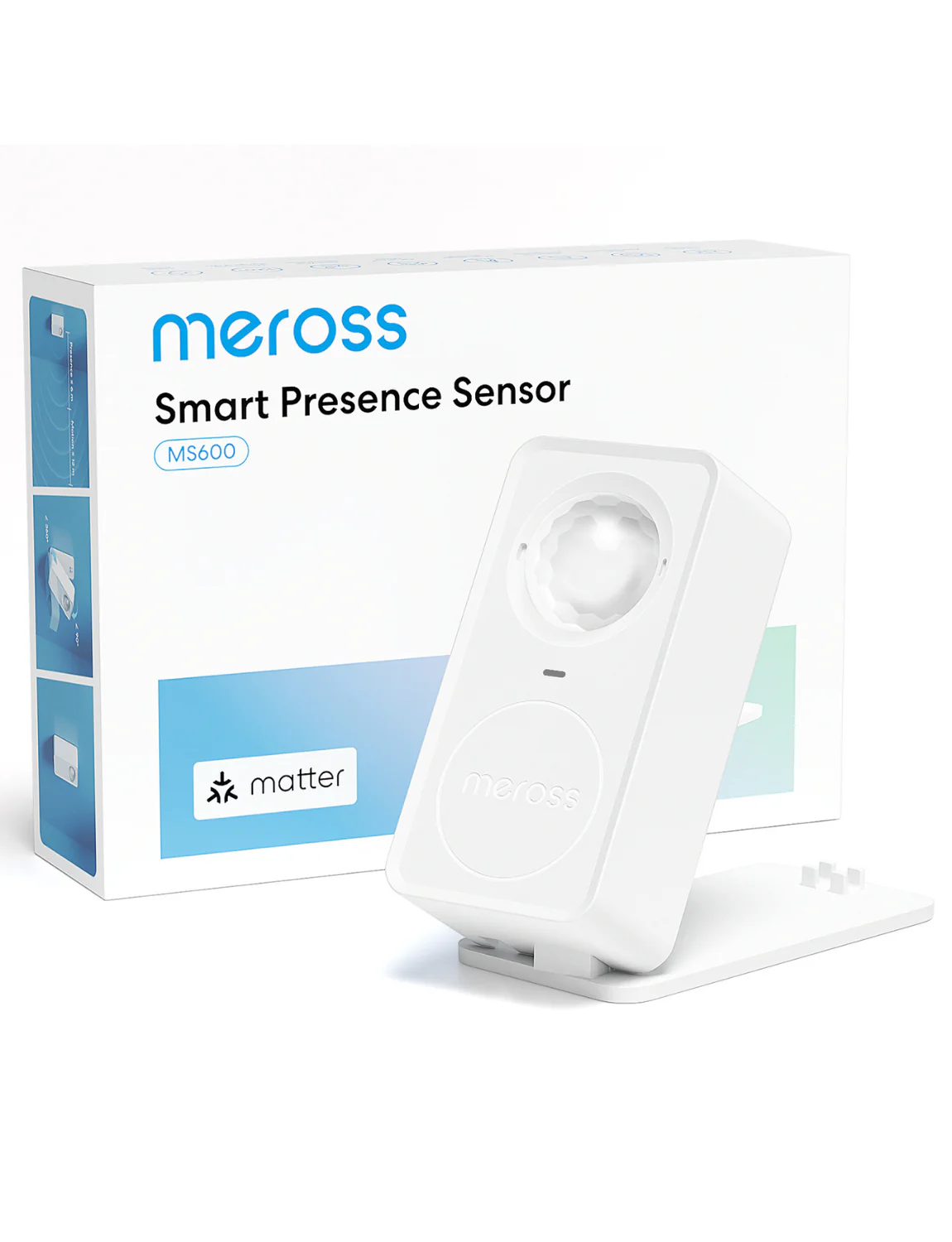
Meross is one of them. Known for its practical smart home products, the brand has introduced the MS605 presence sensor as a Thread upgrade version along with the Wi-Fi option. It combines radar and PIR detection with full Matter exposure, packaged in a design that looks unlike most sensors on the market. I’ve used it for a while and here’s my take on how it performs in daily use.
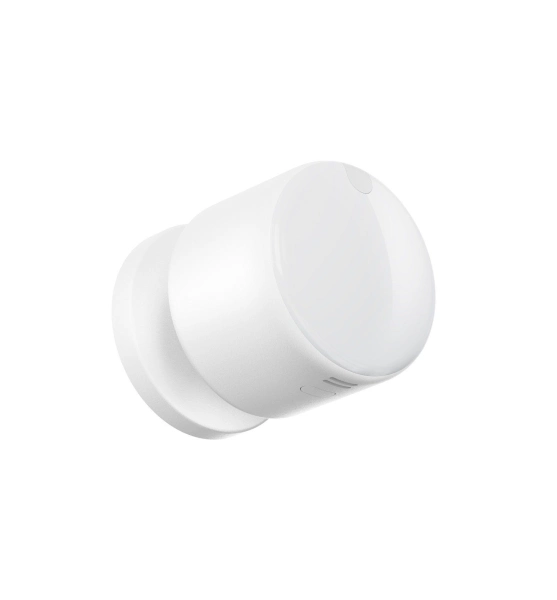
Aqara Presence Multi-Sensor FP300
TL;DR
Fors
-
Fast response
-
Stable connectivity
-
Multi-zone exposed to Matter
-
Waterproof design
-
Full configuration
-
Fair price
Againsts
-
Sudden battery level drop
-
Struggle for heavy multi-admin
Design and hardware
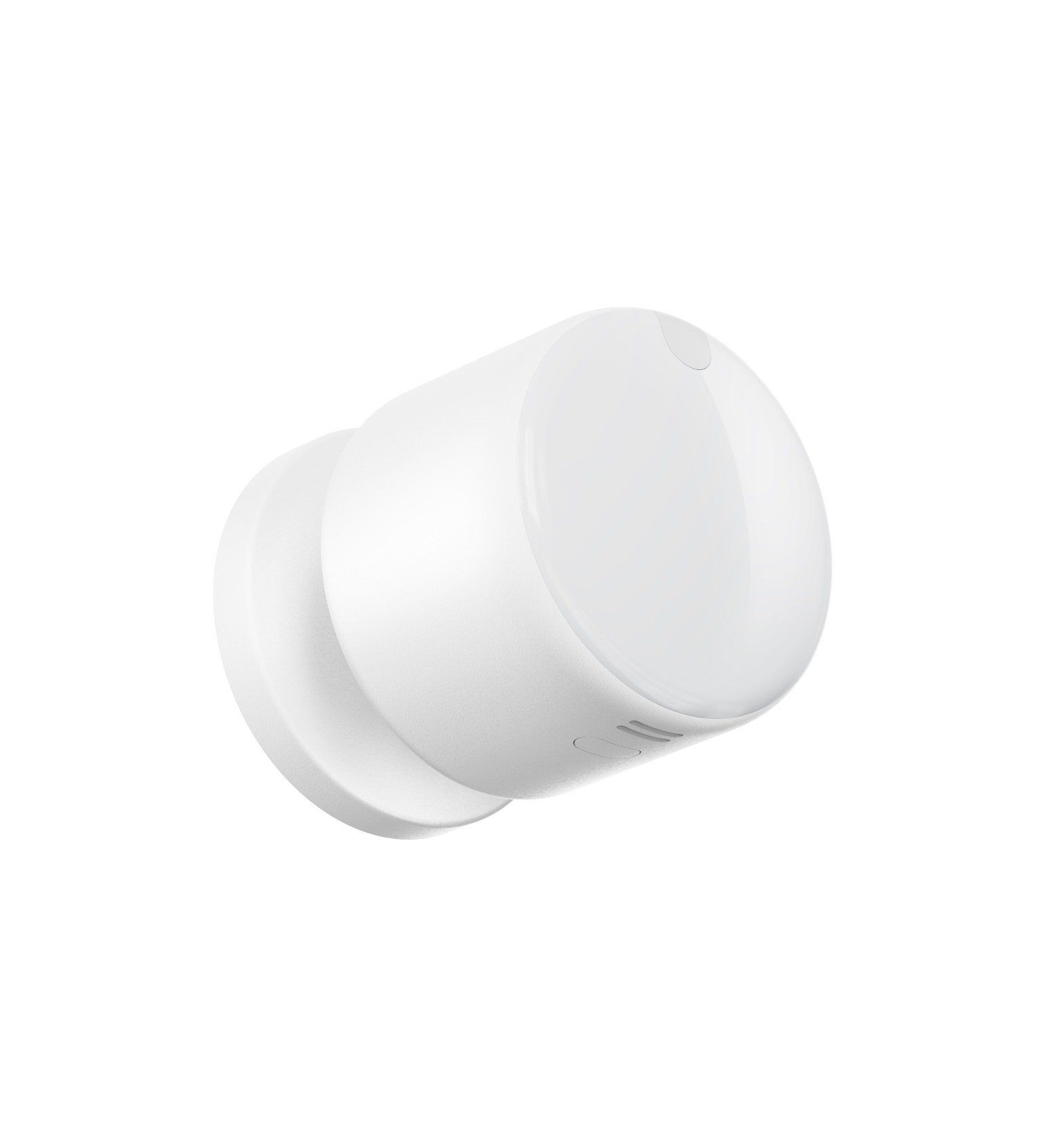
The physical design of the Meross MS605 is quite different from other smart home sensors on the market. It looks like a mini traffic light, and it even has three color indicator lights on the front face. While the overall size is slightly larger when compared to alternatives like the Aqara FP300.
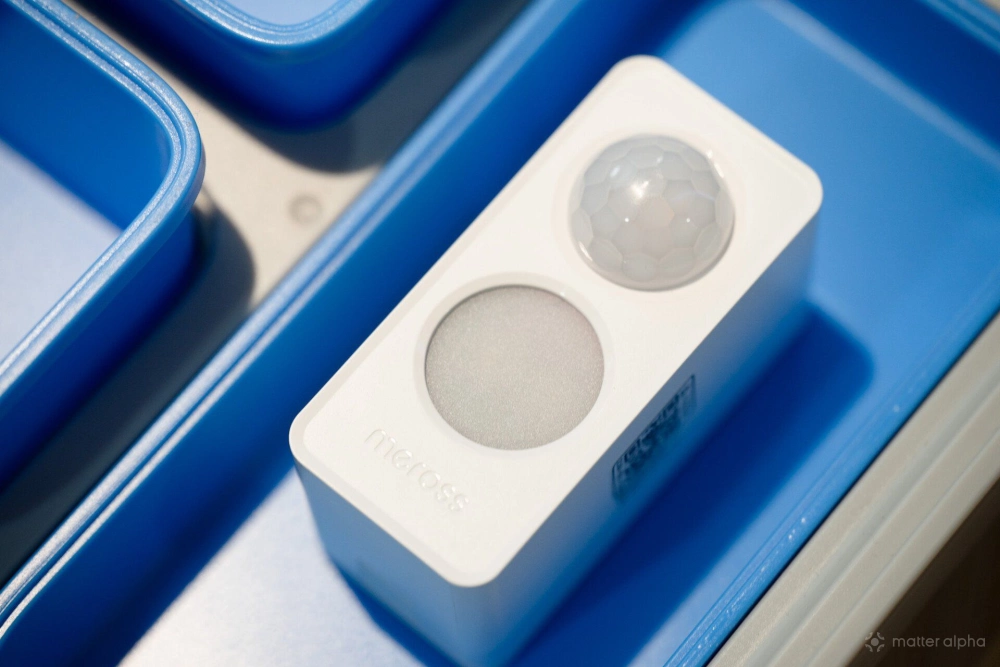
The square shape of the housing makes it easy to place on any flat surface like a table or a shelf. On the front of the device, there are two distinct circular areas. One circle contains the passive infrared lens, while the other holds the millimeter-wave radar sensor used for continuous presence detection.
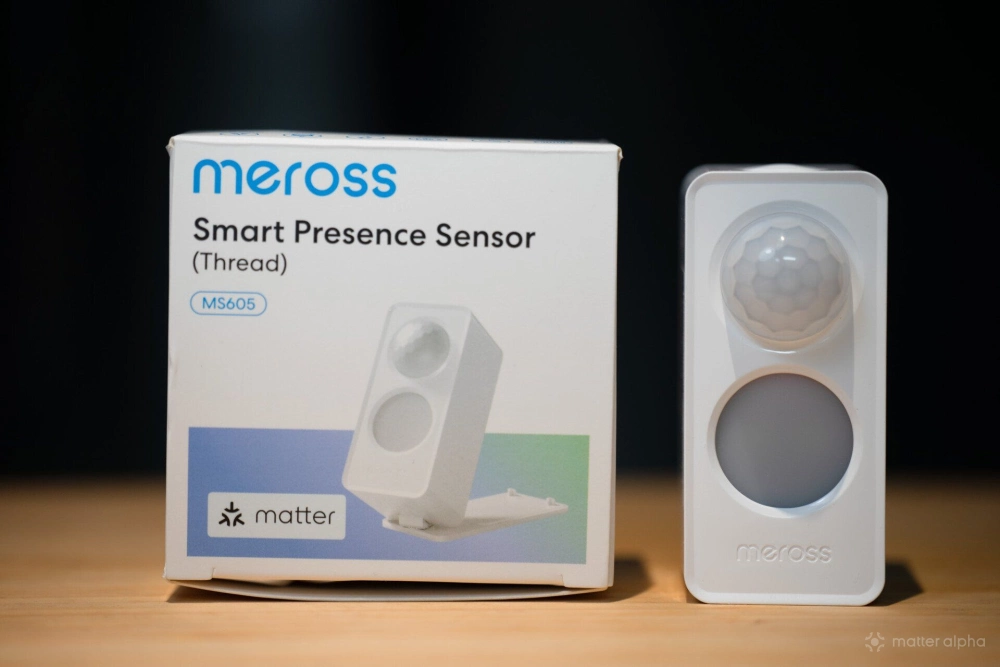
On the back of the device, there is an adjustable kickstand that can be rotated to set a specific angle. This allows for more flexibility when installing the sensor for better coverage. However, the plastic used for this stand feels somewhat thin. The hinge is also very tight out of the box, so I have to be extremely careful when adjusting it to avoid snapping the plastic components. The box includes adhesive magic tapes, so the sensor can be attached to a wall without using screws, which also makes it easy for maintenance.
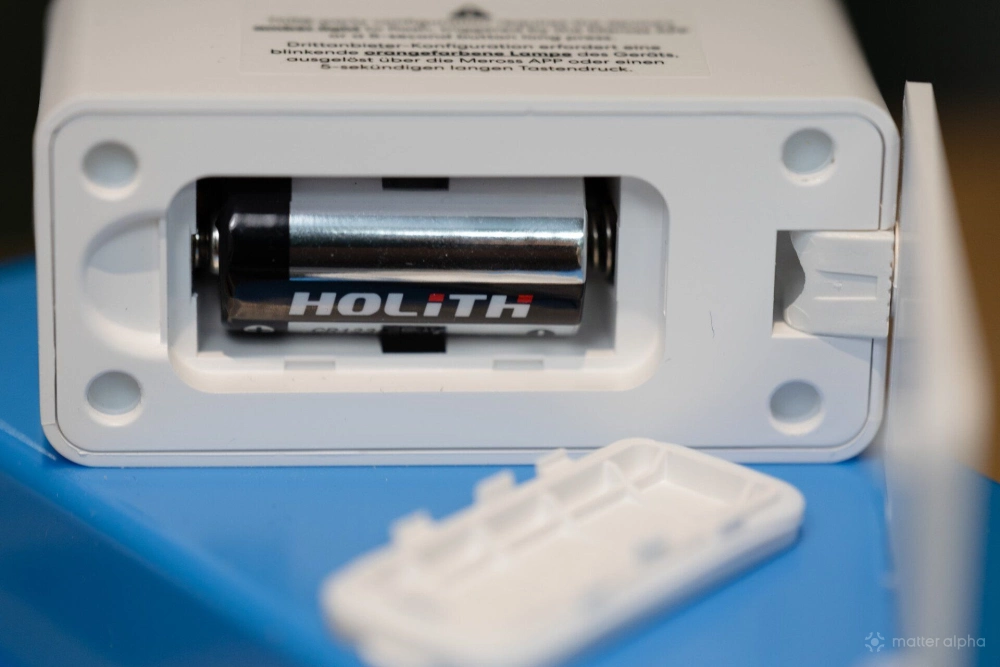
Meross includes a small tool in the packaging to help users open the battery lid. This lid has a thick rubber seal around it to keep moisture out of the internal electronics. During my testing, the sensor was used in a bathroom near a shower and did not have any problems with the high humidity or light water splashes.
The device is powered by a single CR123A battery. This is a common battery model but more expensive than standard AAA batteries.
Daily performance and reliability
The everyday performance of the MS605 is very reliable. The sensor triggers quickly and barely reports ghost detections. It also does a great job of keeping the occupancy status active when a person is sitting completely still.
The sensor was tested in a small bathroom space to control the overhead lights and the exhaust fan. It usually detects my presence when I am about a meter away from the door. This ensured the lights were already on by the time I walked into the room. This is a perfect example of how a well-tuned radar sensor should work, as it avoids the frustrating problem of lights turning on and off unexpectedly.
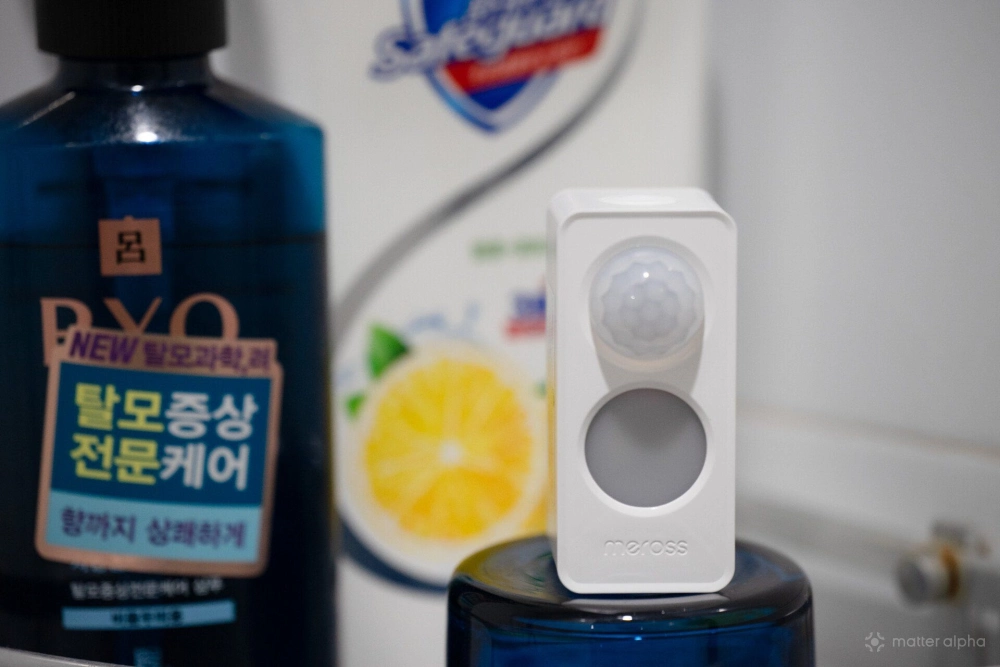
When the sensor detects motion, a green light on the front flashes once. This is a very helpful feature for checking if the sensor is working properly when you are setting up new automations in your house. The wireless connection remained entirely stable during the testing period. The sensor stayed connected to both Apple Home and Home Assistant even after multiple power and network outages. The device reconnects to the Thread network fast in general.
Battery and multi-admin issues
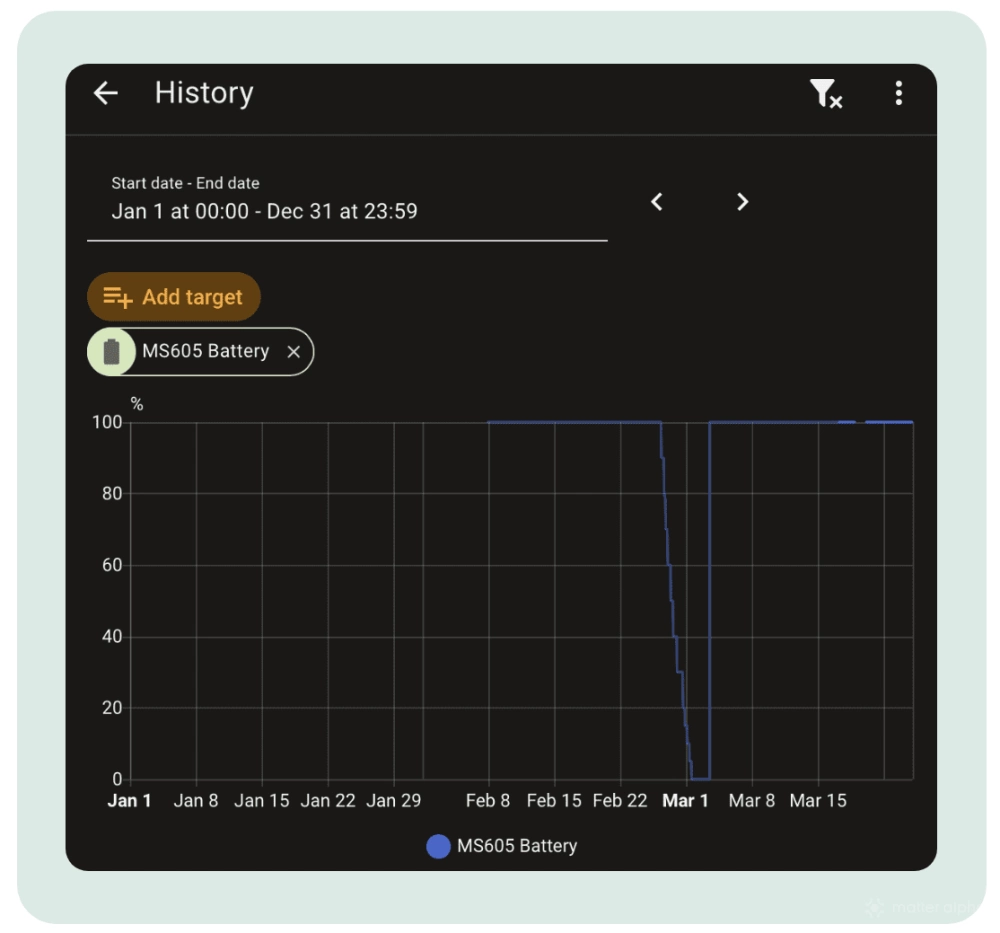
There are a few technical issues that I countered. The most significant problem found during testing was a sudden drop in battery life. One fresh battery was completely drained in only two days of use. This exact same rapid drain issue has been seen in another sensor I have that uses a similar chipset solution. It is not yet clear if this is an edge case or something that happens to all Matter devices using the Nordic solutions.
The Thread network can also be difficult for average users to troubleshoot because it does not provide a lot of clear information about how devices are communicating in the background.
Another issue involves using the sensor with multiple smart home platforms. While sharing the device with a second system worked well, the failure rate increased when a third or fourth platform was added. This will likely not be a problem for most users, but it could be a major challenge for power users.
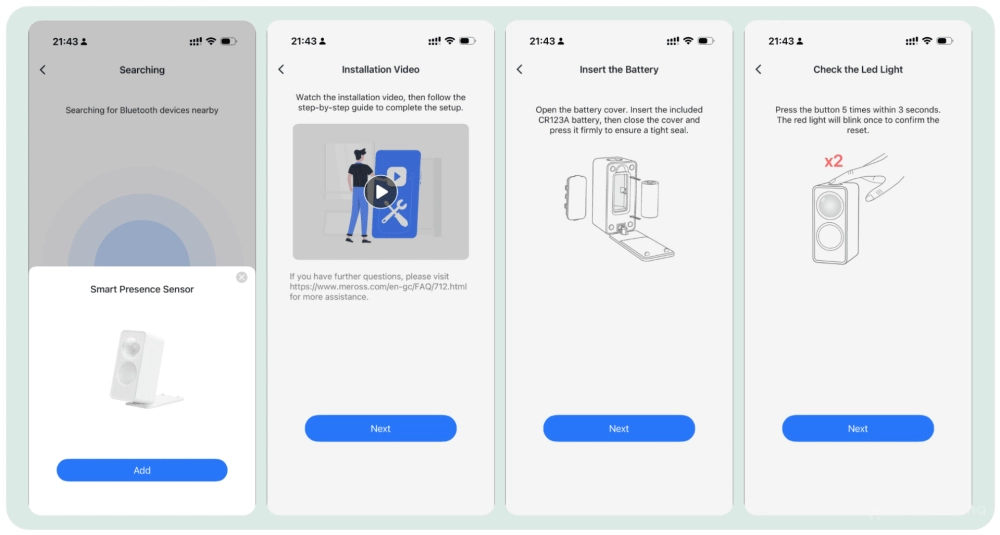
The Meross app provides a very detailed setup process that makes the overall installation experience much smoother, but I had trouble adding it directly to a Matter platform bypassing the whole in-app setup flow.
Zone detection and Matter features
A standout feature of the MS605 is the way it handles multi-zone detection. Many other radar sensors only show one basic occupancy status to Matter platforms. While MS605 makes three separate detection zones available directly to the smart home platforms. These zones represent different physical distances from the sensor. Users can easily customize these zones in the Meross app by setting the exact distance and deciding how long the sensor stays active for each specific area.
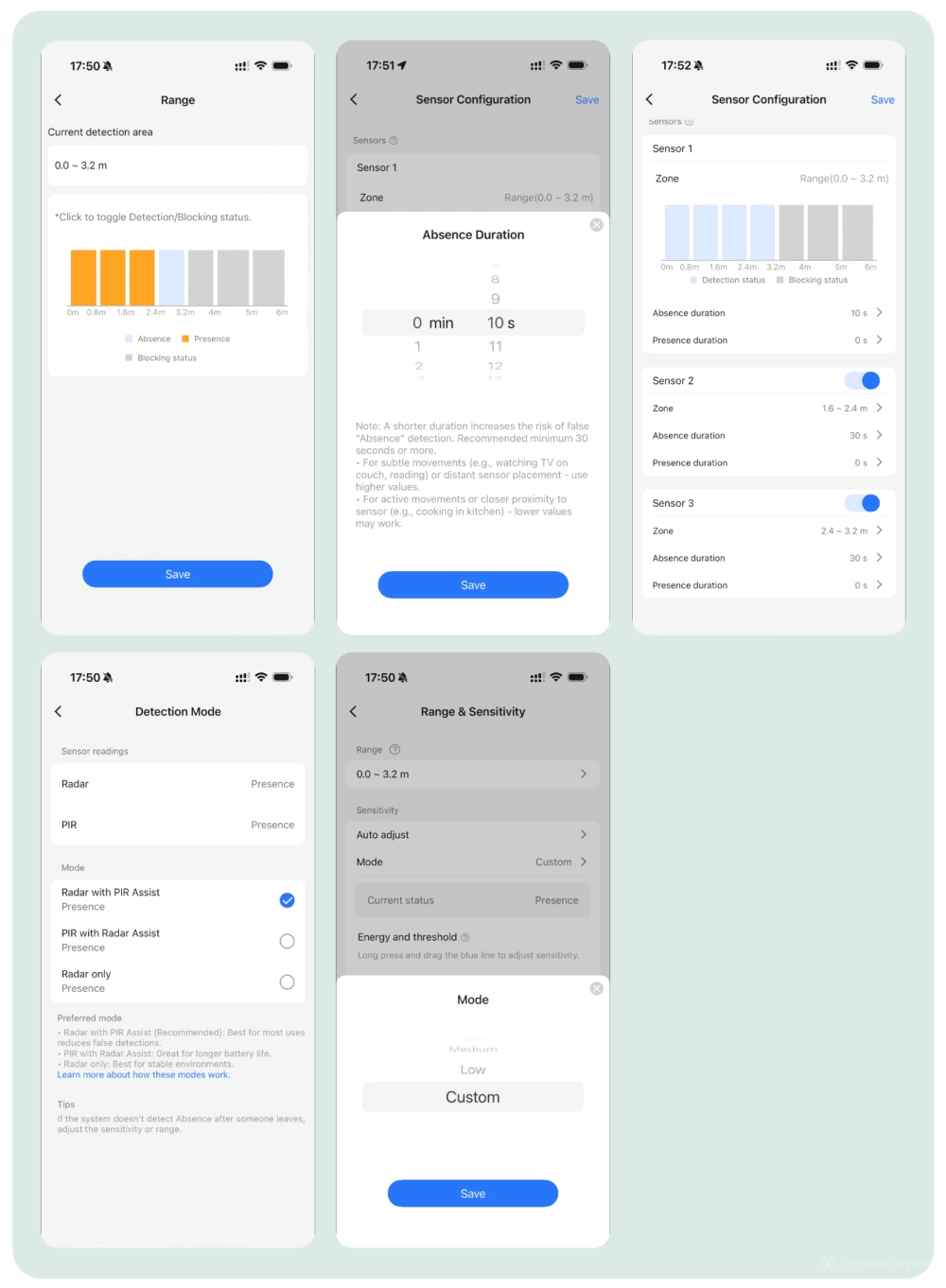
This multi-zone support allows for much more creative and complex automations. For example, a sensor placed in a living room can turn on a small lamp when someone is far away, and then turn on the main ceiling lights when the person gets closer to the center of the room.
The detection zones are exposed in Apple Home, Google Home, and Home Assistant, but Samsung SmartThings only shows one. Within the Meross app, there is a helpful visual interface of where the sensor is detecting movement in real time. You can also adjust the sensitivity levels to fit the specific needs of your room to avoid interference.
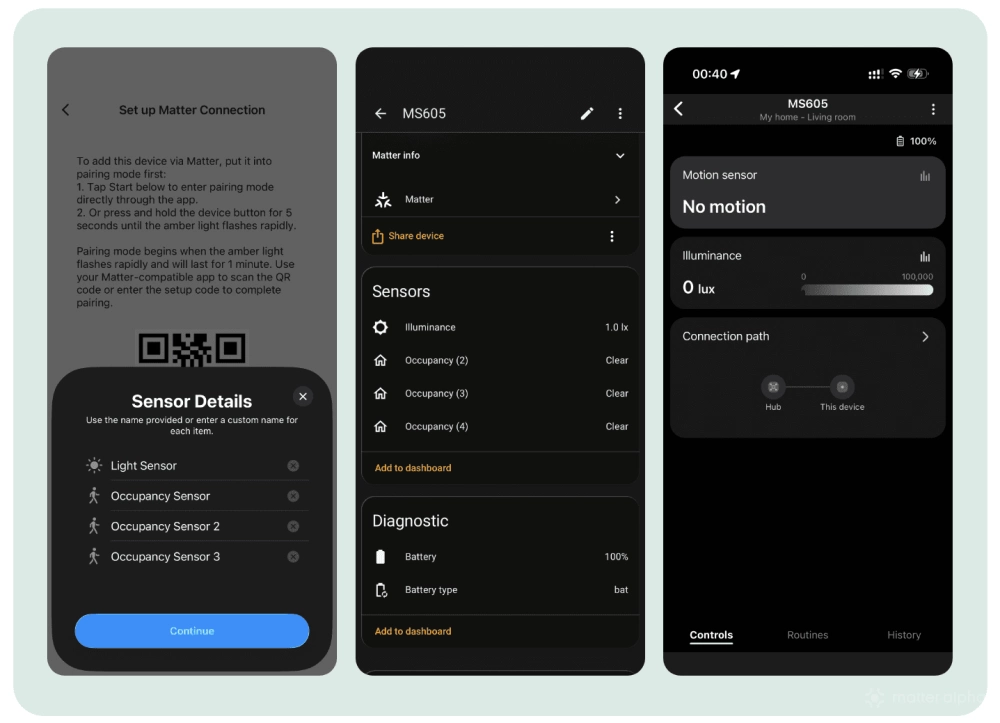
Frankly speaking, it is refreshing to see a manufacturer allow these advanced features to work directly with the Matter spec instead of keeping them hidden inside their own app. This proves that Matter is flexible enough to handle advanced hardware features only if a company puts in the effort.
Because the device equips both infrared and radar sensors, Meross provides several options for how to use them together. For most users, setting the radar as the primary sensor is the best choice. This uses the infrared sensor to quickly wake the device up when someone enters. You can also set the infrared sensor as the primary to save battery life, or use only the radar for the best accuracy in a room without moving objects like fans or curtains.
The sensor also includes a light sensor that can be used to make sure lights only turn on when the room is dark. Some advanced settings like sensitivity and hold times cannot be changed directly in Matter yet and still require the Meross app for fine-tuning.
Verdict
The Meross MS605 is a unique product in the current smart home market. It is a solid choice for people who want an easy Matter setup with advanced tracking features. As the only Matter over Thread sensor that offers true multi-zone detection natively. It provides a stable wireless connection and highly reliable movement tracking inside a waterproof housing.
Despite the issues I had with battery life and heavy multi-admin, it is still a good option for average users. The price of about $34 is also competitive when compared to other Matter radar sensors available today.
(Image: Matter Alpha/Ward Zhou)