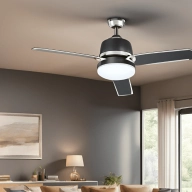
The Best Matter-Compatible Recessed Lights
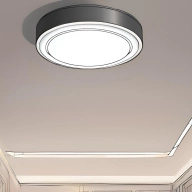
Ready to give your home a smart lighting upgrade? These Matter-compatible recessed lights may be just what you're looking for.
Whether you need to replace an old non-working fixture, or looking to modernize your home, there's a Matter-compatible ceiling light that can meet almost any need. With a Matter ceiling light, your home will not only benefit from an updated look, but it will also gain convenient smart controls and maybe even a few extras like colorful scenes.
Matter aims to bring improved interoperability and security into the smart home space. One way this is achieved is through a rigid release schedule. The Matter 1.3 specification was released in Spring 2024. It introduced a number of significant improvements, but what are the key differences between Matter 1.2 and 1.3?
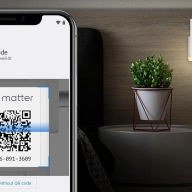
QR codes are a key part of the Matter protocol, designed to make the process of commissioning a Matter device into your home easy. But what even is a QR code, and how does Matter use them? Let's take a deep dive, in today's technical explainer.
Boasting temperature control, inventory management, and even diet control, the smart fridge can only be enhanced by the emergence of Matter. The new smart home standard is slowly spreading into the kitchen, with connected devices included in Matter 1.3. But can current smart fridges connect to Matter?
Are you tired of waiting on Matter software and product releases? Then it's time to go DIY with one of the best Matter-compatible relay switches.
On the face of things, Matter-compatible smart switches just do what other smart home light switches do. But there is more to switching lights off and on remotely using Matter.
If you’re building your Matter smart home, one of the key areas that you’ve probably identified is the kitchen. But is Matter-compatible kitchenware available? As of mid-2024, the list of compatible hardware is short, but the kitchen is a key opportunity for Matter.
You could think of Matter as a subset of IoT devices, but the differences go far beyond that.
Mesh networking is critical to the smart home, and it's partly why Thread is the network of choice for Matter.
If you're busy reading up on Matter smarthome devices, you may have come across mentions of something called Thread. But what is it?
Smart homes technology has been surprisingly slow to build integrations with TVs. Aside from support for smart assistants, there is little to shout about. It’s hardly smart, is it? But with increased support for Matter, that might be about to change.
With the current boom in AI, it won't be long before we all have a HAL9000 to manage our smart homes for us.
Matter is bringing smart home convenience outdoors with connected lighting, sensors, plugs, and weather-ready automation
In our guide to the best smart plugs, we covered how they are a simple, yet effective way to add Matter capabilities to older devices with physical controls. However, smart plugs aren't so hot when it comes to devices that don't save their state after powering down or for those that rely on a remote. For these types of devices, you'll need to turn to a Matter-compatible IR Blaster to get the job done.
When you need the versatility of smart plugs for your desk or behind a TV, you'll want to consider a Matter-compatible smart power strip with USB (or without).
Knowing which version of Matter your hardware is running can help you to choose the right devices. It will also determine which features your smart home kit can control via a smart hub app, and which ones are restricted to the device’s native app. But there is a problem. You can’t definitively find out which version of Matter you’re using.
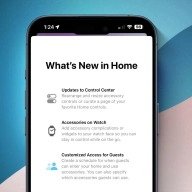
Pairing your new Matter accessory should be simple—but behind the scenes there’s a lot going on. Here’s what you need to know about the process.
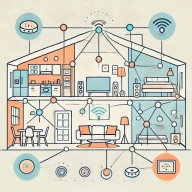
The chances are, your smart home isn’t as smart as you would like it to be. Incompatibility, a lack of interoperability, and perhaps a simple tiff between brands and ecosystems are taking their toll. Multiple apps, dependence on specific hubs, and a collision of ecosystems in an attempt to make things simply work.
Arguably the biggest problem with smart homes is the lack of compatibility between devices and hubs. Even where compatibility is used as a selling point, problems can occur down the line. Two possible solutions are the Matter protocol and the Z-Wave mesh networking system. But both are slightly different.