Getting devices onto your smart home using is so much easier and faster than it was, and someone needs to shout about it.
It’s early 2024, and you’ve just bought a smart home light bulb from IKEA or some other hardware retailer. It has Wi-Fi, it has Zigbee too, perhaps Thread, and is marked as Matter compatible. So, you take it home, attach it to the fitting, safely discarding (or preferably, reusing) the previous bulb.
You switch it on at the wall – all is well. Then, you begin the process of enrolling the light bulb with your smart home platform. Perhaps IKEA, perhaps Samsung SmartThings, Google Home, etc.
Then, you stand next to your light switch, flicking it on and off like an idiot.
Getting a smart home device online with Matter, pre-2025
Building a smart home has never been as simple as we wanted it to be, but it has never been this easy. Following the invention of the telephone, radio waves, and the availability of electricity in homes, the notion of in-home automation became more popular. Some examples date back to the early 20th century (such as automatic thermostats), which you can learn more about in our history of the smart home.
Prior to the release of the first Matter spec, and its eventual wider availability with Matter 1.2 and 1.3, smart home tech was limited to Wi-Fi connectivity, Zigbee, Z-Wave, Bluetooth… and a seemingly endless list of individual apps. In many cases, enrolling a device on your home network was straightforward, but potentially time-consuming, subject to networking issues, interference from other devices, and the idiosyncrasies of the hardware.

That clicking on and off of the light switch was all part of power-cycling the device, which made it available for detection by your smart home hub. You might feel stupid flicking the switch nine or more times, but in truth, it makes sense. It’s just unwieldy.
If successful, your smart home device worked, but you had to remember which app controlled it. Some inroads were made via Google Home, Apple Home, etc., but the arrival of Matter began the process of removing the “which app is it?” problem by unifying controls within a single interface.
Matter 1.4 changed everything
These days, thanks to improvements in how Matter commissions new devices on your network, the weird ritual of smart home enrollment (like switching a lamp on and off to a rhythm) is over.
I’ve just fitted a new Matter light bulb from IKEA, a KAJPLATS smart home bulb. After moving some older Zigbee-based TRADFRI bulbs to a different room and going through the distance-to-hub/Dance-Revolution nonsense, onboarding the KAJPLATS was an absolute breeze.
To be fair, the distance-to-hub thing isn’t such an issue these days, and that is down to Matter 1.4.1. The manual power-cycling sequence isn’t needed with modern bulbs because, crucially, the bulbs can do this automatically. You still get the flip on and off, but you don’t have to stand there, staring at your phone, hoping you meet the rhythm and get through to the next round (smart home functionality).
Instead, the app and the device work together to simulate that power-cycling rhythm, which enables the device to be fully detected, enrolled, and commissioned as part of your Matter smart home.
It’s not all about Thread
When I first became aware of Thread, it was already inextricably linked to Matter. Despite the two technologies existing separately, Matter needs Thread far more than anyone has dared admit.
Matter-over-Wi-Fi is ideal for larger, complex hardware like hubs and robot cleaners and cameras, but Matter-over-Thread is ideal everywhere.
But as great as Thread is, the improvements in enrolling new hardware onto your network happened separately to greater Thread functionality. Matter 1.4 and Thread 1.4 work extremely well together, and we hope that will continue.
We needed Matter 1.4 from the start
Thanks to Thread, these new bulbs can automatically enroll onto the Matter network once connected to the fitting and powered on. I’ve had similar swift commissioning with Thread-based sensors, and that challenge of distance from the IKEA DIRIGERA hub has been overcome, too.
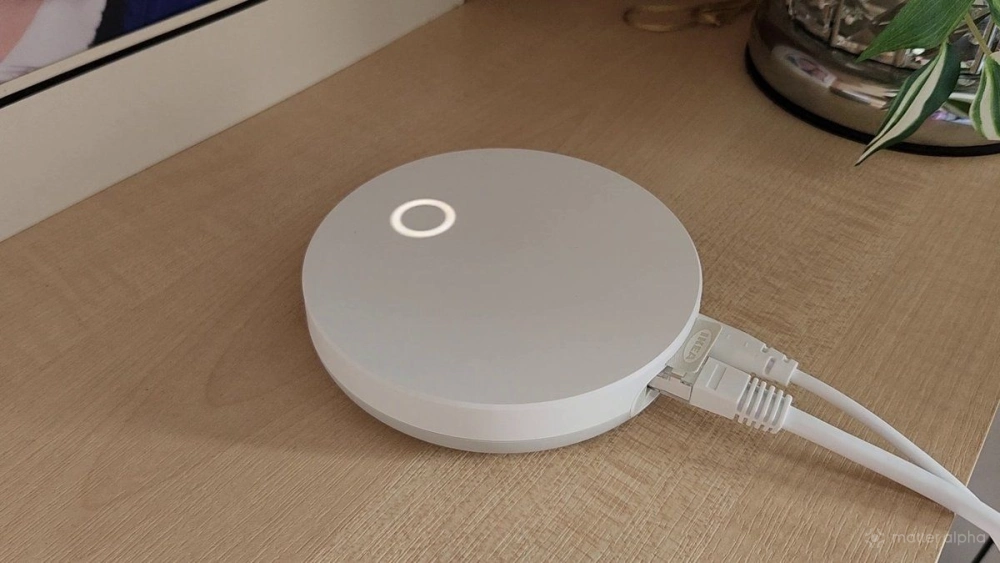
Once, you had to be almost on top of the DIRIGERA. The last Thread-based sensor added to my Matter network was situated in my office, 20 meters from the hub.
It’s just a shame this series of fixes took so long to appear, not just in terms of Matter 1.4 being released, but also in it appearing on smart home hubs. You may not know this, but there is a delay between the release of a specification, and the smart home ecosystems pushing that out to hubs and controllers. So, while Matter 1.4 was unveiled in November 2024, it was almost a year later before it was available across Google Home and other platforms.
Now, we’re seeing the benefit, but Matter really needed this streamlined commissioning from the start.
Improved device enrolling needs shouting about
I have no doubt that people have been turned off Matter because of its pre 1.4 struggles with enrollment. I’ve spent way too much time myself locked in a seemingly unwinnable battle.
Sometimes, it was my own fault but on other occasions, it was the foibles of adding a device to Matter.
It is safe to say that this is now a thing of the past, but I’m amazed that no one is making more of this. Demo units in IKEA or other big stores to illustrate how easy this is – even a sales assistant could do it – would really sell this gear, and perhaps even the notion of the Matter smart home.
Perception is everything, and if people are intimidated by technology, they will steer clear of it. Simplifying commissioning in the Matter 1.4 specification is only one part of this – IKEA, Google, Apple, Samsung SmartThings, and everyone else selling these devices need to start showing the world how simple it is to assemble a smart home with Matter.
That needs to happen sooner, rather than later.
(Image credits: Alena Darmel/Pexels; Castorly Stock/Pexels; Christian Cawley)