Matter is brilliant; it should come as no surprise that I’m all in on it, given the domain you’re reading this on. But the poster boy mesh networking protocol — Matter over Thread — is, to put it bluntly, a complete mess. Ten years after its inception, built on the solid foundation of Zigbee and with some big-name backing, it’s still not ready for the everyday consumer.
Granted, it was only brought under the Matter wing with the first official Matter specification in 2022, but as a networking protocol Thread existed before then. You’ll still find HomeKit over Thread devices floating around which have nothing to do with Matter.
So why am I avoiding Thread in 2026, and still opting for Wi-Fi?
It’s not because it needs a “hub”
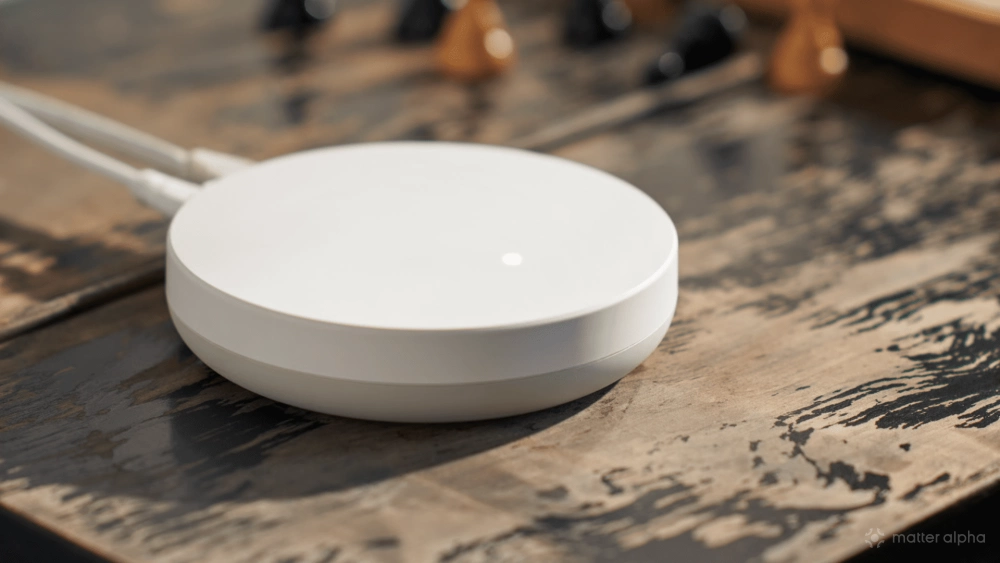
I’ve heard criticisms of Thread that it needs a hub — or, technically speaking, a border router (what is a Thread Border Router?) — to act as the middleman between the Thread mesh network and your home network. While true, I think it’s a non-issue.
Chances are that if you’re buying a Thread device, you already have a smart home hub of some sort, and it more than likely includes Thread Border Routing capabilities. Pretty much any voice assistant device bought in the last five years does. Of course there’ll always be older devices and some hapless consumer will buy a random smart plug without realizing you need anything else, but these will be edge cases — especially since Thread devices are typically more expensive. They’re far more likely to pick up a cheaper device that runs on Wi-Fi.
Thread isn’t robust
Matter only just introduced a way for multiple Thread Border Routers from different manufacturers to extend the same Thread network. Most still don’t support that, meaning if you’ve got both an Apple and Google Home hub, chances are they’ve created their own Thread networks, even if devices are accessible from either.
I haven’t had many Thread devices until recently, and it was only after installing the excellent Haojai wall switch that I noticed, without fail, every Thread device would drop offline every few days until I power-cycled my Apple HomePod. I ended up buying an Apple TV 4K and setting it as my preferred Border Router, but I shouldn’t have to — and I still don’t know why that fixed it, or if it was something else entirely and that fixed it by coincidence.
Now, I also tried integrating Home Assistant Yellow, which supposedly supports extending an existing Thread network. I followed all the complex steps of downloading credentials for my Thread network from HomeKit, and uploading them back into Home Assistant in a process of credential sharing. No Matter how many times I tried, it still created a separate Thread network. In the end, I disabled the Thread radio entirely so it wouldn't conflict.
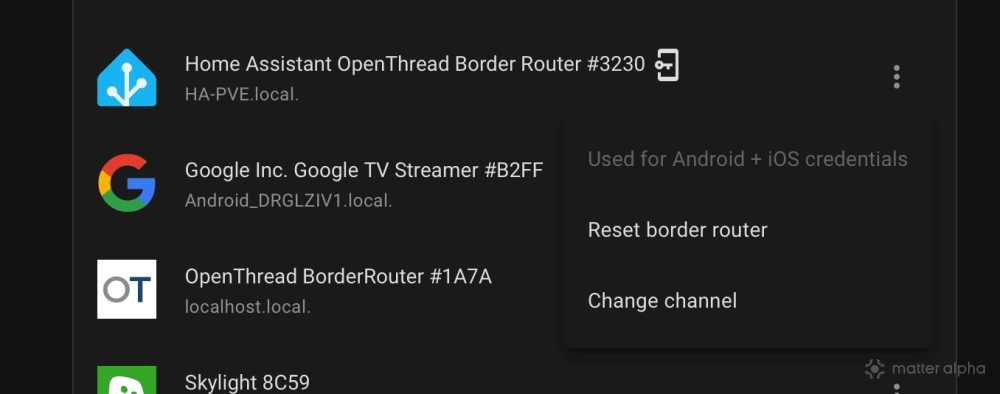
I get it; I guess I'm an early adopter. Not everyone has a mixed-assistant household (I’m so woke!), but given that the ability to use multiple systems simultaneously is touted as a bedrock of the Matter protocol, it’s rather disappointing when it turns out to be a cause of issues.
A complete lack of debug tools
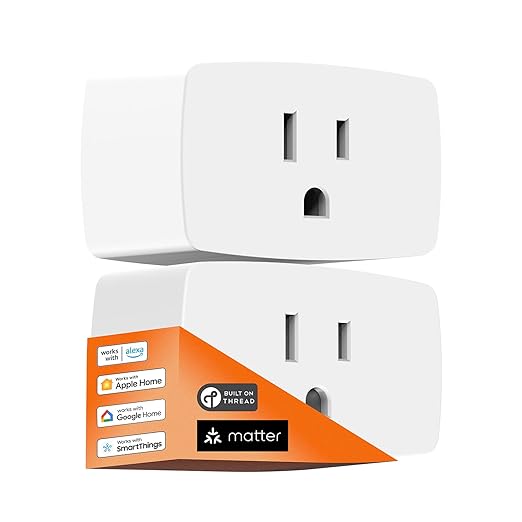
I recently bought a 4.5-star-rated Matter-over-Thread plug socket on Amazon in an effort to extend the mesh network and let me use some battery-powered Thread switches elsewhere:
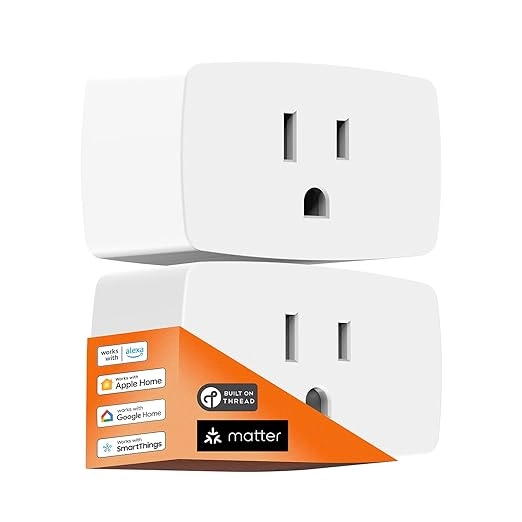
Onvis Smart Plug S4
Now, I’m no idiot, but it flat-out refused to connect to Apple Home. I know the Thread network is solid now because I have other devices, and I was sitting right next to the hub. I put the plug in pairing mode. I restarted the router; I reset the plug; I tried scanning the QR code, and manually typing in the number. In fact, I even tried the manufacturer’s app instead, but that turned out to be just a wrapper for Apple Home.
I spent hours trying to get this highly-rated smart plug to connect.
I found a few Reddit threads about this particular plug needing a critical update to resolve Thread connectivity issues, with users bemoaning that it could only be done using the app. But those were existing owners who already had it added to their network. I couldn’t update it like that because it wouldn’t add to the app in the first place. Who knows if that was even the issue; either way, I returned it.
If this had been a Wi-Fi device, I could have checked logs. Was it attempting to connect with the wrong password? Was my phone on a different network? Was it getting an IP?
Could I ping it?
Thread offers none of that, at least not in any useful consumer-facing way. The Eve app used to offer at least some kind of Thread map, but that no longer works until you own an Eve device. “Couldn’t add device” is the best you get. The entire process is invisible. There are no logs, no debug tools, no helpful error messages — just… computer says no.
As a programmer, a geek, and the default fix-my-PC man for the family, this lack of tools is the most infuriating part of Thread. I can’t fix anything if I don’t know what’s wrong.
Meshing is overrated
The promise of Thread meshing is that all devices you add to the network make it more robust by extending the network, providing additional coverage and strengthening the backbone. Brilliant, in theory.
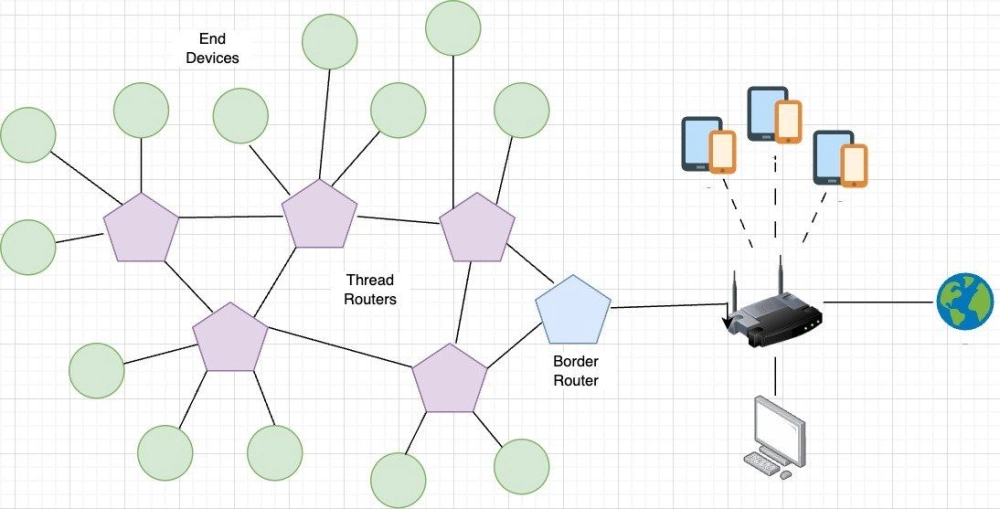
But in practice that’s not true, because only always-on devices like light switches and plugs extend the network and retransmit messages. The average consumer doesn’t know that, and it isn’t explained on the box that most Thread devices, like motion sensors or battery-powered buttons, are what’s known as “sleepy endpoints.” They only wake up and join the mesh when they’re used — like pushing the button or sensing motion — they don’t extend the mesh at all.
I already have Wi-Fi everywhere
I have a UniFi prosumer Wi-Fi system, with four or five Wi-Fi points hard-wired to an Ethernet backbone. The management software is superb, and I’ve never had problems with devices not connecting to the dual-band — even those with big scary warnings about not working with 5 GHz.
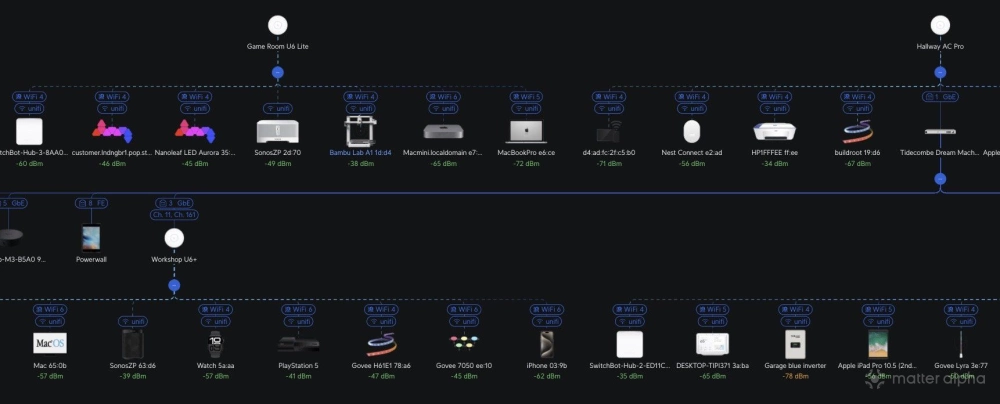
It’s not cheap kit by any means; I chose the system out of necessity for coverage in my old house that has foot-thick internal stone walls in some places. It's true that most generic Wi-Fi routers have problems beyond about 50 clients, but that's a lot, even for a smart home. If you're at that point, you really ought to upgrade your infrastructure and not rely on the router your ISP provided.
But generally speaking, Wi-Fi is robust, reliable, and if anything does go wrong, there’s plenty of information available to debug what’s wrong. In fairness, Wi-Fi has been around since 1997, and we're up to version 8 now, so there's been plenty of opportunities to work out the kinks.
Is it all over for Thread?
I really hope the Matter group can spend some time fixing core issues rather than announcing yet more specifications for devices that needn’t be smart, like refrigerators. Please, let’s get some fundamentals like plugs and switches working solidly, first.
There’s a point in everyone's smart-home journey where it can all go crucially wrong — the moment when the time spent setting things up, fixing, resetting, and re-pairing devices outweighs any utility you get from the system. And right now, I'm having painful flashbacks to Z-Wave and Samsung SmartThings, a system I was all in on until a cascade of failures meant I’d finally reached that point of no return. I stripped almost my entire smart home, leaving only Hue bulbs (the only thing that actually seemed to work) and gave up the smart-home dream.
Matter lured me back, and for the most part it’s been solid. But right now, Thread is a pernicious weak point in that dream, and it needs some serious work or risk poisoning the well for every potential smart home enthusiast yet to join the fold.