Unify 2026 is the first major public gathering hosted by the Connectivity Standards Alliance. While CES 2026 was an opportunity to see a flood of upcoming Matter-based devices, Unify 2026 is a chance to bring together companies, organizations, and media that want to talk exclusively about connected smart home devices. Since the launch of Matter, there hasn't been an opportunity for everyone invested in the Matter ecosystem to come together quite like this. Naturally, Matter Alpha was present, often in the front row.
In a way, the event represents a victory lap. You'll be hard-pressed to name an open standard with faster adoption and more excitement than Matter. This was not an event hosted by people with something to prove—Matter is already winning.
With that shared understanding, attendants instead placed their focus on the work still left to do. Here is much of what we heard.
Matter is the foundation for what comes next
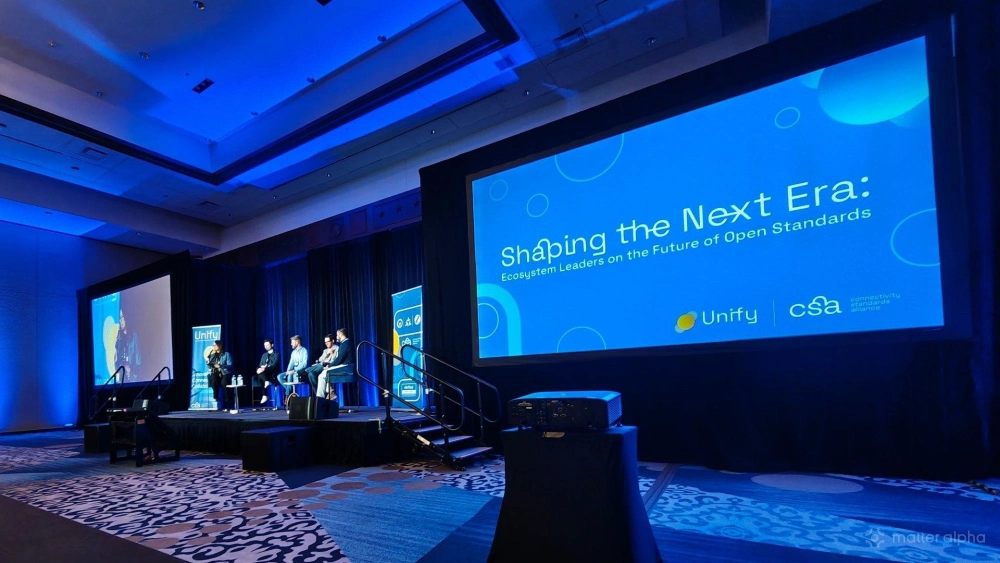
Matter 1.0 only launched in 2022, meaning the standard remains less than half a decade old. Yet at Unity 2026, there was no question whether Matter would still be around in 10 or 20 years. It is taken as a given that we will still see Matter products and that those products will be able to do more and be better than the ones available today.
This isn't pie-in-the-sky thinking. The CSA went from certifying a few hundred devices a couple of years ago to over 1,200 devices today. This may be a conservative estimate, and those numbers continue to grow. The companies represented in the room aren't scrappy upstarts either. Among the over 900 companies that make up the CSA, you have giants like Google, Samsung, and Amazon, who each had representatives in attendance.
Each spoke of the value of Matter, their ongoing work on Matter products, and how the standard supports their businesses. Of course, that's the sort of thing you say at a Matter conference, but the vibes are backed up by new products and increasing adoption.
Companies like Google see Matter as a means to greatly expand what newer technologies like Gemini and other AI agents can do. Google doesn't have to develop a way for Gemini to access all the devices in your home. Gemini only needs to know how to speak Matter. For Samsung, Matter will remain what enables us to control third-party devices from a Samsung TV and other Samsung SmartThings appliances (though there was still no hint of Samsung making its own products Matter-compatible)
Matter is one of many connectivity standards all championed at the event. Much emphasis went to those maintained by the CSA, such as Aliro and Zigbee, but Thread was also prominent. We also heard from representatives of the Wi-Fi Alliance as well as the Bluetooth Special Interest Group. Matter is in the company of standards that are tried, tested, and widely accepted. It is what the future will be built on top of.
Matter and Thread need to be simpler
To get to this imagined future, Matter needs to be more accessible than it is today. This is why the CSA was happy to announce NFC onboarding as part of the Matter 1.6 update, which enables Matter devices to be configured even if you neither know nor can access their Matter pairing code. This is to streamline Matter onboarding of devices like light bulbs and smart switches whose QR codes are no longer visible once installed.
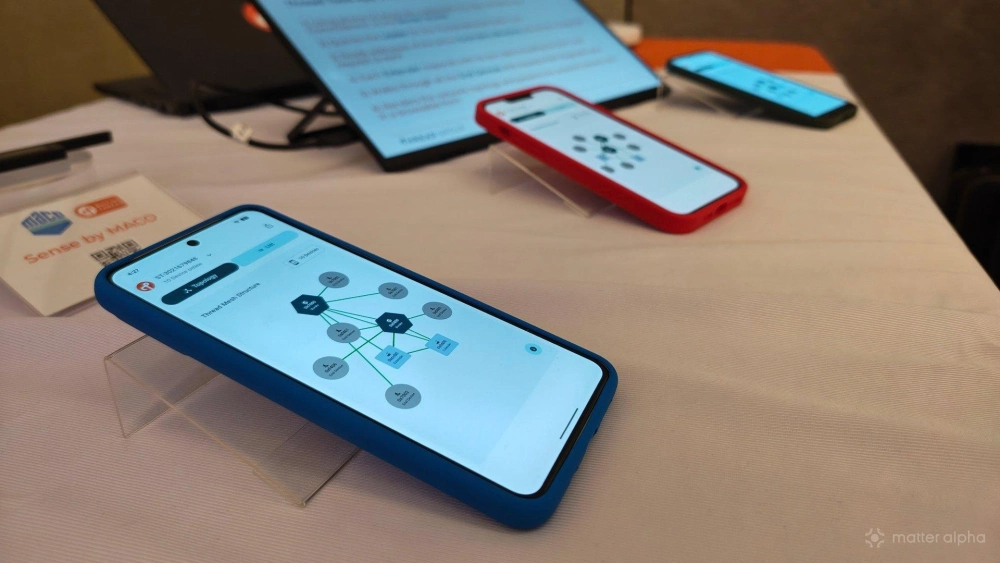
Likewise, the Thread Group spoke of Thread Direct. Thread Direct is not yet ready, but it is an initiative to use Thread Devices without the need for a border router. With Thread Direct, you can buy a Thread device, bring it home, and know that it will work even if you have not yet invested in any other Thread equipment. That said, it does not remove the need for a border router. While Thread Direct guarantees some degree of functionality, it does not connect your devices to smart home platforms or enable remote access. The purpose is to ensure that when a consumer picks up a new smart bulb that relies on Thread, they can be guaranteed core functionality when they bring it home.
Matter 1.6 introduces Joint Fabric, which allows multiple smart home platforms to share a single fabric. Soon, when you add a Matter device to one fabric, you'll be adding it to all the platforms in use in your home. This also makes it easier to transfer Matter devices from one homeowner to the next.
Expect a deluge of Aliro-based smart locks
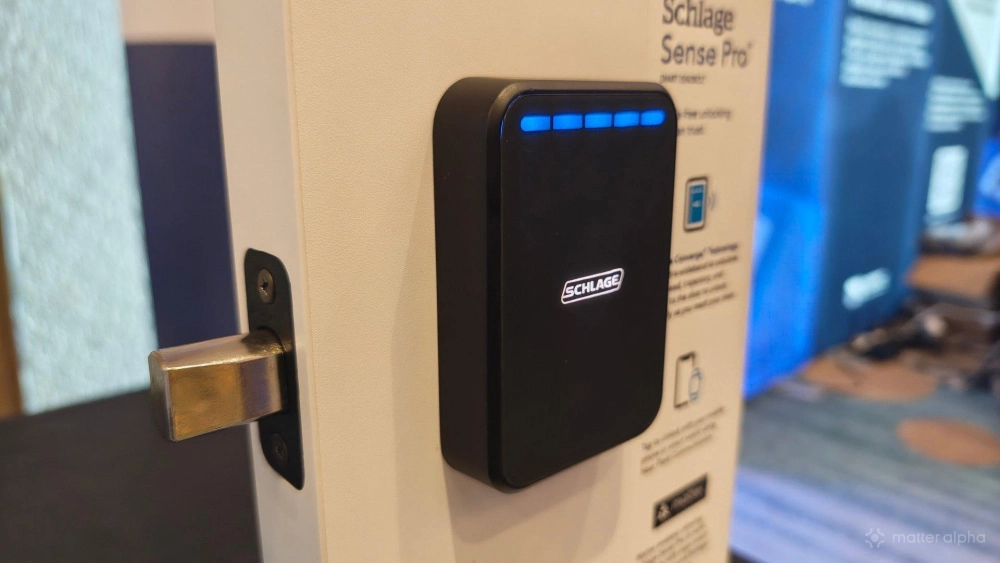
There were an abundance of smart locks on the show floor, all utilizing Aliro.
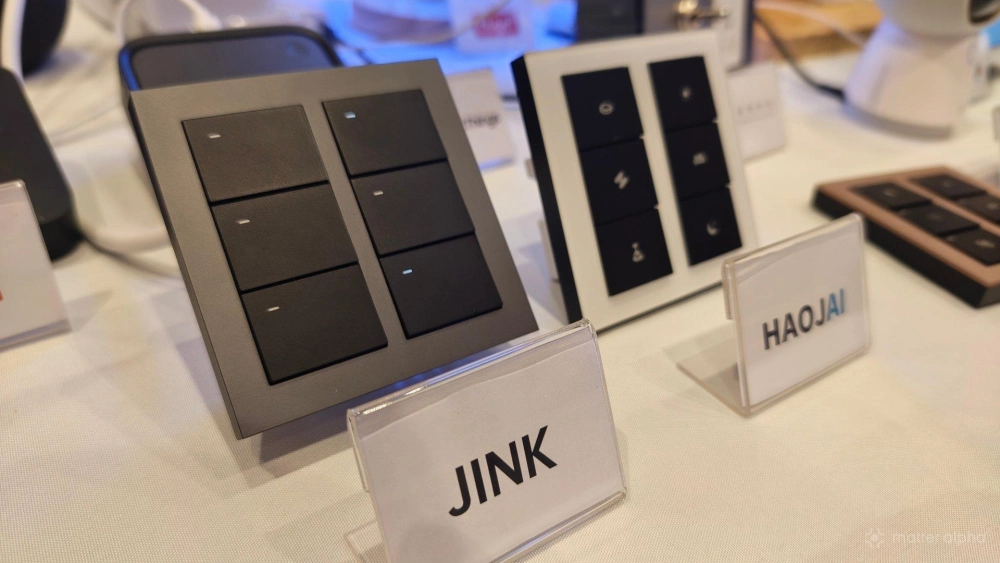
SiliconLabs, Tuya, Schlage, Qualcomm, ST, SafeTrust, and NXP all demoed various types of Aliro-based access control. At any of these booths, you could find a rep happy to show off the ease with which you can unlock a smart lock by bringing your phone within range of the lock. The locks also contain cameras and lidar, making it possible to detect whether you are approaching or walking away from the door. This way the door does not automatically unlock as you're walking away from it simply because your phone was still nearby.
Schlage announced the Sense Pro on the opening day of UniFi 2026 and had a model on display on the show floor. While the lock contains a keypad, Aliro-enabled functionality is what places the lock at the top of the product line. A door with a Schlage Sense Pro installed is one that you can unlock by approaching with your phone or tapping your phone directly against. While Aqara did not have its own booth, other companies and organizations were happy to show off how Aliro works with its product.
Security is vital to adoption
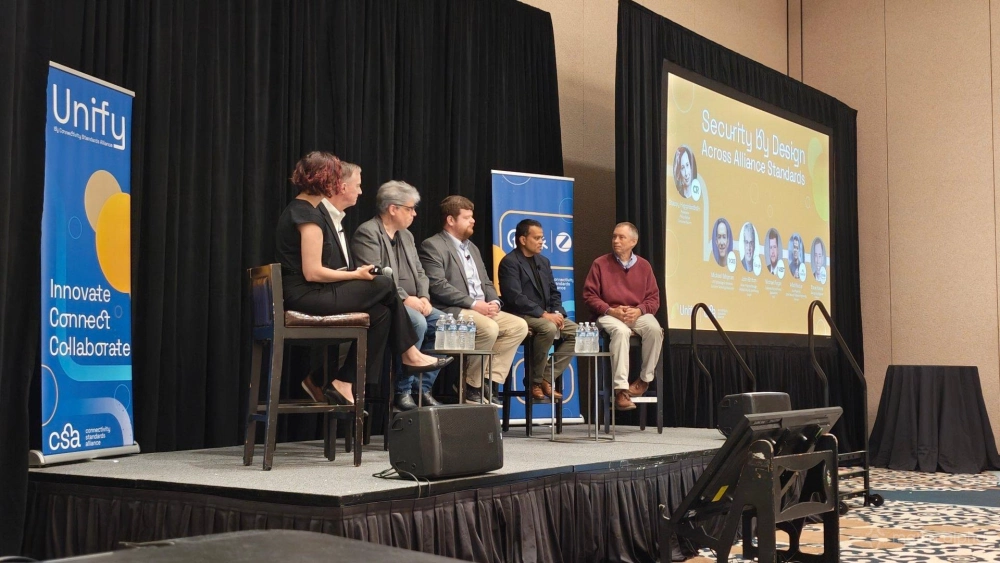
It is widely understood within the industry that many members of the public remain squeamish about smart home technology. As more of our lives become conducted digitally, we have been exposed to data breaches and ever-present tracking. Many see smart home devices not for their positive potential but for their risks and downsides. The industry members present understand the need for strong security to overcome these concerns and eventually generate more sales.
The CSA announced version 1.1 of its Product Security certification, which it sees as vital alongside other standards like Matter, Aliro, and Zigbee. Product certification is an effort to provide what is known as mutual recognition, a cybersecurity standard that can be certified once and recognized everywhere. As countries around the world pass their own regulations, it does not benefit companies or consumers for device makers to have to divert people away from developing new tech toward making sure their products are able to meet many different sets of cybersecurity expectations.
To overcome people's general squeamishness, it is vital that Matter devices meet a certain set of security standards, not just on the device but also in the cloud. The CSA's product security certification also contains some data privacy protections, as some regions, such as the EU, also require that certain data remain private, not just secure. No one benefits from a world of cheap, insecure, and unsupported Matter devices, putting our homes at risk and ultimately tarnishing the reputations not just of Matter but the companies that use it.
Matter's ambitions are global
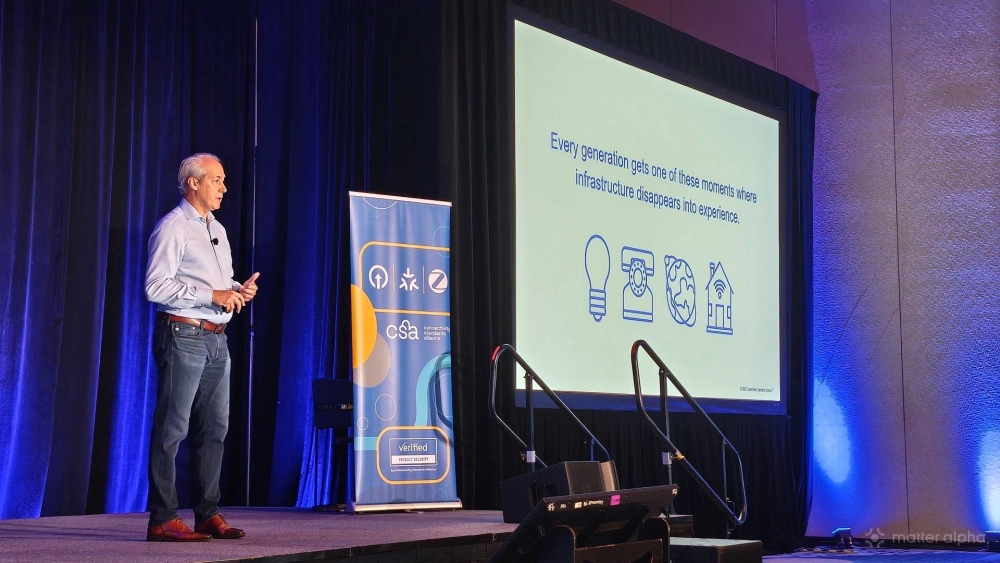
While Unify 2026 may take place in Austin, Texas, this was not a gathering of Americans or intended for an American audience. Representatives flew in from all over the world. This wasn't just a networking opportunity for them, either. This is an opportunity to see the way developments in other parts of the world are leading the charge.
Singapore led the way in setting cybersecurity standards. China has recently required the use of open standards such as Matter, which not only means the manufacturing center of the world will move in that direction but also means that the world's second-largest economy will be purchasing those devices. Policies like GDPR mean that everyone needs to up their data privacy game, even those utilizing Matter.
Matter is not unique in this regard. Wi-Fi is not limited to any one country. Nor is Bluetooth. These technologies are everywhere. As the world embraces a new generation of smart home tech, Matter is positioned to be the foundation.