
Notable smart relay maker Shelly has gained Thread support via an open-source custom firmware, taking advantage of its multi-radio Espressif chipsets.
This is a significant project for the brand, which has historically shied away from Thread, opting instead for Wi-Fi even on battery-powered sensors like the Shelly Flood. This development also introduces a new open-source firmware option for Shelly products alongside Tasmota and ESPHome, bringing native Matter and Thread capabilities to an established IoT device maker.
What is supported
All Shelly Gen4 products use the Espressif ESP32-C6 chipset, a rapidly growing multi-radio solution that supports Wi-Fi, Bluetooth, Zigbee, and Thread. Because of this hardware, Shelly Gen4 devices have all the hardware prerequisites needed to run Matter over Thread firmware.
Currently, the project only supports the Shelly 1 Gen4, a single-channel switch designed for in-wall installation. The developer, named Jayce, has integrated a robust set of features. The firmware operates entirely on Matter over Thread, requiring no Wi-Fi, and functions as a Thread router (Full Thread Device) to extend the mesh network for other devices. It also supports multi-fabric commissioning for simultaneous connections to hubs like Apple Home, Google Home, Alexa, and Home Assistant, while syncing the device state across all connected Matter ecosystems.
You can toggle the relay using the onboard physical button or an external wall switch wired to the SW terminal. A long press on the onboard button will trigger a factory reset. Additionally, the firmware supports the Matter StartUpOnOff attribute, allowing you to configure the power-on behavior. It features status LED indications for Bluetooth advertising and Thread connectivity, and responds to the Matter “Identify” command by blinking the LED to help physically locate the device.
More models in the pipeline
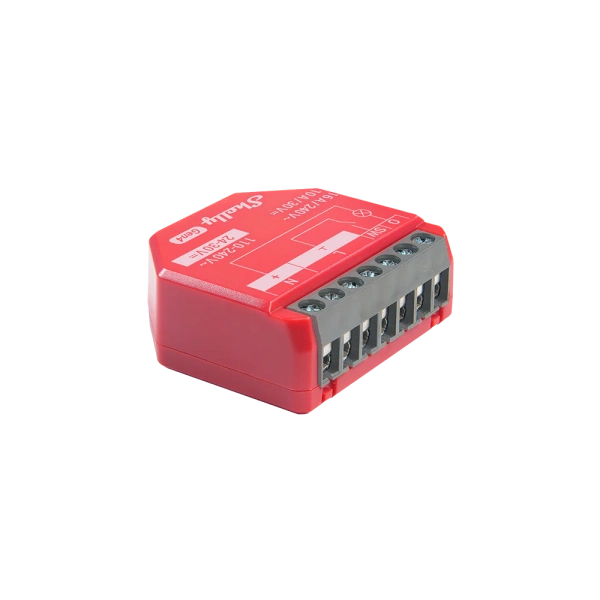
Shelly 1PM Gen4
A smart switch with power monitoring, multiprotocol connectivity, and automation capabilities for remote control and energy savings.

Shelly 1PM Mini Gen4
The Shelly 1PM Mini Gen4 is a compact on/off plug-in unit that supports Matter, allowing it to operate across various smart home ecosystems with ease.

Shelly Flood S Gen4
Compact water leak sensor with Matter support plus Wi-Fi, Zigbee, and Bluetooth, featuring stainless steel detection surfaces, smartphone alerts, and built-in light and sound alarms.
The developer has outlined a roadmap to expand hardware compatibility and add advanced functionalities to the project. The immediate goal is porting the firmware to the smaller 1 Mini Gen4 model, which fits more easily behind standard wall switches. Support is also planned for the 2PM Gen4, which features dual relays and power monitoring, with the goal of eventually covering the entire Gen4 lineup over time. That would be a big plus for battery-powered sensors thanks to the efficient Thread.
Future updates will also explore a “detached mode” for light switches, allowing you to bind the physical switch directly to other Matter lights without cutting the power. The developer is also exploring over-the-air updates after the initial flash, potentially managed through Home Assistant.
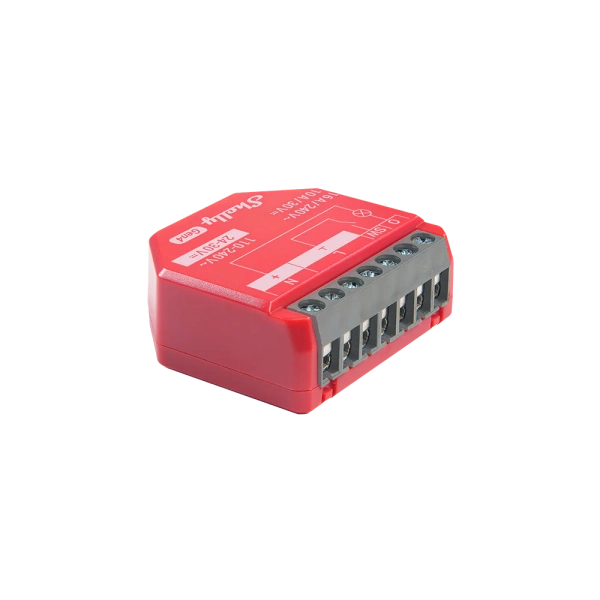
Shelly 1 Gen4
For installation, if you have a Shelly 1 Gen4, you can download the firmware from the GitHub repository and upload it to your Shelly device through its local web console. Be sure to make a backup and follow the guides provided by the developer.
Shelly offers one of the most open systems so you can truly take control. However, you should be cautious. Never leak stock firmware backup files, and remember that flashing unknown firmware can introduce security risks to a home network via Matter. Freedom comes with risk.
By contrast, SONOFF, once a popular choice for open-source enthusiasts, has closed the gate on custom firmware for its official Matter models. As of press time, Sonoff has not commented on any plans to open its Matter devices to custom firmware like Tasmota.
It remains unclear how Shelly will officially react to this community-driven development. If the Thread custom firmware goes viral, it could pressure Shelly and other vendors to officially offer Thread options to cater to market demand. Even outside of community projects, major electronics manufacturers like Wago have been steadily shifting toward Thread.
(Source: GitHub, Shelly; Image: Shelly)