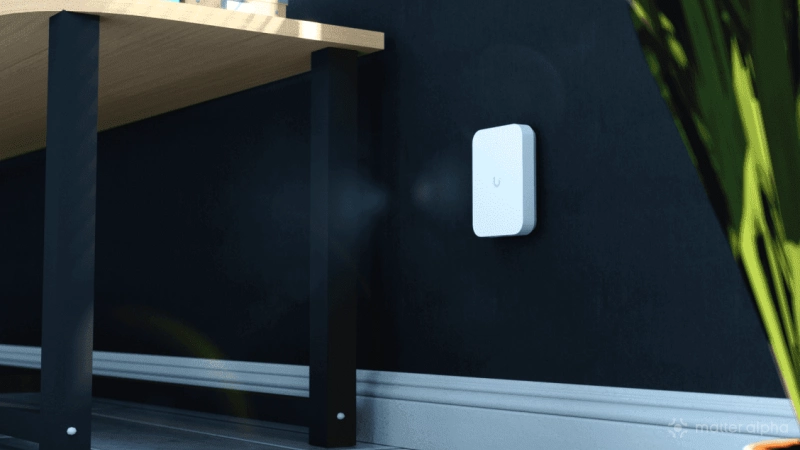
Prosumer networking gear maker Ubiquiti has recently filed a new UniFi Wi-Fi 7 mesh device with the FCC, revealing plans to build a Thread radio directly into its next wall-mounted access point.
Putting Thread directly into UniFi access points turns everyday wall-mounted networking gear into a whole-home smart home backbone like Nest Wi-Fi and eero. Rather than relying on a single smart speaker or hub to reach distant sensors, every Wi-Fi node can extend low-power Thread coverage across the house.
What the FCC filings reveal
Tipped by our reader, the new device is expected to launch as a wall-mounted access point, named U7 Mesh Wall as FCC fillings note. While Ubiquiti has requested short-term confidentiality for external photos, internal teardowns, and user manuals until April 2027, the public radio test reports reveal what is inside.
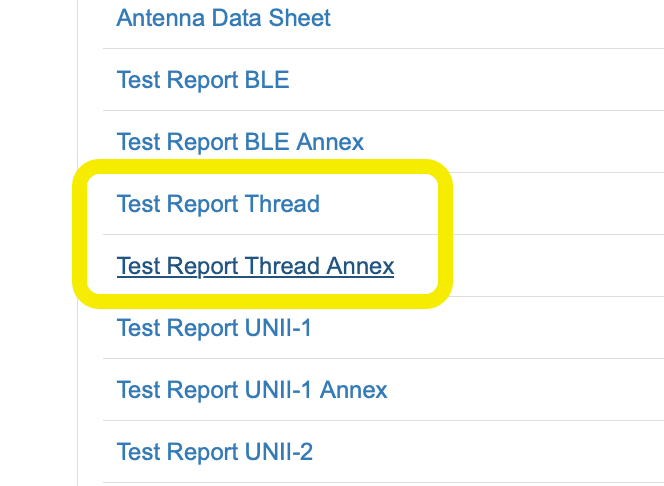
The test reports show a multi-radio device equipped with Wi-Fi 7, Bluetooth Low Energy, and a dedicated Thread radio. Separate test documents for Bluetooth and Thread confirm that the 2.4 GHz low-power radios operate alongside the main Wi-Fi antennas.
On the Wi-Fi side, the FCC grant shows the access point operates only on the 2.4 GHz and 5 GHz bands.
Notably absent is any 6 GHz test report. By skipping the 6 GHz band, the new model follows the same approach as Ubiquiti’s entry-level U7 Lite and standard U7 In-Wall series rather than the pricier tri-band U7 Pro Wall. Leaving out 6 GHz lowers hardware costs, power draw, and heat, which makes sense for a compact wall-mounted unit meant to be installed in multiple rooms at an affordable price.
Ubiquiti goes deeper with Matter and Thread
The new filing is the clearest sign yet that Ubiquiti is building Matter and Thread deeper into the UniFi lineup.
Earlier this month, the company began rolling out UniFi Network 11, which adds “Matter-aware” network monitoring.The software update lets users add Matter-over-Thread devices directly into the UniFi interface using their Matter pairing codes. Once added, Thread accessories show up alongside regular Wi-Fi and wired clients in a single network map,displaying status details like signal strength, Thread channel, connection path, and battery level.
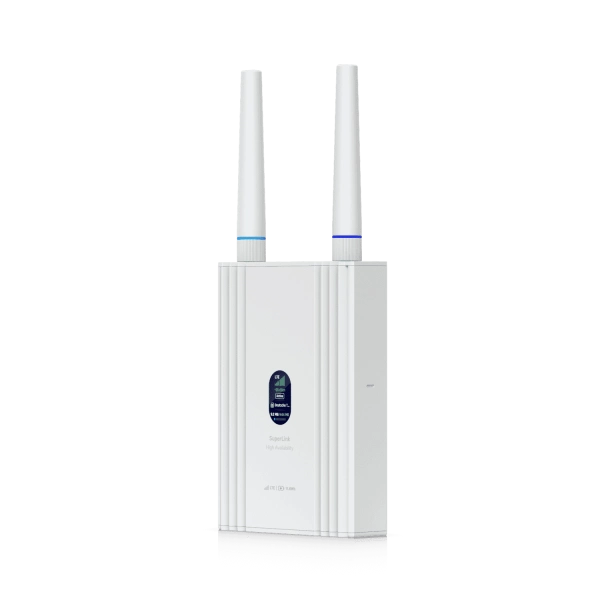
UniFi SuperLink Gateway HA
That software update followed Ubiquiti’s first hardware move into open smart home networking with the SuperLink Gateway HA. Built as an IoT gateway for UniFi Protect’s long-range sensors, the SuperLink Gateway HA also added a built-in 2.4 GHz Thread border router that supports up to 128 Thread devices.
Bringing Thread radios directly to UniFi Wi-Fi access points is the natural next step. While UniFi Network 11 initially relied on third-party Thread border routers like an Apple TV or HomePod on the local network, Thread-equipped U7 access points will let users and installers build, expand, and monitor both Wi-Fi and Thread networks from one system.
Availability and pricing
Ubiquiti has not officially announced the new access point yet, and there is no confirmed release date. However, Ubiquiti hardware typically shows up in the company’s store within months of passing FCC certification.
Because it uses a dual-band 2.4 GHz and 5 GHz design, the new model should sit near the entry level of the Wi-Fi 7 lineup. Its price is expected to land close to the standard UniFi U7 In-Wall, which sells for $199.
(Source: FCC, Ubiquiti; Image: Ubiquiti, Matter Alpha/Ward Zhou)