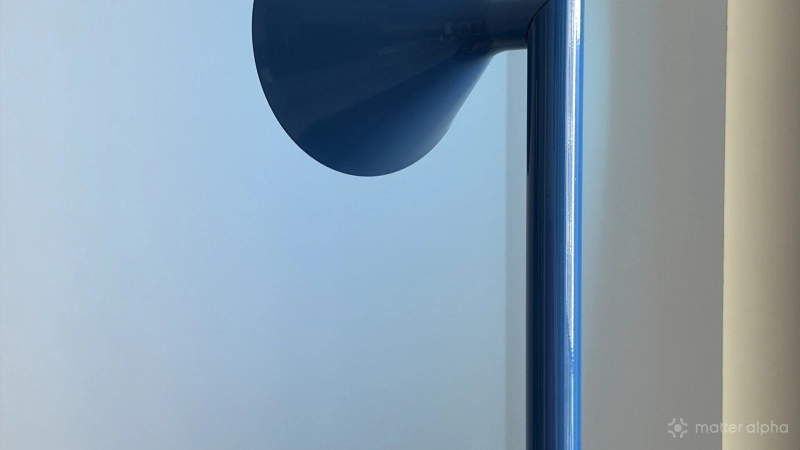
The yearly festival of retro IKEA releases arrived recently. The new PS2026 portfolio includes an iconic floor lamp featuring an adjustable, shapable three-step stand that makes it flexible enough to fit most home spaces. I managed to grab one from the first batch, which completely sold out in a matter of hours.
The lamp uses a GU10 base, which is designed primarily for spotlights. These types of lights usually generate a strong point light source rather than a diffused room glow. Unlike the incredibly popular screw bulbs E26/27, GU10 options are relatively limited on the market when it comes to native Matter support. After setting it up, here are my top recommendations for a Matter bulb to use with this specific lamp.
Secondary lighting and reading corners
If you prefer to use the lamp as a secondary lighting source or plan to place it near the couch as a reading light, your hardware priorities should shift. The key features to look for are maximum brightness, a high color rendering index (CRI) and flicker-free LEDs. A basic temperature tunable light would be sufficient for this use case.
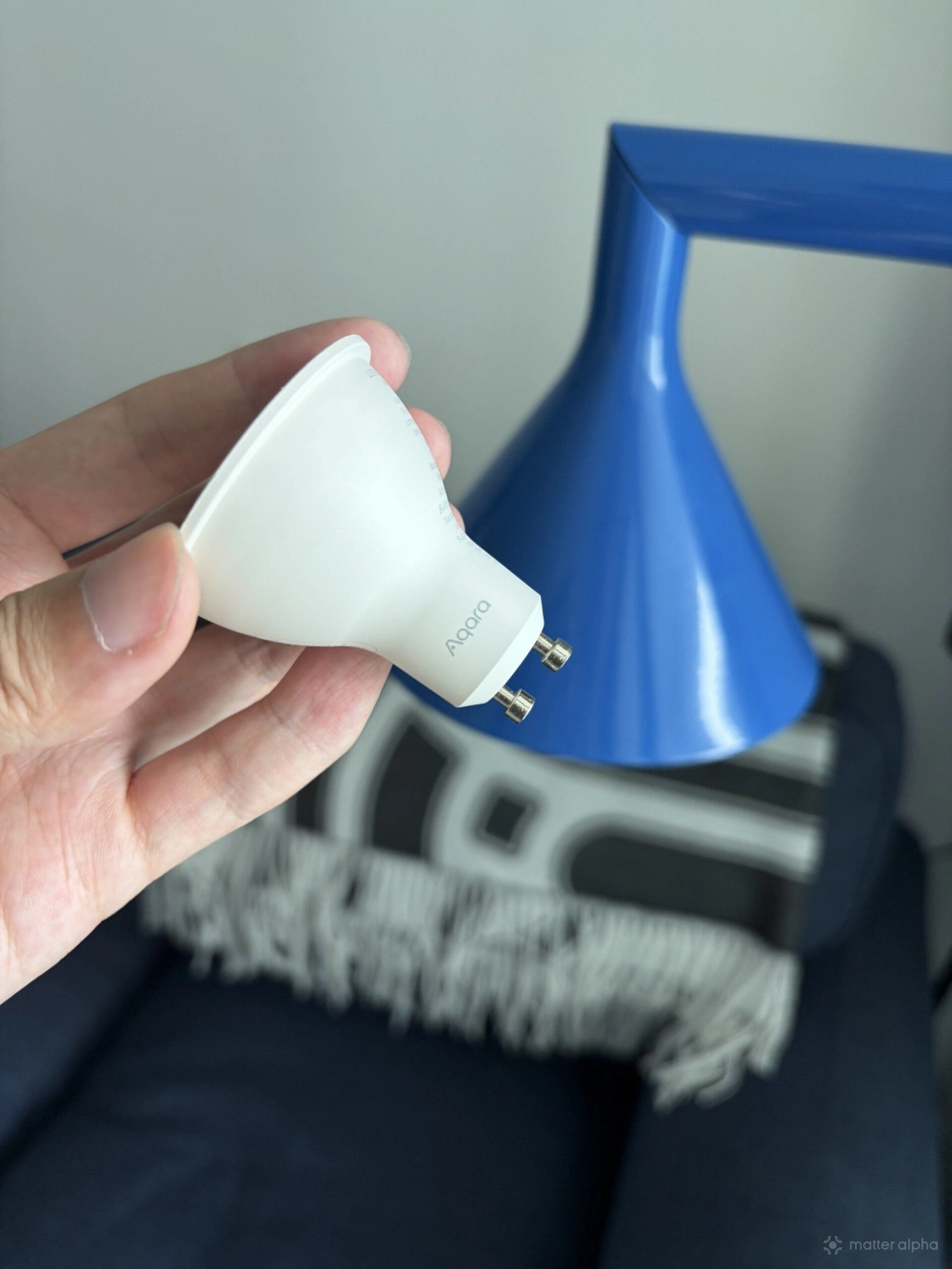
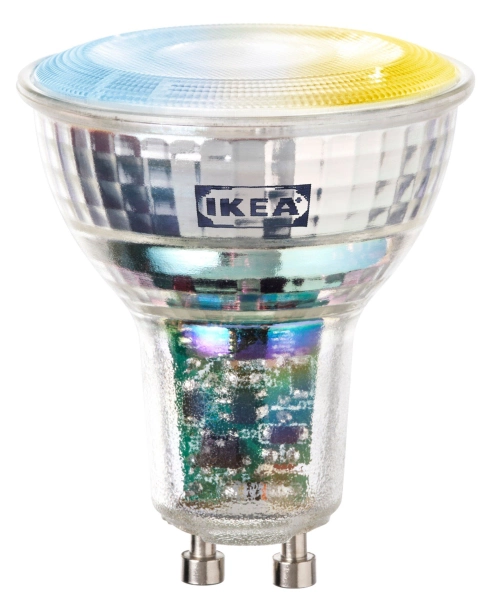
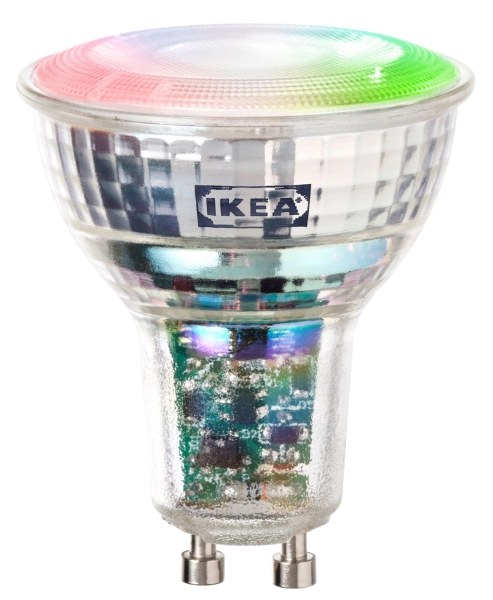
There are solid options from Philips Hue, IKEA and Aqara. My primary choice goes to Aqara because it strikes a great balance between light quality and build quality (CRI 90, 2000-9000K, and 450 lumen). If you prefer a cheaper alternative, IKEA KAJPLATS is definitely the way to go. It boasts 632 lumens, and it’s on a nearby shelf at IKEA when you pick up the PS2026 lamp.
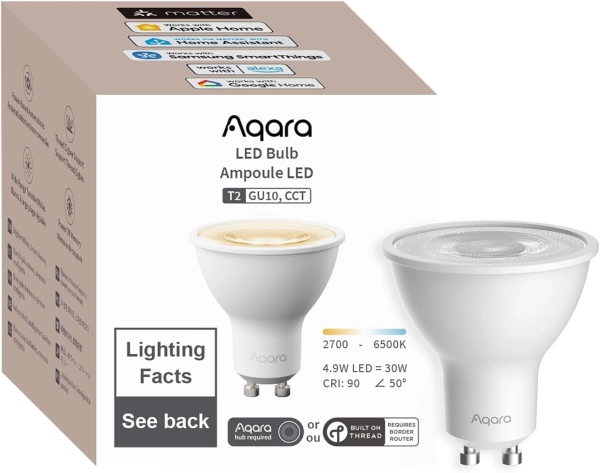
Aqara Smart LED Light Bulb T2 GU10 (Tunable White)
A dual-protocol GU10 smart spotlight bulb that combines Matter compatibility, Thread and Zigbee connectivity, and adjustable white light from warm to daylight tones for flexible everyday lighting.
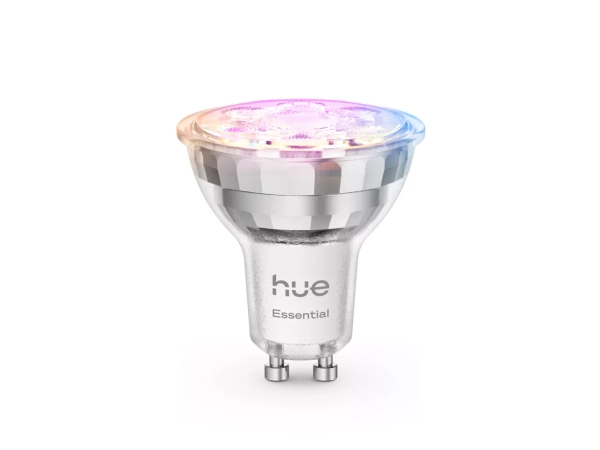
Philips Hue Essential GU10 Smart Spotlight
A smart GU10 spotlight that combines millions of colors, adjustable white light, and Philips Hue smart lighting features to deliver flexible accent and everyday lighting.
Meanwhile, Philips Hue Essential suffers from low brightness and poor CRI (80), making it difficult to recommend unless you’re already invested in the Hue ecosystem.
Color options for room ambiance
If you want to set a mood, you need to look at full color options. Lots of notable brands offer color bulbs in the GU10 form factor. In this specific case, maximum brightness is less important than overall color range and color accuracy. Govee, Aqara, IKEA, Philips Hue, Nanoleaf and Linkind are the major brands currently competing in this space.
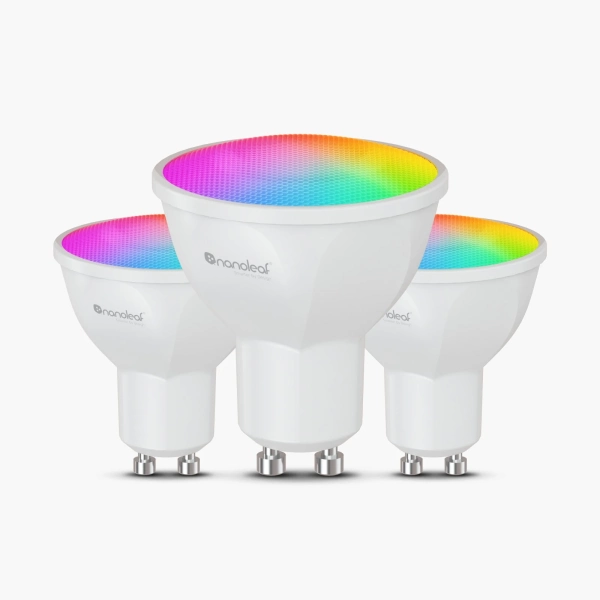
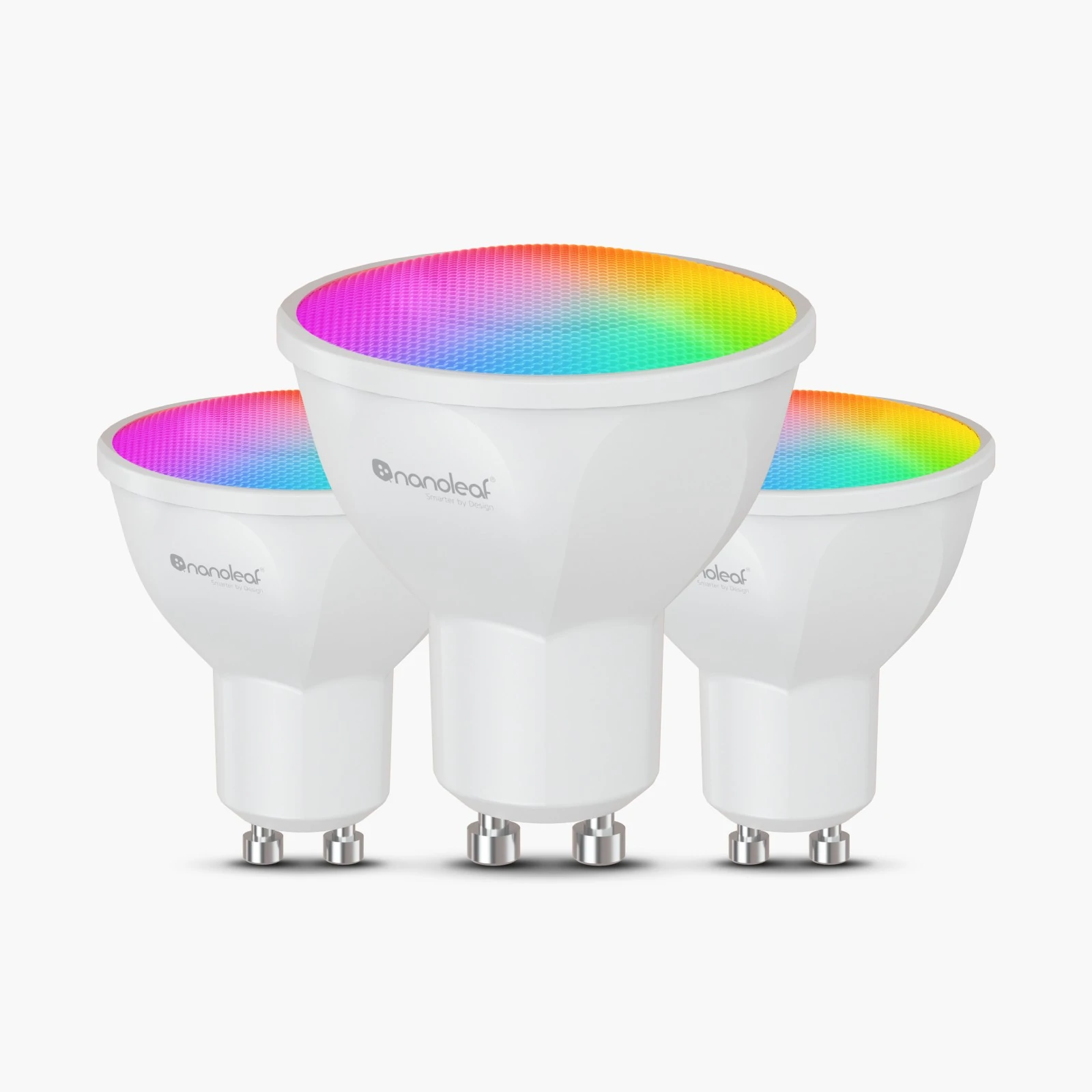
Nanoleaf GU10 Smart Bulb
The Nanoleaf GU10 is a smart LED bulb offering over 16 million colors, tunable white light, and compatibility with the Matter smart home standard via Thread technology.
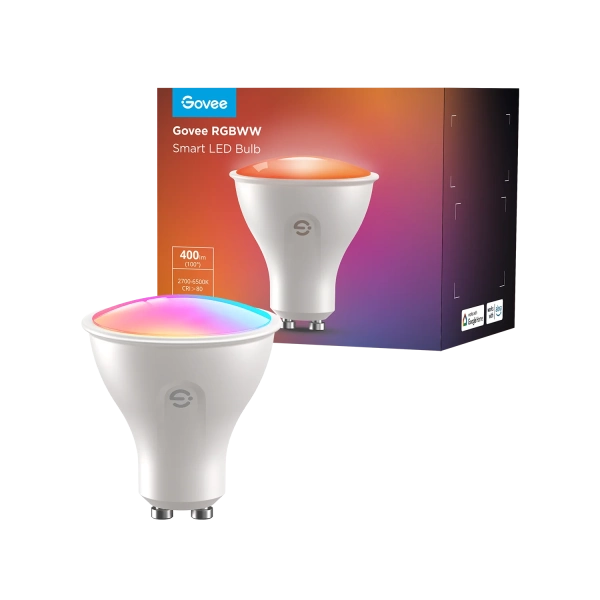
Govee RGBWW Smart Light Bulbs GU10
Smart LED bulbs that combine vivid RGB color lighting with tunable white illumination, offering flexible lighting for both everyday use and decorative scenes.
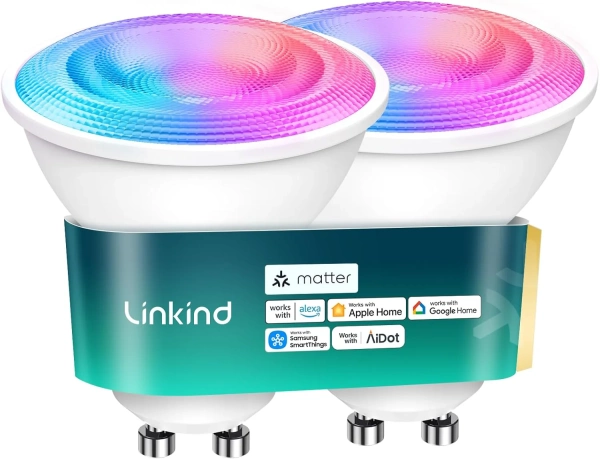
Linkind GU10 Smart Light Bulbs
A 2-pack of GU10 color-changing smart bulbs with 470LM brightness, 1800K–6500K tunable white light, music sync, light shows, and support for Alexa, Apple Home, and Google Home.
For basic Wi-Fi connectivity, Govee, Meross and Linkind fall into your selection pool. I prefer Govee for the extra feature from its lighting system. Meross and Linkind offer fewer software features, but their price range ($10-15) is fair enough too for basic setups.
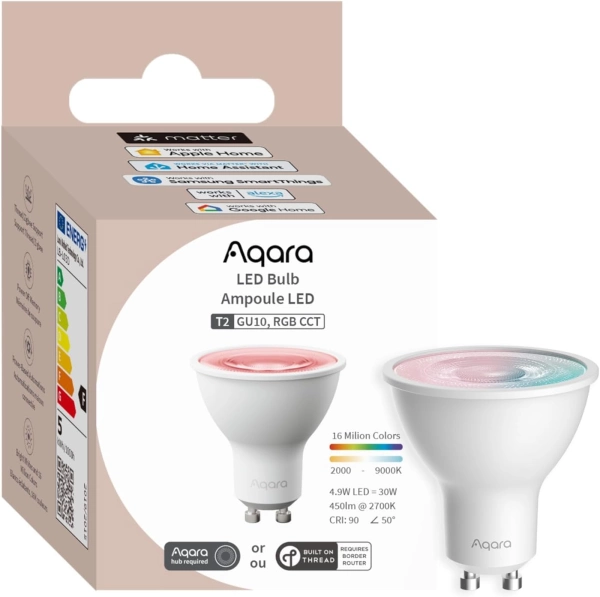
Aqara Smart LED Light Bulb T2 GU10 RGB CCT
A versatile GU10 smart spotlight bulb featuring 16 million colors, a 2000K–9000K tunable white range, and dual Thread/Zigbee connectivity for seamless smart home integration.
Philips Hue Essential GU10 Smart Spotlight
A smart GU10 spotlight that combines millions of colors, adjustable white light, and Philips Hue smart lighting features to deliver flexible accent and everyday lighting.
If you are building a Thread mesh, Aqara, IKEA, Philips Hue and Nanoleaf can be an extender. Nanoleaf is the one brand I would avoid first. Their hardware has all kinds of weird reliability issues and the bulbs may black out suddenly. Three out of ten Nanoleaf essential bulbs died last year in my own house. If you have already invested heavily in the Nanoleaf ecosystem and absolutely want their TV light sync feature, that is the only real reason to choose them.
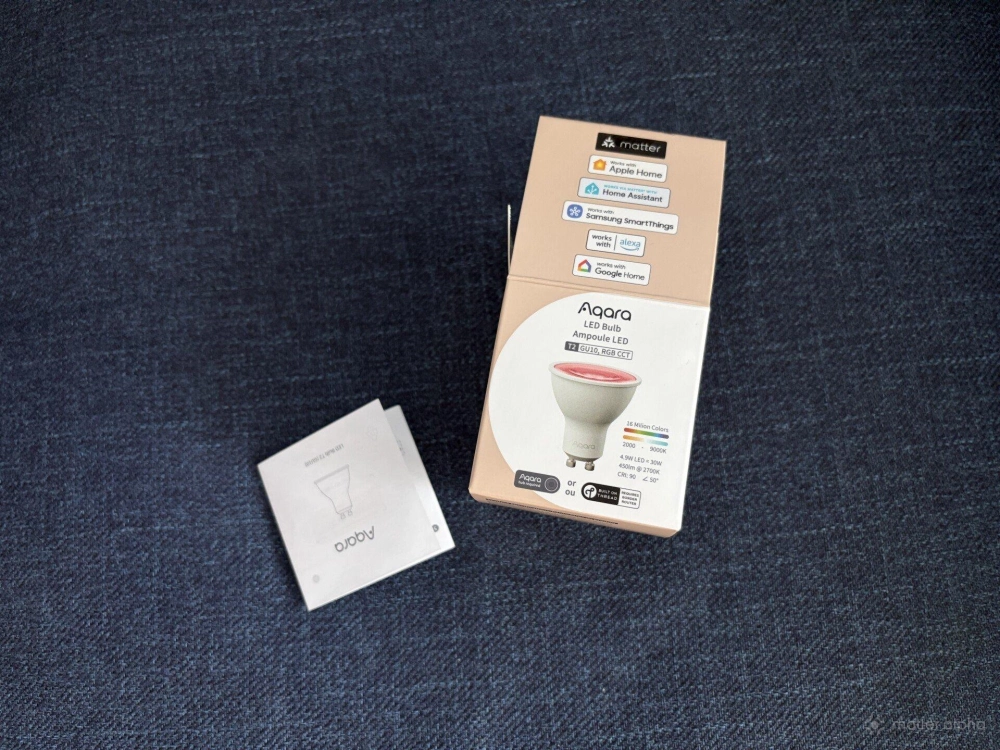
My top picks are Aqara and IKEA’s budget-friendly smart bulbs, both of which offer a stronger overall balance of specs and performance.
I would also pass on Philips Hue Essential bulbs for the same reasons mentioned above. However, if connectivity and Thread coverage are your top priorities, it is worth mentioning that Hue Matter bulbs use newer Silicon Labs radio chips, which can provide slightly better Thread performance and network coverage than alternatives.
Comfort with adaptive lighting
One of the biggest benefits of choosing the right Matter bulb is taking advantage of dynamic temperature shifts. Apple Home now supports “adaptive lighting” for compatible Matter hardware. This feature automatically adjusts the color temperature of your smart bulbs throughout the day. It provides warm tones in the morning, switches to cooler daylight tones for reading in the afternoon, and automatically removes blue light as you get closer to bedtime.
When pairing a bulb with the PS2026 lamp for a reading light source, this feature is incredibly valuable. Because GU10 bulbs create a focused point of light, having the temperature shift naturally prevents eye strain over long periods.
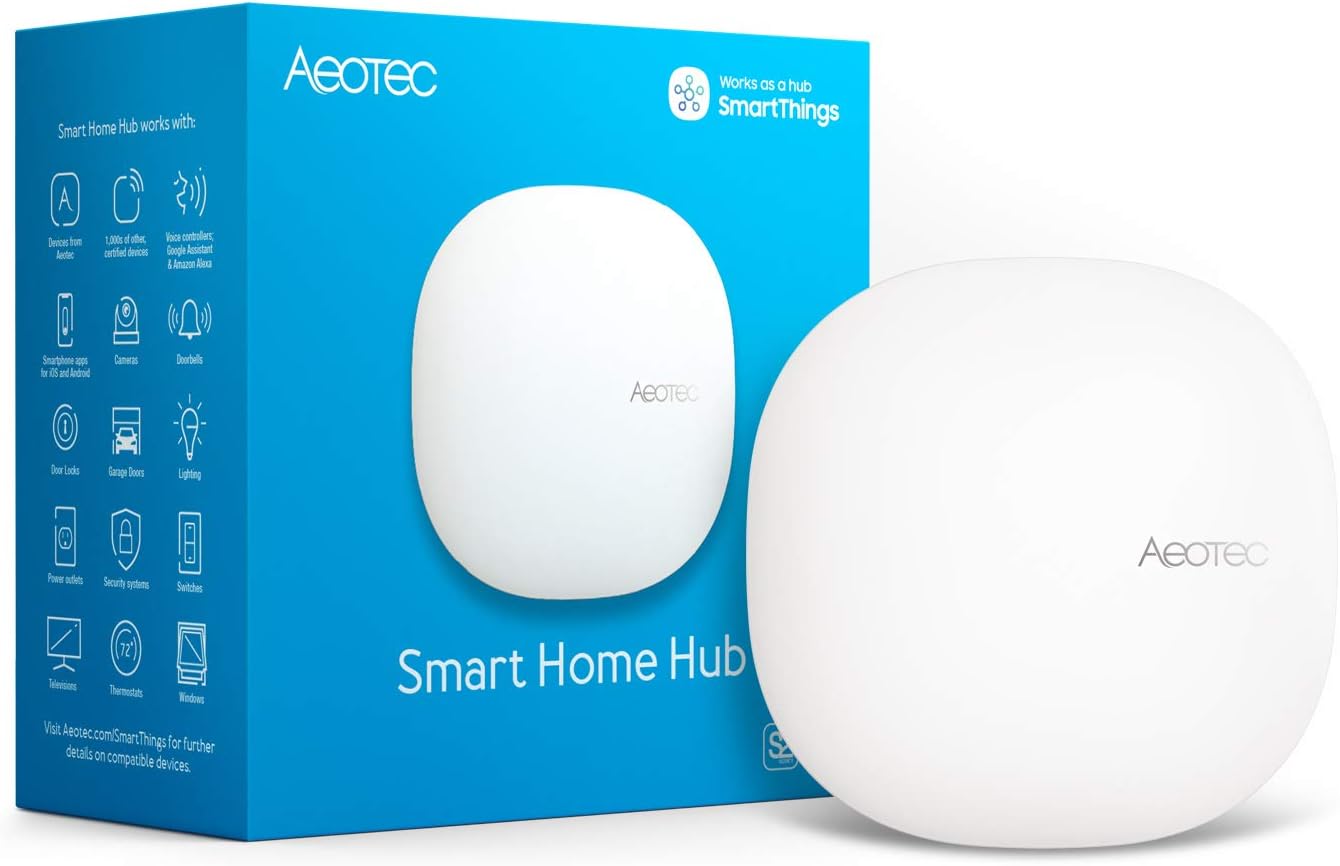
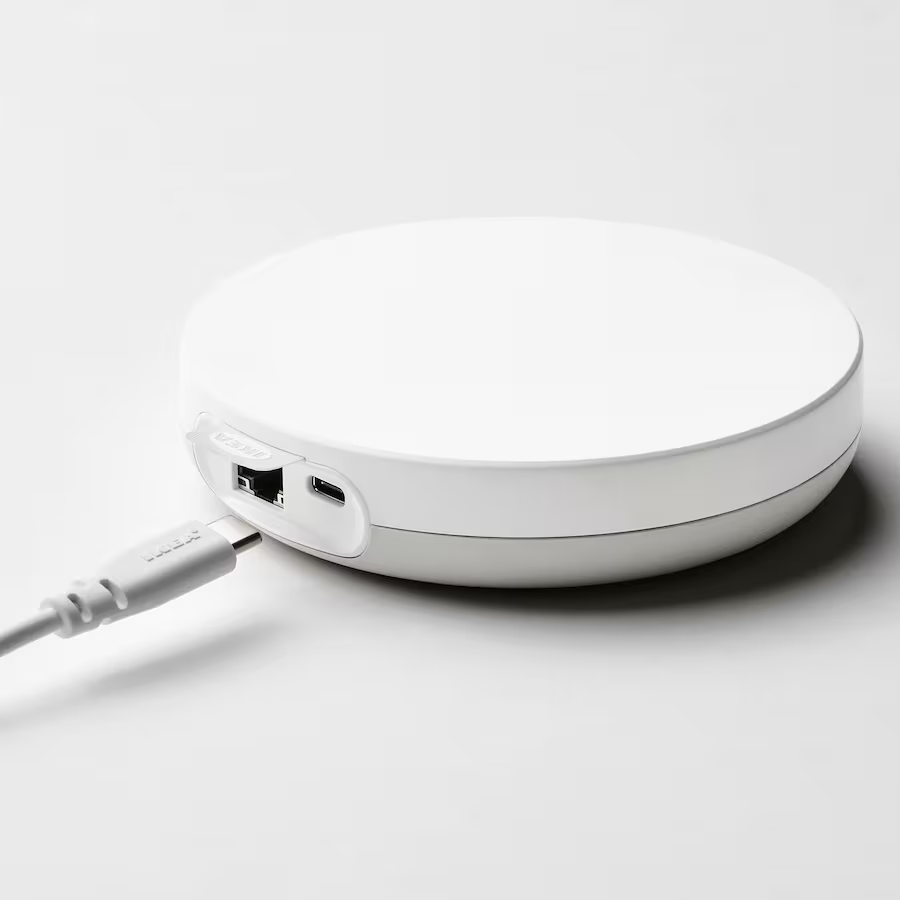
For those not compatible with Apple Adaptive Lighting, you can turn to IKEA and SmartThings for a similar experience. IKEA even allows you to customize the curve for Matter lights. But you need to buy a controller hub like DIRIGERA and Aeotec Hubs from these brands. If you are an advanced user, there are plugins for such features in Home Assistant and Node-Red as well with extra steps and configurations.
(Source: Philips Hue, IKEA, Linkind, Aqara, Amazon; Image: Matter Alpha/Ward Zhou)