Home Assistant has added Matter 1.6 support to the latest beta of the Open Home Foundation (OHF) Matter Server, bringing ICD controls, expanded Thread diagnostics, multiple Wi-Fi and Thread credential management, and further work toward Matter camera support.
The update marks the return of Home Assistant’s faster Matter adoption cycle after completing its migration from the legacy C++ SDK to Matter.JS. While not every Matter 1.6 feature is available through the Home Assistant interface yet, the backend now supports the latest spec and provides the foundation for future integrations.
Matter 1.6 arrives in beta
Matter 1.6 support is included in the latest 1.2.x Matter Server beta, which uses a new Matter.JS 0.17.5 nightly build. According to a LinkedIn post by Ingo Fischer, the project’s lead maintainer, the release is expected to include “full Matter 1.6.0 support,” covering all new device types and clusters introduced in the latest spec.
The update gives the server access to Matter 1.6 features and device capabilities, although Home Assistant still needs separate work to expose each one through its interface, entities, and automation system.
NFC commissioning is one example. The feature is supported by Matter 1.6, but Home Assistant still needs a way to access an NFC reader. That could require additional hardware, such as a USB dongle, or a proxy device that passes NFC onboarding information to Home Assistant. The implementation remains under discussion.
The Matter server also adds support for storing multiple Wi-Fi and Thread credentials. During commissioning, users can select which saved network a new device should join. This could be useful for homes running more than one Thread network, as well as developers testing devices across different setups.
ICD controls help battery devices sleep longer
One of the most useful additions is full management for Intermittently Connected Devices, or ICDs.
ICDs spend much of their time asleep instead of maintaining a constant connection. This reduces power use and can extend the battery life of sensors, buttons, locks, and other low-power devices.
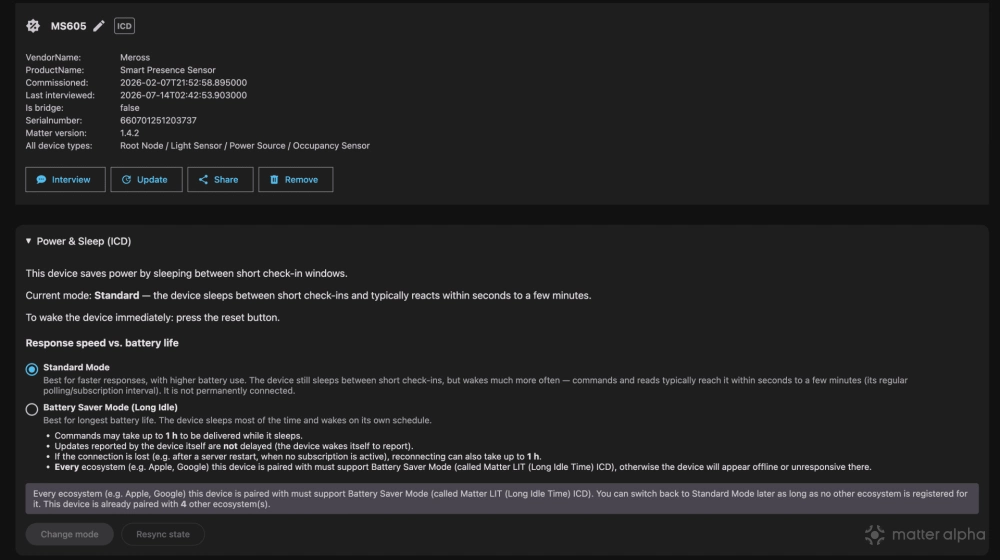
The new Matter Server supports both Short Idle Time and Long Idle Time devices. Matter 1.4 or newer is required for managing Long Idle Time modes.
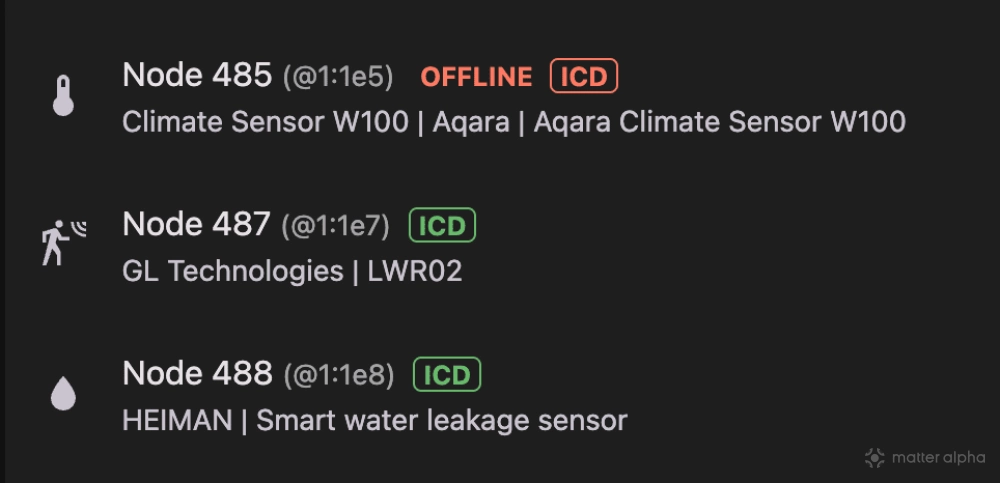
You can find the controls through the Matter Server Web UI, available from the Home Assistant sidebar or the Matter Server app page. The Nodes tab marks devices that report ICD support. Selecting the ICD label opens a “Power & Sleep” panel where you can review and change the supported battery-saving mode.
I found that some Heiman and Aqara devices in my setup already support ICD management. Several IKEA sensors do not currently expose the feature. The new Lafaer Presence Sensor LWR2 also supports this feature.
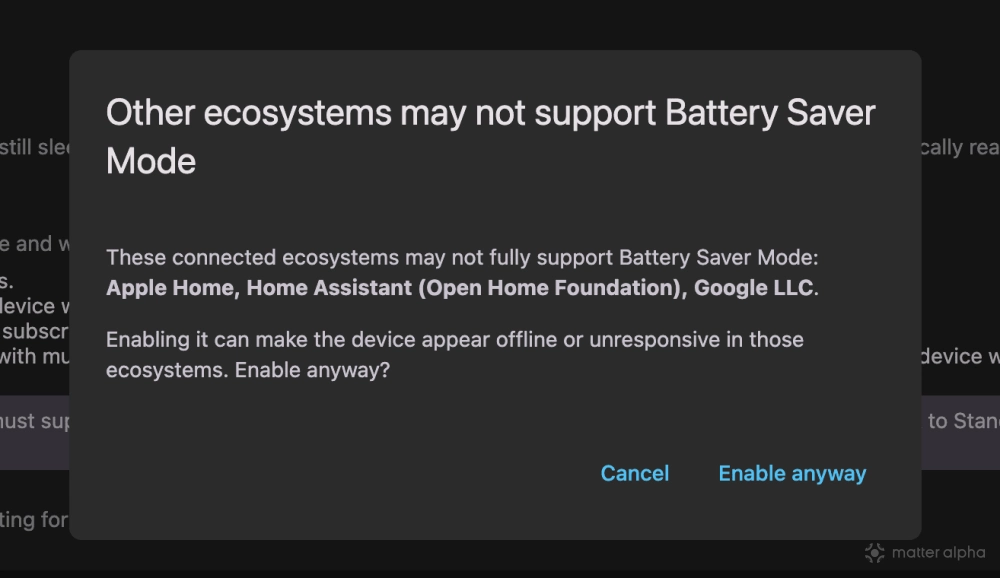
There is one important limitation. Every Matter ecosystem connected to the same device needs to understand its sleep behavior. If another connected platform does not support the selected ICD mode, the device may appear offline or become unreliable in that ecosystem. In some cases, you may need to remove unsupported fabrics before enabling the longer sleep mode. And so far we only know SmartThings and Home Assistant support this feature for now.
Thread diagnostics get a wider view
The beta also expands the Thread diagnostic tools introduced with the new Matter Server.
The server can now collect information from Thread Border Routers through different approaches. And it automatically selects an available method and caches the result.
This gives the dashboard more information about each Thread network, including connected border routers and network conditions. It should also make the diagnostic system work with a wider range of Thread Border Routers instead of relying only on products that expose the OTBR REST API.
The update also adds an option to disable the entire Thread Border Router diagnostic subsystem for installations that only need a Matter controller. Matter-over-Thread commissioning still works when these additional diagnostics are disabled.
More stable under heavy Matter traffic
Several backend changes focus on keeping Matter Server responsive as the number of connected devices grows.
WebSocket connections now apply backpressure separately for each client. If a browser, proxy, or connected service cannot keep up with incoming Matter events, the server combines node and attribute updates while dropping older events instead of allowing data to build up in memory.
The follow-up 1.2.1 and 1.2.2 releases refine that system after initial dashboard connections could stall behind higher-latency paths such as Home Assistant ingress.
Subscription reporting intervals have also been optimized, while updated node structures are sent immediately after a device resubscribes. These changes should help devices recover more cleanly after restarting, reconnecting, or temporarily dropping from the network.
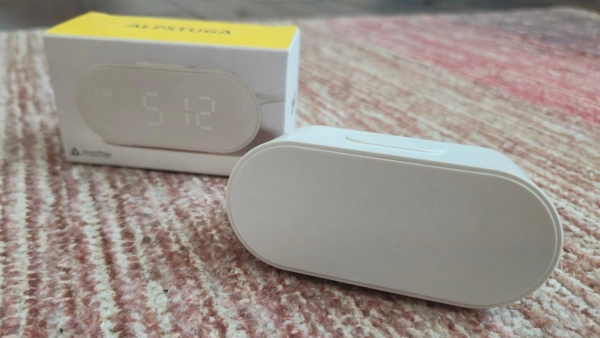
The server also gains optional time synchronization for supported devices (e.g. IKEA ALPSTUGA air quality monitor). When enabled, it sends the host’s UTC time, time zone, and daylight-saving information shortly after startup and then once every 24 hours.
ALPSTUGA Air Quality Sensor
Matter cameras are on the way
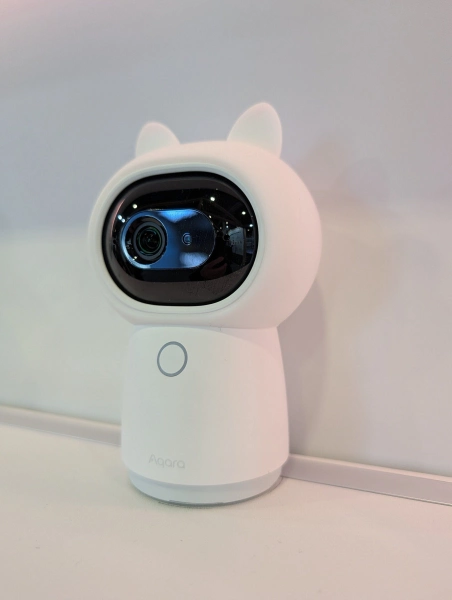
Matter.JS Server already includes Matter camera capabilities, but Home Assistant does not yet expose Matter cameras as fully supported devices through its normal interface. A draft pull request is now working to bring the device type into Home Assistant Core.
Aqara Camera G350
The latest Matter Server updates also refine WebRTC and camera handling. Audio and video streams are now treated separately in the dashboard, while camera callback events are sent only to the connection that started the session instead of every connected client.
The backend progress means Home Assistant can already work with parts of the Matter camera stack. The remaining work is mainly in Home Assistant Core, the frontend, and automation support before users can manage Matter cameras and doorbells like existing camera integrations.
A faster Matter cycle returns
Matter Server 1.2.x shows the benefit of Home Assistant’s move to Matter.JS. Home Assistant was previously one of the fastest platforms to adopt new Matter specifications. That pace slowed while the project moved its Matter implementation to Matter.JS. With the migration now complete, new specification support can arrive without another major backend change.
The migration slowed specification updates for a time, but the new backend now gives the Open Home Foundation a direct path to add Matter versions and features. Matter 1.6, ICD controls, network credential management, Thread diagnostics, and camera work have all reached the server within the same beta cycle.
Some features still need work before they are ready for general Home Assistant users. But the backend is no longer the main blocker, putting Home Assistant back among the platforms moving quickly on new Matter support.
(Source: GitHub)