Nordic Semiconductor is expanding its wireless connectivity portfolio with a new Wi-Fi chip family and upcoming Sub-GHz solutions, giving device makers more options beyond its established Bluetooth and Thread platforms.
The announcements mark another step toward broader multiprotocol support among major IoT chipmakers. Nordic is already a notable supplier for Matter-over-Thread devices, used mainly by high-end products like Eve Motion. The expansion offers alternative solutions to manufacturers to develop Matter and Thread devices, catering to the multi-protocol trend on the market.
New nRF71 series combines Wi-Fi and Thread
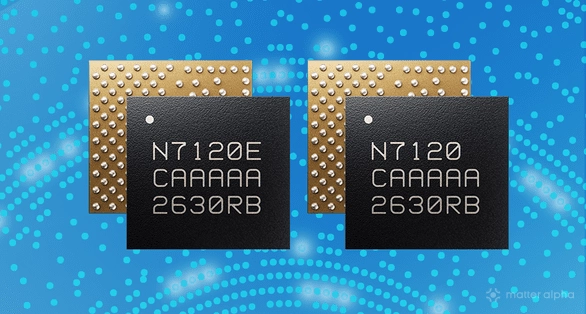
The new nRF71 series integrates Wi-Fi, Bluetooth Low Energy, Thread and edge AI capabilities into a single system-on-chip (SoC), targeting battery-powered smart home and industrial devices.
Unlike earlier nRF70 Wi-Fi companion chips, the nRF71 series combines wireless connectivity and application processing, reducing the need for additional components.
The family includes two models: the nRF7120 with dual-band Wi-Fi 6 and the nRF7120E with tri-band Wi-Fi 6E support. Both feature 4MB of non-volatile memory and 1MB of RAM.
Nordic says the new chips deliver up to 20 times lower standby power consumption compared with its current nRF70 series, potentially making Wi-Fi more practical for battery-powered sensors, smart locks and other low-power devices. So we should expect more Matter sensors and locks without the need for Thread.
The chips also feature two independent radios, allowing simultaneous Wi-Fi and Thread or Bluetooth LE reception. This could be useful for Matter bridges and Thread border routers that need to maintain connections across different networks.
Another addition is Nordic’s Axon neural processing unit, which accelerates on-device AI tasks such as sound recognition, anomaly detection and image classification. The company says the hardware can run supported machine learning models 10 to 17 times faster than its 256MHz Arm Cortex-M33 processor alone.
Sub-GHz brings longer-range connectivity
Nordic has separately announced plans to enter the license-exempt Sub-GHz market, targeting applications that need better wireless range and penetration through walls and other obstacles.
The upcoming solutions will build on the company’s 22nm low-power platform, combining wireless connectivity with security and local AI processing.
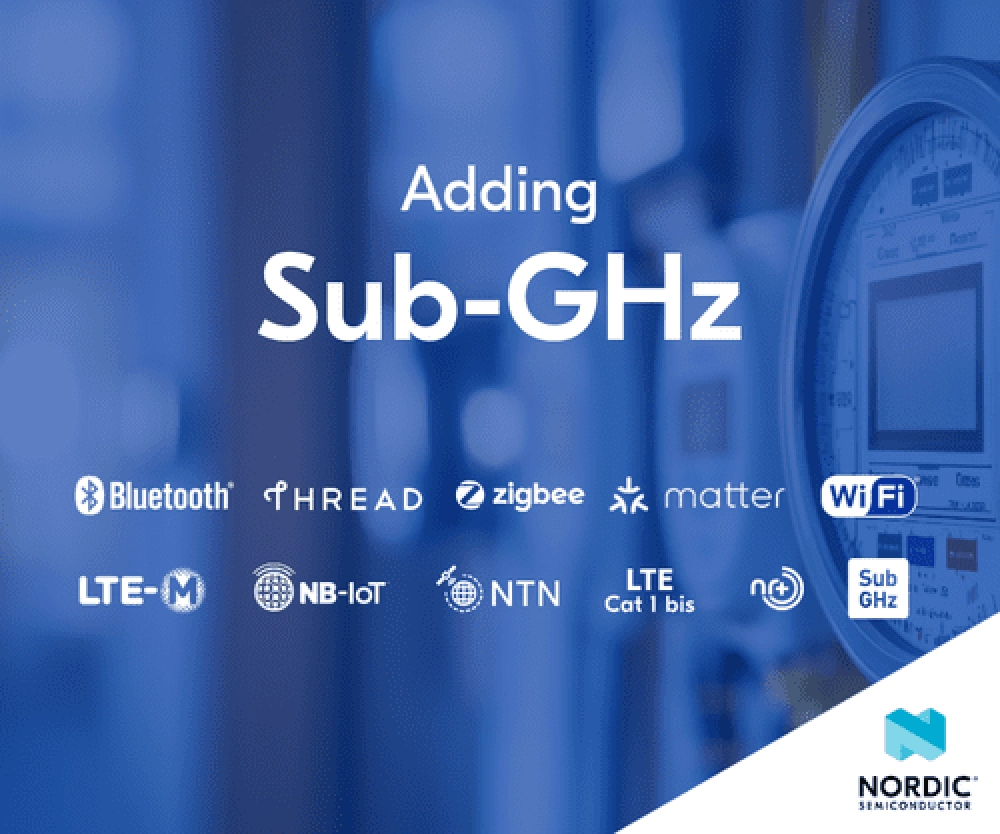
Nordic is initially targeting smart metering, asset tracking and building automation, where devices often operate across large properties or in difficult locations such as underground meter pits.
The company says its Sub-GHz platform will prioritize open standards while retaining support for proprietary protocols through a flexible modem design. And Thread could fall into that coverage, even if it is still a work in progress.
Stronger competition in Matter chipset market
Nordic expanding its wireless portfolio reflects a broader shift among major smart home chipmakers. Silicon vendors are stepping outside their historical comfort zones to build complete wireless stacks across competing protocols rather than just offering multiprotocol support for their traditional strengths.
Silicon Labs recently introduced its SiWx917 low-power Wi-Fi 6 platform to complement its established Zigbee and Thread solutions just like Nordic. Espressif has taken the opposite path. Known primarily for its dominant Wi-Fi modules, the company has expanded heavily into 802.15.4 chipsets for Zigbee and Thread over recent years.
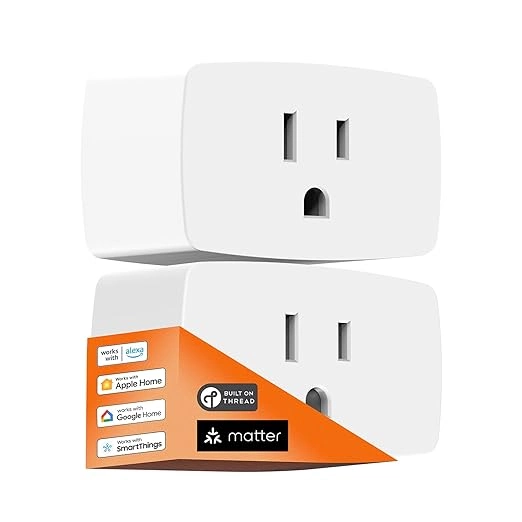
Onvis Smart Plug S4
The Onvis Smart Plug S4, designed by ChampOn, is a Matter-certified on/off plug-in unit that enables smart control of electrical devices.

Busy Bar
A customizable smart LED bar that blocks distractions, signals availability, and integrates into smart home systems to help boost productivity.
These moves allow manufacturers to select connectivity based entirely on device requirements instead of being constrained by supplier limitations.
Sub-GHz is also becoming a major focal point for the future of Matter. In September, the Thread Group officially approved work to extend Thread into the Sub-GHz spectrum to bring IP-based mesh networking to longer-range commercial and industrial applications.
The new standard could eventually support Matter devices far beyond the practical range of existing 2.4GHz Thread networks, covering outdoor sensors, large building installations, and distributed equipment. Thread Sub-GHz remains under development, and Nordic has not confirmed whether its upcoming chips will support the standard.
For device makers, this growing selection of crossover radios provides much more flexibility to balance range, power consumption, performance, pricing, and ecosystem compatibility.
The nRF71 series is currently sampling with selected customers, with Nordic also preparing its own module based on the new chips. Nordic has not announced specific Sub-GHz chip models or detailed hardware spec. But an early adopter program is open to developers.
(Source: Nordic Semiconductor, Silicon Labs, Thread Group; Image: Nordic Semiconductor).