Silicon Labs just released version 5.0 of its Arduino Core, adding support for more Matter device types including water valves and water heaters, as well as Matter binding for switches and a new Zigbee library.
The update makes its supported wireless boards more capable as ready-made building blocks for DIY and open-source smart home hardware. Developers can use higher-level Arduino APIs instead of implementing much of the Matter device behavior themselves, while still producing devices that can join major Matter ecosystems directly.
More Matter functions arrive in Arduino
The biggest Matter additions in version 5.0 are support for Water Valve and Water Heater device types, both contributed by an active community developer Ludovic Boué.
Water control has been part of Matter since version 1.3, opening the door to devices such as connected shutoff valves and water heaters that can participate in automations around leaks, energy use and hot water management. Bringing those device types into Silicon Labs’ Arduino library lowers the amount of work needed to prototype or build them on supported hardware.
Matter switches also gain binding support. Binding allows one Matter device to establish a link with another device or endpoint, enabling actions to be sent more directly rather than relying entirely on an automation running through a smart hub.
That can be particularly useful for physical controls, where a switch can be associated with a light or another compatible endpoint while remaining part of a standard Matter network.
Version 5.0 also adds Matter time synchronization and a UniqueID attribute for bridged devices, alongside fixes to thermostat behavior and other smaller Matter improvements. So a clock face or other features that rely on it can be added more easily with the Matter stack.
Silicon Labs describes its bundled Matter library as a simpler layer on top of its Matter SDK, intended to make creating and managing Matter devices easier within Arduino. Supported Matter boards currently include:
-
SparkFun Thing Plus Matter
-
Silicon Labs xG24 Explorer
-
Silicon Labs xG24 Explorer Dev Kits
However, the change log did not mention Matter spec version upgrade, so it should still be on Matter 1.4.
Zigbee joins the same Arduino platform
Version 5.0 also introduces an all-new Zigbee library, extending the same Arduino environment beyond Matter.
Initial supported Zigbee device types include on/off, dimmable and color lights, contact, humidity, light and temperature sensors, smart plugs, switches, power sources and time synchronization.
The first supported boards include:
-
Arduino Nano Matter
-
SparkFun Thing Plus Matter
-
Silicon Labs xG24 Explorer Dev Kits
-
Seeed Studio XIAO MG24
Silicon Labs’ current board definitions expose Zigbee as a selectable protocol stack alongside Matter and Bluetooth on supported hardware.
That gives developers more flexibility around the same Silicon Labs hardware. A board such as the XIAO MG24 can be used to build a native Matter-over-Thread device or a Zigbee product depending on the project, without moving to a completely different development platform.
Community contributions fill the gaps
A notable part of the release is how much of the new Matter functionality came from contributors outside the core Silicon Labs team.
While the new Zigbee library was led by Silicon Labs developer Tamas Jozsi, the changelog credits community contributors for the Matter Water Valve, Water Heater and switch binding implementations, alongside other fixes and additions.
That is an important advantage for an Arduino-based Matter stack. Device support does not have to expand only through a chipset vendor’s internal roadmap. Developers building real projects can add missing device types or fix behaviors they encounter, with those changes then becoming available to everyone using the same platform.
For DIY Matter hardware, that can make the difference between starting from low-level SDK examples and having a usable Arduino abstraction already available for the device being built.
Better hardware for home-made Matter devices
Silicon Labs has been steadily expanding the Arduino project around its wireless chips rather than treating it as a small demonstration environment.
Previous releases added device types including air purifiers, door locks, rain sensors and air quality measurements, along with Matter-over-Thread support, BLE running alongside Matter, OpenThread RCP firmware and tooling for changing Matter provisioning information. The project also exposes Silicon Labs’ low-power and radio capabilities through boards that are considerably easier to work with than a conventional embedded SDK.
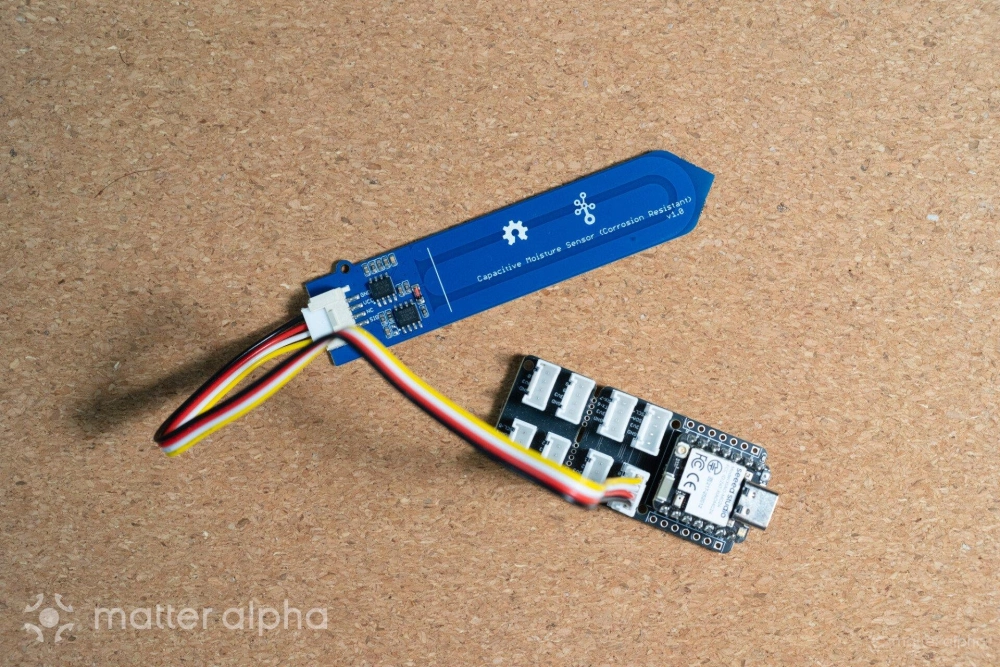
For open-source smart home projects, that means boards based on Silicon Labs hardware can increasingly be used to create more complete Matter accessories while retaining advantages around Thread radio performance and low-power operation.
Once commissioned, those devices use standard Matter rather than a project-specific integration. Silicon Labs’ documentation shows Arduino-built Matter devices being added directly to ecosystems including Apple Home, Google Home and Amazon Alexa through the regular Matter commissioning process.
The update shows the value of an actively maintained open platform. With more Matter features landing from Silicon Labs and the community, could ESPHome be the next project it supports?
(Source: GitHub/Silicon Labs; Image: Matter Alpha/Ward Zhou, Silicon Labs, Arduino)