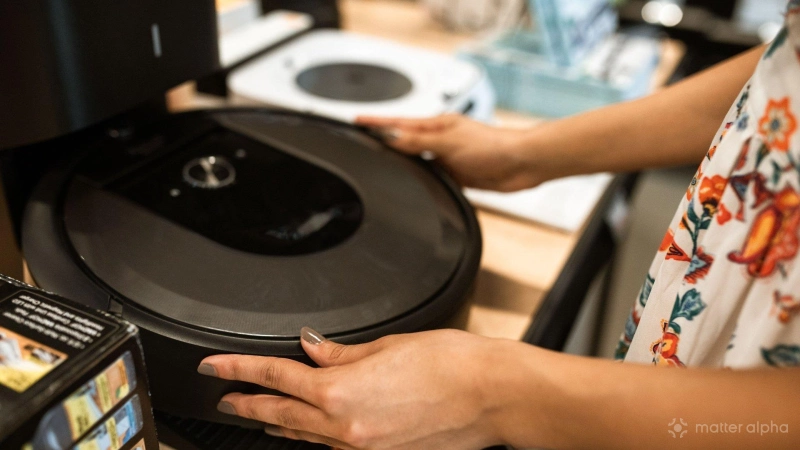
Every time I look at a new smart home purchase, I’m looking for Matter support. But sometimes, I don’t want it.
There are some devices you don’t need to have Matter. They might not be ready for it yet, or still have inadequate implementation. Or they might just not really need it.
We’ll have a look at those product categories later. First, I wanted to focus on the things that I don’t believe can – or should – be bought without Matter.
In 2026, these are the categories where I'd need a very good reason not to buy Matter.
1. Smart plug
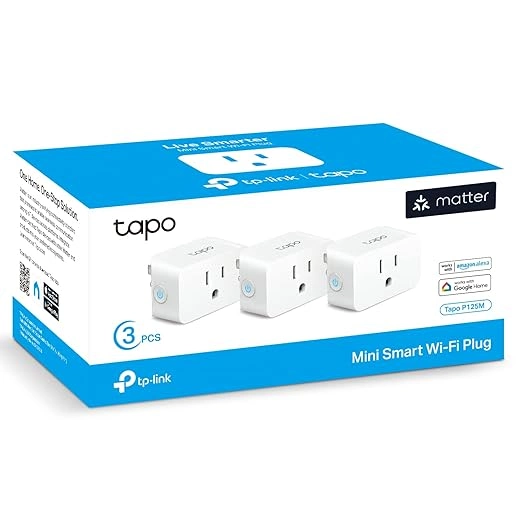
TP-Link Tapo P125M Mini Smart Wi-Fi Plug
The TP-Link Tapo Mini Plug P125M is a compact Wi-Fi-enabled smart plug that supports voice and remote control, automatic shutoff, and integrates with Matter for compatibility with other smart devices.
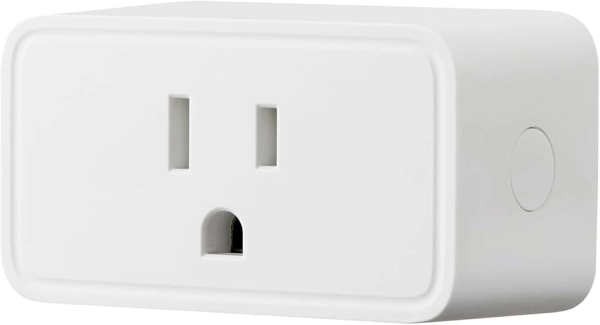
Amazon Basics Smart Indoor Plug – Single outlet
Matter-certified smart plug with 2.4GHz Wi-Fi, Alexa-friendly setup, scheduling and voice control, plus a compact one-outlet design for lamps, fans, coffee makers, and other small appliances.

This brand helps to support our site to remain ad-free.
Read more about our ethics policySmart Plug M1
A Matter-certified smart plugs with energy monitoring, cross-platform compatibility, compact design, and customizable safety features.
The smart plug is the modern iteration of a timer plug, with much of the same impact: you control what is connected based on a schedule. Rather than a manual timer control found in older devices, the original smart plugs were controlled over Wi-Fi using a companion app, and a Matter-compatible smart plug replicates that functionality in the chosen Matter app.
Increasingly, these devices offer further functionality. Whether you’re using Apple Home, Google Home, Samsung SmartThings, Amazon Alexa, Home Assistant, or the increasingly flexible IKEA Home smart app, you should be able to access energy monitoring features where smart plugs support it (and expose the data to Matter).
But smart plugs are not the only way to control your devices. Smart outlets are increasingly available with Matter support, so if you’re confident swapping these out, consider whether the devices you use regularly benefit from a smart plug or as smart outlet. I plan to do that, but for now I’m sticking with Matter smart plugs.
2. Smart bulbs and lights
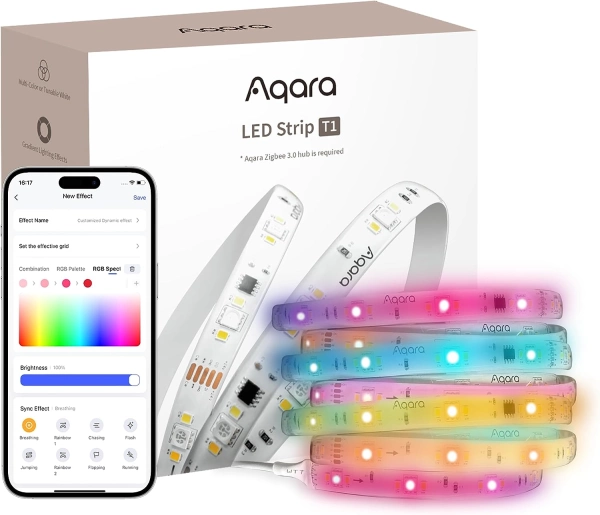
Aqara LED Strip T1
The Aqara LED Strip T1 by lumiunited is a customizable lighting solution that can be extended up to 10 meters, cut at 20 cm intervals, and re-attached using third-party 5-pin LED strip connectors, offering versatility for various smart home projects, while its compatibility with Matter ensures seamless integration with other smart devices.
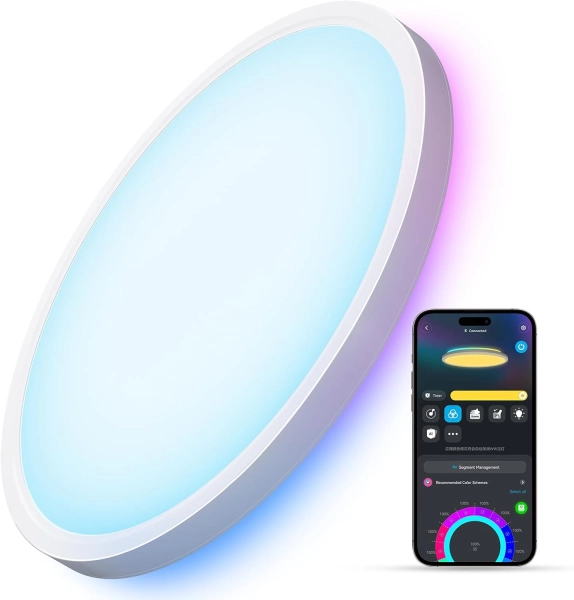
Govee Ceiling Light
A dual-zone smart ceiling light with RGBWW and RGBIC output, smart app/voice control, and circadian rhythm features for personalized lighting experiences.
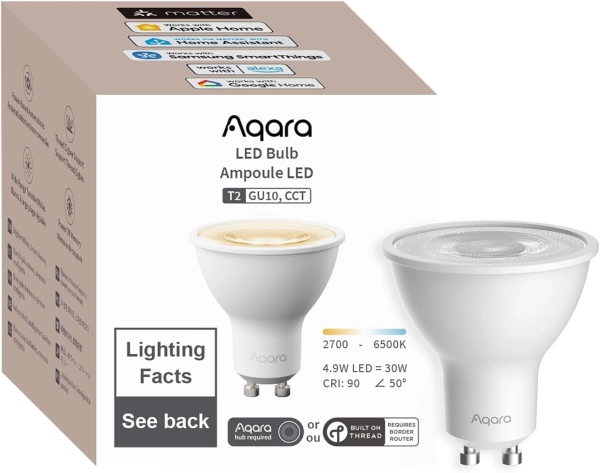
Aqara Smart LED Light Bulb T2 GU10 (Tunable White)
A dual-protocol GU10 smart spotlight bulb that combines Matter compatibility, Thread and Zigbee connectivity, and adjustable white light from warm to daylight tones for flexible everyday lighting.
Without a doubt the most visually appealing aspect of any smart home, smart lights (those LED-based strips and environmental enhancements) and bulbs often include Matter at this stage, and as such support integrations.
The very first smart home device I bought was a Wi-Fi bulb from a local electronics retailer, and their availability has steadily grown over the past few years. Now, you can pick up a smart bulb from your local supermarket, and they increasingly support Matter. The last bulbs I bought were from IKEA, and a look at both the IKEA Home smart app and my Samsung SmartThings app reveal that aside from integrations, control of these devices over Matter is limited to on/off and color selection and dimming.
But it should be noted that in the case of smart lighting systems, the vast majority of functions are not available through your chosen Matter app, beyond the same settings. Using Matter smart lights offers some strong integration possibilities and striking home visuals, but it currently means you will still need to use the companion app.
3. Smart locks
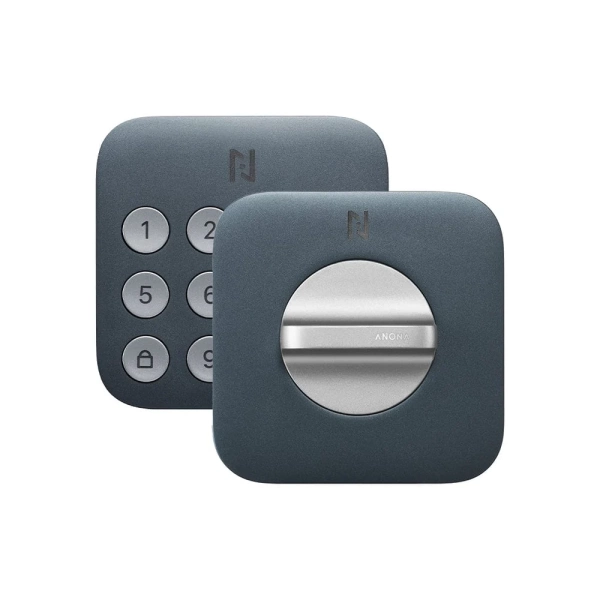
Anona Holo Wi-Fi Smart Lock and Keypad Set
Anona Holo Wi-Fi Smart Lock and Keypad Set
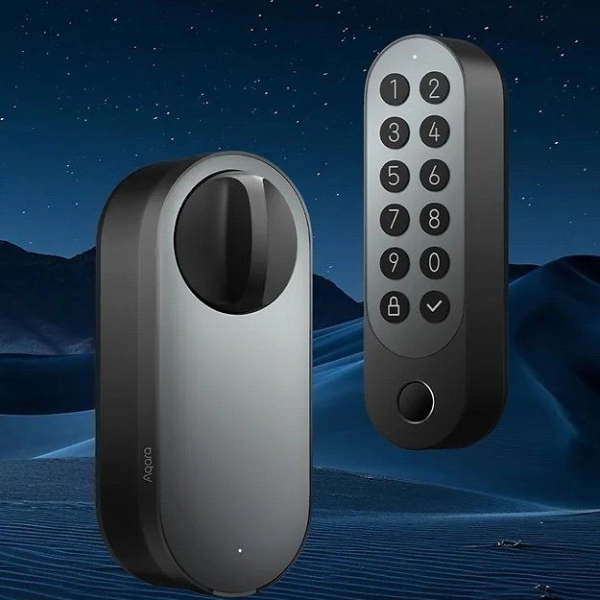
Aqara Smart Lock U200
A native Matter over Thread retrofit smartlock with planned support for Apple Home Keys as well as auto-unlock, NFC, a keypad, and fingerprint recognition.
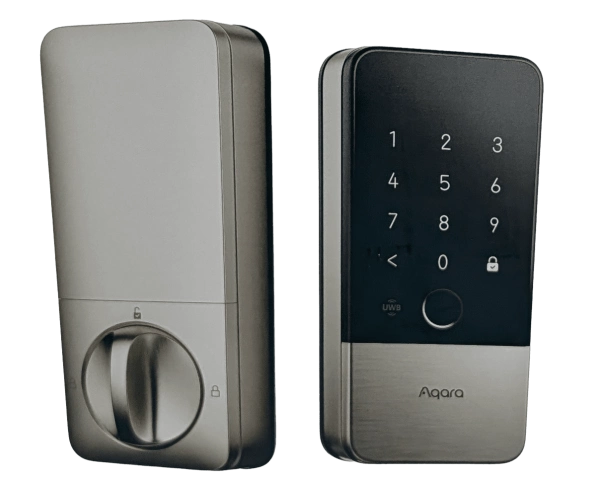
Aqara Smart Lock U400
Matter-certified Thread smart lock with UWB hands-free intent-based unlocking, Apple Home Key support, multiple access methods, auto lock via gyroscope, weather resistance, and a rechargeable battery.
Somewhere on my list of home improvements to make over the next 18 months is a new front door, and if we’re doing that, we’re not installing it without a Matter-compatible smart lock. Automated locking based on time of day is a vital time saver, not least in ensuring I stay in bed after 11pm instead of a near-OCD scramble to establish that the home is secure.
Aliro is required for smart locks to really work, however, so I’m not looking for a smart lock that only has Matter. This only handles integrations, automations and basic locking and unlocking. With Aliro, this is enhanced with credentials, keyless access, ways to prove you have access to the door in question. So, Matter is good for smart locks, but it also needs to be complemented with Aliro.
4. Smart thermostats/heating controls
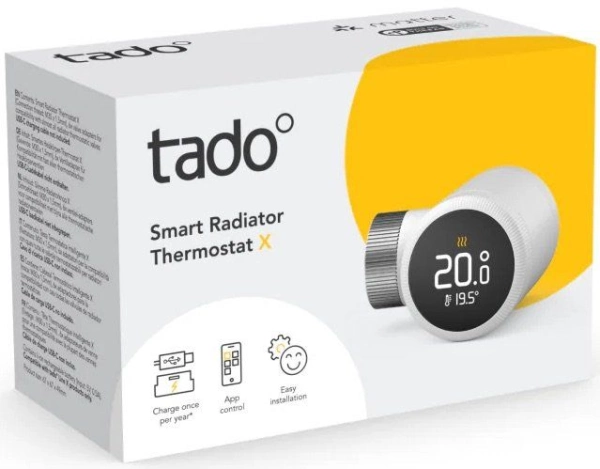
Smart Radiator Thermostat X
The tado Smart Radiator Thermostat X (VA04) is a Matter-compatible device designed to provide precise temperature control for individual radiators.
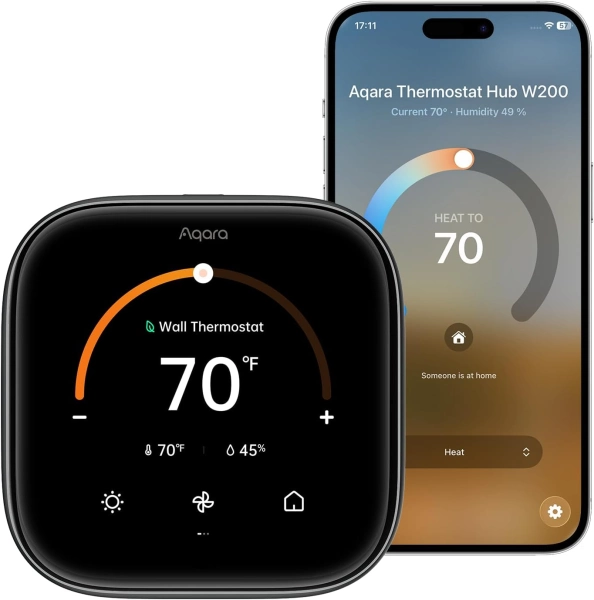
Aqara Thermostat Hub W200
Aqara Thermostat Hub W200 combines smart climate control, presence detection, and Matter hub capabilities in one compact device.
As prices for domestic fuel and heating rise, I have one eye on the increasingly likely installation of Matter-compatible thermostats and controls. The most important aspect to a smart heating setup is Matter, although sensors are useful too (see below). I would not consider a solution that isn’t Matter compatible.
The reason for this is that I already have a smart(ish) heating system and it is absolutely terrible. My boiler has OpenTherm compatibility, a protocol popular across the UK and Europe, so the option is there to engage with this fully and work towards a smarter approach to heating rooms. Unfortunately, this is an area I am moving towards relatively slowly, as I’ve already had my fingers burned (pun intended).
You see, the boiler was sold and installed as “smart” but the provider’s internet-connected box was inadequate, crashed repeatedly, and the service cost more than I was willing to pay. Now that Matter is widely supported by smart heating solutions, I’m more encouraged, and spend some time browsing the best Matter thermostats for the home.
5. Smart sensors
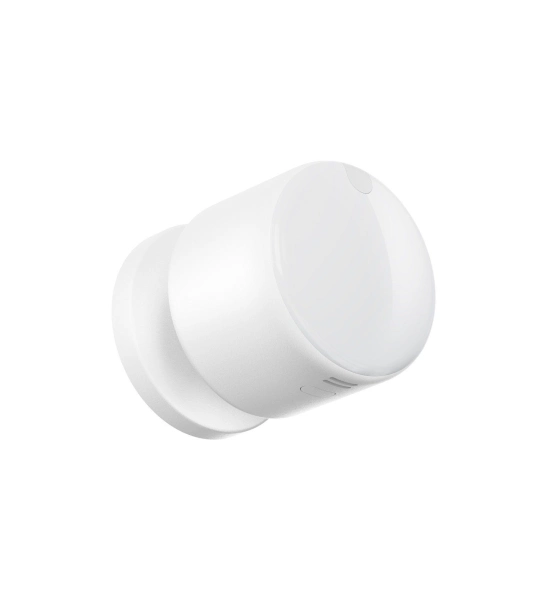
Aqara Presence Multi-Sensor FP300
A multi-functional presence sensor with PIR and mmWave detection, designed for seamless smart home integration with Thread and Zigbee support.
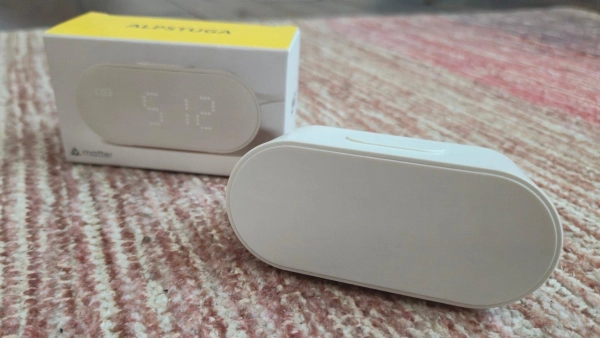
ALPSTUGA Air Quality Sensor
A smart, compact sensor that tracks CO₂, PM2.5, temperature, and humidity to help you monitor and improve indoor air quality.
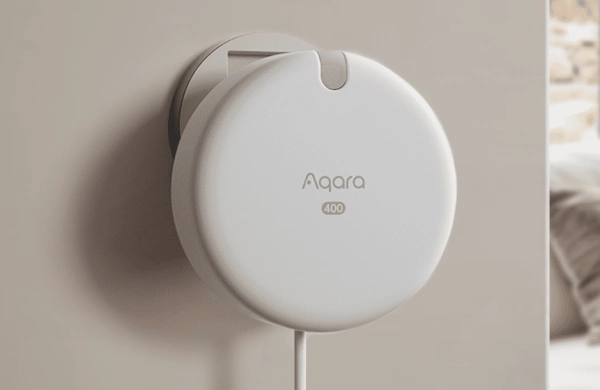
Aqara Multi-Sensor FP400
Matter-enabled mmWave sensor with Thread and Zigbee that tracks up to ten people’s position and posture, supports fine-grained zones, fall detection with exclusion areas, and includes a built-in light sensor.
Throughout 2026, smart sensors have become more widely available, in part thanks to IKEA’s addition of motion, door/window, and water leak sensors. These are equipped with Thread radios, enabling low-power, long-range connectivity. As a whole, they’re compact – I’ve put a pair of the IKEA KLIPPBOK water sensors in leak problem areas in house – and they add a new element of “smart” to your home.
It isn’t just IKEA that has affordable sensors, either. SwitchBot has a compact mmWave presence sensor that can be used to improve automations by determining not motion, but presence – there is a difference.
So, as I explore the options for additional smart sensors around my home, I’m strictly looking at devices with Matter-over-Thread support. The integrations available with these sensors are just too good to miss.
Devices I would still buy without Matter
Since launching in 2022, Matter has made steady progress, albeit at a pace most of us would wish to be quicker. Consequently, I think that it is safe to buy various devices without worrying about Matter compatibility.
Video doorbells and security cameras are the most obvious, with support for video streaming not yet widely supported. I expect it will be a couple of years until Matter 1.5 is available on hubs and security cameras.
Also of less interest for Matter support are smart displays and smart speakers, although these devices should be Matter-compatible eventually.
Similarly, smart TVs and streaming devices – which I expect will all have Matter support and Thread Border Routers eventually – are systems I would buy without worrying about Matter (and I write this as the owner of a Samsung TV with Matter).
Finally, kitchen tech isn’t quite where I would like it to be with Matter. Given the lifespan of white goods – 5 years on average – holding off a purchase just in case advanced Matter integrations can be added seems like the wrong decision. More likely, those automations will be available and fully integrated when it’s time to buy the next-but-one appliance.